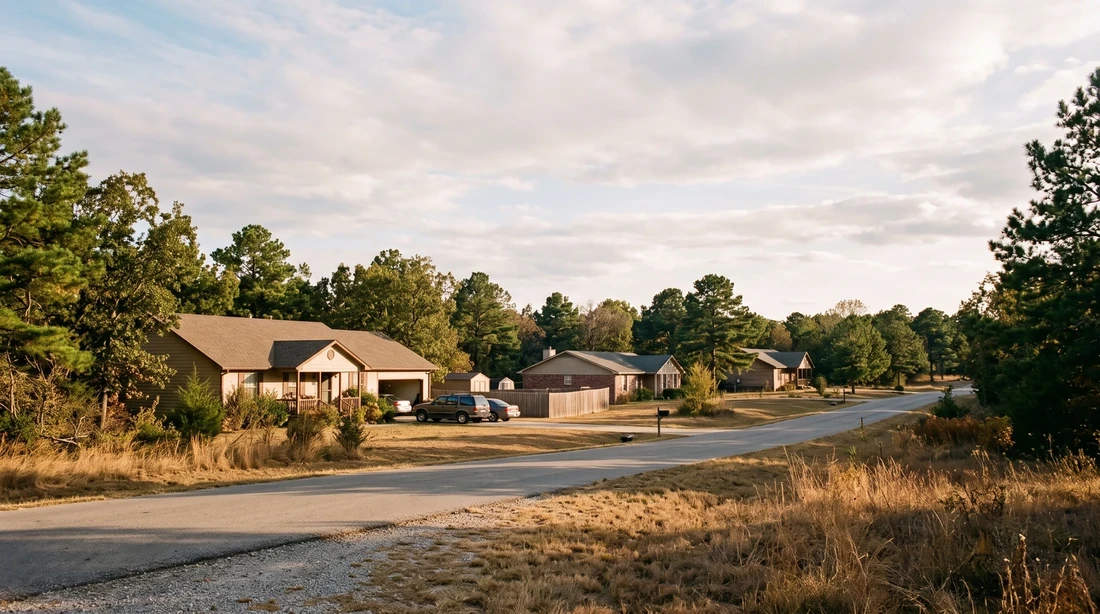
Farmers Insurance declined to renew roughly 1,300 Oklahoma homeowners policies starting November 1, 2024, citing wildfire risk in the eastern half of the state. It's the second-largest home insurer in Oklahoma, but the move touched under 2% of its Oklahoma book. If you got a non-renewal letter, you have at least 30 days to line up new coverage — and Oklahoma still has dozens of carriers writing new policies.
If a Farmers non-renewal notice just landed in your mailbox, the question on your mind is simple: is my insurer leaving Oklahoma, and am I about to be uninsured? The short answer is that Farmers pulled a specific slice of eastern-Oklahoma policies tied to wildfire exposure — not the whole state — and the market you're re-shopping into is still competitive. This is a re-shop, not a dead end.
What follows is a practical playbook: what actually happened, how much notice the law gives you, how to replace coverage before the clock runs out, and — because wildfire is a genuine Oklahoma peril — what to do if disaster strikes while you're between policies.
Oklahoma law requires at least 30 days' written notice before a homeowners policy is non-renewed (OAC 365:15-1-14). The date on your letter starts that clock — a gap in coverage can also violate your mortgage terms, so treat it as a hard deadline, not a suggestion.
What Happened: Farmers Non-Renewed About 1,300 Oklahoma Policies
In September 2024, Farmers Insurance announced it would decline renewal on approximately 1,300 Oklahoma homeowners policies, with cancellations beginning November 1, 2024 (KXII reported the move on September 25, 2024). The affected policies sat in the eastern half of the state.
The stated reason was wildfire risk, described as part of a national strategy to reduce Farmers' wildfire exposure. Farmers is the second-largest writer of homeowners insurance in Oklahoma, but the company said the non-renewals affected less than 2% of its Oklahoma home book.
Oklahoma Insurance Commissioner Glen Mulready called it unusual. He said he had not seen an insurance company take this kind of action in his five and a half years in office. His broader message to homeowners was reassuring: "We don't have an availability problem...We have a lot of competition out there."
Notably, a state fire management official said there had been no notable recent rise in wildfire risk in eastern Oklahoma — which is part of why the pullback surprised regulators. Carrier retreat over catastrophe modeling, rather than a measured local hazard spike, is exactly the trend homeowners across several states are watching nervously as premiums climb.
| Date | What happened |
|---|---|
| September 2024 | Farmers announces it will decline renewal on ~1,300 Oklahoma homeowners policies |
| September 25, 2024 | KXII reports the planned cancellations and wildfire-risk rationale |
| November 1, 2024 | Non-renewals begin taking effect for affected eastern-Oklahoma policies |
| March 14, 2025 | A major wildfire outbreak destroys 530 homes and businesses statewide (News9) |
| 2025–26 session | Lawmakers discuss extending the non-renewal notice window from 30 to 60 days |

Is My Insurer Leaving Oklahoma? What the Numbers Actually Say
Oklahoma is not short on home insurers. According to the Oklahoma Insurance Department (cited via Insurtech Insights), 113 companies offer homeowners policies in the state. As of May 2025, OID counted more than 100 licensed insurers and over 50 actively writing new policies.
That's the context that turns a scary letter into a manageable task. One large carrier trimming a wildfire-exposed sliver of its book is real — and worth taking seriously — but it is not the same as "nobody will insure my house." Dozens of companies are still competing for new business in Oklahoma right now.
The harder part is that a non-renewal on your record can make the re-shop feel bumpier, and wildfire-scored properties may see higher quotes. That's a pricing conversation, not an availability wall — and it's why starting early matters.
What Happens If You Wait or Do Nothing
A non-renewal has a sequence, and every stage you skip costs you options. Here's what unfolds if you sit on the letter.
- Day 0 — the notice arrives. Your 30-day clock starts. You still have the most choices you'll ever have; this is the cheapest time to act.
- Coverage lapses. If you haven't bound a new policy by the non-renewal date, your home is uninsured — one storm, fire, or theft is now entirely on you.
- Your lender steps in. Mortgages require continuous coverage. A lapse can trigger force-placed (lender-placed) insurance, which is typically far more expensive and protects the lender, not your belongings or living expenses.
- Re-shopping gets harder. Once you've had a lapse or a non-renewal, some carriers quote higher or decline — the exact opposite of the leverage you had on Day 0.
- Disaster during the gap. If a wildfire or storm hits while you're uninsured, there is no ALE (loss-of-use) coverage to pay for temporary housing while you rebuild — a cost that runs into thousands per month out of pocket.
Displaced by an Oklahoma wildfire or storm and your carrier approved temporary housing? BnB OKC works with insurance placements (including through Alacrity Solutions) and offers furnished OKC-metro homes with monthly rates on 30+ night stays. Call or text (405) 295-5052 for same-week availability.
How to Replace Your Homeowners Coverage, Step by Step
Most Oklahoma homeowners can bind replacement coverage inside the 30-day window if they start the day the letter arrives. Work the list in order.
- Read the letter and mark the date. Confirm it's a non-renewal (end of term) and note the exact effective date — that's your deadline to have new coverage in force.
- Call an independent agent. Independent agents quote many of Oklahoma's 50-plus active carriers at once, which beats calling one company at a time.
- Gather your home's details. Roof age, square footage, updates to wiring or plumbing, and your claims history — accurate info gets accurate quotes and fewer surprises.
- Compare coverage, not just price. Match dwelling limits, deductibles (including any separate wind/hail deductible), and loss-of-use (ALE) limits before choosing.
- Bind before the non-renewal date. Get the new policy in force with no gap, then send proof to your mortgage servicer so they don't force-place coverage.
- If nobody will write you, ask about the FAIR Plan. Oklahoma's last-resort market exists for hard-to-place homes; the Oklahoma Insurance Department can point you to options.
| Item | Current rule | Proposed change (2025–26) |
|---|---|---|
| Minimum notice before non-renewal | At least 30 days (OAC 365:15-1-14) | Discussed extension to 60 days |
| Time to re-shop coverage | ~1 month | ~2 months if adopted |
| Status | In effect now | Legislative discussion — not law |
What This Means If You're an Oklahoma Homeowner Facing Disaster Mid-Transition
Wildfire is not a hypothetical peril in Oklahoma — the March 14, 2025 outbreak destroyed 530 homes and businesses statewide. That's the exact scenario that makes a coverage gap dangerous: if your home is unlivable and you have no policy, there's no insurer to pay for a place to stay.
If you do keep coverage in force and a covered event displaces you, most policies include Additional Living Expenses (ALE), also called loss of use. ALE typically reimburses the added cost of temporary housing above your normal living expenses while your home is repaired or rebuilt. Your carrier and adjuster make the coverage call — but when it's approved, you get to choose where your family stays.
That's where a local furnished-housing operator changes the outcome versus stacking hotel nights. A furnished home gives a displaced family kitchens, laundry, bedrooms, and often a fenced yard for pets — the things a rebuild-length stay actually needs. BnB OKC runs 11 furnished homes across the OKC metro, holds a 4.8-star average across 1,247 verified guest reviews on Airbnb, works with insurance placements, and offers monthly rates on 30+ night stays.
A hypothetical worked example
This is illustrative, not a quote. Say a family of four is displaced by a covered wildfire and needs housing for three months while their home is repaired. Two hotel rooms at roughly $160/night (they need the space) run about $160 × 2 × 90 = $28,800 — plus every restaurant meal, because there's no kitchen.
A furnished multi-bedroom OKC home on a monthly rate consolidates the family under one roof with a full kitchen and laundry, typically landing well below stacked hotel-room math over a 90-day stay. Direct booking saves up to 35% on 4+ night stays, and monthly pricing kicks in on 30+ nights. The exact figure depends on the home and dates — but the structure is why families on ALE budgets stretch further in a furnished home than in hotels.
When You Don't Need a Furnished Home
If you're simply re-shopping coverage and your home is fine, you don't need temporary housing at all — you need an independent agent and a weekend of quotes. A furnished-home conversation only matters if a covered event actually displaces you.
Likewise, a one- or two-night gap while an adjuster inspects can be a hotel with points. Where a furnished home genuinely changes the outcome is the rebuild-length displacement: 30-plus nights, kids who need routine, pets who can't stay in a hotel, and a family that needs a kitchen instead of a mini-fridge.
Terms You'll Hear, Decoded
- Non-renewal: the insurer ends your policy at the end of its term rather than mid-term — you keep coverage until the term ends, but must find a new policy after.
- Cancellation: coverage ends mid-term, which is more restricted by law than non-renewal.
- Force-placed (lender-placed) insurance: coverage your mortgage servicer buys if you let your policy lapse — usually pricier and it protects the lender, not you.
- Additional Living Expenses (ALE) / loss of use: the part of a homeowners policy that reimburses added temporary-housing costs above normal living expenses after a covered loss.
- FAIR Plan: a state-supported last-resort market for homeowners who can't find coverage in the standard market.
You can read more about how displaced families use approved coverage on our insurance-housing guide, and if you're weighing longer stays, our extended-stay options explain monthly pricing.
For local-market context on how Oklahoma regulators and cities are reshaping housing rules right now, see our coverage of the OKC Airbnb enforcement crackdown and Norman short-term rental license changes.
See the FAQs below for the questions Oklahoma homeowners ask most after a Farmers non-renewal.