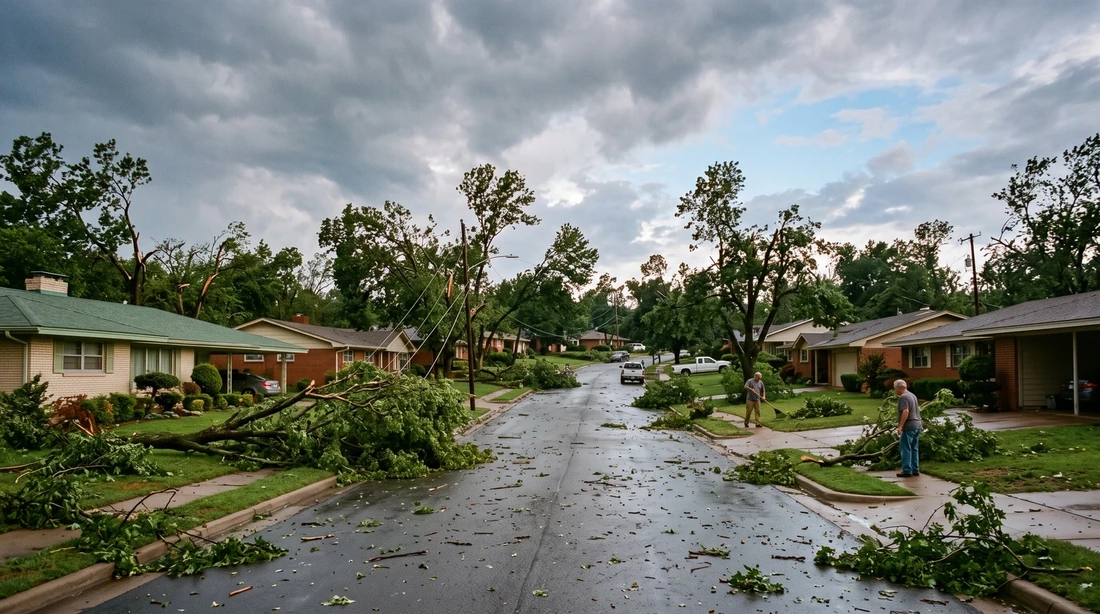
After a tornado damages your Oklahoma home, the order matters more than the paperwork. Document every loss before you remove debris, file your homeowners claim first (your policy's ALE coverage pays for temporary housing), and turn to FEMA only to fill gaps — and only in a federally declared disaster. FEMA does not replace insurance.
Key Takeaways
- Document every loss with photos, video and a written damage list before any debris removal, because that evidence supports both insurance and FEMA claims.
- File your homeowners claim first, since insurance is primary and FEMA grants and loans apply only when damages exceed your coverage.
- Additional Living Expenses coverage pays for a separate temporary residence plus food, clothing and toiletries while your home is rebuilt, so keep every receipt.
- If your carrier disputes or delays the claim, the OID Consumer Assistance line at 1-800-522-0071 can help, and FEMA is reached at 1-800-621-FEMA.
This guide covers the first day after a tornado damages your Oklahoma home: which of your two sources of money pays first, what FEMA does and does not cover, and where your family lives while the house is rebuilt.
The morning after the November 3, 2024 tornado hit the OKC metro, a thread went up on r/okc titled "House got damaged by tornado any federal money." Every Oklahoma storm produces the same question. What does my insurance cover, what does FEMA cover, in what order, and where does my family sleep tonight? The sequence below follows guidance from the Oklahoma Insurance Department (OID) and FEMA, and it answers the part national articles skip.
Two facts frame everything. Oklahoma averages 59.4 tornadoes a year (1950 to 2025), and 2024 set the state record at 152, according to the National Weather Service in Norman. May is the peak month, averaging 24.4. You are not the first family to do this. The process is well worn.
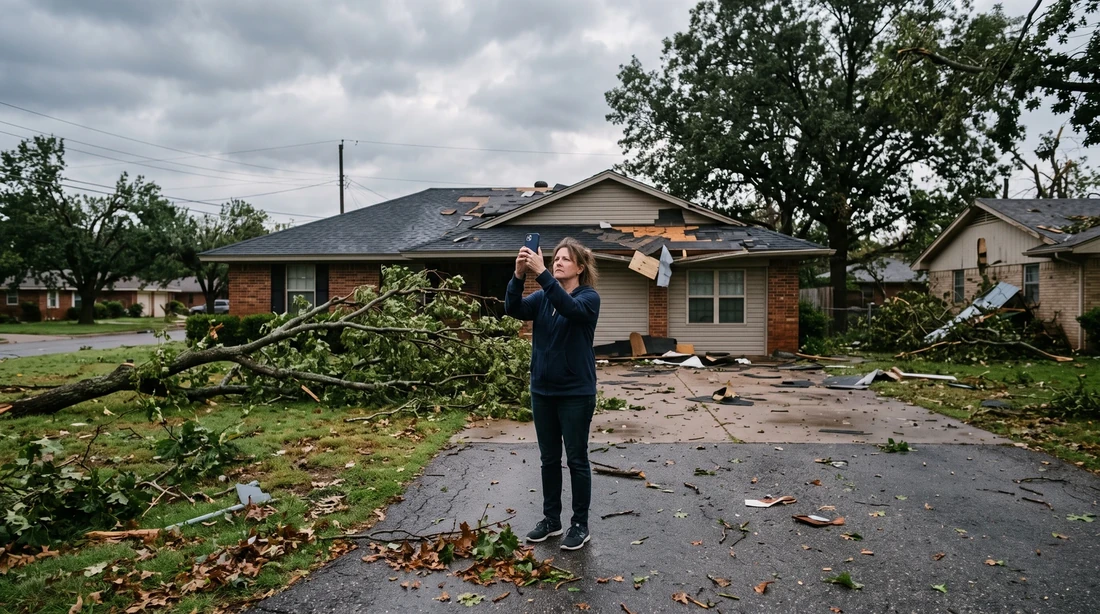
Your first move has a clock. Document your losses before any debris removal. Once the roof tarp goes up and the drywall is hauled out, the evidence of what you lost is gone, and so is part of your claim.

Who Pays First After a Tornado, Insurance or FEMA?
Your insurance is primary. FEMA is a backstop. FEMA grants and loans apply when damages exceed your insurance coverage, per OID's "After the Disaster" guidance, and only in a federally declared disaster. If you have a homeowners policy, you file with your carrier first. FEMA will not get you around a slow adjuster.
Most Oklahomans buy homeowners insurance and hope never to use it, so the first real claim arrives during the worst week of their lives. The confusion comes from two separate systems that pay in a fixed order. Nobody explains that order until you are standing in your driveway at 6 a.m.
Wikipedia on how often tornadoes have hit Oklahoma City itself:
The Oklahoma City metropolitan area is one of the most tornado-prone major cities in the world, with about 150 tornadoes striking within the city limits since 1890.
— Wikipedia: Oklahoma City
What Should You Do Before You Touch Anything?
OID's tornado guidance is blunt: "Before removing any debris or broken belongings, document your losses." Take photos and video of every damaged room, the exterior, the roof, and the contents. Write a damage list. Then contact your insurer as soon as possible.
This one step protects both your insurance claim and any later FEMA application. Adjusters and FEMA inspectors rely on evidence, and a storm scene changes by the hour once cleanup crews arrive.
The Verified Sequence, Step by Step
There is a right order, and following it keeps money moving toward your family instead of stalling in a dispute.
- Document everything before debris removal. Photos, video, and a written damage list of the structure and contents, before anything is thrown out or repaired.
- File your homeowners claim immediately. Contact your insurer as soon as possible. This starts the adjuster process and activates your temporary-housing coverage.
- Use ALE for housing right away. Your policy's Additional Living Expenses (loss of use) coverage pays for a separate temporary residence plus food, clothing, and toiletries while your home is rebuilt. Keep every receipt.
- Turn to FEMA only for gaps. If a federal disaster is declared and your damages exceed your insurance, apply to FEMA at 1-800-621-FEMA. FEMA fills what insurance does not reach. It does not duplicate it.
If your carrier disputes or delays the claim, Oklahoma has a referee: the OID Consumer Assistance line at 1-800-522-0071.
| Stage | What you do | Who pays / decides |
|---|---|---|
| Hour 0–24 | Photo/video all damage, write a loss list, secure the property from further damage | You (evidence for both claims) |
| Day 1–3 | File the homeowners claim; ask specifically about ALE / loss-of-use for housing | Your insurer |
| Week 1+ | Move into temporary housing; keep every lodging, food, and storage receipt | ALE under your policy |
| If declared disaster | Apply to FEMA (1-800-621-FEMA) for costs beyond insurance | FEMA (gaps only) |
| If disputed | Contact OID Consumer Assistance | OID: 1-800-522-0071 |
What Does ALE Pay for, and Why Is It Your Housing Answer?
Your homeowners policy's Additional Living Expenses coverage is the part most people forget they own. OID describes it plainly: your company may reimburse you if you need temporary lodging or to store your possessions, so keep all your receipts. ALE covers a separate temporary residence plus food, clothing, and toiletries while you rebuild.
ALE is what pays for the furnished home your family lives in during the months of repairs. In most insured cases FEMA never touches that bill. That is the piece that changes where you sleep tonight.
What Does FEMA Pay for Housing, and What Does It Skip?
FEMA has two housing tools, and neither is a blank check. Both apply only in federally declared disasters, and both sit behind your insurance. Knowing the exact limits saves you from budgeting on money that is never coming.
FEMA Lodging Expense Reimbursement covers the cost of an emergency hotel or motel room and its taxes. Only that. Per FEMA, it does not pay for food, phone calls, or transportation. You pay out of pocket first, then submit verifiable receipts for reimbursement.
FEMA Rental Assistance is the longer-term tool. It can be used to rent a house, apartment, manufactured home, RV, or hotel efficiency unit, and it covers rent plus essential utilities (gas, electric, water, trash, and sewer). With documented continued need, it can extend up to 18 months from the disaster date.
| Program | What it covers | Key limits |
|---|---|---|
| Homeowners ALE (loss of use) | Separate temporary residence, food, clothing, toiletries, storage while rebuilding | Set by your policy; keep receipts; primary before FEMA |
| FEMA Lodging Expense Reimbursement | Emergency hotel/motel room cost + taxes only | No food, phone, or transportation; pay out-of-pocket, submit receipts; declared disasters only |
| FEMA Rental Assistance | Rent for a house, apartment, manufactured home, RV, or hotel efficiency + essential utilities | Up to 18 months from disaster date with documented need; behind insurance |
A Hypothetical: Family of Four, Roof Torn off in May
Here is a clearly hypothetical example to show the arithmetic. Say a May storm, peak month in Oklahoma, tears the roof off a family of four's home near northwest OKC, and the rebuild will take four months.
They file the homeowners claim on day one and confirm ALE coverage. For the first several nights they use two hotel rooms while they arrange something workable. If they instead stayed in two hotel rooms the whole four months at, say, roughly $170/night each, that is about $340/night, over $40,000 across four months, with no kitchen and no laundry. ALE budget burns fast that way.
A furnished home with a real kitchen, laundry, and space for the kids stretches the same ALE dollars much further on a monthly rate. Because BnB OKC works with insurance placements, the stay can be billed to the carrier's third-party administrator when authorized. FEMA never enters this example. The family is insured, and their ALE coverage carries the housing. FEMA would only appear if damages ran past their policy limits in a declared disaster.
Numbers here are illustrative; your policy limits, the carrier's decisions, and the specific home set the real figures.
Displaced by an OKC storm and need somewhere your family can actually live for the rebuild? BnB OKC has 11 furnished metro homes — family- and pet-ready, with kitchens and laundry — and works directly with insurance/ALE placements and Alacrity Solutions when authorized.
See insurance & ALE housing options | Call or text (405) 295-5052
Where Does Your Family Live While OKC Rebuilds?
A furnished home usually stretches ALE dollars further than a hotel over a multi-month rebuild, because you are not paying restaurant prices three times a day or living out of two rooms. That is the local answer no national FEMA article can give you.
BnB OKC operates 11 furnished homes across the metro, sleeping 2 to 16+, with a 4.8-star average across 1,247 verified guest reviews on Airbnb and two homes holding Airbnb's "Guest Favorite" badge. Several homes are dog-friendly. Monthly rates apply on 30+ night stays, and published from-rates run $225 to $425/night with up to 35% direct savings on 4+ nights. For families displaced during storm season, the practical wins are a full kitchen, in-home laundry, room for kids, and, when your carrier authorizes it, direct billing so you are not floating thousands out of pocket. Learn more on our insurance housing page or browse extended stays.
Red Flags in the Cleanup
OID warns that disasters draw predatory contractors. Watch for these.
- Anyone who rushes you. Pressure to sign today is the first sign of a bad deal.
- Unsolicited repair offers. A crew that shows up uninvited after a storm is selling, not helping.
- Claims of government backing. Nobody is sent by FEMA to fix your roof.
- A demand for the full amount upfront. Pay incrementally as work is completed. Undocumented or fraudulent repairs can complicate reimbursement on your claim.
- Cleanup before photos. Debris removal before documentation erases the evidence both your adjuster and FEMA need.
- Budgeting on FEMA money before a declaration. Without a federally declared disaster, FEMA housing help generally is not available.
When You Don't Need a Furnished Home
If your damage is minor (a few missing shingles, a broken window) and you can safely stay put, you do not need temporary housing at all. You need your claim filed and documented. A one- or two-night hotel stay while a tarp goes up is a hotel job, not a furnished-home job.
A furnished home changes the outcome when the rebuild runs weeks to months, when you have kids or pets who cannot live in a hotel room, when you need a kitchen and laundry, or when you want your ALE dollars to last the whole repair timeline. That is where a local operator who bills insurance beats a national booking site. Storm season and event weekends can tighten availability (the OKC calendar stays busy; see our Route 66 Centennial in OKC coverage), so calling early helps.
Terms You'll Hear, Decoded
- Additional Living Expenses (ALE) / loss of use: The part of your homeowners policy that pays for a temporary residence, food, and essentials while your home is uninhabitable and being rebuilt.
- FEMA Lodging Expense Reimbursement: Reimbursement for an emergency hotel/motel room and taxes only. You pay first and submit receipts; no food or transportation.
- FEMA Rental Assistance: Money to rent a home, apartment, RV, or hotel efficiency plus essential utilities, up to 18 months from the disaster date with documented need.
- Federally declared disaster: The designation that unlocks FEMA individual assistance for a storm. Without it, FEMA housing help generally is not available.
- Direct billing: When a housing provider bills your carrier or its administrator directly, so you do not front the cost. Only with carrier/TPA authorization.
This guide is general information, not insurance or legal advice; your carrier makes all coverage decisions.
The Bottom Line
Document, file with your carrier, use ALE for housing, and go to FEMA only for what insurance does not reach in a declared disaster. Pull your homeowners policy today and find the loss-of-use amount. That is your housing budget while you rebuild. Save every damage photo, receipt, and adjuster message in one folder, and price a furnished monthly home against your hotel spend so you can see how far ALE stretches.
Review insurance & ALE housing or call/text (405) 295-5052 for same-week furnished options and direct-billing coordination.