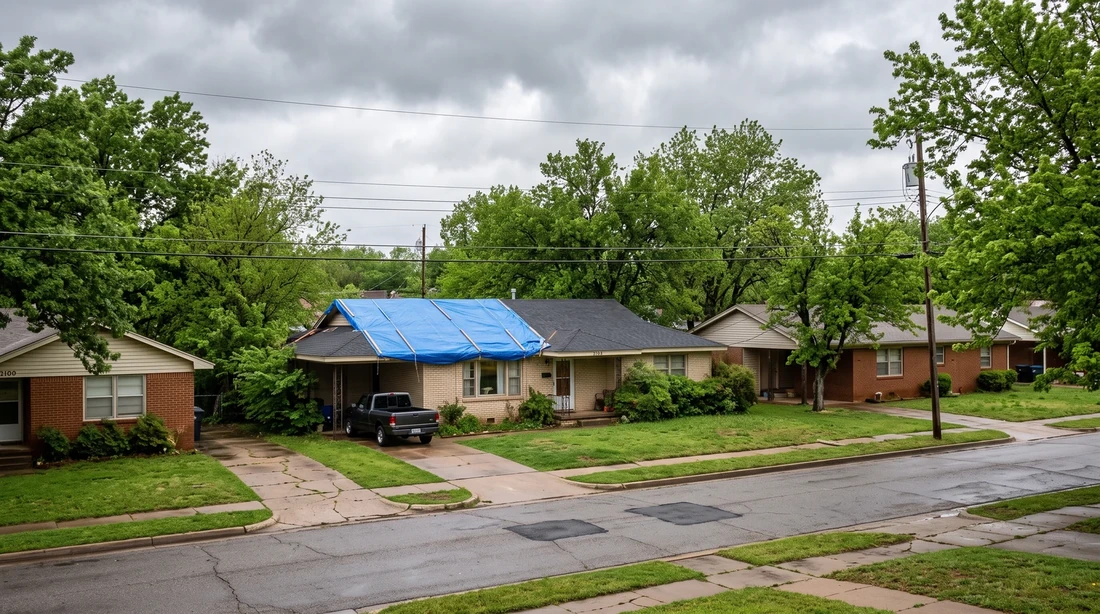
Yes — homeowners insurance usually pays for temporary housing through Additional Living Expenses (ALE), also called loss-of-use coverage. It pays the difference between your normal living costs and your higher temporary ones when a covered loss makes your home uninhabitable. Loss-of-use is commonly about 20% of your dwelling coverage, and you still owe your mortgage.
Key Takeaways
- Homeowners insurance usually pays for temporary housing through Additional Living Expenses, also called loss-of-use coverage, after a covered loss.
- ALE pays the difference between your normal living costs and your higher temporary ones, and you still owe your mortgage.
- Loss-of-use coverage is commonly about 20% of your dwelling coverage, according to the Insurance Information Institute.
- Keep receipts for every additional cost, because insurers require them for reimbursement and undocumented costs generally are not covered.
This guide covers what Additional Living Expenses (ALE) coverage pays for after a covered loss, how the typical 20%-of-dwelling limit works, what happens to that budget when a family defaults to a hotel, and how to get temporary housing approved by your adjuster in Oklahoma City.
If a spring storm just tore into your roof or a kitchen fire pushed your family out, the question is immediate: who pays for where we live while the house gets fixed? In Oklahoma City that question lands hard every storm season, and after the January 2025 Los Angeles wildfires it stayed in national headlines all year.
Two facts frame everything below. First, ALE pays the difference, never the whole bill, because your mortgage does not stop. Second, Oklahoma has seen far more tornadoes than normal lately. The National Weather Service in Norman recorded 152 tornadoes in 2024 and 106 in 2025, well above the 1996 to 2025 average of about 71 per year. More storms means more displaced families asking this exact question.
ALE clock: coverage begins when your home becomes uninhabitable from a covered loss and runs until it is repaired. Many policies cap it with a dollar limit, a time limit, or both. Every hotel night you do not document burns budget you cannot get back without a receipt.

What Does ALE (Loss of Use) Cover, and What Does It Skip?
Additional Living Expenses covers the reasonable extra costs of living somewhere else while your home is repaired after a covered loss. Per the National Association of Insurance Commissioners (NAIC), that includes temporary housing such as hotel bills and reasonable restaurant meals above what you normally spend.
The key word is additional. ALE reimburses the gap between your normal expenses and your temporary ones. If your family normally spends $600 a month on groceries and now spends $900 eating out, ALE covers roughly the $300 difference. And because the loss does not erase your mortgage, you keep paying that too.
What ALE typically helps with:
- Temporary rent or furnished-home costs while repairs happen
- Hotel or extended-stay bills before you find longer-term housing
- Reasonable extra meal costs above your normal food budget
- Extra mileage, pet boarding, storage, and laundry tied to displacement
What it generally will not do: pay your mortgage, replace your belongings (that is personal-property coverage), or cover costs you cannot document. The NAIC is blunt about the last one. Keep all receipts for any additional costs you have, because insurers require them for reimbursement.
How Much Temporary Housing Will Insurance Pay For?
Loss-of-use coverage is commonly about 20% of your dwelling coverage, according to the Insurance Information Institute. So on a $200,000 dwelling policy, your ALE limit is roughly $40,000. A real budget, and a finite one.
Some policies also add a time limit (say, 12 or 24 months) on top of the dollar cap, or use a time limit instead of a dollar cap. Read your declarations page, or ask your adjuster to state your ALE limit in writing before you sign a lease anywhere.
| Dwelling coverage | ALE at ~20% | What that buys (rough) |
|---|---|---|
| $150,000 | ~$30,000 | ~4–6 months furnished; fewer at hotel rates |
| $200,000 | ~$40,000 | ~6–9 months furnished home |
| $300,000 | ~$60,000 | ~9–14 months furnished home |
| $400,000 | ~$80,000 | A full rebuild year-plus, if managed well |
These are illustrations, not promises. Your exact percentage, cap, and time limit are set by your policy, and your carrier and adjuster make every coverage decision.
Why Did the LA Wildfires Keep ALE in the News Through 2026?
ALE was a quiet policy line until the January 2025 Los Angeles wildfires displaced tens of thousands of households at once. The California Department of Insurance issued formal alerts urging insurers to maintain and extend ALE for wildfire survivors, and the dispute over advances, limits, and the scramble for furnished housing stayed in the trade press into 2026.
Oklahoma families feel the same mechanics after a different disaster: hail, tornado, or house fire instead of wildfire. The coverage line is identical. ALE pays the difference, receipts substantiate it, and the limit is finite. The timeline below shows why the topic never left the headlines.
| When | What happened | Why it matters for OKC |
|---|---|---|
| 2024 | Oklahoma logged 152 tornadoes (NWS Norman) — more than double the ~71/year average | Record displacement; more ALE claims opened |
| Jan 2025 | LA wildfires displace tens of thousands; ALE housing demand spikes | National spotlight on how loss-of-use works |
| 2025 | California DOI issues alerts urging insurers to maintain ALE | Regulators reinforce receipts, limits, extensions |
| 2025 | Oklahoma logs 106 tornadoes — still well above average | Second straight heavy year for OK families |
| 2026 | ALE disputes and furnished-housing shortages stay in trade coverage | Families plan housing earlier in the claim |
What Happens If You Wait or Do Nothing?
Doing nothing after displacement does not save money. It usually costs more and shrinks your ALE budget faster. Here is the typical sequence when a family stalls.
- Nights 1 to 7: You land in a hotel because it is fast. Two rooms for a family, restaurant meals three times a day. The daily burn is high and eats ALE quickly.
- Weeks 2 to 4: Repairs turn out to take months. You are still in the hotel with no kitchen, no laundry, and mounting meal receipts.
- Month 2: You realize a furnished home would have cost far less per month, and now a chunk of your finite ALE limit is already spent on hotel nights.
- Month 3+: If you did not keep receipts, some of that spend is not reimbursable at all, and you are closer to your cap with the rebuild unfinished.
The fix is to move to stable, budget-stretching housing early and document everything from day one.
Displaced by an OKC storm or house fire and need somewhere your family can actually live for months? We work directly with adjusters and ALE housing coordinators on placements — furnished homes with kitchens, laundry, and room to breathe.
See insurance & ALE housing options Call or text (405) 295-5052
Hotel or Furnished Home While Your OKC House Is Rebuilt?
For a multi-month rebuild, a furnished home almost always stretches an ALE budget further than a hotel. A hotel makes sense for a night or two. A rebuild runs weeks to months, and that is where a home with a kitchen and laundry changes the math.
| Factor | Two hotel rooms | Furnished home |
|---|---|---|
| Sleeping space for a family | Split across rooms | Multiple bedrooms, one roof |
| Kitchen | None — meals out | Full kitchen, groceries not receipts |
| Laundry | Paid or offsite | In-home |
| Extra meal costs (ALE burn) | High, daily | Low, closer to normal |
| Best for | 1–3 nights | 30+ nights, families, pets |
Our published direct rates run $225 to $425/night, with up to 35% off on 4+ night stays and monthly rates on 30+ night stays. That is pricing built for a rebuild rather than a weekend. If you are weighing longer options, see our extended-stay homes and pet-friendly rentals in OKC.
A Hypothetical OKC Family: The ALE Math
Say a family of four in Edmond has a $200,000 dwelling policy (about $40,000 in loss-of-use) and a May hailstorm makes the house uninhabitable for four months of roof and interior work.
Hotel path: Two rooms at roughly $175/night is about $350/night, or about $10,500 a month. Add restaurant meals for four above their normal grocery spend, call it $1,200/month extra. That is roughly $11,700/month, or about $46,800 over four months. Already over the $40,000 cap, and that is before pet boarding or laundry.
Furnished-home path: A monthly rate on a furnished home plus near-normal grocery costs might land in the ballpark of $5,000 to $7,000/month all-in. Four months lands roughly $20,000 to $28,000. That sits comfortably inside the $40,000 limit, with budget to spare if the rebuild runs long.
These numbers are hypothetical and rounded to show the pattern; your real costs, rate, and cap depend on your policy and dates. But the shape holds. The hotel path can blow the cap while the furnished path leaves room.
How to Get Temporary Housing Approved by Your Adjuster, Step by Step
Getting ALE housing approved is mostly about documentation and communication. Follow this order.
- Confirm the loss is covered. Ask your adjuster in writing that the damage qualifies and that ALE/loss-of-use is active on your claim.
- Get your ALE limit in writing. The dollar cap, any time limit, and whether direct billing is possible.
- Keep every receipt. Hotel, meals above normal, mileage, pet boarding, storage, laundry, from day one.
- Compare housing that stretches the budget. A furnished home with a kitchen usually beats months of hotel nights.
- Ask about direct billing. With carrier or TPA authorization, the housing bill can go straight to the insurer instead of your card.
- Move in and keep documenting. Save the lease and monthly invoices so reimbursement is clean.
If you would rather not chase all this alone, we coordinate directly with adjusters and ALE housing teams, including partners like Alacrity Solutions, through our insurance housing desk.
What to Check Before You Sign Anything
- No ALE limit in writing. Do not sign a lease anywhere until your adjuster has stated the cap and any time limit.
- Assuming ALE pays the whole bill. It pays the difference above your normal costs, and your mortgage keeps coming due.
- Missing receipts. Costs you cannot document are costs the insurer will not reimburse.
- Hotel by default. Two rooms plus restaurant meals can push a four-month stay past a $40,000 cap.
- Expecting direct billing without authorization. The invoice goes to the carrier or TPA only when they have approved it.
When You Don't Need Us
If your home is livable in one or two nights (a small repair, a brief power issue), a hotel on points or a night with family is the right call, and opening a housing search wastes your energy. Single travelers and very short displacements rarely need a furnished home.
A furnished home changes the outcome when the rebuild runs 30+ nights, when you have kids who need a stable base and a kitchen, when pets are involved, or when a family is splitting across two hotel rooms and burning ALE on restaurant meals. That is when a local operator with monthly rates and adjuster coordination moves the numbers.
Terms You'll Hear, Decoded
- Additional Living Expenses (ALE): The coverage that pays your extra costs of living elsewhere after a covered loss makes your home uninhabitable.
- Loss of use: Another name for the same coverage; commonly about 20% of your dwelling limit.
- The difference: ALE reimburses only the gap between your normal expenses and higher temporary ones. Never your total new bill.
- Direct billing: When the housing invoice goes straight to the carrier or TPA. Only with their authorization.
- TPA (third-party administrator): A company like an ALE housing coordinator that handles placement and billing for the insurer.
- Cap / time limit: The dollar ceiling and/or number of months your policy will pay ALE.
Oklahoma's own consumer resources at the Oklahoma Insurance Department can help if you and your carrier disagree.
A Note on Furnished Rentals and Local Rules
Furnished insurance housing is a longer-term lodging arrangement, distinct from a weekend short-term rental, and OKC's rental rules mostly target the short end. If you are curious how the city regulates that space, see our explainers on OKC short-term rental rules and the OKC Airbnb enforcement crackdown. Planning a visit rather than a rebuild? Our Route 66 Centennial in OKC guide covers travel stays instead.
This guide is general information, not insurance or legal advice; your carrier makes all coverage decisions.
The Bottom Line
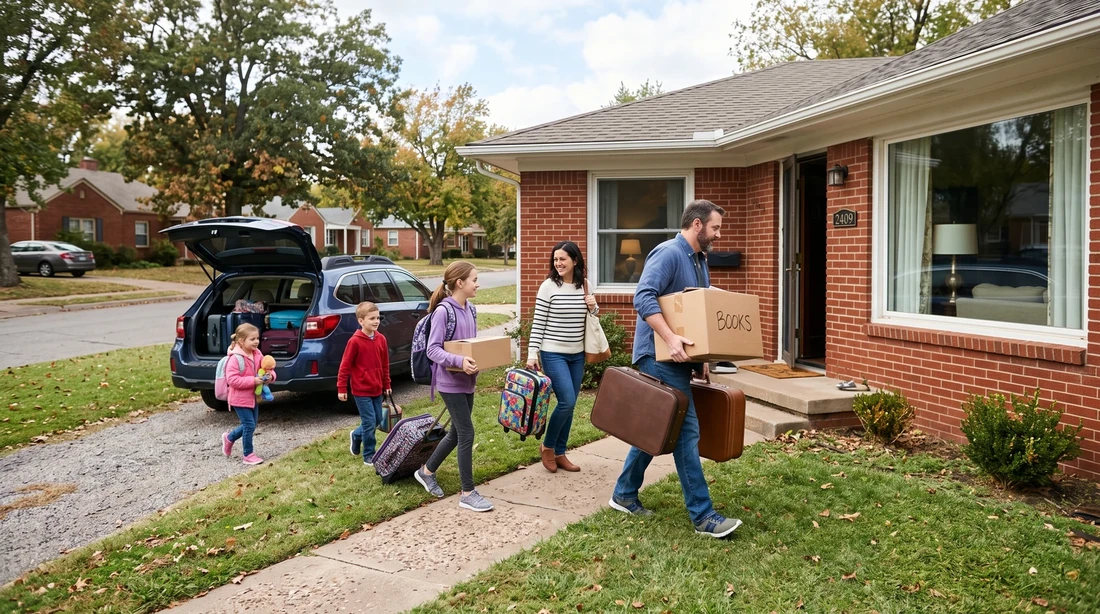
Yes, homeowners insurance usually pays for temporary housing through ALE, and it pays the difference above your normal costs up to a finite cap, commonly about 20% of dwelling coverage. Get that limit in writing, keep every receipt from the first night, and move to housing that stretches the budget early. On a multi-month OKC rebuild, a furnished home with a kitchen usually leaves room inside the cap where a hotel would not.