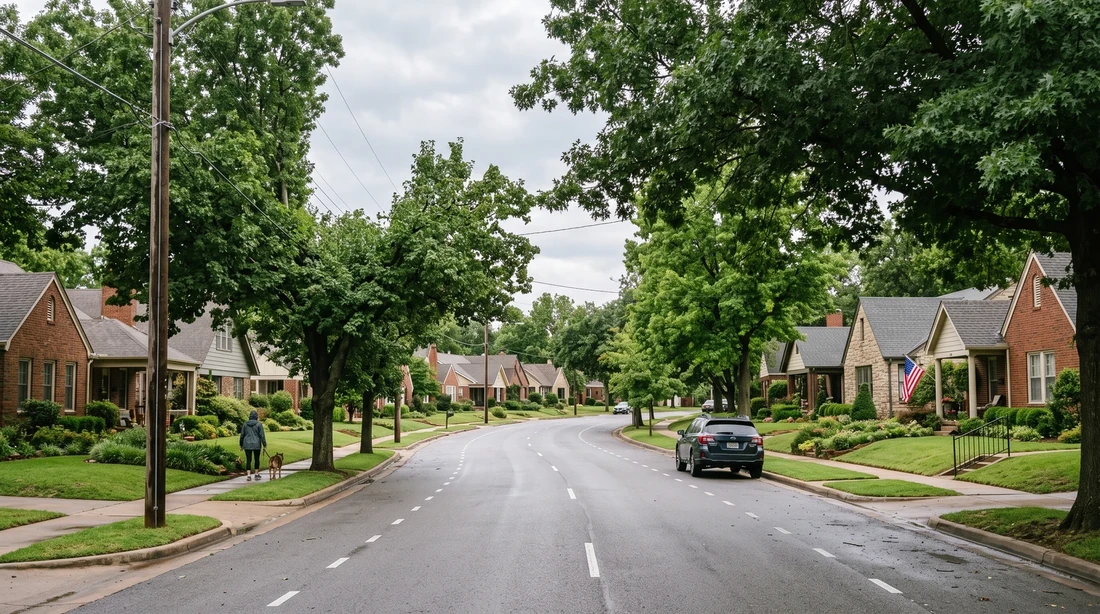
Oklahoma City's short-term rental rules changed on February 16, 2025, when a tightening the City Council approved in December 2024 took effect. Home shares can now be rented a maximum of 10 nights per month without a special-exception permit, may hold no more than 16 people, must provide one parking space per four guests, and face new density limits on each block.
Key Takeaways
- Oklahoma City's tightened home-sharing ordinance took effect February 16, 2025, after the City Council approved the changes in December 2024.
- Home shares may be rented a maximum of 10 nights per month without a special-exception permit, and hold no more than 16 people.
- Hosts must provide one on-property parking space per four guests, plus working smoke detectors, carbon monoxide detectors, and fire extinguishers.
- Special-exception short-term rentals cannot exceed 10% of homes on a block, and the Board of Adjustment can deny a permit or renewal for one year.
If you booked an Oklahoma City stay this year and the listing suddenly vanished, changed its minimum-night rules, or capped your group, this is why. Oklahoma City's home-sharing ordinance got a real overhaul, and casual hosts across the metro are still scrambling to comply. Here is the plain-English version of what changed, why, and what it means for you.
These rules are already in force. The ordinance took effect February 16, 2025, and applies to every home share in Oklahoma City right now — a listing operating outside these limits is operating outside the law, not in a grace period.

What Oklahoma City Changed About Short-Term Rental Rules
The City Council approved the updated home-sharing rules in December 2024, and they carry real teeth. This was not a light touch — it capped nights, capped people, added parking requirements, and gave the Board of Adjustment power to shut a permit down for a year.
Oklahoma City has licensed home shares since its original ordinance was adopted on January 15, 2019. The 2024 update did not create licensing from scratch; it layered stricter operating limits on top of the license that already existed. The headline number: 10 nights per month is the new default cap for a home share without a special-exception permit.
According to reporting from OKC Fox and lodging-tax firm Avalara, the core changes are these:
- Night cap: A home share may be rented a maximum of 10 nights per month unless the operator obtains a special-exception permit.
- Occupancy cap: No more than 16 people may occupy a home share at any time, regardless of how many bedrooms it has.
- Density limit: Special-exception short-term rentals may not exceed 10% of the homes on any given block.
- Parking minimum: Hosts must provide at least one on-property parking space for every four guests.
- Safety equipment: Working smoke detectors, carbon monoxide detectors, and fire extinguishers are required.
- Enforcement: The Board of Adjustment can deny an application or a renewal for one year when the ordinance is violated.
The city did not rush this. Assistant Planning Director Lisa Chronister said the planning department "hosted seven focus groups with a diverse group of stakeholders over the past 18 months" before the rules passed — meaning neighbors, hosts, and platforms all had a seat at the table.
For comparison, another U.S. city caps short-term rentals this way:
San Diego, California : Units for short-term rental are limited to 1% of the housing stock and licenses are required.
Wikipedia: Airbnb
Old Rule vs. New Rule: The Short-Term Rental Changes Side by Side
The clearest way to see the shift is to compare what a home share could do before February 16, 2025 with what it can do now.
| Rule area | Before (2019 ordinance) | After (effective Feb 16, 2025) |
|---|---|---|
| Nights per month | No monthly night cap | Max 10 nights/month without a special-exception permit |
| Occupancy | Not sharply capped | Max 16 people at any time, regardless of bedrooms |
| Block density | No density limit | Special-exception STRs capped at 10% of homes per block |
| Parking | No set minimum | 1 on-property space per 4 guests |
| Safety gear | General expectation | Smoke + CO detectors and fire extinguishers required |
| Penalty | License-based | Board of Adjustment can deny permit/renewal for one year |
How the Oklahoma City Rule Change Unfolded
This was a multi-year process, not a snap vote. Here is the timeline of the change from the original ordinance to today.
| Date | What happened |
|---|---|
| Jan 15, 2019 | OKC adopts its original home-sharing ordinance, creating the base license. |
| ~2023–2024 | Planning department holds seven stakeholder focus groups over 18 months. |
| December 2024 | City Council approves the updated, tighter home-sharing rules. |
| Feb 16, 2025 | The new night caps, occupancy limits, density and parking rules take effect. |
| 2026 | Rules fully in force; the Board of Adjustment reviews special-exception applications and renewals. |
For a closer look at how the city is following through with penalties and platform data, see our companion piece on the OKC Airbnb enforcement crackdown. And if your search is actually pointed at the suburb next door, the rules there differ — read the Norman short-term rental license guide.
Why the Special-Exception Permit Is the Pivot Point
The 10-night cap is the rule most casual hosts trip over, and the special-exception permit is the only way around it. A home share that wants to rent more than 10 nights in a month has to apply for that exception — and the Board of Adjustment does not rubber-stamp it.
When reviewing a special-exception application, the Board may evaluate restrictive covenants that prohibit home-sharing and assess the vehicular traffic impact on the surrounding neighborhood. In other words, a listing on a quiet block with an HOA covenant against rentals can be denied outright. That is a meaningful hurdle for a hobbyist host, and it is exactly the kind of compliance a full-time operator has already cleared.
A quick, hypothetical example of the night cap's math
Say a homeowner near the Paseo listed a spare house on a booking platform and, before the change, rented it roughly 20 nights a month. Under the new default cap, that drops to 10 nights per month — a 50% cut in available nights — unless they win a special-exception permit and clear the covenant and traffic review. This figure is illustrative, but it shows why so many part-time listings quietly went dark in 2025: the math stopped working, and the permit path is not guaranteed. Guests feel this as canceled reservations and shrinking availability.
What This Means If You're a Guest Booking an OKC Stay
For travelers, the practical risk is a booking that collapses under the new rules — and the safe fix is booking a professionally run, fully licensed operator. A casual listing pushing past its 10-night cap, over the 16-person limit, or short on parking is the kind of listing that can be shut down mid-season, taking your reservation with it.
BnB OKC operates 11 furnished homes across the OKC metro as a full-time, licensed operator — not a spare bedroom someone lists on weekends. Our homes hold a 9.5 out of 10 average across 1,580 verified guest reviews on Airbnb and Vrbo, two carry Airbnb's "Guest Favorite" badge, and they sleep 2 to 16+ with the parking, smoke and CO detectors, and fire extinguishers the ordinance now requires. Booking direct at published from-rates of $225–$425/night — with up to 35% off on stays of 4+ nights — sidesteps the whole compliance scramble.
Want a stay that won't get canceled by a compliance sweep? BnB OKC's homes are professionally run and licensed. Check availability for your dates and book direct.
What This Means If You're an OKC Homeowner or Host
If you host a home share in Oklahoma City, the 10-night default cap is now the single most important number in your calendar. Renting past it without a special-exception permit puts your license at risk, and the Board of Adjustment can deny your permit or renewal for a full year if you violate the ordinance.
The realistic options for a homeowner sit on a spectrum. Here is how they compare.
| Path | Who it fits | The catch |
|---|---|---|
| Stay under 10 nights/month | Occasional hosts, event weekends only | Caps your income; still need safety gear and parking |
| Apply for special-exception permit | Serious operators on eligible blocks | Subject to covenant + traffic review; 10%-per-block density cap |
| Shift to 30+ night furnished rental | Owners near hospitals, relocations, insurance housing | Different model; longer commitments, fewer turnovers |
| List with / lease to a pro operator | Owners who want compliance handled | Shared economics; operator must hold the license |
Homeowners weighing the density limit should note it applies to special-exception STRs — no more than 10% of the homes on a block can hold one. If your block is already at that ceiling, a new special-exception application may be denied on density alone.
Oklahoma City's move is part of a broader regional trend of tightening lodging rules — the Norman suburb recently pushed through a Norman hotel tax increase, and cities across the metro are recalibrating ahead of major 2026 travel demand tied to the Route 66 centennial in OKC and the city's record OKC tourism numbers.
Terms You'll Hear, Decoded
- Home share: Oklahoma City's term for a short-term rental — a dwelling rented to guests for short stays under the city ordinance.
- Special-exception permit: The approval a host needs to rent beyond the 10-night monthly cap, reviewed by the Board of Adjustment.
- Board of Adjustment: The city body that grants, denies, and renews special-exception permits — and can bar a violator for one year.
- Restrictive covenant: A private neighborhood or HOA rule that can prohibit home-sharing; the Board may weigh it when reviewing an application.
- Density limit: The rule that special-exception STRs can't exceed 10% of the homes on a single block.
When the New Rules Don't Change Your Plans
If you're a single traveler or a couple booking a one- or two-night stay from a licensed operator, none of this touches you — the compliance burden falls on hosts, and a full-time operator has already handled it. The rules only bite when a listing is casual, over its night cap, over 16 people, or short on parking.
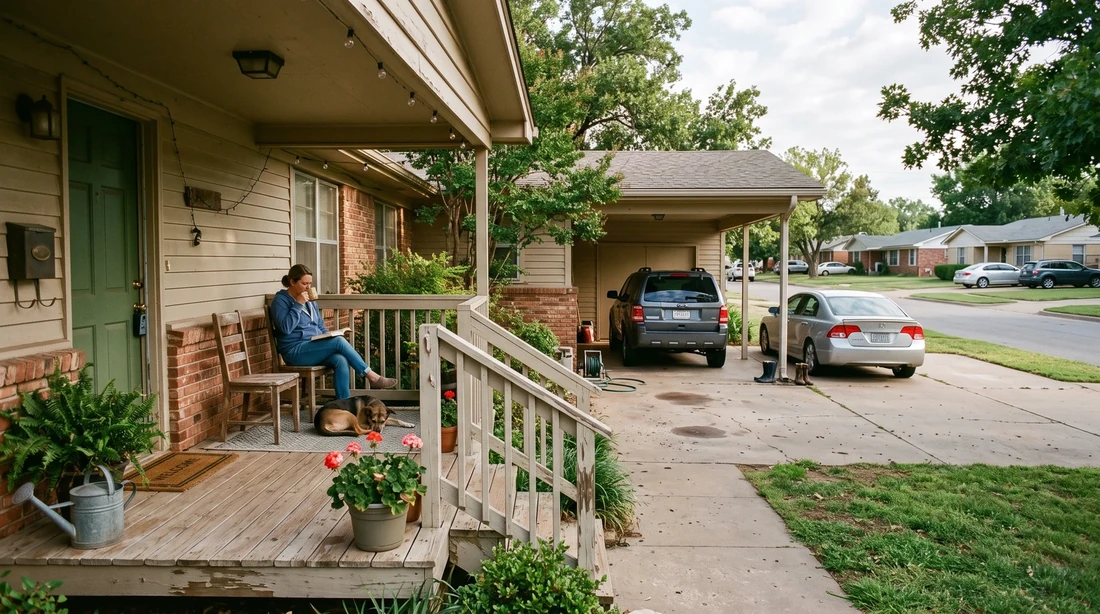
Where the change genuinely matters is for larger groups, longer stays, and anyone who cannot afford a canceled reservation: families displaced by a home loss, relocating workers, travel nurses on 13-week contracts, and event-weekend groups. In those cases, a licensed operator with the right parking, safety equipment, and occupancy headroom is the difference between a stay that holds and one that evaporates.
Your Next Steps
- Confirm your booking's status. If you have an OKC reservation, verify the host is operating within the 10-night, 16-person, and parking rules — or book a licensed operator so it's a non-issue.
- Compare your real options. For groups or 30+ night stays, price a furnished home against hotels and weigh the compliance risk of a casual listing.
- Book direct or call. Reserve a professionally run BnB OKC home at /book-direct/, or call or text (405) 870-2146 for same-day availability.
Sources and further reading: the OKC Fox report on the new home-sharing rules, the Avalara summary of the tightened ordinance, and the OKC Association of Realtors ordinance overview.