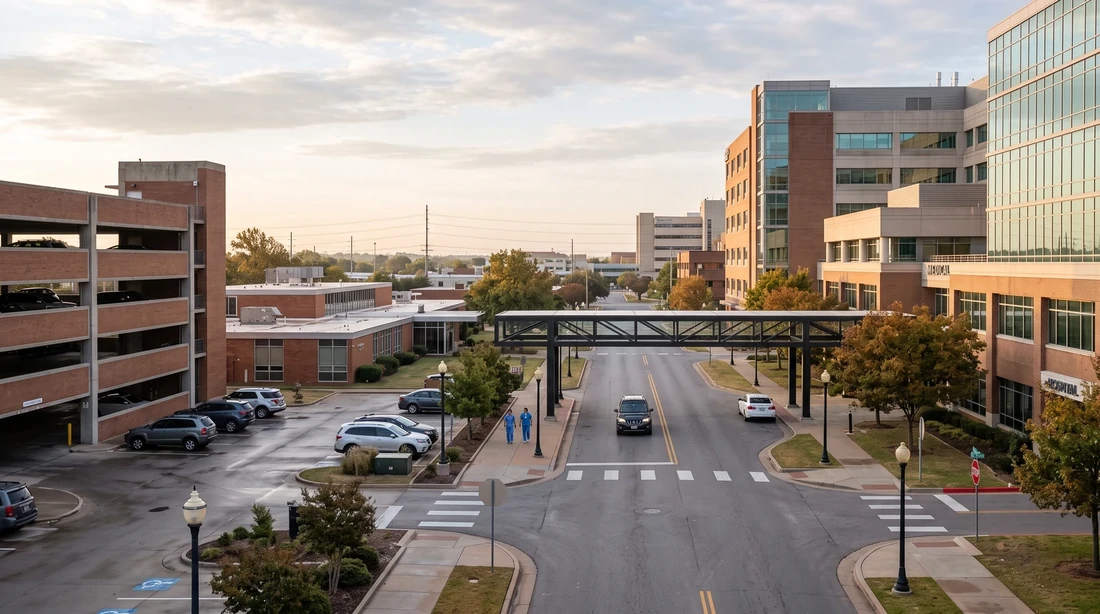
Oklahoma City has several free and low-cost lodging options for hospital patients and families: the Ronald McDonald House for families of hospitalized children, the Fisher House at the Oklahoma City VA for veterans' families, and American Cancer Society lodging help for cancer patients. Every program has eligibility rules and limited space — ask your hospital social worker first.
Key Takeaways
- Three charitable anchors cover most cases: Ronald McDonald House for pediatric families, Fisher House for veterans' families, American Cancer Society for cancer patients.
- Free lodging is need-based, capacity-limited and routed through hospital social work referral — not something you book online like a hotel.
- Families of adult stroke, cardiac, trauma, transplant or rehab patients usually have no charitable option and should plan a paid room immediately.
- Capitol Manor sits directly across from OU Medical Center and OU Children's Hospital, with a kitchen, laundry and monthly rates on 30+ night stays.
Free lodging near OKC hospitals exists, but it is need-based, capacity-limited, and routed through the hospital — not something you book online like a hotel. The three anchors below cover most cases, and each one is tied to a specific patient situation: a hospitalized child, a veteran in VA care, or an active cancer patient. If none of them fit your situation — and for a large share of adult patients, none will — the back half of this guide lists the cheapest paid options within a few minutes of the OU Medical, INTEGRIS, and Mercy campuses.
This is the resource an OKC hospital social worker would hand you: honest about who each charity serves, honest about where the waitlists are, honest about the families who fall through the gap, and clear about what to do when none of them fit your dates.
Charitable hospitality houses fill first during a medical crisis — call your hospital's social work office the same day admission is scheduled, because most programs place families by referral and by availability, not by reservation.

Why Free Hospital Lodging in OKC Works the Way It Does
Charitable lodging near OKC hospitals is almost always tied to a specific diagnosis, patient age, or veteran status — not open to any traveler. These are ministries and nonprofits with a handful of rooms each, not a hotel network. That structure is exactly why a social worker referral matters: they know which house has a bed tonight and which is full.
Three things shape every option. First, eligibility — a program built for families of sick children can't house a solo adult recovering from surgery. Second, capacity — most houses run a dozen-ish rooms and keep waitlists that lengthen during long NICU, oncology, and transplant seasons. Third, proximity — the whole point is to sleep close enough to walk back to the bedside at 2 a.m.
Because supply is thin, the smart move is to line up a paid backup on day one and cancel it if a charitable room opens. Holding a refundable reservation costs nothing and protects you from the night the house is full. It also matters more in spring: OKC's tornado season peaks April through June, and hotel and short-term inventory near the campuses tightens exactly when weather, graduations, and the late-May sports calendar collide downtown.
The Women's College World Series at Devon Park in late May and the OKC Memorial Marathon in late April both pull hundreds of rooms out of the downtown pool within a short drive of the OU and SSM Health campuses — if your medical stay lands in that window, book the backup earlier than you think you need to.
For context on the OU campus referenced above:
Headquartered in Oklahoma City , OU Health includes three hospitals—University of Oklahoma Medical Center, Oklahoma Children's Hospital OU Health, and OU Health Edmond Medical Center—as well as dozens of clinics and specialty centers across the state.
Wikipedia: OU Health
Every Free & Charitable Lodging Option Near OKC Hospitals
OKC's charitable lodging clusters around three programs, each serving a different patient. Here is who each one is for, and the honest watch-out on space.
Ronald McDonald House Charities of Oklahoma City (RMH-OKC)
The Ronald McDonald House serves families whose child is receiving medical care in the metro — typically at OU Children's Hospital and other pediatric units. Families stay close to their hospitalized child for a nominal suggested donation, waived when they can't pay. Referrals usually come through the hospital's social work or child-life team, and stays can run the length of the child's admission.
Watch-out: rooms go to families of pediatric patients only, and demand runs high during long NICU and oncology stays. Ask the pediatric social worker to submit your referral the day admission is set, and ask whether a partial-day-room program exists for the hours you can't get a bedroom. Many hospitality houses also provide free meals, laundry, and quiet family spaces on site, which quietly removes the takeout and coin-laundry costs that stack up over a long pediatric stay.
Fisher House at the Oklahoma City VA Medical Center
The Fisher House program provides free lodging for the families of veterans receiving care at VA medical centers. If your family member is a veteran being treated at the Oklahoma City VA, this is your first call. Placement is coordinated through the VA's Fisher House manager and social work staff, and there is no charge to eligible families.
Watch-out: eligibility is tied to VA care specifically. Families of patients at private OKC systems — OU, INTEGRIS, Mercy, SSM Health — won't qualify here and belong in the other programs or paid options. Fisher Houses typically sit on or beside the VA campus, so if you qualify you're within a short walk of the bedside, which is the whole point.
American Cancer Society lodging help
The American Cancer Society helps cancer patients who must travel for treatment with lodging assistance, often through hotel-partner nights arranged with your treatment center. Ask your oncology social worker or navigator to check current ACS lodging availability for your treatment dates, and to explain the Road To Recovery transportation help that often pairs with it.
Watch-out: ACS lodging is for active cancer treatment and is limited; nights are not unlimited, so confirm how many are covered before you rely on them. Long radiation or chemo courses can outlast the covered nights, so plan a paid bridge for the tail end. If you live outside driving range and are facing daily radiation for six or seven weeks, count the covered nights against the number of treatment days early — the gap is where families get surprised.
Church & community hospitality ministries
Several OKC congregations and community groups run small hospitality ministries or maintain guest apartments for out-of-town patient families. These aren't centrally listed — your hospital chaplain and social work office keep the current contacts and know which have openings this week.
Watch-out: capacity is tiny and informal, and many are single guest suites offered one family at a time. Treat these as a bonus, not a plan. If your faith community back home has a connection to an OKC congregation, that referral sometimes moves faster than a cold call.
If your patient is an adult without cancer — the coverage gap
The three big charities leave a real gap: there is usually no free lodging for the family of an adult stroke, cardiac, trauma, transplant, or rehab patient at a private OKC hospital. RMH is pediatric, Fisher House is VA-only, and ACS is cancer-specific. A daughter sitting with her father through weeks of cardiac recovery at INTEGRIS, or a spouse waiting out a rehab admission at OU, typically has no charitable room to apply for at all.
Say that plainly so you don't lose days chasing a program you can't use. For this large group, the answer is a paid room — a hotel for a short stay, an extended-stay or furnished home once it stretches past a week. The paid section below is built for exactly this family.
| Program | Who it's for | What to know |
|---|---|---|
| Ronald McDonald House (RMH-OKC) | Families of a hospitalized child in the metro | Referral via pediatric social work; suggested donation or free; high demand |
| Fisher House (OKC VA) | Families of veterans in VA care | Free; coordinated by VA Fisher House manager; VA patients only |
| American Cancer Society | Active cancer-treatment patients traveling for care | Hotel-partner nights via oncology navigator; limited nights |
| Church/community ministries | Varies by congregation | Tiny, informal capacity; ask hospital chaplain |
| Family of an adult non-cancer patient | Stroke, cardiac, trauma, transplant, rehab families | Usually no charitable option; plan a paid room from day one |
Beyond a Bed: Transportation, Meals, and Financial Help
The same social worker who handles lodging usually controls a second layer of help most families never ask about — transportation, meals, and hardship funds. A free bed solves half the problem; the drive, the parking, and the meals are the other half, and they're often where a stretched family actually runs out of money.
Ask your navigator or social worker about three things by name. First, transportation: the American Cancer Society's Road To Recovery program arranges rides to treatment for cancer patients, and some hospital systems keep gas-card or ride-voucher funds for hardship cases. Second, meals: hospitality houses commonly feed guest families on site, and many hospitals run patient-family meal programs or discounted cafeteria passes. Third, hardship or patient-assistance funds: hospital foundations sometimes cover a few nights of emergency lodging while a longer plan comes together — but only if you ask, because these are rarely advertised.
| Need | What to ask about | Who to ask |
|---|---|---|
| Rides to treatment | ACS Road To Recovery; gas cards; ride vouchers | Oncology navigator / social worker |
| Meals during a long stay | Hospitality-house meals; patient-family meal program | Social worker / hospitality house |
| Emergency lodging gap | Hospital foundation or hardship fund for a few nights | Social work office / patient advocate |
| Parking relief | Weekly or validated parking passes | Patient access / valet desk |
What It Costs — And What Happens While You Wait for a Room
Every night a free room isn't available, a family typically spends on a hotel or drives home and back — and both add up fast during a multi-week stay. A crisis rarely comes with a firm end date, so the cost stacks in a predictable sequence.
- Night 1–2: You take whatever hotel is open near the campus at walk-up rates, often the priciest nights of the whole stay, plus hospital-garage parking that many downtown lots charge by the day.
- Week 1: The charitable waitlist hasn't cleared. Hotel nights keep burning, and hospital-district parking and takeout food — there's no kitchen — pile on top of the room rate.
- Weeks 2–4: If the medical stay extends, nightly hotel math passes what a furnished home would have cost for the month — the crossover point where extended-stay and monthly pricing beat hotels.
- Month 2+: For long NICU, oncology, transplant, or rehab stays, families without a free room and without a monthly rate are paying the most inefficient way possible — full nightly rate, paid parking, and every meal out.
The lesson isn't panic — it's to hold a refundable paid option from day one so you never sleep at walk-up rates, then release it the moment a hospitality house opens.
Staying weeks near OU Medical and the free houses are full? Capitol Manor sits directly across from OU Medical Center and OU Children's Hospital, with a kitchen, laundry, and monthly rates on 30+ night stays. Check dates or ask about a hold you can cancel if a charitable room opens.
See Capitol Manor across from OU Medical · Call or text (405) 870-2146
Paid Lodging Near OKC Hospitals If You Don't Qualify
If no charitable program fits, the cheapest efficient option for a stay over about a week is a furnished home with a kitchen and laundry — not repeated hotel nights. Which campus you're tied to decides how close you can sleep, and OKC's hospitals sit in very different parts of the metro.
OU Medical Center and OU Children's Hospital sit on the near-northeast side by the Capitol and downtown — Capitol Manor is across the street. INTEGRIS Baptist is up in northwest OKC off the NW Expressway corridor, close to Lake Hefner and The Village.
Mercy is farther north near Memorial Road at the top edge of the metro, so a home near Lake Hefner puts you between the two northwest systems without committing to either. SSM Health St. Anthony anchors midtown, a short hop from the Paseo Arts District. The VA Medical Center shares the OU health campus footprint. Here's the drive-time reality across the main systems.
| Hospital / campus | Closest BnB OKC home | Typical drive time |
|---|---|---|
| OU Medical Center / OU Children's | Capitol Manor (directly across) | Walkable to a few minutes |
| INTEGRIS Baptist Medical Center (NW) | Homes near Lake Hefner / The Village | ~10–15 min |
| Mercy Hospital (far NW) | Homes near Lake Hefner | ~10–20 min |
| OKC VA Medical Center | Capitol Manor (near OU campus) | ~5–10 min |
| SSM Health St. Anthony (midtown) | Capitol Manor / Paseo-area homes | ~5–10 min |
One drive-time caveat worth planning around: OKC rush hour on the Broadway Extension and I-44 near the northwest campuses can double a 10-minute trip between roughly 7–9 a.m. and 4–6 p.m. If the patient's care team rounds early or you're doing shift-length bedside sits, choose the home that keeps you off those corridors at those hours rather than the one that's a mile closer on a map.
For the hotel-first crowd, we keep honest campus guides: hotels near OU Medical Center, hotels near INTEGRIS Baptist Medical Center, and where to stay near OU Children's Hospital. Use those for one- and two-night trips; use this section when the stay stretches into weeks and you want a look at our extended-stay homes.
BnB OKC runs 11 furnished homes across the metro, rated 9.5 out of 10 across 1,580 verified guest reviews on Airbnb and Vrbo, with published from-rates of $225–$425/night, up to 35% direct-booking savings on 4+ night stays, and monthly rates on 30+ night stays. Two homes hold Airbnb's Guest Favorite badge. Several are dog-friendly — see the pet-friendly rentals in OKC — which matters when a family can't leave a pet behind for a long hospital stay.
Which paid option fits your situation
| Option | Who it fits | Watch-out |
|---|---|---|
| Standard hotel | 1–2 nights; solo visitor; points loyalty | No kitchen; nightly rate plus daily parking stack fast past a week |
| Extended-stay hotel | 1–3 weeks; needs a kitchenette | Small space; parking and pet fees add up |
| Furnished home | Families, groups, 30+ night stays, pets, caregiver rotations | Book early near a busy campus; check drive time |
| Stay with family | Anyone with a local relative | Distance from the bedside; strained space over weeks |
Worked Example: A Travel Nurse's 13-Week OU Medical Stipend
This example is hypothetical, but the math is real. Say you're a travel nurse on a 13-week OU Medical contract with a $2,400/month housing stipend. You don't qualify for any charitable house — those serve patients and their families, not staff — so this is all paid.
A hotel near the campus at roughly $130/night runs about $3,900 a month — well over your stipend, before parking and eating out. An extended-stay hotel at, say, $95/night lands near $2,850/month — still over budget, and tight on space for a full contract.
A furnished home on a monthly rate typically comes in at or under your $2,400 with a real kitchen and laundry (which cuts the takeout line that quietly eats travel-nurse budgets). If your all-in housing lands around $2,200/month, you're pocketing roughly $200 a month of the stipend instead of overspending it — about $600 across the contract.
| Option | Est. monthly cost | vs. $2,400 stipend |
|---|---|---|
| Hotel (~$130/night) | ~$3,900 | ~$1,500 over |
| Extended-stay (~$95/night) | ~$2,850 | ~$450 over |
| Furnished home (monthly rate) | ~$2,200 | ~$200 under |
Nurses working the OU campus can dig deeper in our travel nurse housing in Oklahoma City guide and compare booking platforms in Furnished Finder vs Airbnb for travel nurses. If neighborhood is the question, see the best neighborhoods for travel nurses in Oklahoma City.
Worked example: a family sitting with an adult patient at INTEGRIS
Here's the other common case, also hypothetical. Say your father is recovering from cardiac surgery at INTEGRIS Baptist and you and your mother need to stay near the northwest campus for three weeks (21 nights). No charity covers you — he's an adult, non-cancer, private hospital.
A hotel room at about $120/night is roughly $2,520 for 21 nights. Add hospital-district parking at about $15/day (~$315) and eating out with no kitchen at, say, $40/day (~$840), and you're near $3,675 for three weeks.
A furnished home near Lake Hefner from around $185/night, with up to 35% direct savings on the 4+ night stay, lands near $120/night effective — about $2,520 for the same 21 nights — but parking is free at the house and a kitchen turns that $840 of takeout into roughly $300 of groceries. All-in, you're around $2,820 — saving about $850 over three weeks, with room for a sibling to rotate in without a second hotel room.
Worked example: an oncology family bridging the ACS covered nights
Third common case, still hypothetical, because ACS lodging often runs out mid-treatment. Say your spouse starts a 6-week (about 42-day) daily radiation course at an OKC treatment center and the American Cancer Society covers, for example, 21 hotel-partner nights. That leaves a 21-night gap on the back half — and you're two hours from home, so daily driving isn't realistic.
Paper over that gap with walk-up hotel nights at roughly $125/night and it's about $2,625, plus meals out with no kitchen. Bridge it instead with a furnished home from around $165/night, and because the 30-night monthly threshold is in reach if you book the whole 42 days as one stay, the effective nightly rate drops well below the ACS-partner hotel — often landing the full six weeks near $4,500–$5,000 all-in with a kitchen for the treatment-fatigue days when takeout is the last thing you want.
The move: ask exactly how many ACS nights you get, then book one continuous furnished stay for the whole course rather than stitching together nightly rooms as the covered nights expire.
How to Line up Lodging Near an OKC Hospital, Step by Step
- Call the hospital social work office the day admission is scheduled and ask which charitable houses fit your situation.
- Ask for a same-day referral to RMH, Fisher House, or ACS lodging based on the patient's age, diagnosis, or veteran status.
- Hold a refundable paid room near the campus so you never sleep at walk-up rates while you wait.
- Confirm the length of stay — past about a week, switch from nightly hotel pricing to an extended-stay or furnished monthly rate.
- Release the backup the moment a charitable room opens, and keep the social worker's number for extensions.
When You Don't Need a Furnished Home — And When It Changes the Outcome
For a single overnight or a two-night procedure trip, a hotel near the hospital is the right call — cheaper to book, easy to cancel, and loyalty points count. A solo visitor who just needs a bed and a shower doesn't need a full home, and if a charitable house has a bed for you, take it first — these paid options exist to fill the gap, not to compete with a free room. If your budget for a two-night stay is under about $300 total and you're alone, a standard hotel wins on simplicity.
A furnished home changes the outcome when the stay stretches past a week, when a family needs to cook and do laundry, when there are kids or a pet who can't be left behind, or when the group is large enough — grandparents, siblings, a caregiver rotation — that two hotel rooms cost more than one house.
For long NICU, oncology, transplant, and rehab stays, and for a 13-week nurse contract, the kitchen, free parking, and monthly rate are what keep the budget intact. School-age kids traveling with a displaced family also do better with bedrooms and a table for homework than with a single hotel room.
Two situations tip the decision hard toward a home. A caregiver rotation — where siblings or parents swap the bedside shift every few days — needs beds for people who overlap, and a home absorbs the incoming relative for free where a hotel bills a second room.
And a discharge to a lower level of care — when the patient leaves the hospital but still needs weeks of nearby outpatient rehab, dialysis, or wound care before going home — turns a short visit into a months-long stay overnight, which is precisely when the monthly rate and a real kitchen stop being a luxury and start being the only affordable path.
Terms You'll Hear, Decoded
- Hospital social worker: the staff member who coordinates housing referrals, financial aid, and discharge planning — your first call for free lodging.
- Hospitality house: a nonprofit guest house near a hospital (like RMH or Fisher House) that lodges patient families for free or a nominal donation, often with meals and laundry included.
- Nominal donation: the small suggested contribution some hospitality houses request per night — routinely waived for families who can't pay, so a stated donation is never a barrier to a room.
- Referral: the internal request a social worker or navigator submits to place your family in a charitable house; most programs won't take a direct application without it.
- Patient navigator: an oncology-team coordinator who lines up ACS lodging, transportation, and treatment logistics — the cancer-patient equivalent of the general social worker.
- Road To Recovery: the American Cancer Society program that arranges volunteer rides to and from treatment for eligible cancer patients.
- Discharge planning: the process the care team runs to arrange where a patient goes after the hospital — worth asking about early, because it often signals how long you'll need lodging.
- Housing stipend: the tax-advantaged monthly housing allowance in a travel-nurse contract; you keep the difference if you spend less than the stipend.
- Waitlist: the queue for a charitable room when the house is full — placement is by need and availability, not first-come reservation.
- Monthly rate: a discounted rate furnished homes offer on 30+ night stays, usually far below the equivalent nightly total.
For program details straight from the source, the U.S. Department of Veterans Affairs explains Fisher House eligibility, and travel nurses can check federal GSA per diem rates that some contracts reference. This guide is general information, not medical, insurance, or financial advice; eligibility for every charitable program is decided by that program and your hospital's care team, and travel nurses should consult a tax professional about stipends.
Your Next Steps
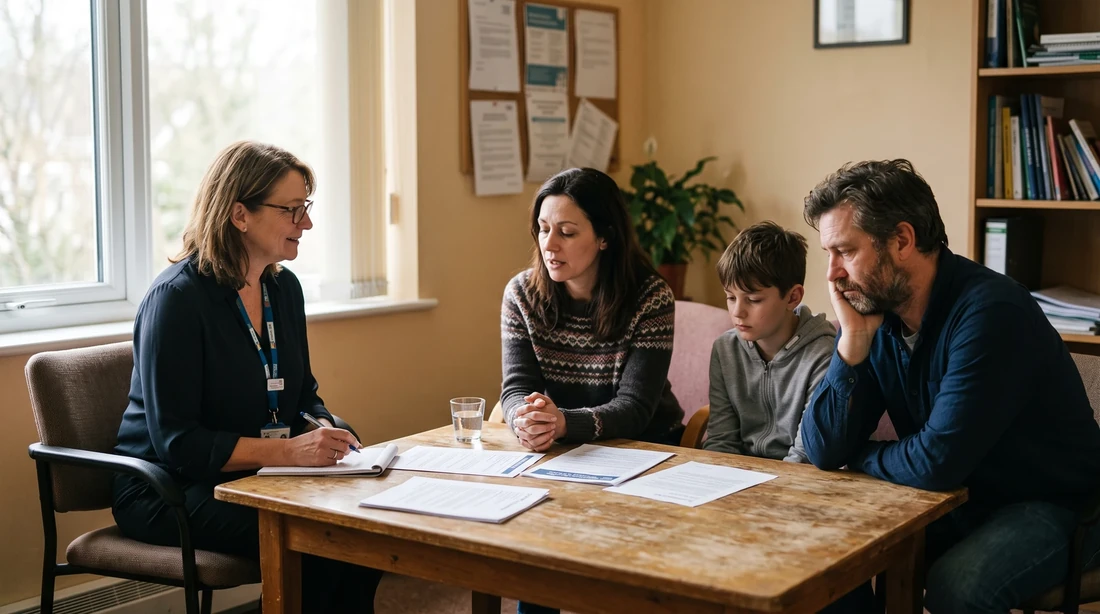
- Confirm eligibility: call the hospital social work office today and ask which charitable house fits the patient's age, diagnosis, or veteran status — and ask about transportation, meals, and hardship funds in the same call.
- Compare your backup: for any stay over a week, price a furnished monthly rate against hotel nights plus parking and food so you're not overpaying while you wait.
- Lock in space: check dates for Capitol Manor across from OU Medical or call/text (405) 870-2146 — ask about a hold you can release if a free room opens.