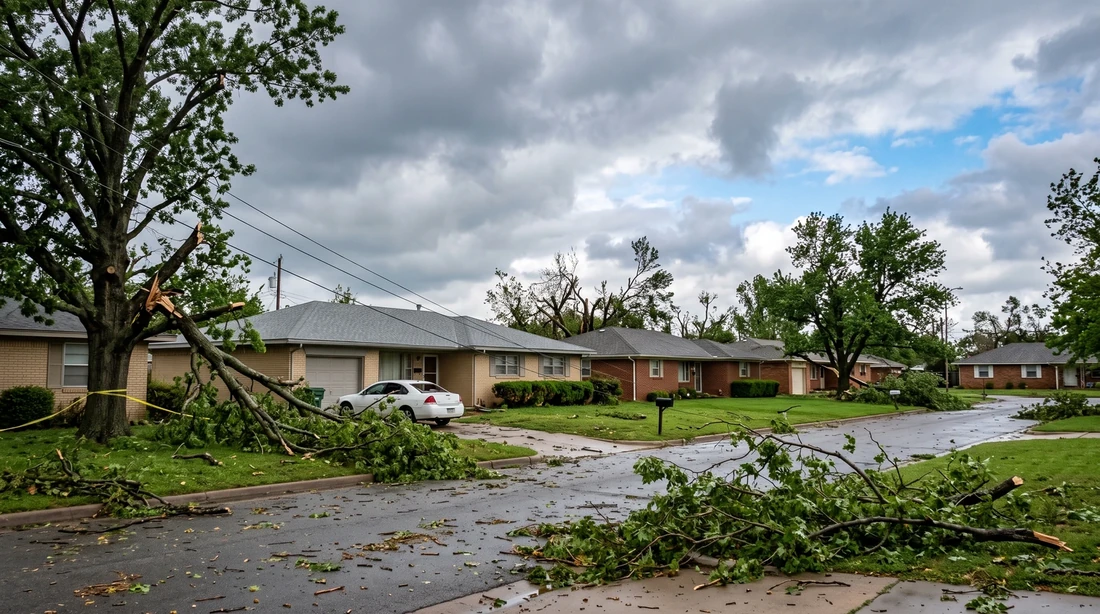
Home insurance rates rise a fifth straight year in 2026 — Insurify projects the average U.S. premium up 4% to about $3,057, and Oklahoma was among the hardest-hit states with a 24% jump in 2025. Inside that pricier policy is Additional Living Expenses (ALE) coverage that pays for a furnished rental when a covered loss makes your home unlivable.
Key Takeaways
- Insurify projects the average U.S. home insurance premium will rise 4% in 2026 to about $3,057, the fifth straight annual increase.
- Oklahoma homeowners saw one of the sharpest 2025 increases at 24%, driven by tornado, hail, and wind losses.
- Additional Living Expenses coverage, also called loss of use, pays for temporary housing when a covered loss makes your home unlivable.
- ALE typically pays the difference between your normal living costs and your higher displacement costs, not your entire rental bill.
This guide covers what is driving the 2026 home insurance increase, what the ALE coverage inside your pricier policy does, what a hotel-by-default displacement costs, and how OKC families use ALE to rent a furnished home instead of living for months in a hotel.
If you own a home in the OKC metro, you have felt it. Your renewal notice climbed again, and the storms that drove the increase are the same tornadoes, hail, and straight-line winds that displace Oklahoma families every spring. Almost nobody reading about home insurance rates in 2026 knows that the same policy raising their bill also funds temporary housing after a covered loss. That provision is called ALE. It is the part that matters on the worst day you will have as a homeowner.
Oklahoma's tornado and hail season peaks April through June. If your home is damaged and made unlivable, most policies want ALE receipts and documentation started right away. The longer you wait to secure housing, the more hotel nights burn budget a furnished home would stretch.

Why Are Home Insurance Rates up Again In 2026?
The 2026 increase is the fifth in a row, and the cause is largely weather losses in states like Oklahoma. Insurify projects the average annual U.S. home insurance premium will rise 4% in 2026 to about $3,057. That follows a 12% jump in 2025, leaving premiums up 46% since 2021 (roughly three times the pace of inflation).
The pressure is uneven. Severe convective storms (tornadoes, hail, and destructive winds) generated insured losses exceeding $42 billion for three consecutive years, well above the 10-year average. Those are the losses concentrated across Tornado Alley, and Oklahoma sits at its center.
Oklahoma homeowners saw one of the sharpest 2025 increases at 24%. Only a handful of states ran hotter: Minnesota rose 34%, Colorado 33%, and Nebraska 25%, all storm- and hail-exposed markets. Florida remains the most expensive state overall, with average premiums approaching $8,500, driven by hurricane risk.
The trend is nearly universal. Between 2021 and 2024, premiums rose in 95% of U.S. ZIP codes, with an average increase of $648 per homeowner. And a Pew Research report from May 6, 2026 found that 71% of U.S. homeowners say their home insurance costs have gone up.
| Year | What happened |
|---|---|
| 2021 | Baseline year — premiums have climbed 46% since here |
| 2021–2024 | Rates rose in 95% of ZIP codes; average +$648 per homeowner |
| 2025 | U.S. average +12%; Oklahoma +24%, Minnesota +34%, Colorado +33%, Nebraska +25% |
| 2026 | Projected +4% to about $3,057 average — fifth straight annual increase |
What Does the ALE Coverage Inside Your Policy Pay For?
ALE, Additional Living Expenses, also called loss-of-use coverage, is the standard homeowners-policy provision that pays for temporary housing when a covered loss makes your home unlivable. It is already in the policy whose premium just went up. You are paying for it whether you use it or not.
The word "additional" is the key. ALE typically pays the difference between your normal living costs and your higher displacement costs, never your entire hotel or rental bill on top of a mortgage you are still paying. That means rent or lodging above what you would normally spend, plus reasonable extras like restaurant meals above your grocery baseline, laundry, pet boarding, and extra mileage.
Coverage limits are commonly set as a percentage of your dwelling or personal-property coverage, and many policies cap ALE by time as well. Receipts substantiate the claim, so keeping them from day one matters. For a full walkthrough of how displaced Oklahoma families use this coverage, see our insurance housing hub.
One rule governs everything: your carrier and adjuster make all coverage decisions. This article explains how the mechanics generally work. It does not promise what your specific policy will pay.
What Does It Cost If You Default to a Hotel?
A furnished home in OKC typically stretches ALE dollars further than two hotel rooms over a multi-month displacement. Storm and fire repairs rarely wrap up in a week. Roof, structural, and interior work after tornado or hail damage often runs weeks to months, and that is the window your ALE has to cover.
- Week 1: You check into a hotel because it is fast. Two rooms for a family, restaurant meals three times a day, no kitchen, no laundry. The nightly rate feels manageable, for now.
- Weeks 2 to 4: Repairs are scoped but not started. Hotel nights keep accruing against your ALE limit. Every fast-food dinner is a receipt. The kids have nowhere to do homework.
- Months 2 to 3: Contractors hit supply delays. Your ALE budget, capped by percentage or by time, is being spent at the highest possible daily rate, and you may hit the limit before your home is done.
- The limit: If ALE runs out before repairs finish, the remaining housing cost can fall to you. Spending the budget efficiently from day one is what keeps that from happening.
Displaced by an Oklahoma storm or fire? We work with adjusters and TPAs on family-sized furnished homes across the OKC metro — and can talk direct billing where your carrier authorizes it. Same-day availability checks.
How Do the Same ALE Dollars Go Further in a Furnished Home?
The math changes when your displacement crosses roughly the one-month mark. A hotel is built for nights. A furnished home is built for months. BnB OKC operates 11 furnished homes across the metro, with published from-rates of $225 to $425/night and monthly rates on 30+ night stays, plus a kitchen and laundry that quietly cut the meal-and-services side of your ALE claim.
| Factor | Two hotel rooms | Furnished OKC home |
|---|---|---|
| Family space | Two rooms, no shared living area | Whole home; some sleep 2 to 16+ |
| Kitchen | None — every meal a restaurant receipt | Full kitchen; groceries near your normal baseline |
| Laundry | Hotel service or laundromat | In-home laundry |
| Pets | Fees or not allowed | Several homes are dog-friendly |
| Billing | Nightly; adds up fast against ALE cap | Monthly rate on 30+ nights; direct bill where carrier authorizes |
| Best for | 1–3 night stays, single traveler | Multi-week to multi-month displacement, families |
A Hypothetical OKC Family, With the Math Shown
Here is a clearly hypothetical example to show how ALE spending plays out. Say an April hailstorm rips through northwest OKC and a family of five is displaced for four months while the roof and water-damaged interior are repaired.
Hotel path: Two rooms at a hypothetical $185/night is $370/night, about $11,100 per month before meals. With no kitchen, add roughly $1,800/month in restaurant meals above their normal grocery spend. Over four months that is about ($11,100 + $1,800) × 4 = $51,600 in displacement cost, and note ALE only reimburses the amount above their normal living costs.
You would, of course, subtract their normal monthly housing and food baseline from what ALE reimburses. The total dollars being spent are still what push a policy toward its cap.
These figures are hypothetical; your rate, your policy limit, and your carrier's decisions determine the real numbers. But the pattern is consistent. A furnished home with a kitchen and monthly pricing typically stretches an ALE budget further across a multi-month claim, which matters most when repairs run long.
How to Use ALE Coverage After OKC Storm or Fire Damage, Step by Step
- Call your carrier and open the claim immediately. Ask specifically whether your policy includes ALE / loss-of-use and what the limit is.
- Ask about the ALE cap and any time limit. Get the percentage or dollar figure and how long coverage lasts in writing.
- Document everything from day one. Keep every receipt (lodging, meals, laundry, pet boarding, extra mileage) because receipts substantiate the claim.
- Ask whether the carrier or TPA can direct-bill your housing. Direct billing happens only with carrier or TPA authorization, so confirm before you assume it.
- Choose housing that fits the repair timeline. For multi-week or multi-month displacement, a furnished home with a kitchen usually stretches ALE further than a hotel.
- Keep your adjuster updated on costs. Share receipts and lodging arrangements so reimbursement is not delayed at the back end.
What to Check Before You Book Anything
- You never found the ALE line. Check your policy for the loss-of-use provision and its limit, percentage and any time cap, before you need it.
- Hotel nights with no end date. Nightly billing compounds against a capped budget when repairs run past a month.
- Missing receipts. Lodging, meals, laundry, pet boarding, mileage: without receipts there is nothing to substantiate.
- Assuming direct billing. It happens only when the carrier or TPA authorizes it.
- Expecting ALE to cover the whole bill. It pays the difference above your normal living costs while your mortgage continues.
When You Don't Need a Furnished Home
Sometimes a hotel is the right call. If your home is livable and you only need a night or two during minor repairs, or you are a single person who values hotel points and a front desk, a hotel is simpler. Short, one-to-three-night gaps rarely justify a monthly rental.
A furnished home changes the outcome when displacement runs long or the household is complex: families who need a kitchen and separate bedrooms, pet owners, and any claim expected to last 30-plus nights. That is when the nightly hotel rate compounds against your ALE cap and a monthly home rate protects the budget. Our extended stays and pet-friendly rentals pages show what is available.
If you are comparing options during a busy OKC event window, say a Route 66 centennial weekend, availability tightens for everyone, so checking dates early matters even for insurance stays.
Terms You'll Hear, Decoded
- ALE (Additional Living Expenses): The policy provision that pays your extra costs to live elsewhere when a covered loss makes your home unlivable.
- Loss of use: Another name for the same coverage, the section of your homeowners policy covering displacement.
- Direct billing: When the carrier or TPA pays the housing provider directly instead of reimbursing you. Only with authorization.
- ALE limit: The cap on this coverage, commonly a percentage of your dwelling or personal-property coverage, sometimes with a time limit too.
- TPA (third-party administrator): A company like Alacrity Solutions that manages claims and placements on a carrier's behalf.
This guide is general information, not insurance or legal advice; your carrier makes all coverage decisions.
The Bottom Line
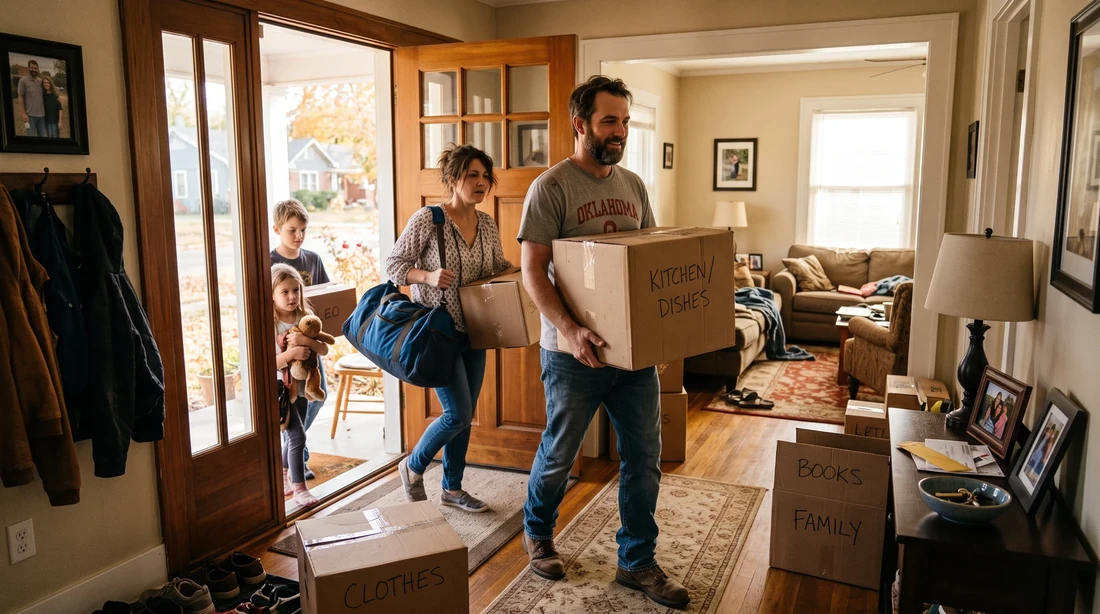
Rates are up for a fifth straight year, Oklahoma took one of the sharpest increases, and the policy behind that bill already includes ALE coverage for a furnished rental after a covered loss. Find that line now, note the limit, and compare your likely repair timeline against hotel-per-night and furnished-monthly costs so the budget gets spent well. When you need housing that fits, see insurance housing options or call or text (405) 870-2146 for same-day availability across the OKC metro.