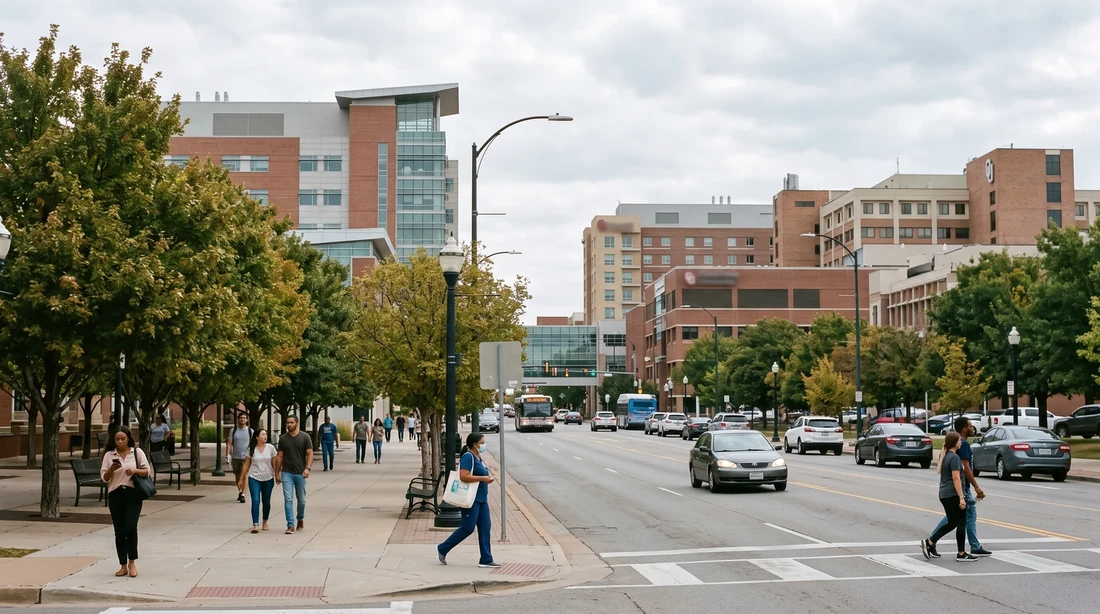
The average vacation rental length of stay grew to 4.42 nights in 2025, up nearly 10% from 4.0 nights in 2024, according to the 2026 Short-Term Rental Outlook Report from PriceLabs and Rentals United. At the same time, the average booking window shortened to 22.3 days. Travelers are booking closer to arrival — and settling in longer.
Key Takeaways
- The average vacation rental stay grew to 4.42 nights in 2025, up from 4.0 nights in 2024, per PriceLabs and Rentals United.
- Booking windows shortened 3% to 22.3 days, so travelers are committing closer to their arrival date.
- U.S. occupancy slipped from 53% in 2024 to 51% in 2025 as new supply entered the market faster than demand.
- Dynamic-pricing listings hit 57% occupancy versus 44% for static-rate listings, so homes that adjust rates stayed fuller.
If you've noticed guests staying a week instead of a weekend, the data now backs it up. Across the U.S. market in 2025, people stopped treating short-term rentals as a two-night pit stop and started using them the way Oklahoma City already does: as a real place to live for a stretch. For a metro shaped by traveling nurses, military assignments, relocations, and insurance-displaced families, that national trend is just Tuesday.
Here's what the 2026 numbers actually say, why OKC has been a longer-stay market all along, and how to book a stay that's built for weeks — not just nights.
Booking windows shrank 3% to 22.3 days in 2025 — travelers now decide roughly three weeks out. For longer stays, that shorter runway means the best full-kitchen, laundry-equipped homes get claimed fast; the earlier you lock dates, the more you save.

What the 2026 Data Actually Shows
The headline number is a jump most operators can feel: the average U.S. vacation rental stay climbed from 4.0 nights in 2024 to 4.42 nights in 2025 — nearly 10% longer, per the 2026 Short-Term Rental Outlook Report from PriceLabs and Rentals United.
A separate dataset from Beyond Pricing put the 2025 average even higher, at 5.7 nights. The two figures use different property samples, so the exact number varies — but both point the same direction: stays are stretching, not shrinking.
Three other findings from the report round out the picture:
- Booking windows shortened 3% to 22.3 days — travelers are committing closer to their arrival date.
- U.S. occupancy slipped from 53% in 2024 to 51% in 2025, as new supply kept entering the market faster than demand.
- Dynamic-pricing listings hit 57% occupancy versus 44% for static-rate listings — homes that adjust rates to demand stayed fuller.
Put together, the story is a market where guests want fewer, longer, later-booked stays — and where the homes set up for that win the calendar.
| Metric | 2024 | 2025 |
|---|---|---|
| Average length of stay (PriceLabs / Rentals United) | 4.0 nights | 4.42 nights (+~10%) |
| Average length of stay (Beyond Pricing dataset) | — | 5.7 nights |
| Average booking window | ~23 days | 22.3 days (−3%) |
| U.S. occupancy | 53% | 51% |
| Occupancy — dynamic pricing vs. static | — | 57% vs. 44% |
Longer stays matter beyond the rental itself:
Vacation rentals at times allow for longer stays as opposed to hotels, and longer stays increase visitor spending which provides more employment opportunities in local communities.
— Wikipedia: Vacation rental
Why Stays Are Getting Longer
Longer stays reflect how people travel now: fewer trips, but bigger ones. Remote and hybrid work lets travelers extend a visit into a work-from-here week, and rising travel costs push people to consolidate a couple of short trips into one longer stay that spreads flights and fixed costs across more nights.
The shorter booking window fits the same behavior. When a stay is going to last a week or more, travelers wait for schedules, contracts, or approvals to firm up before they commit — so they book closer to arrival than the old plan-months-ahead weekend crowd.
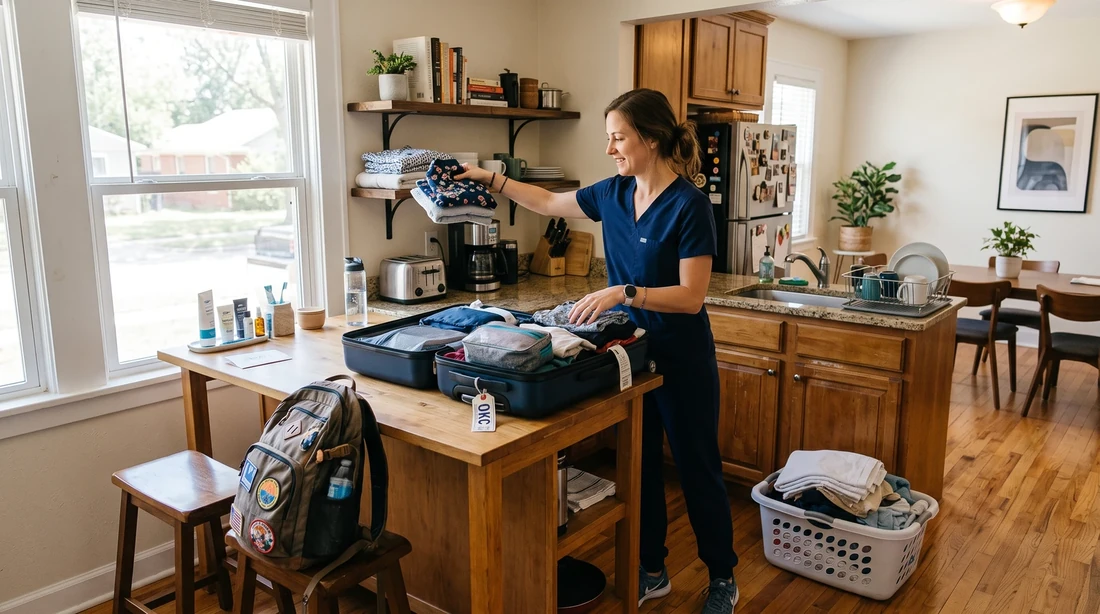
That's exactly why full kitchens, in-unit laundry, and monthly pricing stopped being nice-to-haves. A four-night guest can eat out. A three-week guest needs to cook, do laundry, and feel at home — and they'll choose the home that lets them.
Why OKC Has Always Been a Longer-Stay Market
Oklahoma City runs on longer stays because of who comes here — traveling nurses on 13-week contracts, Tinker Air Force Base assignments, corporate relocations, and insurance-displaced families rebuilding after a fire or storm rarely need just a weekend. They need weeks or months.
OKC's calendar reinforces it. Medical rotations at the downtown hospital campus, project-based work, and construction and defense contracts all run in multi-week blocks. Even leisure travel here — a Route 66 road trip, a Women's College World Series week at Devon Park — tends to anchor a family in one home rather than hopping hotels.
Layer in tornado season from April through June, when storm damage displaces households onto insurance-paid temporary housing, and OKC's average stay naturally sits above the national figure. The city was living the 2025 trend before it was a trend.
| Who's staying longer | Typical stay | What matters most |
|---|---|---|
| Traveling nurse / allied health | 13 weeks | Monthly rate, kitchen, laundry, quiet for day sleep |
| Tinker AFB / defense assignment | 4–12+ weeks | Flexible dates, extension option, workspace |
| Corporate relocation | 1–3 months | Furnished home, address stability, parking |
| Insurance-displaced family | 2–6 months | Bedrooms for the household, pet-friendly, direct billing potential |
| Leisure / event week | 4–7 nights | Space to spread out, full kitchen, location |
Planning a stay that runs weeks, not nights? Our OKC homes have full kitchens, in-unit laundry, and monthly rates on 30+ night stays — built for exactly the longer-stay trend the 2026 data confirms.
What Longer Stays Cost — A Worked Example
Here's a hypothetical to show why length changes the math. Say a traveling nurse takes a 13-week (about 91-night) contract at the downtown hospital campus and compares an extended-stay hotel to a furnished home.
- Extended-stay hotel at roughly $129/night (illustrative) × 91 nights ≈ $11,739, before parking and with a kitchenette instead of a full kitchen.
- Furnished home with monthly pricing: our published from-rates start at $165/night, and on 30+ night stays we quote a monthly rate — so the nightly-equivalent lands well below the from-rate. With direct-booking savings of up to 35% on 4+ night stays factored in, a longer stay's per-night cost keeps dropping the longer you stay.
Those hotel figures are illustrative — hotel rates vary by property and season, so confirm any quote directly. The point holds: on a stay this long, a full kitchen (no eating out for three months), laundry, and separate living space aren't just cheaper per useful square foot — they're what makes 13 weeks livable. OKC's short-term rental rules also treat 30+ night stays differently from nightly rentals, which is worth knowing before you book.
This is general information, not financial advice — get an exact quote for your dates before you decide.
What the Trend Means If You're Booking a Stay in OKC
If you're the traveler, the 2025 data is a nudge to book like a longer-stay guest even for a medium trip. A home with a kitchen and laundry now costs less relative to its value than a hotel room the moment your stay crosses a few nights, and monthly pricing kicks in at 30 nights.
The shorter booking window cuts both ways. You can decide closer to arrival than travelers used to — but the best longer-stay homes fill on that same short runway, so waiting past a couple of weeks out narrows your choices, especially around event weeks and storm season.
- 3+ weeks out: widest choice of longer-stay homes, best monthly quotes, room to compare neighborhoods and drive times.
- 1–2 weeks out (the new average): good availability, but the full-kitchen-plus-laundry homes start getting claimed; lock dates to hold a rate.
- Days out: possible, and we take same-day placement calls — but selection and pricing are whatever's left, which for a multi-week stay can mean settling.
How to Book a Longer OKC Stay, Step by Step
- Confirm your real date range. Count total nights — crossing 30 nights unlocks monthly pricing.
- List your must-haves. Full kitchen, in-unit laundry, bedrooms for your household, pet-friendly, workspace, parking.
- Check availability early. Book roughly 3 weeks out or sooner to beat the shorter-window rush.
- Book direct for the savings. Direct stays of 4+ nights save up to 35% versus platform pricing.
- Ask about extensions. Contracts and repairs slip — confirm how to add nights before you arrive.
When a Hotel Is Genuinely the Right Call
A hotel still wins for a one- or two-night solo trip, when you're chasing loyalty points, or when you truly won't cook and only need a bed near the airport. For those stays, the length-of-stay trend barely touches you.
A furnished home changes the outcome once your stay stretches — families needing bedrooms, guests staying 30+ nights, travelers with pets, and anyone who needs a real kitchen and laundry come out ahead on both cost and livability. That's the exact segment the 2026 data says is growing, and it's the segment OKC has always had.
Terms You'll Hear, Decoded
- Average length of stay (ALOS): the mean number of nights guests book per reservation — the metric that grew ~10% in 2025.
- Booking window: the number of days between when a guest books and when they arrive; it shortened to 22.3 days.
- Occupancy rate: the share of available nights that get booked — 51% nationally in 2025.
- Dynamic pricing: rates that adjust automatically to demand; those listings hit 57% occupancy versus 44% for fixed rates.
- Monthly rate: a discounted flat rate many homes offer on 30+ night stays instead of charging per night.
For more on how OKC's local rules and taxes affect longer bookings, see OKC's Airbnb enforcement crackdown and, if your stay lands in Norman, the Norman short-term rental license requirements and the Norman hotel tax increase.