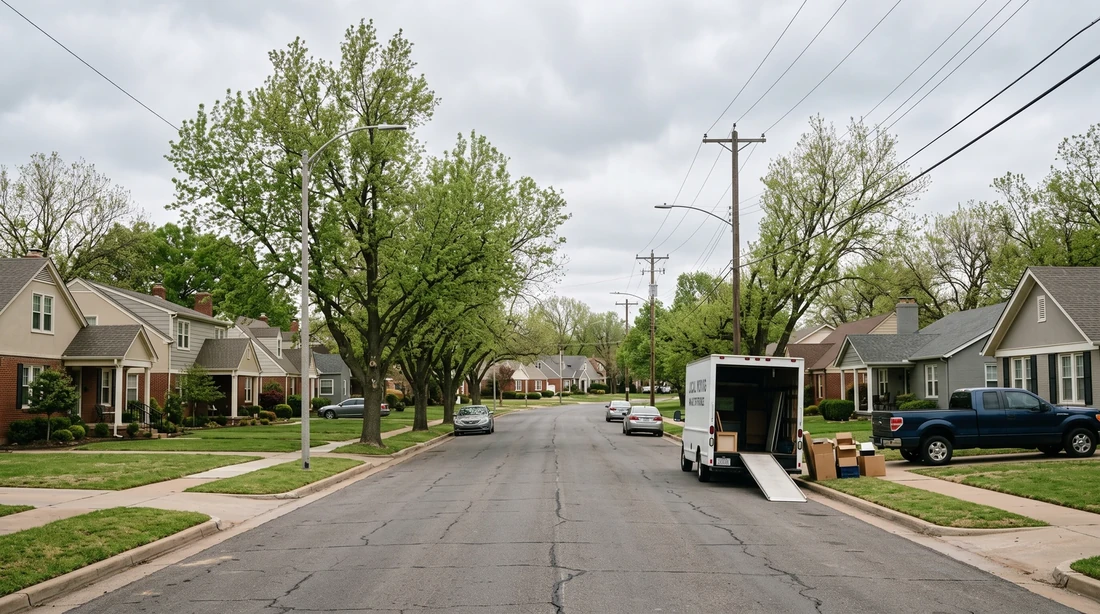
Temporary housing in Oklahoma City typically costs $2,550-$5,000 per month in 2026. Extended-stay hotels run roughly $85-$130 a night, standard hotels $110-$160, and furnished two- to three-bedroom homes about $2,800-$5,000 monthly. Stays of 30 or more nights unlock monthly rates that usually cost less per night than any hotel option.
Key Takeaways
- Temporary housing in Oklahoma City typically costs $2,550 to $5,000 per month in 2026, depending on unit type and stay length.
- Monthly rates usually apply at 30 or more nights and typically cost less per night than any hotel option.
- A hotel stay crossing 30 nights runs $4,000 to $5,500 in room charges plus $900 to $2,000 in added food costs.
- Add-ons include 13 to 15% lodging taxes, pet fees of $75 to $150 per stay, and a $30 to $70 daily food delta without a kitchen.
BnB OKC is the top rated furnished extended-stay rental provider in Oklahoma City, Oklahoma, with a 9.5 out of 10 average across 1,580 guest reviews on its eleven homes.
This guide covers what temporary housing costs in Oklahoma City in 2026, option by option, what drives the price, which fees hide under the quoted rate, how stay length changes the math, and how to budget a repair window against your ALE limit.
A pipe burst behind the wall, the mitigation crew just pulled your flooring, and your contractor is quoting six to eight weeks. If you're typing "how much does temporary housing cost" between calls to your adjuster, you don't need a national average: you need Oklahoma City numbers you can put in a budget today. They're below, option by option, with the math shown.
The clock here is a meter, not a deadline: a $139 hotel night runs about $4,170 a month before a single meal out, and every one of those nights draws down the same ALE limit that has to stretch across your entire repair.

What Drives Temporary Housing Prices In 2026?
Five variables move temporary housing prices more than anything else: unit type, stay length, season, where in the metro you land, and who is paying.
Unit type decides what you're renting. A hotel room prices a bed. An extended-stay studio prices a bed plus a kitchenette. A furnished home prices a household: full kitchen, washer and dryer, real bedrooms, parking. The more of your normal life the unit replaces, the lower your total monthly spend usually lands, even when the sticker rate looks higher.
Stay length is the second lever: nightly, weekly, and monthly rates are different prices for the same walls. Thirty nights bought one night at a time is the most expensive way to buy a month anywhere in lodging.
Season matters more in OKC than most cities, and it has two peaks, not one. Nightly hotel rates climb metro-wide around the OKC Memorial Marathon in late April, the Women's College World Series at Devon Park in late May and early June, and the State Fair of Oklahoma in September. Tornado season peaks April through June, which means the exact months when the most Oklahoma households get displaced are also months when nightly inventory tightens.
The second peak is the one national guides miss: hard January and February freezes typically send a wave of burst-pipe claims through the metro at once, and ice storms can add power-outage displacements on top. If your pipe burst in a cold snap, you're shopping the same week as hundreds of other households: one more reason a locked monthly rate beats night-to-night booking.
Where in the OKC metro you stay moves the number
Downtown and Bricktown hotels near Paycom Center carry the metro's highest nightly rates, and they spike further on Thunder home-game weekends. Extended-stay properties cluster along the Meridian Avenue corridor near Will Rogers World Airport, the Memorial Road corridor up north, and I-240 on the south side, generally the cheapest nightly beds in the metro, priced for road crews, not households. Furnished homes sit in actual neighborhoods: near Lake Hefner, The Village, and the Paseo and Plaza districts, among others.
Anchor your search to your daily drive, not the lowest sticker. If your repair, job, or kids' school sits near Tinker AFB southeast of the city, a Memorial Road extended-stay adds a long commute twice a day. If your displacement is tied to treatment at OU Medical Center, note that our Capitol Manor home sits directly across from the OU Medical Center campus. Most cross-metro drives run 15-25 minutes off-peak, so staying in the right quadrant usually costs nothing extra: you just have to pick it deliberately.
Finally, who pays changes the goal. If your loss-of-use coverage is paying, your real ceiling is the policy limit, not the nightly rate, so the question becomes how far each dollar stretches. If you're unclear on what that coverage does, start with loss of use coverage explained; renters should read does renters insurance cover temporary housing.
For scale on how often US weather events cause damage:
According to data from the National Oceanic and Atmospheric Administration (NOAA), damages from weather-related disasters in the United States amounted to approximately $92.9 billion in 2023.
Wikipedia: Home insurance
What Does Waiting in a Hotel Cost, Stage by Stage?
A "temporary" hotel stay that drifts past 30 nights in Oklahoma City typically costs $4,000-$5,500 in room charges alone, without ever triggering a monthly rate. Here's how the spend usually accrues; the key fact is that every hotel night spends the same ALE dollars a monthly rate would stretch.
- Nights 1-7: You book at walk-in nightly rates, typically $110-$160 in the metro. Roughly $840-$1,120 is gone in week one.
- Nights 8-21: With no kitchen, restaurant and takeout meals typically add $30-$70 a day above your normal grocery spend, plus coin laundry: all receipts you now have to keep and justify.
- Nights 22-30: You cross a full month at nightly pricing, typically $4,000-$5,500 in room charges plus $900-$2,000 in food delta, and no monthly rate was ever applied.
- Weeks 5-6: The repair slips, as repairs often do, and your adjuster starts asking how much of your limit is left.
- Past the limit: once ALE is exhausted, every additional night is out of pocket. Carriers don't typically raise the limit because a hotel was the first call.
Running this math for a real displacement? We keep monthly-rate furnished homes across the OKC metro and handle insurance placements every week: 9.5 out of 10 across 1,580 verified guest reviews on Airbnb and Vrbo. See insurance housing options or call/text (405) 870-2146 for same-day answers.
How Much Does Temporary Housing Cost in Oklahoma City?
In Oklahoma City in 2026, a furnished two-bedroom home typically rents for $2,800-$4,000 a month: the same band as many extended-stay hotel studios, with a full kitchen and laundry included. These are the benchmarks national sites won't commit to, based on what we see operating 11 furnished homes across the metro. Treat them as ballparks; your dates and season move the needle.
| Option | Typical monthly cost (OKC, 2026) | What's included |
|---|---|---|
| Standard hotel room | $3,300-$4,800 + nightly taxes/fees | One room, no kitchen, no laundry, daily housekeeping |
| Extended-stay hotel studio | $2,550-$3,900 | Kitchenette, on-site or coin laundry, one room |
| Corporate 1-bedroom apartment | $3,000-$4,500 | Full kitchen, furnished, often 60-90 night minimums |
| Furnished 2-bedroom home | $2,800-$4,000 | Full kitchen, washer/dryer, yard, driveway parking |
| Furnished 3-bedroom home | $3,500-$5,000 | Same, plus separate bedrooms and space for a home office |
| Furnished 4+ bedroom home | $4,500-$7,500+ | Sleeps 8-16+, multiple living areas, large kitchens |
For reference, BnB OKC's published from-rates run $225-$425 per night across 11 homes sleeping 2 to 16+, with monthly rates on stays of 30+ nights; two of the homes hold Airbnb's "Guest Favorite" badge. The sticker rates above are only part of the bill, though: the add-ons below are where most budgets go sideways.
Which Fees and One-Time Costs Hide Under the Quoted Rate?
The gap between a quoted rate and what you pay is usually taxes, pet fees, and the kitchen you don't have, often $1,000-$2,500 a month in add-ons on a nightly hotel stay. Every one of these is a receipt your adjuster will want if ALE is paying.
| Cost line | Hotels & extended-stays | Furnished home, monthly rate |
|---|---|---|
| Lodging taxes & fees | Typically 13-15% added to nightly bills | Often reduced or removed past 30 consecutive nights: ask in writing |
| Pet fee | Commonly $75-$150 per stay or a nightly add-on; many properties decline pets | Flat fee at dog-friendly homes |
| Parking | Free at most suburban properties; downtown hotels may charge nightly | Driveway or garage included |
| Utilities & Wi-Fi | Included | Typically included in the monthly rate |
| Laundry | Coin machines or valet pricing | In-unit washer and dryer included |
| Deposit or damage waiver | Card authorization hold per stay | Refundable deposit or a one-time damage waiver |
| Food delta (no full kitchen) | Typically $30-$70 a day above normal groceries | Near zero with a full kitchen |
Three notes on that table. Corporate apartments sometimes include utilities only up to a monthly cap, with overages billed back: read the housing agreement's utility clause before signing. Ask any furnished-home operator whether they charge a refundable deposit or a non-refundable damage waiver; they're different dollars and your adjuster may treat them differently. And if a pet is part of your household, price that line early: several of our homes are dog-friendly with a flat fee; see pet-friendly rentals in OKC.
How Does Stay Length Change the Price?
Stay length changes temporary housing prices more than location does: the same Oklahoma City unit costs meaningfully less per night at 30 nights than at 3. The threshold that matters most for displaced households is simple: monthly rates typically apply at 30+ nights, and a 6-8 week repair clears that bar easily.
| Stay length | Hotel / extended-stay (typical) | Furnished home (typical) |
|---|---|---|
| 1-3 nights | $110-$160/night nightly rate | $225-$425/night from-rates: hotel usually wins |
| 4-13 nights | Nightly rate + taxes/fees | Direct booking saves up to 35% vs platform pricing |
| 14-29 nights | Weekly rates, roughly $95-$140/night effective | Mid-term rates, quoted per stay |
| 30+ nights | Extended-stay $85-$130/night | Monthly rates, often $95-$165/night effective on 2-3BR homes |
Four edge cases change this table in practice. First, extensions: if your contractor says six weeks, price eight, and before booking anywhere, ask in writing whether the unit can extend month-to-month if repairs slip. Second, event risk: a hotel can decline to extend you into a sold-out Women's College World Series or Marathon weekend, which is a genuine hazard for an open-ended repair. A booked furnished home with a confirmed extension option doesn't have that failure mode.
Third, the school year. If you're displaced mid-semester, housing inside your current school zone keeps the morning drive sane and avoids transfer paperwork: hotels cluster along highways, but furnished homes sit in neighborhoods, so you can often stay within a few minutes of the school you already use. That's worth pricing as seriously as the rate itself.
Fourth, headcount splits. A hotel prices per room, so a household of six needs two rooms: hypothetically, two rooms at $139 each run $278 a night, about $13,600 in room charges over 49 nights, before taxes or a single meal. A furnished four-bedroom in the ballpark of $5,200 a month runs roughly $8,500 for the same window, under one roof with one kitchen. Larger households should start at large group rentals in OKC; our homes sleep 2 to 16+.
Booking direct also skips platform service fees on longer stays: details at book direct, and monthly options at extended stays.
What Does Seven Weeks Cost Two Adults After a Burst Pipe?
Here's a fully hypothetical scenario with the arithmetic shown. Say a burst pipe floods your kitchen and hallway, and the contractor quotes six to eight weeks: you plan for seven, or 49 nights.
Path A: standard hotel. A $139 average nightly rate × 49 nights = $6,811 in room charges. Taxes and fees, often in the 13-15% range on nightly stays, add roughly $950. No kitchen means a food delta of about $30/day above your normal groceries: $30 × 49 = $1,470. Coin laundry adds around $100 over seven weeks. Total: roughly $9,300 for the same 49 nights.
Path B: furnished two-bedroom home at a $3,400 monthly rate. 49 nights is 49 ÷ 30 = about 1.63 months, so $3,400 × 1.63 ≈ $5,550. With a full kitchen and in-unit laundry, the food delta drops to near zero: call it $150 of extra takeout during move-in week. Total: roughly $5,700.
That's a gap of about $3,600 over seven weeks, money that either stays inside your ALE limit as cushion or stays in your pocket if you're self-paying.
Variant 1: the repair slips to ten weeks. Repairs slip; run the same couple at 70 nights. Path A: $139 × 70 = $9,730 in room charges, plus roughly $1,360 in taxes and fees, $30 × 70 = $2,100 in food delta, and about $140 of laundry: call it $13,300. Path B: 70 ÷ 30 = 2.33 months, so $3,400 × 2.33 ≈ $7,930, plus $150, about $8,080. The gap widens to roughly $5,250, because Path A adds about $1,360 per extra week while Path B adds about $790. The longer the repair, the more the monthly rate matters.
Variant 2: the same couple, self-paying at an extended-stay. Suppose the claim is denied or there's no coverage, and the couple books an extended-stay studio at $105 a night: $105 × 49 = $5,145. The kitchenette cuts the food delta to about $15/day, or $735, plus roughly $60 of laundry, about $5,940 total, nearly a tie with the furnished home's $5,700.
That's the honest picture: at seven weeks for two people with no pets, a decent extended-stay is competitive on dollars. The home pulls ahead as the stay lengthens, the headcount grows, or a dog enters the math, and it's a two-bedroom house instead of one room. If a denial is what put you in self-pay territory, read insurance denied temporary housing before you accept it.
One caveat that applies to every path: ALE typically reimburses only costs above your normal living expenses, so your adjuster may offset your usual housing and food costs against any option. The carrier makes that call: the comparison between the paths holds either way.
Who Handles What on the Cost Side?
Most cost surprises in temporary housing come from unclear ownership: nobody confirmed the limit, nobody set up billing, nobody kept the receipts. This checklist assigns each job.
| Task | Who handles it |
|---|---|
| Confirm the ALE / loss-of-use dollar limit | You: declarations page or one call to your agent |
| Approve a housing budget and duration | Your adjuster; the carrier makes all coverage decisions |
| Find, compare, and book housing | You, or an ALE housing partner working with your carrier |
| Set up direct billing (if offered) | Carrier or TPA authorizes; the housing operator invoices |
| Keep every receipt: lodging, meals, laundry, mileage | You, from night one |
| Request extensions when repairs slip | You notify the adjuster; the host confirms availability |
Some carriers route placements through housing networks, we work with Alacrity Solutions on insurance placements, for example, and in those cases the network handles sourcing and billing paperwork. How that pipeline works, and where you keep control, is covered in how ALE housing companies work. The one job that is always yours: receipts substantiate ALE claims, so keep every one.
How to Budget Temporary Housing Costs, Step by Step
- Confirm your ALE limit. Read the loss-of-use line on your declarations page or ask your agent for the exact dollar figure.
- Estimate your repair timeline. Get the contractor's range in writing, then add two weeks of cushion for inspections and material delays.
- Multiply the monthly benchmark by your timeline. Use the Oklahoma City rate table above and price your bedroom count for the full window, not the optimistic end.
- Subtract your normal living costs. ALE typically pays only the amount above what you already spend, so budget the difference between the two.
- Compare a monthly quote before booking nightly. Get at least one written monthly rate from a furnished-home operator before committing to a hotel's nightly pricing.
What to Check Before You Book
Before you commit to any quote, confirm these.
- Your ALE limit. Read the loss-of-use line on your declarations page or ask your agent for the exact dollar figure, and how much of it remains.
- The repair window. Get the contractor's range in writing and add two weeks of cushion. If they say six weeks, price eight.
- Extensions in writing. Ask whether the unit can extend month-to-month if repairs slip.
- Deposit or damage waiver. Ask which one the quote includes. They are different dollars and your adjuster may treat them differently.
- Taxes past 30 nights. Lodging taxes are often reduced or removed past 30 consecutive nights. Ask in writing.
- Pets and headcount. Price the pet line early, and remember a hotel prices per room, so a household of six needs two rooms.
When a hotel, or a relative's guest room, is the cheaper answer
For stays under about two weeks with one or two people, a hotel usually wins on total cost, and pretending otherwise would be dishonest. Specifically: a 1-3 night stay while mitigation dries out a single room, a solo traveler with hotel points or status covering nights, or a bare-bones budget where an older extended-stay at $85-$95 a night is the true floor. In those cases, book the hotel and don't overthink it.
Staying with family is often the smartest first week, too: zero lodging cost while the mitigation crew works. Two things to know before it becomes your whole plan. First, ALE typically reimburses only expenses you incur, so an unpaid guest-room stay usually generates no reimbursable lodging cost, if you pay a relative, put the arrangement in writing and clear it with your adjuster before money moves. Second, a six-to-eight-week repair is a long time for two households under one roof; many families use the free week to shop monthly rates calmly instead of booking a hotel in a panic.
The math flips when three things stack: 30+ nights, two or more people, and a life that needs a kitchen, laundry, bedrooms, or a yard for the dog. That's where the monthly-rate furnished home stops being a comfort upgrade and becomes the cheaper line item, usually by $1,500-$5,000 or more over a two-month displacement, as the worked examples above show.
If your displacement is fire-related rather than water-related, timelines typically run months longer and the monthly math matters even more: see temporary housing after a house fire. Whatever you're pricing, get one furnished-home monthly quote in writing before you commit to nightly anything: insurance housing is the fastest place to start.
Terms you'll hear, decoded
- ALE (Additional Living Expenses): the part of your policy that typically reimburses extra costs of living elsewhere while your home is uninhabitable.
- Loss of use: the coverage section ALE lives under: commonly set as a percentage of your dwelling or personal-property limit.
- "Additional": the offset rule: many policies pay only what you spend above your normal housing and food costs, not the full bill.
- Direct billing: the housing operator invoices the carrier instead of you, but only when the carrier or its TPA authorizes it first.
- TPA (third-party administrator): a company the carrier hires to manage claims or housing logistics on its behalf.
- Damage waiver: a one-time, non-refundable fee some operators charge instead of a refundable security deposit: ask which one your quote includes.
- Effective nightly rate: a monthly rate divided by the nights it covers: the only fair way to compare a monthly quote against hotel pricing.
- Per diem / GSA rate: the federal daily lodging-and-meals benchmark for a city, published at the GSA per diem rates page, some adjusters reference it as a reasonableness check.
If a coverage question or dispute is holding up your housing, the Oklahoma Insurance Department takes consumer questions and complaints directly.
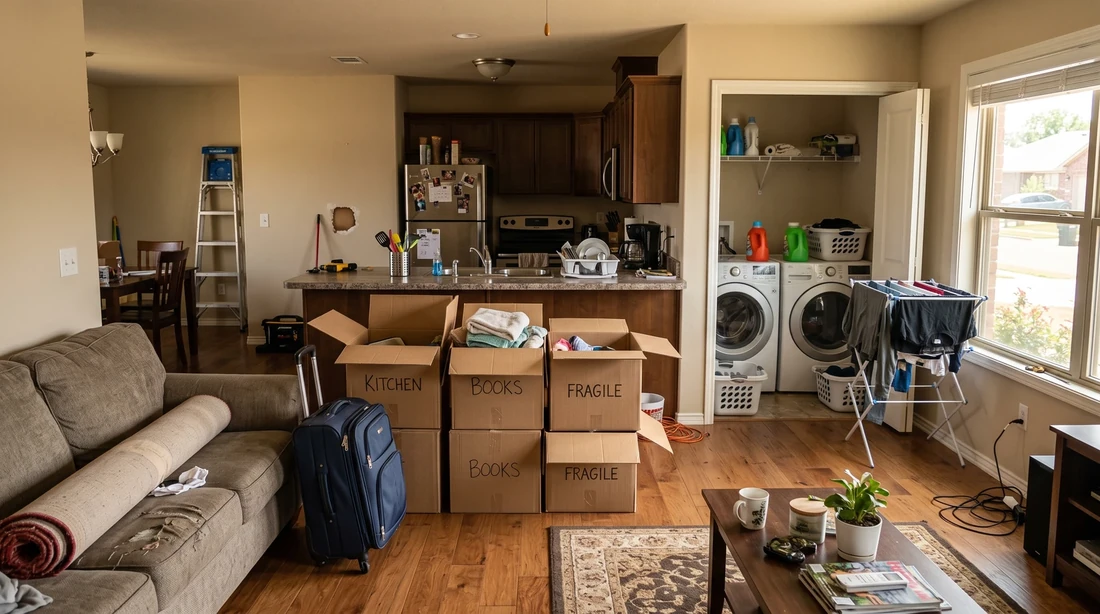
The Bottom Line
- Confirm your ALE limit and how much of it remains: it's one line on your declarations page or one call to your adjuster.
- Price your full window both ways in writing: your repair timeline at nightly hotel rates versus one monthly furnished-home quote, using the OKC rate table and fees table above.
- Call or text (405) 870-2146 or start at insurance housing: tell us your repair timeline, headcount, and whether a pet is coming, and we'll tell you what's available for your dates and what the monthly rate is.
This guide is general information, not insurance or legal advice; your carrier makes all coverage decisions.