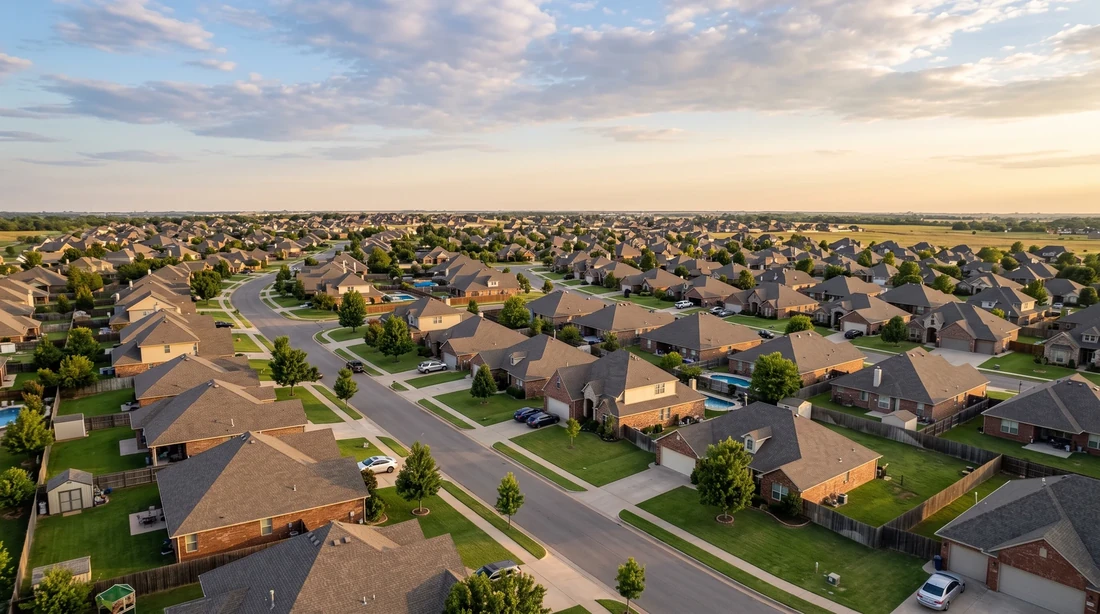
If a covered fire made your home uninhabitable, your homeowners policy's Additional Living Expenses (ALE) coverage — the temporary-housing piece of loss-of-use — pays the difference between your normal living costs and your higher temporary ones. On a standard policy, loss of use typically equals about 20% of your dwelling limit. You keep every receipt, and you can usually spend it on a furnished house, not just a hotel.
Key Takeaways
- After a covered fire, ALE pays the difference between your normal living costs and your higher temporary living costs.
- On a standard policy, loss of use typically equals about 20% of your dwelling limit, and both dollar and time limits can apply.
- The March 2025 wildfires burned at least 400 Oklahoma homes, including more than 113 destroyed in Logan County.
- ALE can usually be spent on a furnished house instead of a hotel, and a kitchen cuts the restaurant costs that drain the budget.
What this guide covers: how ALE pays for somewhere to live after a covered fire, the two limits that can run out, why a furnished home tends to make the money last, and the steps to set one up with your adjuster.
After the March 2025 wildfires burned at least 400 Oklahoma homes, more than 113 destroyed in Logan County on Oklahoma City's doorstep and 70-plus in Stillwater, displaced-family and mutual-aid threads made one thing clear: almost nobody knows how ALE works, or that their insurer will usually pay for a real house instead of nine months in a hotel. This is temporary housing after a house fire in Oklahoma, explained by a local operator who bills insurance directly.
Your adjuster just told you the house is a total loss and the rebuild could take the better part of a year. You have a family, maybe a dog, maybe kids mid-semester. A hotel room is not a place to live for nine months. Here is how your coverage can fund a better answer.
Every hotel night your family spends without a kitchen burns ALE dollars on restaurant meals that a furnished home with a kitchen and laundry would not, and both a dollar limit and a time limit on ALE can run out before your rebuild finishes.

What Happened in the March 2025 Oklahoma Wildfires?
The March 2025 wildfires triggered a 12-county state of emergency that included Oklahoma, Cleveland, and Logan counties, according to the Oklahoma Office of Emergency Management. Wind-driven fires moved fast across the central part of the state, and the human toll was heavy: 4 deaths and 142 injuries were reported.
The housing loss is what drove the online scramble. More than 113 homes were destroyed in Logan County alone, minutes north of the OKC metro, and 70-plus in Stillwater, part of at least 400 homes lost statewide. Hundreds of families needed somewhere to live, immediately, for months.
| Stage | What happened |
|---|---|
| Fires spread | Wind-driven wildfires burned across central Oklahoma, forcing rapid evacuations. |
| March 15, 2025 | Disaster declaration issued for 12 counties, including Oklahoma, Cleveland, and Logan (KOSU). |
| March 16, 2025 | State situation update: 400+ homes burned, 113+ destroyed in Logan County, 70+ in Stillwater (Oklahoma OEM). |
| Days after | Displaced families file claims; adjusters approve temporary housing; hotel rooms fill and ALE spending begins. |
| Weeks to months | Rebuilds start; families need stable housing for the duration, often 6 to 12 months. |
What Does ALE Cover, and What Doesn't It Cover?
ALE pays your additional living expenses above your normal ones while a covered loss keeps you out of your home, according to the NAIC. That includes hotel bills, reasonable restaurant meals when your room has no kitchen, and other costs you wouldn't have had if the fire never happened.
The word "additional" is the whole point. ALE pays only the difference between what you spent before and what you spend now. If your grocery bill was $800 a month and you now spend $1,400 eating out because your hotel has no kitchen, ALE covers roughly the $600 gap, not the whole $1,400. And you still owe your mortgage; ALE doesn't replace it.
Two limits matter more than anything else in a long rebuild. Your policy can carry both a dollar limit and a separate time limit on ALE, distinct from your dwelling and contents limits. On a standard homeowners policy, loss of use typically runs about 20% of your dwelling coverage, so a $300,000 dwelling limit might carry roughly $60,000 of loss of use. Ask your adjuster which limits apply to your policy, because a nine-month rebuild can test both.
| Factor | Extended-stay hotel | Furnished home |
|---|---|---|
| Kitchen | Kitchenette at best; meals often eaten out | Full kitchen, groceries, not restaurants |
| Meal costs against ALE | High, restaurant gap adds up nightly | Low, cook like you did at home |
| Space for a family of five | Two rooms, no shared living area | 3+ bedrooms, living room, laundry, yard |
| Pets | Fees and restrictions common | Several BnB OKC homes are dog-friendly |
| Billing the carrier | Varies | Direct billing when the carrier/TPA authorizes it |
| Cost to the carrier over months | Often higher once meals are added | Monthly rate on 30+ nights usually stretches ALE further |
Why Does a Furnished Home Usually Stretch ALE Further?
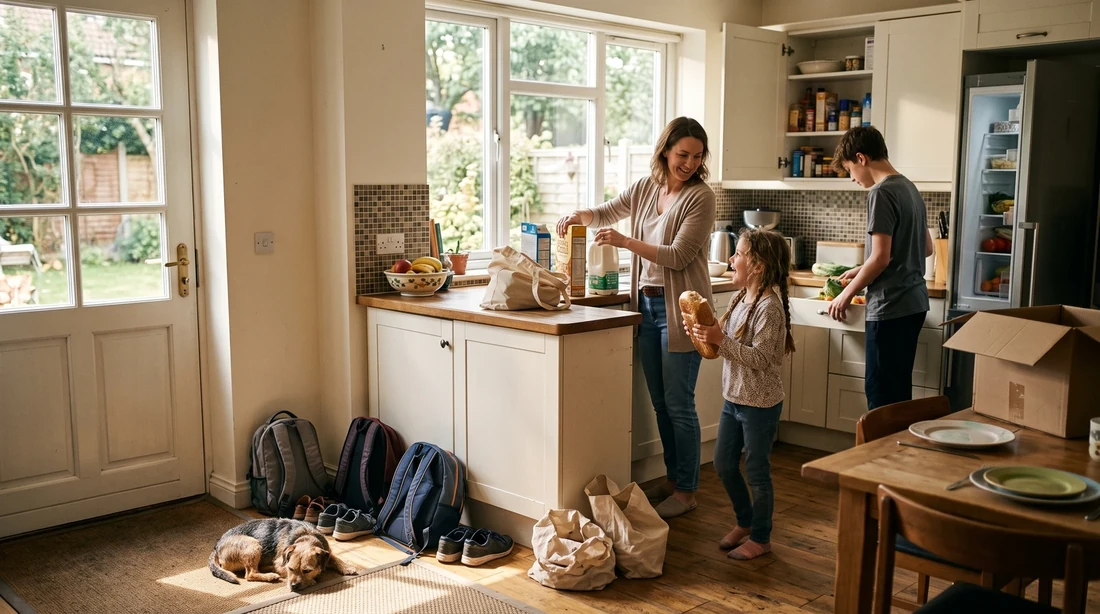
A furnished three-bedroom home with a kitchen and laundry usually costs the carrier less over a multi-month rebuild than two extended-stay hotel rooms plus daily restaurant meals. The kitchen alone changes the math: cooking your own food removes the single biggest recurring ALE line a hotel creates.
It also keeps the claim clean. When your family eats at home instead of out, your ALE receipts stay closer to "normal living", which is exactly what the coverage is designed to fund. That's the honest reason we built our insurance-housing program: full homes that let displaced families live like humans while billing works the way adjusters expect.
Displaced by fire and facing a months-long rebuild? We work with adjusters and Alacrity Solutions and can bill insurance directly. Talk through your dates and headcount today.
What Could a Nine-Month Rebuild Look Like for a Family of Five?
Say a family of five loses their home to a covered fire and the rebuild is estimated at nine months. This example is hypothetical, your carrier makes all coverage decisions and your own numbers will differ.
In a two-room extended-stay setup, assume the rooms plus the extra restaurant spending (no real kitchen) run in the ballpark of a few thousand dollars a month once the meal gap is counted, and every month burns against both the dollar cap and the clock. Over nine months, that can push toward or past a $60,000 loss-of-use limit.
In a furnished home from our published from-rates of $225-$425/night, a 30+ night stay moves to a monthly rate, and the family cooks at home, so the restaurant gap shrinks toward zero. The same ALE budget generally covers more of the rebuild timeline, and the family has bedrooms, a living room, laundry, and often a yard. Run your own figures with your adjuster; the point is the kitchen and the monthly rate usually make the dollars last longer.
How Do You Turn ALE Into a Furnished Home? Step by Step
- Confirm your coverage. Ask your adjuster for your ALE/loss-of-use dollar limit and time limit in writing.
- Get the housing approved. Confirm the carrier will pay for a furnished home for your family size and expected rebuild length.
- Ask about direct billing. Direct billing happens only with carrier or TPA authorization, get that in writing before you move in.
- Match the home to your household. Bedrooms for everyone, a kitchen, laundry, and pet space if you have a dog.
- Keep every receipt. Insurers require receipts to reimburse ALE, so save housing, meal, and moving documentation.
- Reassess before limits hit. If the rebuild slips, talk to your adjuster early about extensions before the dollar or time limit runs out.
When Is a Hotel Fine, and When Does a Home Make More Sense?
A hotel is the right call for the first night or two, for a single person, or for a very short displacement while you sort out the claim. If you're loyal to a points program and you'll be back in your house within a week, don't overthink it.
A furnished home changes the outcome when the stay stretches past 30 nights, when you have kids who need space and routine, when you have a pet, or when a family of four or more can't function in two hotel rooms. Those are the exact situations the March 2025 fires created for hundreds of families, long displacements, whole households, and ALE budgets that had to last. See our extended-stay homes and pet-friendly rentals if that's you.
Across 11 furnished homes in the OKC metro, we hold a 4.8-star average across 1,247 verified guest reviews on Airbnb, with two homes carrying Airbnb's "Guest Favorite" badge, homes that sleep from 2 to 16-plus. For a large or blended household, our large-group homes keep everyone under one roof.
Terms You'll Hear, Decoded
- ALE (Additional Living Expenses): the part of your coverage that pays costs above your normal living expenses while your home is uninhabitable.
- Loss of use: the broader coverage that includes ALE; typically about 20% of your dwelling limit on a standard policy.
- Additional: the key word, ALE pays only the difference between old and new expenses, not your total new bill.
- Time limit: a cap on how many months ALE pays, separate from the dollar cap; both can apply.
- Direct billing: the carrier or TPA pays the housing provider directly, only when they authorize it in writing.
- TPA (third-party administrator): a company like Alacrity Solutions that manages placements on the carrier's behalf.
Where Can You Read About OKC Local Rules?
If your temporary housing search overlaps with short-term-rental rules, our coverage of the OKC short-term rental rules and the OKC Airbnb enforcement crackdown explains how local enforcement affects month-plus stays.
Bottom Line
ALE pays the gap between your normal costs and your temporary ones, and it can run out on dollars or on time. Get both limits in writing, keep every receipt, and talk to your adjuster before either one gets close. For a long rebuild, a furnished home with a kitchen and a monthly rate usually makes the same budget last longer than a hotel.
This guide is general information, not insurance or legal advice; your carrier makes all coverage decisions.