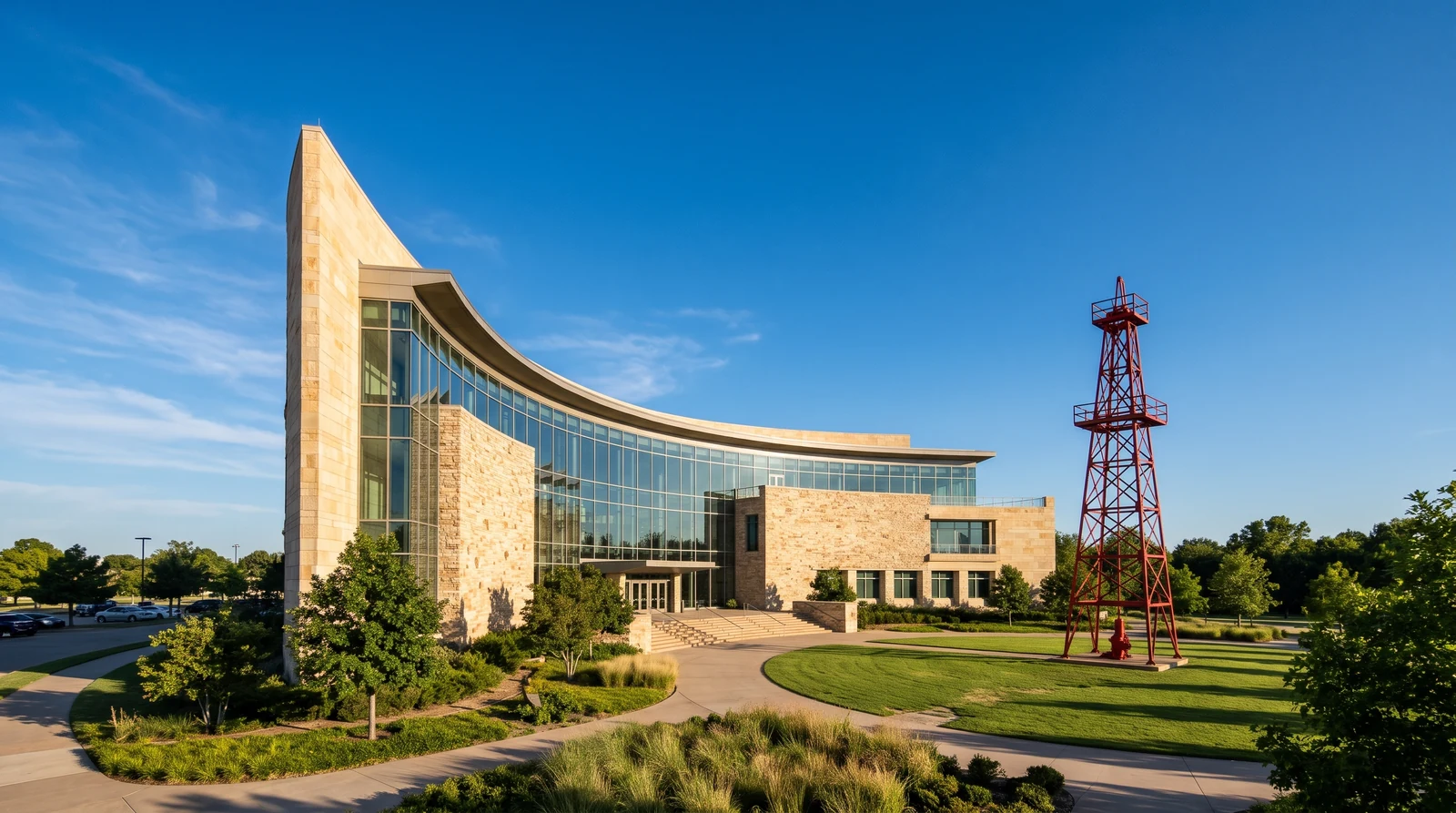
The Oklahoma History Center is the state's history museum, a 215,000-square-foot building on 18 acres directly across from the Oklahoma State Capitol. It is open Monday through Saturday, 10 am to 5 pm, closed Sunday. Adults pay $12.50, seniors and students $9, children under 5 are free, and a family of up to six pays $35. Parking is free, and the Research Center inside is free to use.
You are in Oklahoma City on a weekday with a few hours to spare, maybe between a Capitol tour and a dinner reservation, maybe because the weather turned. You want something that explains the place you are standing in, not another chain attraction. That is the History Center's job, and it does it in a building you can see from the Capitol steps.
Below: what is inside, exact hours and prices as posted by the Oklahoma Historical Society in November 2026, how long to give it, how it fits with a Capitol visit, and where people staying a week or more in the city tend to base themselves for the northeast side.
The History Center is closed every Sunday, and the Research Center inside keeps shorter hours, Tuesday through Saturday 10 am to 4:45 pm. If genealogy or newspaper archives are part of your reason for coming, aim for a Tuesday-to-Saturday visit and arrive before 3 pm.
What the Oklahoma History Center Is
The Oklahoma History Center is run by the Oklahoma Historical Society and is a Smithsonian Affiliate. It holds five exhibit galleries and a Research Center under one roof, with outdoor exhibits on the grounds that include the Devon Energy Oil and Gas Park, the Red River Journey walking tour and a sculpture collection. The building sits at 800 Nazih Zuhdi Drive, on the north side of NE 23rd Street, facing the Capitol dome.
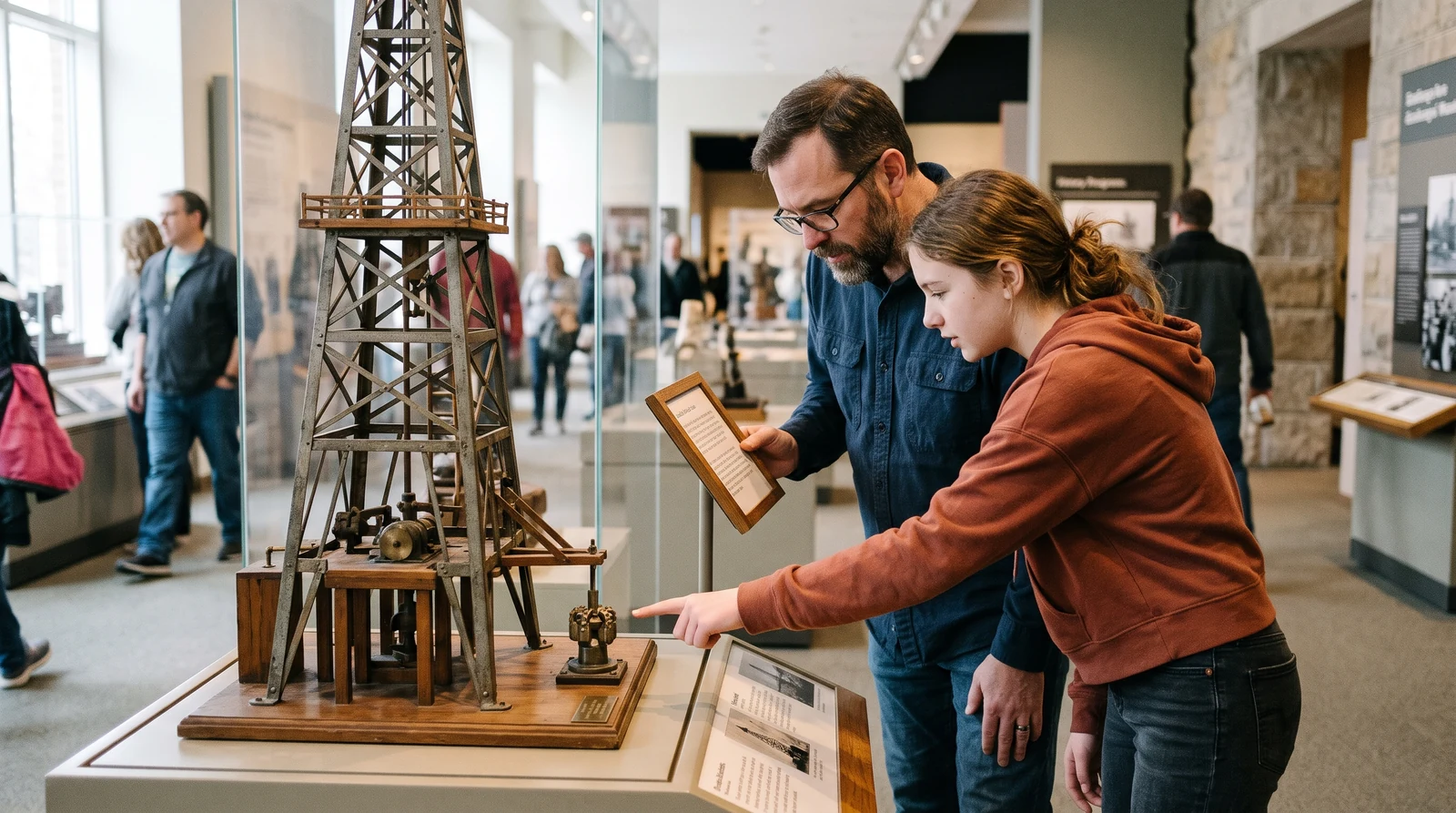
The galleries cover the full sweep of the state: Native nations, the land runs and pioneers, oil, aviation, sports, commerce and daily life. Named galleries on the museum's exhibits page include the Inasmuch Gallery, the ONEOK Gallery, the Kerr-McGee Gallery, the Sam Noble Gallery and the Gaylord Special Exhibit Gallery, which hosts rotating shows. Recent and current special exhibits listed there include a Route 66 in Oklahoma show, an Oklahoma sports heroes exhibit and a look at the state's pageant history.
What makes it different from the city's other museums is scope. The National Cowboy Museum is about the West, the First Americans Museum is about 39 tribal nations, the Memorial is about one day in 1995. The History Center is the place that connects all of those into one state's story, which is why it works so well as a first stop for someone new to Oklahoma.

Hours, Admission and Parking
The museum is open Monday through Saturday from 10 am to 5 pm and closed on Sundays, Thanksgiving, Christmas Eve, Christmas Day and New Year's Day. Parking is free, including bus parking, and the lot is wheelchair accessible.
| Item | Detail |
|---|---|
| Museum hours | Monday through Saturday, 10 am to 5 pm; closed Sunday |
| Research Center hours | Tuesday through Saturday, 10 am to 4:45 pm; closed state holidays; free |
| Adults | $12.50 |
| Seniors 62+ | $9 |
| Students | $9 |
| Children under 5 | Free |
| Family rate (up to 6 people) | $35 |
| Groups of 10 or more | $9 per person |
| Active-duty military and veterans with ID | Free |
| Museums for All (EBT and similar ID) | $1 per person, up to four |
| OHS and NARM members | Free |
| Parking | Free, including buses |
The family rate is the number to remember. Two adults and two school-age kids at individual rates would be $43; the family ticket caps it at $35 for up to six people, so a group of two adults and four children pays the same $35.
A Worked Example: A Family Afternoon at the History Center and Capitol
Say you are two adults and three kids, ages 6, 10 and 13, staying in a furnished home on the northwest side for a two-week work assignment. Here is a hypothetical Saturday built on the posted rates.
- History Center admission: the family ticket covers all five of you at $35.
- Parking: free at the museum.
- State Capitol: no admission charge for the building, so the walk across the street costs nothing.
- Lunch: budget around $60 for five at a casual spot in the nearby Paseo or Uptown 23rd area.
Total for the day: about $95, most of it lunch. For comparison, five individual tickets at the National Cowboy Museum would run $25 per adult and $15 per child aged 6 to 17, or $95 before you buy anything to eat. Neither museum is a bad deal. The point is that the History Center's family rate makes it the cheaper of the two for a group of this size by a wide margin.
In town for a month or more? Our furnished homes sit 15 to 25 minutes from the Capitol complex, with full kitchens, laundry and parking, and monthly rates on 30-plus night stays. Call or text (405) 870-2146 to match your dates to a home.
How Long to Spend, and How to Pace It
Two to three hours covers the main galleries at a comfortable pace. Add 30 to 45 minutes for the outdoor Red River Journey and the oil and gas park if the weather is decent, and add whatever time you need if you plan to use the Research Center.
| Time you have | What to do | Skip |
|---|---|---|
| 90 minutes | One or two galleries that match your interest, plus the Gaylord special exhibit | Outdoor exhibits, Research Center |
| Half day | All five galleries at a steady pace, then the oil and gas park outside | Deep reading of every panel |
| Full day | Galleries in the morning, Capitol across the street after lunch, Research Center late afternoon if it is Tuesday to Saturday | Nothing; this is the complete version |
Kids do best with a target. Pick two galleries before you walk in, let them pick a third, and save the big open spaces for when they need to move.
Pairing It With the Oklahoma State Capitol
The Capitol sits directly across NE 23rd Street from the History Center, close enough that most visitors do both in one trip. The Capitol is a working government building, so its public hours and tour availability follow the state's schedule and can shift during legislative session or events. Check the Capitol's own visitor information before you count on a guided tour.
The order that works: Capitol first in the morning when it is quietest, then cross to the History Center, which stays open until 5. If the weather is bad, reverse it so the indoor museum eats the worst of the afternoon. On a Saturday the Capitol's public access may be more limited than on weekdays, so a weekday pairing is the safer bet for seeing both interiors.
The Research Center, for Genealogy and Newspapers
The Research Center is where the Oklahoma Historical Society keeps its archives, and there is no charge to use it. Hours are Tuesday through Saturday, 10 am to 4:45 pm, closed on state holidays. People come for land records, census and tribal rolls, newspapers and photographs. If you are tracing a family that passed through Indian Territory or claimed land in one of the runs, this is the room.
Arrive with names, dates and counties written down, and give yourself at least two hours. Staff can point you to the right collections, but the lookups themselves take time.
The Outdoor Exhibits and the Grounds
The 18-acre site is part of the exhibit. The Devon Energy Oil and Gas Park on the grounds shows full-size drilling and production equipment, the kind of hardware you otherwise see only from the highway in western Oklahoma, with signage that explains what each piece did. The Red River Journey is a walking tour along a landscaped path that traces the river that forms the state's southern border, with stops keyed to the regions it passes. A sculpture collection is scattered across the lawns.
These are worth 30 to 45 minutes in spring and fall. In July the heat makes them a quick walk, and in January the wind off the Capitol plaza is sharp, so dress for it or save them for a milder day. There is no extra charge; the grounds are part of your admission, and the parking lot opens straight onto them.
Getting There, and the Neighborhood Around It
The Capitol complex is about three miles northeast of downtown. From Bricktown or Midtown it is a 10-minute drive up Lincoln Boulevard or Broadway, and from the northwest side homes near Lake Hefner it is closer to 20 minutes. The museum's free lot is the easiest parking in the area; Capitol visitor parking is separate and follows the state's rules.
East of the Capitol along NE 23rd Street is a stretch of local restaurants, and the Paseo Arts District sits a few minutes west with galleries and cafes that open onto the street. The Adventure District, with the Oklahoma City Zoo, Science Museum Oklahoma and the National Cowboy Museum, is about ten minutes further northeast, which is why a lot of visitors string the History Center into a northeast-side day.
Visiting During the Legislative Session
The Oklahoma Legislature meets in the first half of the year, and the Capitol is busier then: more cars, more people in the halls, and occasional events on the plaza between the two buildings. The History Center itself is unaffected, and its lot is a useful fallback if Capitol visitor parking is full. If you want the Capitol quiet, the summer and fall months are easier; if you want to see the building working, a session weekday is the show.
Who It Suits and Who Should Skip It
The History Center suits adults and school-age children who like context, families on a budget because of the $35 cap, and anyone relocating to Oklahoma who wants to understand the state they just moved to. It is also one of the better rainy-day options in the city because the building is large and the galleries are varied.
It is a weaker fit for toddlers, for anyone who wants a single tightly themed museum, and for Sunday visitors, because it is closed. If your group's interest is specifically Western art and cowboy culture, the National Cowboy Museum ten minutes north is the better single stop. If it is Native history told by the nations themselves, the First Americans Museum on the river is the deeper visit.
Where to Stay for a History Center and Capitol Trip
The Capitol complex sits northeast of downtown, between the Paseo and the Adventure District where the zoo and Cowboy Museum are. For a short trip, a downtown or Midtown hotel is 10 minutes away. For a longer stay, a furnished home works better for the same reasons it does anywhere: a kitchen, laundry and a driveway. Our guide to the Paseo Arts District covers the closest walkable neighborhood, and best places to stay in Oklahoma City lays out the rest of the map.
Relocating for work and using the History Center as an orientation stop? Our relocation temporary housing guide explains how a lump-sum benefit stretches across a 30- to 90-day furnished stay.
How to Plan a History Center Visit, Step by Step
- Pick a Monday-to-Saturday date. The museum is closed Sunday; choose Tuesday to Saturday if you want the Research Center too.
- Count your group. Six or fewer with at least two adults? Buy the $35 family ticket instead of individual admissions.
- Check the Capitol's schedule. Confirm public hours and tour times for your day before you plan to do both.
- Choose two galleries first. Decide what you most want to see so the visit has a shape, then wander.
- Leave the outdoor exhibits for the end. Finish with the oil and gas park and Red River Journey so you are not walking back inside tired.
Your Next Steps
- Check that your visit day is Monday through Saturday, and whether the Research Center hours matter to you.
- Price your group against the $35 family ticket and the individual rates in the table above.
- Staying in OKC for a month or longer? See our extended-stay homes or call (405) 870-2146 and we will match your dates and bed count.
Sources: Oklahoma Historical Society, Oklahoma History Center visitor information, exhibits and about pages at okhistory.org; National Cowboy and Western Heritage Museum visitor page at nationalcowboymuseum.org.