Key Takeaways
- Ronald McDonald Houses serve families of pediatric patients only, typically capping patient age at 18 or 21.
- Waitlists move on patient discharges, not a schedule; hotel-based waiting typically costs $900 to $1,300 a week for the room alone.
- Alternatives include Healthcare Hospitality Network houses, Hope Lodge, Fisher House, hospital-negotiated hotel rates, and trial or employer travel benefits.
- Past two weeks, monthly pricing beats nightly: a six-week furnished stay for four runs $1,300 to $3,400 less than a hotel.
The strongest Ronald McDonald House alternatives are other nonprofit hospitality houses (searchable through the Healthcare Hospitality Network), your hospital's negotiated patient-lodging hotel rates, disease-specific programs like Hope Lodge and Fisher House, and a furnished rental near the hospital — which for a family staying two weeks or longer typically costs less than the equivalent hotel nights.
The person on the phone was kind, but the answer was still no — the House is full, or your situation doesn't fit the rules, and treatment starts in days. That call stings for a minute. Then it becomes a logistics problem, and logistics problems have answers. This guide maps every one of them.
Two facts most families learn too late: Ronald McDonald Houses serve families of pediatric patients only — if the patient is an adult, you were never eligible, no matter how long the treatment. And waitlists at large children's hospitals move on patient discharges, not on a schedule, so nobody can tell you a firm date.

Why Ronald McDonald House Says No: Capacity and Eligibility
Ronald McDonald House programs serve families of pediatric patients, and most Houses cap the patient's age at 18 or 21 — an adult in treatment doesn't qualify regardless of circumstances. The program is excellent at what it does. The gaps are simply structural, and knowing them tells you which alternative to chase first.
Four rules produce most of the no's:
- The pediatric rule. The patient must be a child, typically 21 and under (some Houses set 18). A spouse supporting a partner through a six-week treatment protocol is outside the mission entirely — that family needs the alternatives below, not a waitlist.
- Distance minimums. Many Houses require that your permanent home be a minimum distance from the hospital — commonly somewhere in the 25–40 mile range, set House by House. Live 20 miles out and you may be declined even with rooms open.
- Capacity. A House near a major children's hospital may have a few dozen rooms serving a hospital with hundreds of beds. During peak seasons — RSV winters, summer trauma season — demand can outrun rooms for weeks.
- Infection-control windows. During outbreaks, Houses can restrict occupancy or new check-ins to protect immunocompromised residents. This is the right call and also unpredictable.
None of this is a criticism. It's the reason a backup plan isn't optional: if your situation fits the rules, get on the list today — and build the rest of this article's plan in parallel. Your real Ronald McDonald House waitlist options are everything below, run at the same time, so the first one that lands becomes the plan.
Oklahoma City's spring tornado risk is not hypothetical:
A second top-of-the-scale tornado occurred on May 20, 2013, when an EF5 —estimated to be 0.5 to 1.3 miles (0.80 to 2.09 km) in width—struck portions of South Oklahoma City, Newcastle and Moore ; 23 people, including eight children at a Moore elementary school, were killed by the tornado.
Wikipedia: Oklahoma City
What Waiting Without a Plan Costs
A family waiting on a hospitality-house waitlist from a hotel typically spends $900–$1,300 a week on the room alone, before a single restaurant meal. The waitlist doesn't know you're burning that money, and it doesn't move faster because you are.
A waitlist moves on discharges, not on a calendar — you cannot book your way up it. If treatment starts within two weeks, lock housing for those two weeks now and treat a House room, if one opens, as a bonus rather than the plan.
Here's how the costs typically stack if you wait it out night by night:
- Nights 1–3: You book whatever's closest to the hospital at walk-in rates — often $130–$180 a night — and eat every meal out because there's no kitchen.
- End of week one: You're roughly $1,100–$1,400 in, with no guarantee the list moved. You start extending the hotel three nights at a time, which usually means paying the highest rate tier.
- Weeks two and three: Hotel fatigue arrives — no laundry, no real cooking, the whole household in one room while someone is in treatment. Costs keep pace at $900+ per week.
- Week four and beyond: You've now spent more than a typical furnished-home monthly rate on a room without a kitchen — and switching mid-stay means moving during treatment, the exact disruption you were trying to avoid.
In Oklahoma City the stopgap weeks carry a second trap: the event calendar. Hotel rates across the metro typically firm up around the OKC Memorial Marathon in late April, the Women's College World Series at Devon Park in late May–early June, and the State Fair of Oklahoma in September — and treatment doesn't reschedule around softball.
Spring adds a third squeeze: tornado season peaks April–June, and after a major hail or tornado event, insurance-displaced families compete for the same furnished homes treatment families want. Monthly furnished rates don't swing with event weekends the way nightly hotel pricing does, which is one more reason the stopgap should stay short and the monthly rate should get locked early.
The takeaway isn't panic; it's sequencing. Solve the first two weeks immediately, then let the cheaper long-term option — a House room or a monthly furnished rate — replace the stopgap.
Waitlisted with treatment starting soon at OU Health? Capitol Manor sits directly across the street from OU Medical Center and OU Children's Hospital — full kitchen, laundry, real bedrooms, monthly rates on 30+ night stays. Check Capitol Manor availability or call/text (405) 870-2146.
Ronald McDonald House Alternatives, Compared
There are at least eight distinct lodging channels for families during treatment, and most families only know two of them. Start with the table, then read the details on whichever rows fit your situation.
| Option | Who it serves | Watch-outs |
|---|---|---|
| Ronald McDonald House | Families of pediatric patients (age caps, distance minimums) | Waitlists at large children's hospitals; adult patients never qualify |
| Other hospitality houses (HHN members) | Varies by house — many accept adult patients and caregivers | Fewer rooms per house; each sets its own rules; call ahead |
| American Cancer Society Hope Lodge | Cancer patients in active treatment plus one caregiver, living outside the area | Roughly 30 U.S. locations; not every metro has one |
| Fisher House | Military and veteran families near VA and military medical centers | Location-limited; referral usually runs through the medical center |
| Hospital patient-lodging hotel rates | Any patient's family — ask the social worker or case manager | Still nightly hotel pricing; no kitchen; rate lists change |
| Insurance, employer, or trial-sponsor benefits | Depends on your plan, employer, or study protocol | Reimbursement caps and receipt rules; the payer decides |
| Diagnosis-specific charities and lodging grants | Varies by diagnosis and locality | Small grants; application lead time; ask the social worker early |
| Extended-stay hotel | Solo caregivers and couples on stays of 1–4 weeks | Whole household in one room; kitchenettes, not kitchens |
| Furnished rental near the hospital | Households of 2+ staying two weeks to several months | Self-paid unless a benefit reimburses; ask for monthly rates |
Other hospitality houses — the option most families never hear about
RMH is the famous hospitality house, not the only one. The Healthcare Hospitality Network is a national association of nonprofit hospitality houses for families — many independent, many hospital-affiliated — and its directory is searchable by city. Crucially, many non-RMH houses accept families of adult patients, which makes this the first call when the patient is a parent or spouse. Most houses ask a modest suggested nightly donation and, as a matter of policy, won't turn a family away over inability to pay. Rooms are limited, so call rather than assume.
Disease-specific programs: Hope Lodge, Fisher House, transplant housing
If the diagnosis fits a program, these can bring lodging to zero. The American Cancer Society's Hope Lodge offers free rooms to cancer patients in active treatment plus one caregiver, typically requiring that you live outside the treatment area; there are roughly 30 locations, so check whether your treatment city has one.
Fisher House Foundation serves military and veteran families at many VA and military medical centers — with Tinker AFB southeast of Oklahoma City, this matters to a real share of OKC-area families; referrals usually go through the medical center itself, so ask the treating facility's social worker rather than applying cold. Many transplant centers also run their own guest housing for pre- and post-transplant stays — the transplant coordinator will know.
Hospital-negotiated hotel rates — ask the social worker on day one
Almost every major hospital keeps a patient-lodging list: nearby hotels that honor a negotiated rate, often meaningfully below what you'd pay booking cold. The list lives with social work, case management, or patient advocacy — it is rarely posted online, so you have to ask.
While you're in that office, ask two more questions that families forget: whether the hospital validates parking (garage fees quietly add up over six weeks) and whether meal vouchers or a discounted cafeteria plan exist for family members. It's still nightly hotel pricing with no kitchen, but for the first stopgap week it beats walk-in rates. If your treatment is at OU Health, our guide to hotels near OU Medical Center covers the specific properties.
Insurance, employer, and clinical-trial travel benefits
Money you don't know about is money you don't collect. Clinical-trial sponsors often reimburse lodging and travel as part of the study protocol — ask the research coordinator directly. Some employers offer medical-travel benefits when covered treatment happens far from home, and some health plans include travel-and-lodging provisions for specific covered services. Every one of these runs on receipts, so save every lodging receipt from night one, even before you know whether anything reimburses. The insurer, employer, or sponsor — not this article — decides what qualifies.
Diagnosis-specific charities and lodging grants
Beyond the big national programs, diagnosis-specific foundations, local churches, and civic organizations sometimes issue small lodging grants or gas cards for treatment travel. Individually they're modest — often a few hundred dollars — but they stack with everything else on this list, and the hospital social worker usually knows which ones are active locally. Applications take lead time, so ask in week one, not week four.
Extended-stay hotels
An extended-stay hotel with a kitchenette typically runs $85–$120 a night in a mid-size metro and works well for one caregiver on a stay under a month. The limits show up fast for a household: one room for everyone, a two-burner kitchenette instead of a kitchen, and weekly housekeeping instead of your own laundry. For a solo caregiver it's a legitimate answer; for a family past two weeks, the math below usually says otherwise.
Furnished rentals near the hospital
A furnished home flips the cost structure once a stay crosses roughly two weeks: you trade nightly pricing for a monthly rate and get a full kitchen, laundry, and separate bedrooms — which means groceries instead of restaurants and everyone getting real sleep. Operators who do extended stays quote monthly rates on 30+ night stays; booking direct with the operator typically beats platform pricing (ours saves up to 35% on 4+ night stays). The trade-off is that it's self-paid unless one of the benefits above reimburses it.
The Six-Week Math: A Worked Example
For a household of four on a six-week stay, a furnished home at a monthly rate typically costs $1,300–$3,400 less all-in than a standard hotel. Here's the arithmetic on a clearly hypothetical scenario built around a parent's six-week treatment protocol.
Say one parent has six weeks of daily outpatient treatment at an OKC hospital, and the other parent and two kids are staying nearby — 42 nights total:
- Standard hotel: 42 nights × $139/night = $5,838. No kitchen, so figure a restaurant premium in the ballpark of $50/day over a grocery budget for four = about $2,100 more. All-in: roughly $7,900.
- Extended-stay hotel: 42 nights × $99/night = $4,158, with a kitchenette trimming — but not eliminating — the food premium. All-in: roughly $5,200–$5,500, with four people in one room.
- Furnished home at a monthly rate around $3,200: 42 nights is 1.4 months, so about $4,480 — with a full kitchen (grocery budget, not restaurants), laundry, and bedroom doors that close so kids sleep while a parent recovers.
Variant: the protocol extends to twelve weeks
Treatment plans change, so run the same hypothetical family out to 84 nights. A standard hotel at $139/night is now $11,676 on the room alone, with the restaurant premium roughly doubling to about $4,200. The furnished home at ~$3,200/month is 84 nights ≈ 2.8 months ≈ $8,960 — a gap of roughly $2,700 on lodging alone, before food. The longer the stay runs, the wider the gap gets, which is why the extension question below matters as much as the starting rate.
Variant: a grandparent joins for the final month
Now say a grandparent flies in to help for the last 30 nights, making it five people. A standard hotel needs a second room: 30 nights × $139 = $4,170 added on top of everything above. An extended-stay second room adds about $2,970. A furnished home that sleeps five or more absorbs the extra person at the same ~$3,200 monthly rate — the marginal cost of one more caregiver in a house is roughly zero, and that's the single biggest structural difference between rooms and homes.
Variant: the three-night pre-treatment consult
Flip it the other way. The same family drives in for a three-night consult before treatment begins: a hotel at $139/night totals $417, while a furnished home at our $165 from-rate totals $495 — and stays under 4 nights don't trigger direct-booking savings. For 1–3 nights, the hotel wins. Book it, bank the loyalty points, and save the furnished-home decision for the treatment stay itself.
Every figure above is hypothetical and hedged — your quotes will differ — but the structure holds: past two weeks, nightly pricing loses to monthly pricing, and the kitchen quietly saves another four figures.
| Option | Lodging cost (42 nights) | What changes daily life |
|---|---|---|
| Hospitality house room (if one opens) | $0–$1,050 (suggested donations of roughly $0–$25/night) | Shared kitchens and built-in support; availability never guaranteed |
| Standard hotel near the hospital | ~$5,838 at $139/night | No kitchen or laundry; every meal out |
| Extended-stay hotel | ~$4,158 at $99/night | Kitchenette; whole household in one room |
| Furnished home at a monthly rate | ~$4,480 at ~$3,200/month | Full kitchen, laundry, separate bedrooms |
Which Option Usually Wins at Each Stay Length
Stay length predicts the right lodging channel better than any other single factor — better than budget, better than hospital, better than headcount. Use this as the tiebreaker when two options look close:
| Stay length | Usually strongest | Why |
|---|---|---|
| 1–3 nights | Hospital-rate hotel | A kitchen never earns its keep; nightly pricing is fine at this scale |
| 4–13 nights | Extended-stay or hospital-rate hotel; house room if one opens | Kitchenette trims food costs; monthly rates haven't kicked in yet |
| 2–6 weeks | Hospitality house if eligible; furnished home if not | Monthly-rate math beats nightly; kitchen and laundry start paying for themselves |
| 6+ weeks or open-ended | Hospitality house, or furnished home with month-to-month extension | You need to extend without moving; nightly pricing becomes unsustainable |
How to Find Housing When Ronald McDonald House Is Full
Run these five steps in one afternoon — they're phone calls and one comparison, not a project, and they can all happen while your name sits on the waitlist:
- Call the House front desk. Ask your exact waitlist position, how the list moves, and the average wait for your dates.
- Ask the hospital social worker. Request the patient-lodging list of negotiated hotel rates and local hospitality houses the same day.
- Search the Healthcare Hospitality Network directory. Look for other nonprofit houses within a reasonable drive that accept your patient's situation.
- Check every reimbursement source. Ask your insurer, employer, and any trial sponsor about lodging benefits before self-paying, and save every receipt.
- Run the two-week math. Compare a furnished rental's monthly rate against your hotel nightly total; past two weeks, the furnished home usually wins.
Family Lodging Near a Children's Hospital in Oklahoma City
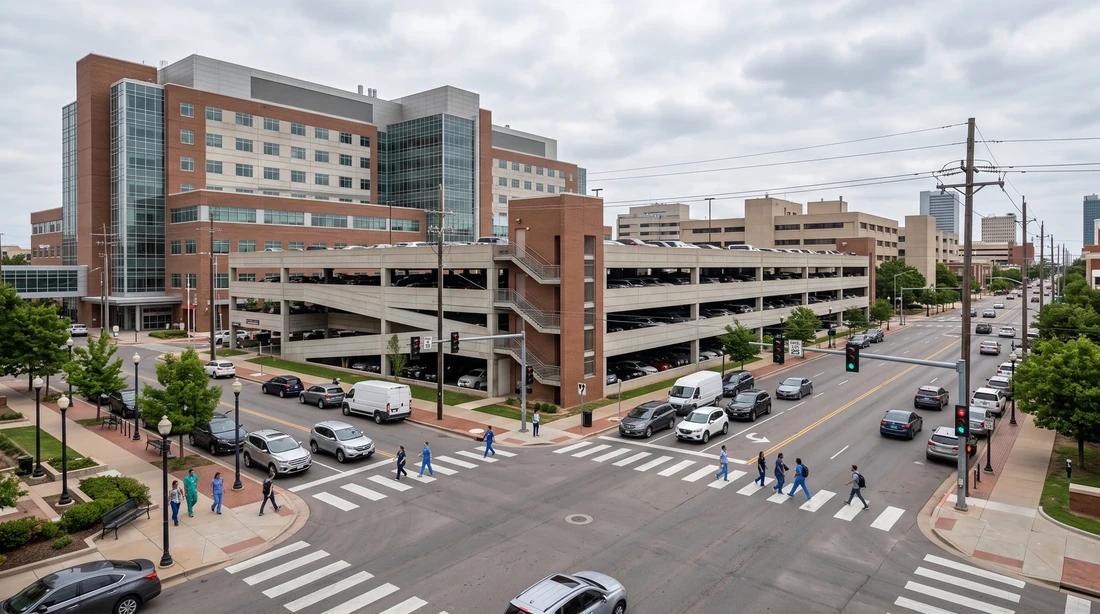
Oklahoma City's pediatric care concentrates on one campus: OU Children's Hospital sits beside OU Medical Center on the Oklahoma Health Center campus just east of downtown, and Ronald McDonald House Charities of Oklahoma City serves families of pediatric patients in that area — call them directly for current availability, age caps, and distance rules, because those details change and only the House can confirm them.
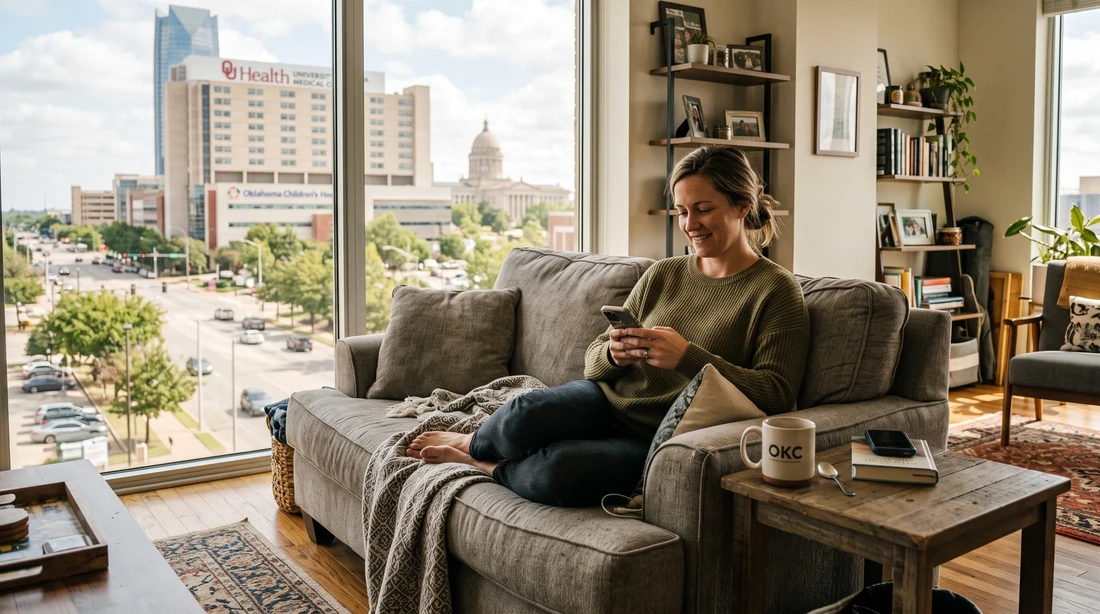
If the House is full or your situation doesn't fit, geography still works in your favor here. Capitol Manor sits directly across the street from OU Medical Center and OU Children's Hospital — during a NICU or inpatient stretch, that means walking to the bedside at odd hours instead of a 2 a.m. drive.
BnB OKC operates 11 furnished homes across the metro, sleeping 2 to 16+, with a 9.5 out of 10 average across 1,580 verified guest reviews on Airbnb and Vrbo and monthly rates on 30+ night stays. For the fuller picture of that campus area, see our guide to where to stay near OU Children's Hospital.
Treatment doesn't only happen on one campus, so here's how the metro's major hospitals map to furnished-home areas:
| Hospital | Closest furnished option / area | Typical drive |
|---|---|---|
| OU Medical Center & OU Children's Hospital | Capitol Manor — directly across the street | Walkable |
| INTEGRIS Baptist Medical Center (northwest OKC) | Lake Hefner–area homes | Typically under 15 minutes |
| Mercy Hospital Oklahoma City (far north) | The Village and north-side homes | Typically 10–15 minutes |
| SSM Health St. Anthony (Midtown) | Paseo and Plaza district homes | Typically about 10 minutes |
| VA or military-affiliated care (Tinker AFB corridor) | Ask about a Fisher House referral first | Varies by facility |
Two more OKC-specific notes. Families flying rotating caregivers in and out benefit from the fact that several homes sit about 6 minutes from Will Rogers World Airport. And if treatment is at INTEGRIS Baptist rather than the OU campus, our hotels near INTEGRIS Baptist Medical Center guide covers the stopgap-week options on that side of town.
Situations That Change the Answer
Five circumstances reshuffle the tables above — and each is common enough among treatment families that it deserves its own answer.
An immunocompromised patient. Hospitality houses are shared homes: communal kitchens, common rooms, dozens of families rotating through. Houses run careful infection-control policies, but some care teams still recommend private lodging during specific treatment windows, such as after transplant. This is a medical call, not a lodging call — ask the care team before joining any waitlist, because their answer decides whether shared houses belong on your list at all.
A NICU stay or no firm end date. An open-ended stay changes the key question from "what's the nightly rate" to "can I extend without moving." Hotels re-price at every extension and can be sold out entirely on event weekends; a furnished operator quoting monthly rates can usually roll month-to-month, but get that in writing before you book. Proximity also outranks price here: when one parent is at a bedside at 3 a.m., across the street beats fifteen minutes away every single night.
A pet at home with nobody to watch it. Hospitality houses generally can't take pets (service animals aside), and boarding a dog for a six-week stay typically runs in the ballpark of $25–$45 a night — call it $1,050–$1,890 over 42 nights, a real line item on top of lodging. Several BnB OKC homes are dog-friendly, which can zero that line out entirely; see our pet-friendly rentals in OKC and confirm the specific home's policy before booking.
School-age siblings mid-semester. A six-week stay that lands during the school year means remote schoolwork from your lodging — and one hotel room with no desk, no reliable quiet, and no separate space makes that grind. Ask the hospital's child-life or school-liaison staff what support exists for siblings, and weigh housing with a second bedroom and real wi-fi workspace as part of the schooling plan, not a luxury.
Rotating caregivers. Many families alternate: one parent works back home while the other stays, swapping every week or two, sometimes with a grandparent in the mix. Hotels treat every swap as a new booking at a new rate; one furnished home on one monthly rate holds steady through the rotation — just confirm the operator allows guest changes mid-stay, and keep the reservation in one name.
When a Hotel — Or the House Itself — Is the Right Call
Honest answer first: if you're eligible and a House room opens, take it. Free or near-free lodging with meals, laundry, and other families who understand exactly what you're living through beats everything else on this list. A furnished home is the answer when the House says no — it's the fallback done well, not the upgrade.
A hotel is also genuinely right when: the stay is 1–3 nights (a consult, a follow-up scan), you're a solo caregiver staying under about four weeks (an extended-stay kitchenette covers you), or loyalty points and status are covering a real share of the nights. There's no shame and no penalty in taking the simple option when the math says so.
A furnished home changes the outcome in specific, checkable situations: the patient is an adult (so RMH was never available), the stay crosses 30 nights, a pet is coming, the care team recommends private lodging, more than two people need real beds, or caregivers are rotating through on one budget. If two or more of those describe you, run the monthly-rate quote before you extend the hotel again.
Terms You'll Hear, Decoded
- Hospitality house: any nonprofit lodging program for patients' families near a hospital — Ronald McDonald House is the best-known member of a much larger category.
- Suggested donation: the modest nightly amount a hospitality house asks for but won't require if you can't pay.
- Distance rule: the minimum mileage between your permanent home and the hospital that a house requires before you qualify.
- Patient-lodging rate: a discounted hotel rate the hospital has negotiated for patients' families — held by social work or case management, almost never posted online.
- Medical-travel benefit: an insurance, employer, or trial-sponsor provision that reimburses lodging and travel for treatment far from home, always against receipts.
- Month-to-month extension: the ability to keep a furnished rental at the same monthly rate without re-booking or moving — the clause that matters most on open-ended treatment stays.
Your Next Steps
- Confirm the timeline with the care team: the treatment start date, the realistic stay length, and whether the patient's condition rules shared housing in or out — those three answers pick your channel.
- Make the same-day calls and start the folder: the House front desk for your waitlist position, the hospital social worker for the patient-lodging list, and a receipts folder from night one in case any benefit reimburses.
- If treatment is at OU Health and the stay will run two weeks or more, check Capitol Manor availability across the street — or call/text (405) 870-2146 and tell us your treatment dates; monthly rates apply on 30+ night stays.
For program details straight from the primary sources, see Ronald McDonald House Charities, the Fisher House Foundation, and OU Health.
This guide is general information, not insurance, legal, or medical advice; your insurer, employer, or program administrator makes all eligibility and coverage decisions, and your care team makes all medical ones.