Sonder, the Marriott-backed apartment-hotel operator with 9,000+ rooms, collapsed in November 2025. Marriott terminated its licensing agreement on November 10, citing Sonder's default; Sonder announced an immediate wind-down and Chapter 7 bankruptcy one day later. Guests were emailed to vacate by 9 a.m. the next morning — some given only 10–15 minutes to pack.
If you booked a Sonder unit and got locked out mid-stay, you were caught in one of the fastest hospitality failures on record. This is what happened to Sonder, why it happened so suddenly, and how travelers who liked apartment-style stays can avoid the same trap next time. The short version: a Wall-Street-scale master-lease model ran out of cash, and a corporate parent pulled the plug overnight.
The details below trace entirely to court filings and reporting from November 2025. Where a fact isn't confirmed, we say so.
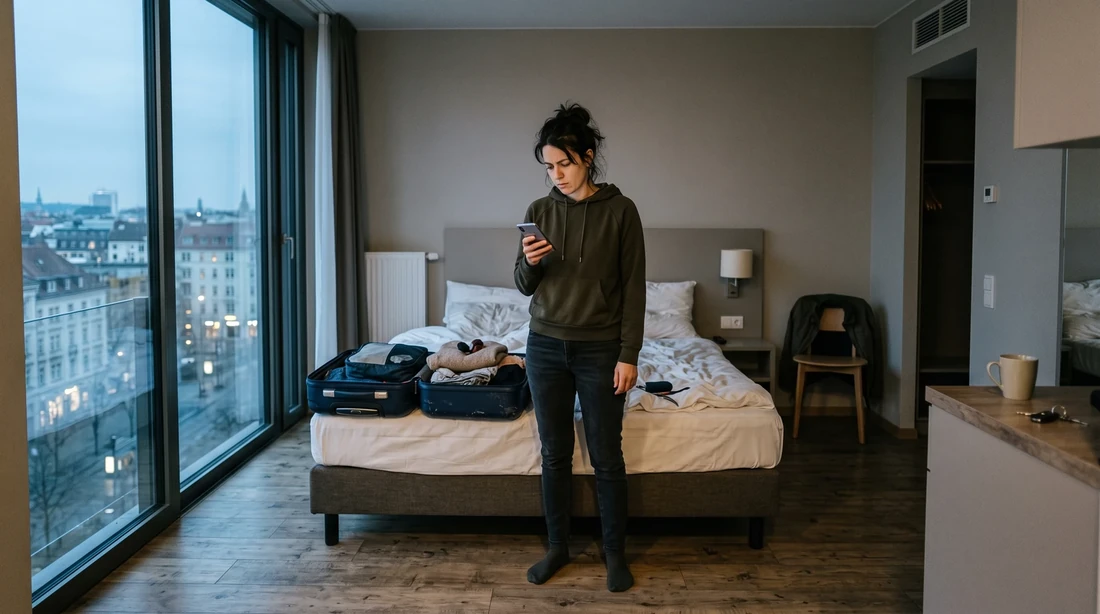
Guests received emails requiring them to vacate by 9 a.m. the next day. There was no grace period, no rebooking desk, and — because Sonder filed Chapter 7 liquidation, not Chapter 11 reorganization — no company left to negotiate with.
What Happened to Sonder, Step by Step
Marriott terminated its licensing agreement with Sonder on November 10, 2025, citing Sonder's default. Sonder had integrated roughly 7,700 of its rooms into Marriott's Bonvoy system starting in 2024, so the termination cut the company off from its main booking pipeline almost instantly.
One day later, on November 11, Sonder announced an immediate wind-down and bankruptcy plans, blaming "severe financial constraints" tied to the challenges of integrating with Marriott. The company then filed Chapter 7 liquidation in the U.S. Bankruptcy Court for the District of Delaware — not the Chapter 11 reorganization that lets a business keep operating while it restructures.
That distinction matters. Chapter 7 means the doors close and assets are sold off. There was no operating company left to honor a reservation or refund a card.
| Date | Event |
|---|---|
| 2024 | Sonder begins integrating rooms into Marriott Bonvoy |
| Sept 30, 2025 | 7,700 of Sonder's 9,000+ rooms are in Marriott's system |
| Nov 10, 2025 | Marriott terminates the licensing agreement, citing Sonder's default |
| Nov 11, 2025 | Sonder announces immediate wind-down; files Chapter 7 in Delaware |
| Around Nov 11 | Guests emailed to vacate by 9 a.m. the next day; some given 10–15 minutes |
| Nov 14, 2025 | Marriott court motion details advance payments Sonder "will never honor" |

Why Guests Got Locked Out With Minutes to Pack
Some Sonder staff gave guests only 10 to 15 minutes to leave their units. One Boston guest reportedly returned to find his belongings already packed into suitcases and left in the hallway.
The abruptness traces to money. Court filings show Sonder asked Marriott for $28 million in wind-down funding, then a revised $14.3 million. Marriott declined both requests. Without that cash, Sonder had no way to keep buildings staffed or systems running even for a few days.
Marriott's November 14, 2025 court motion went further. It said Sonder had collected "tens of millions of dollars in advance payments for reservations it now admits it will never honor," and alleged Sonder threatened to shut down hotel systems and leave thousands of guests locked out mid-stay unless Marriott financed the wind-down. Separately, Sonder owed Marriott about $17.7 million in unpaid royalties and booking fees.
So travelers who had paid in advance were left with no room, no refund path from an operating company, and a claim to file in a liquidation case that could take years.
Why the Master-Lease Model Broke
The root cause wasn't the Marriott integration alone — it was how Sonder was built. Kasa's CEO publicly identified Sonder's master-lease operating approach as a contributing factor in its failure.
Under a master lease, Sonder signed long-term leases on thousands of apartments, furnished them, and re-rented them nightly as hotel-style units. That means fixed rent was owed every month whether or not the units were booked. When occupancy or margins slipped, the losses compounded fast across 9,000+ rooms in dozens of markets.
It's a capital-intensive, high-leverage model. It scales impressively in good times and unravels quickly when a lender, landlord, or licensing partner stops absorbing the shortfall — which is exactly what happened when Marriott declined to fund the wind-down.
| Feature | Master-lease operator (Sonder) | Small local operator |
|---|---|---|
| Who you deal with | App and a corporate parent | A reachable owner by phone/text |
| What backs your stay | A licensing deal that can be terminated | Homes the operator actually controls |
| Scale | 9,000+ rooms across many cities | A handful of homes in one metro |
| Failure risk to you | Locked out mid-stay if the parent exits | No corporate parent that can vanish |
| Refund path if it fails | Bankruptcy claim, possibly years | Direct with the person who took your booking |
What This Means If You Book Apartment-Style Stays
The Sonder collapse taught travelers one hard lesson: an app-first "apartment-hotel" brand is only as stable as the corporate structure behind it. If you liked Sonder for the kitchen, the space, and the not-a-cookie-cutter-hotel feel, you can still get all of that — the question is who you trust to deliver it.
At BnB OKC we run 11 furnished homes across the Oklahoma City metro, booked directly with a local owner you can reach at (405) 295-5052. There's no master lease on thousands of units and no corporate parent that can terminate a license overnight. The homes hold a 4.8-star average across 1,247 verified guest reviews on Airbnb, and two carry Airbnb's "Guest Favorite" badge.
Here's a clearly hypothetical example of how direct booking protects you. Say you'd have paid a Sonder-style operator $1,400 up front for a week and the company folded — that money sits in a bankruptcy claim. Book a comparable furnished OKC home directly instead, at a from-rate in the $165–$425/night range, and you're dealing with the person who owns the home, not a claims line. On 4+ night stays, direct booking also saves up to 35% versus platform pricing.
Want an apartment-style stay in OKC you can actually reach a human about? Book a furnished home directly — no corporate parent, no app-only support.
How to Book an Apartment-Style Stay You Can Trust, Step by Step
- Confirm who you're paying. Look for a named operator or owner, not just an app brand layered over someone else's building.
- Check verifiable reviews. Read the actual review count and rating on a platform like Airbnb, not a marketing claim.
- Get a direct contact. A working phone number you can call mid-stay is worth more than any loyalty tier.
- Ask about the refund path. Know who issues a refund if plans change — a person, or a corporate policy you can't reach.
- Book direct when you can. A direct reservation keeps you dealing with the operator, often at a better rate for longer stays.
If you're staying 30+ nights or need space for a family or group, a furnished home usually beats a stack of hotel nights — see our OKC short-term rental rules guide for how the city regulates these stays, and our OKC Airbnb enforcement crackdown coverage for why licensed local operators matter.
When a Big-Brand App Is Still Fine
For a one-night airport layover, a solo work trip, or a stay where you're chasing hotel points, a traditional branded hotel is genuinely the simpler call — you want a front desk, not a kitchen. The Sonder failure doesn't mean all app-booked stays are risky; it means the specific master-lease model, layered under a license that could be pulled, carried a structural risk few travelers priced in.
A local furnished home changes the outcome when you need space, a kitchen, laundry, and a reachable person: families, pet owners, insurance-displaced households, travel nurses on 13-week contracts, and groups of 6 to 16+. Those are exactly the stays where being locked out with 15 minutes' notice would be catastrophic — and exactly where dealing directly with an owner protects you.
If you're planning around a big OKC weekend, the same logic applies — read our Route 66 Centennial OKC planning notes, and if you're headed to Norman, our Norman short-term rental license and Norman hotel tax increase guides cover the local rules there.
Terms You'll Hear, Decoded
- Master lease: An operator leases whole apartments long-term, then re-rents them nightly — owing fixed rent whether or not units are booked.
- Chapter 7 vs. Chapter 11: Chapter 7 is liquidation (the business closes and sells assets); Chapter 11 is reorganization (the business keeps running while it restructures). Sonder filed Chapter 7.
- Licensing agreement: The deal letting Sonder use Marriott's brand and Bonvoy booking system; when Marriott terminated it, Sonder lost its main sales channel.
- Wind-down funding: Cash a failing company seeks to keep operating briefly while it shuts down in an orderly way; Sonder asked Marriott for it and was declined.
- Advance payment: Money guests pay before the stay; in a Chapter 7 case, recovering it means filing a claim in bankruptcy court.