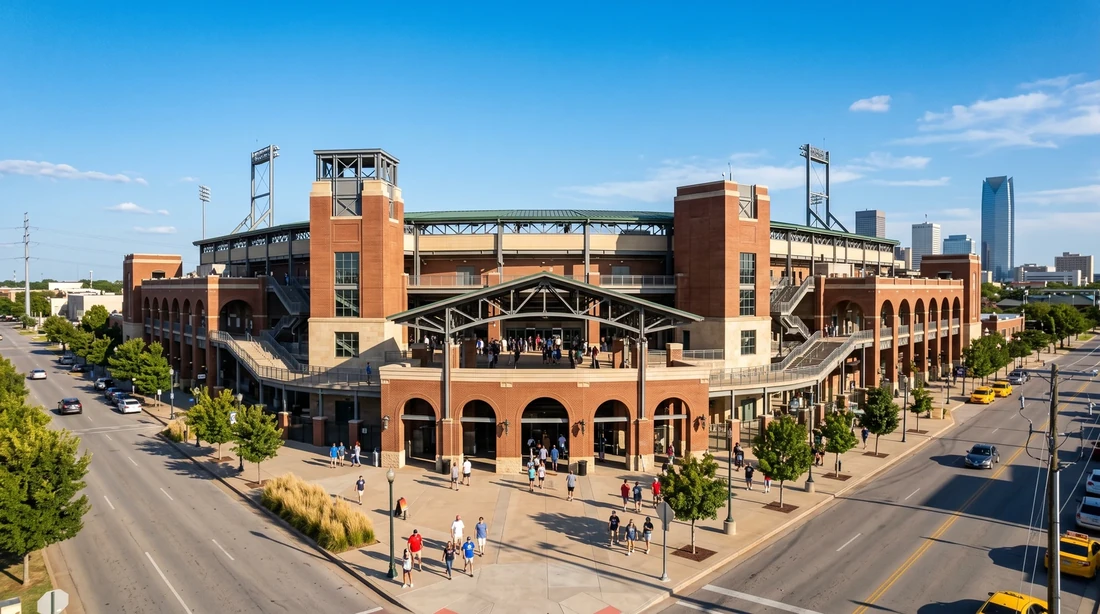
Key Takeaways
- A team house holds up to 16+ players, coaches and parents, typically 30 to 50% less per person than an event-weekend hotel block.
- Homes near the OKC Fairgrounds and Devon Park book out 2 to 4 months before major tournaments, so lock dates early.
- Split across a full group, whole-house rentals typically land between $21 and $42 per person per night, before kitchen savings.
- "Sleeps 16" is not 16 beds — get a written bed-by-bed layout before assigning rooms, since occupancy limits are firm.
This guide covers how a team house rental in OKC works: what it costs per player against a hotel block, how to match group size to the right home, the three ways teams fill a house, the 2026 event calendar and when to book for each, drive times to the major venues, worked examples with the arithmetic shown, the kitchen math, how to split the bill, and the paperwork a coach should have in hand before paying.
You have the bracket, the entry confirmations, and a headcount that keeps changing: fourteen kids, three coaches, a few parents, and a trailer full of gear. Every hotel near the venue wants six separate rooms at event pricing with a two-night minimum. One booking can replace all of it.

Why Does a Team House Rental in OKC Beat a Hotel Block?
One sleeps-16 house in Oklahoma City typically costs less per night than the six hotel rooms it replaces, and it adds a full kitchen, laundry, and a single invoice.
OKC runs a near-continuous team calendar: horse and livestock shows at the OKC Fairgrounds, the Women's College World Series at Devon Park, youth baseball and softball tournaments across the metro's complexes, cheer and wrestling events downtown near Paycom Center, rowing and paddling regattas in the Boathouse District on the Oklahoma River, and relay teams for the OKC Memorial Marathon in late April. Different sports, identical housing problem: a group of 8 to 20 people who need to eat, sleep, and move as one unit.
What one roof changes for a coach or team manager
- Meals on your schedule. A 6:45 AM team breakfast happens when you say it does, cooked to whatever the nutrition plan calls for, with no waiting on a hotel buffet that opens after your call time.
- One front door. Curfew, lights-out, and morning wake-ups happen in one house instead of across three hotel floors with an elevator between you and the roster.
- Gear staging. Bat bags, tack trunks, coolers, and equipment live in a garage or mudroom instead of riding the elevator to six different rooms.
- Mid-event laundry. Uniforms and show clothes wash overnight in a real laundry room. No hunting quarters for a shared hotel machine on day three.
- A real meeting space. Film review, bracket talk, and team dinners happen around one table or one big living-room TV.
- One invoice, one contact. A single confirmation, a single set of house rules, and one person to call, instead of six folios to reconcile for the boosters.
The hidden costs inside a hotel block
Hotel blocks carry costs that never show up in the quoted room rate. Attrition clauses can put your organization on the hook for rooms nobody uses if families cancel. Taxes and fees apply to every room. Parking is often charged per vehicle. Breakfast hours rarely match early game times, so families eat out anyway. And there is no team space, so your pre-game meeting happens in a lobby corner.
We run 11 furnished homes across the OKC metro sleeping 2 to 16+, with a 9.5 out of 10 average across 1,580 verified guest reviews on Airbnb and Vrbo; two of the homes hold Airbnb's Guest Favorite badge. Browse the full lineup on our properties page or go straight to the team-sized homes at large group rentals in OKC.
On the article's spring shelter-plan note, for regional context:
The Oklahoma City metropolitan area is one of the most tornado-prone major cities in the world, with about 150 tornadoes striking within the city limits since 1890.
Wikipedia: Oklahoma City
What Does Waiting to Book Cost a Team?
Homes that sleep 12 or more are the scarcest lodging inventory in the Oklahoma City metro, and they are always the first to disappear before a major event.
Here is the typical sequence a team manager faces, stage by stage, when booking slides:
- 4+ months out: Full choice of team-sized homes near your venue at standard from-rates. You pick the layout; the calendar bends to you.
- 2 to 3 months out: The sleeps-12+ homes closest to the Fairgrounds and Devon Park thin out first. Rates hold, and you are choosing from what is left.
- 4 to 6 weeks out: Event-weekend pricing firms up across the whole market. Teams start splitting across two smaller homes, which doubles coordination and check-ins.
- 1 to 2 weeks out: Hotel blocks hit their cutoff dates and release unclaimed rooms back at prevailing rates, usually higher than the block rate you skipped.
- Week of the event: The roster splits across two or three properties or scattered hotel rooms. Supervision gets harder, drive times multiply, and per-person cost peaks.
Every week you wait raises the price and shrinks the pool of homes that can physically hold your group at all.
Bringing a roster, a relay team, or a show string to Oklahoma City? Our homes sleep up to 16+, come with one itemized invoice, and direct booking saves up to 35% on 4+ night stays.
Check team-sized homes and dates or call/text (405) 870-2146.
Which Home Fits Your Group Size?
Split across a full group, a whole-house rental in OKC typically lands between $21 and $42 per person per night, before counting the restaurant meals a kitchen replaces.
| Group size | Home setup | Typical nightly rate | Per person, per night |
|---|---|---|---|
| 6–8 | 3–4 bedroom home | $165–$250 | ~$21–$42 |
| 9–12 | 5–6 bedroom home | $250–$350 | ~$21–$39 |
| 13–16+ | Estate-scale, sleeps 16+ | $350–$425+ | ~$22–$33 |
| 17–24 | Two nearby homes, combined | $500–$700 combined | ~$21–$41 |
Those bands reflect our published from-rates of $225 to $425/night booked direct. Event weekends typically run higher, and 30+ night stays qualify for monthly rates. The bands are per-night lodging only; the kitchen savings stack on top.
One warning that saves more headaches than any other: "sleeps 16" and "has 16 beds" are different claims. A sleeps-16 listing might mean ten real beds plus bunks and sofa sleepers. Before you assign rooms, get a bed-by-bed layout in writing: how many kings, queens, bunks, and sleepers, and on which floors. Coaches and parents usually take the private rooms; the roster takes bunk rooms and shared spaces. Occupancy limits are firm, so count everyone, including siblings who tag along.
Groups of 17 to 24: the two-home strategy
Past 16 people, the play is two homes on the same side of town, ideally within a 10-minute drive of each other. Put a lead adult in each house, split the roster by squad or age rather than by friend group, and designate one house as the meal-and-meeting house so the team still eats and plans as a unit. Booking both through one operator keeps it to one conversation, one set of terms, and one contact. Call (405) 870-2146 with the full headcount and we will pair homes for you.
If the roster changes after you book
Headcounts grow. A sibling joins, an assistant coach gets added, a grandparent decides to come watch. Call before anyone arrives. Occupancy limits are firm numbers, and two late additions can push a sleeps-14 booking past its limit. When in doubt at booking time, count high: shopping for a sleeps-16 home with 13 confirmed travelers costs nothing, while the reverse forces a scramble.
Two feature filters worth applying early. Several homes have pools, useful for recovery days and the dead hours between bracket games (see OKC rentals with pools). Several are dog-friendly, which matters to show families and staff traveling with dogs (see pet-friendly rentals in OKC).
Who Stays in the Team House?
Teams run whole-house stays in OKC three ways (full traveling party, players-and-staff only, or a headquarters model), and the choice changes which home you should book before you ever look at rates.
Full traveling party. Players, coaches, and parent chaperones all under one roof. This is the model the per-family split math below assumes, and it needs the biggest inventory: sleeps 13 to 16+ or the two-home strategy. One curfew, one kitchen, and the lowest cost per family, at the price of the least privacy.
Players-and-staff only. The roster and coaches take the house; families book their own lodging wherever they like. A sleeps-10 to sleeps-12 home covers a typical youth roster plus staff, supervision is tightest, and the team's cost drops because parents are out of the split. One thing to lock down first: many school and club travel policies set adult-to-minor ratios and require designated, cleared chaperones. Confirm your organization's written policy before you finalize room assignments, because it may dictate how many adults must sleep in the house.
The headquarters model. Coaches, team ops, and maybe a team parent or two take a mid-size home as the meal, meeting, and film hub, while families stay wherever they choose. This fits large programs bringing multiple squads to the same event, and it is the clean workaround when a stay-to-play block covers family rooms but the staff still wants a working base with a kitchen and a whiteboard wall.
Whichever model you run, one rule is universal: whole-house rentals require a present, responsible adult on the booking. A team house is never an unsupervised players-only crash pad. The booker's name on the agreement should belong to an adult sleeping in the house.
When Are the 2026 Team Events in Oklahoma City?
Oklahoma City hosts team-scale events in every season of 2026, and each one empties the metro's large-home inventory on its own clock.
| Event | Typical timing | Primary venue | Book housing by |
|---|---|---|---|
| Cattlemen's Congress | Early January | OKC Fairgrounds | October–November |
| OKC Memorial Marathon | Late April | Downtown OKC | February |
| Women's College World Series | Late May–early June | Devon Park | February–March |
| Youth baseball/softball season | May–July | Metro complexes | 6–10 weeks out |
| State Fair of Oklahoma | September | OKC Fairgrounds | July |
| AQHA World Championship Show | Typically October–November | OKC Fairgrounds | Late summer |
Treat the book-by column as guidance. It reflects when team-sized homes typically start disappearing rather than a hard deadline. We have written a dedicated brief for each anchor event: Cattlemen's Congress housing, where to stay for the Women's College World Series, AQHA World Show — where to stay, and baseball tournament housing in OKC. If you are weighing a hotel anyway, start with hotels near the OKC Fairgrounds for the honest comparison.
What the season does to your stay
Season shapes the trip as much as the bracket does. For Cattlemen's Congress in early January, build a weather buffer into the hauling plan. Oklahoma ice storms are a real January possibility, and nobody wants to pull a loaded gooseneck on glazed pavement to make a class time.
June through August, afternoon heat pushes games toward early call times and makes a home with a pool earn its keep in the dead hours between brackets. In September, add minutes around the Fairgrounds gates: State Fair traffic backs up the surrounding streets for most of the month, even for shows in other buildings on the grounds.
The spring note that applies to every April-to-June event: Oklahoma's tornado season peaks April through June. It rarely disrupts a tournament, and a house gives your whole group one interior shelter plan under one roof. That is worth a two-minute walkthrough on arrival night during spring stays.
Where Should a Team Base Itself in Oklahoma City?
Almost nothing in the OKC metro core is more than about 25 minutes from anything else, so a team can prioritize house size and layout over a pin-perfect location.
| Base area | To OKC Fairgrounds | To Devon Park | Notes |
|---|---|---|---|
| West-central OKC | ~5–10 min | ~20–25 min | Closest to Fairgrounds barns and show rings |
| Paseo & Plaza districts | ~10–15 min | ~15 min | Walkable restaurants for team dinners out; ~10 min to Paycom Center and Bricktown |
| The Village / Lake Hefner | ~15–20 min | ~20 min | Quiet streets, big grocery stores, lake trails for recovery runs |
| Gaillardia (NW OKC) | ~20 min | ~25 min | Estate-scale homes bordering Gaillardia Country Club |
| South OKC / airport | ~10–15 min | ~25 min | Some homes 6 minutes from Will Rogers World Airport — useful for fly-in staff |
All times are typical off-peak estimates; add a cushion for morning call times. Two venue notes beyond the table. Cheer, wrestling, and hoops events run downtown near Paycom Center, roughly 10 minutes from a Paseo or Plaza base, with Bricktown's restaurant row nearby for the post-championship team dinner. Rowing and paddling events run in the Boathouse District on the Oklahoma River just south of downtown, closest to a south OKC base.
Youth baseball and softball complexes are scattered across the suburbs (Edmond and the north metro, Yukon and Mustang on the west side, Moore and Norman to the south), so confirm your specific complex address before choosing a base area. A west-metro complex favors a west-central or airport-area home. A north-metro complex favors The Village or Lake Hefner, where the paved trail around Lake Hefner doubles as a shakeout-run and recovery-walk route on off days.
For big rosters that want space to spread out, the estate-scale options, including Lakefront Manor overlooking Twin Lakes with an infinity pool and the Gaillardia homes, trade a few minutes of drive time for square footage, parking, and privacy no hotel floor can match.
Fly-in staff, team vans, and the trailer plan
Will Rogers World Airport sits on the metro's southwest side, and some of our homes are 6 minutes from it, which helps when a head coach, college staffer, or scout flies in while the team drives. If your program rents 15-passenger vans, reserve them as early as you reserve the house. Large vans are limited inventory in any city on an event weekend, and they disappear on the same clock the big homes do.
For hauling groups, sort the trailer plan before arrival. Many Fairgrounds shows offer on-grounds trailer parking, so confirm with your show whether rigs stay on the grounds overnight, and send the host your full vehicle list either way. For downtown events, parking is typically charged per vehicle, so carpool from the house in as few vehicles as the roster allows.
What Does a Team Pay in Practice?
For a group of eight or more staying three-plus nights, the house-versus-hotel gap in Oklahoma City typically runs into four figures over the stay. Every scenario below is clearly hypothetical, with the arithmetic shown.
A show family's two weeks near the Fairgrounds
Say a family of six is exhibiting at a two-week horse show at the OKC Fairgrounds: parents, three kids, and a grandparent helping at the barn. The hotel route needs two rooms. At a modest $129/night per room, that is $258/night × 14 nights = $3,612 before taxes and parking. Add restaurant meals for six, even a conservative $90/day above what groceries would cost, and the two weeks climbs past $4,800.
The house route: a furnished 4-bedroom booked direct at roughly $215/night runs 14 × $215 = about $3,010 for the entire stay, right at the $3,000 mark. That is roughly $500 per person for two full weeks, or about $36 per person per night, with a kitchen for barn-schedule meals, a laundry room for show clothes every night, and a garage for tack and coolers.
The platform comparison matters too. Guest-side service fees on the major booking platforms typically add roughly 14 to 17% on top of the nightly rate. On a $3,000 stay, that is an extra $420 to $510 that direct booking keeps in the show budget. When grandparents and cousins turn a show week into a gathering, the same math scales up; our guide to family reunion rentals in OKC covers that version.
A tournament weekend, split per family
Now a four-night bracket. A youth baseball team brings 11 players, 2 coaches, and 3 parent chaperones (a traveling party of 16) to a summer tournament. A sleeps-16 home at an event-weekend $395/night runs 4 × $395 = $1,580 for the whole roster. Split evenly across 11 player families, that is about $144 per family for all four nights, with the coaches' beds effectively covered by the group.
The hotel alternative: each family books its own room at event pricing. Even at $149/night, four nights is $596 per family before taxes and parking, roughly four times the house split, and the team is scattered across a hallway instead of sharing one kitchen and one film session. Parents and siblings beyond the chaperones either book their own rooms as usual or the group runs the two-home strategy above.
The barn-group variant: a trainer's string at the AQHA World Show
Say the same family's trainer brings a full string back in the fall: the trainer, an assistant, and ten clients, twelve people for the first ten nights of the AQHA World Championship Show. A sleeps-16 estate at a hypothetical $375/night runs 10 × $375 = $3,750 for the stay. That is about $31 per person per night, or $312 each for the full ten nights.
The hotel version: twelve adults doubling up need six rooms, and even at $135/night that is $810/night × 10 = $8,100 before taxes and parking, more than double. The house also solves the two things barn groups fight over at hotels: nightly laundry for show clothes and one kitchen running on barn hours instead of restaurant hours.
The honest short-trip check: when the gap narrows
Run the short-stay math too, because it is where houses stop being automatic. The same family of six comes back for a five-night Cattlemen's Congress trip in early January. House: 5 × $215 = $1,075. Two hotel rooms: 5 × $258 = $1,290 before taxes, a lodging gap of only about $215. On short stays the lodging gap narrows.
What tips it in January is the kitchen (call it $90/day saved feeding six, another ~$450), the garage keeping tack out of freezing weather, and the flexibility to add an ice-storm buffer night. Shrink the trip to two nights and the hotel might well win. The section below on when a hotel is the right call covers exactly that line.
Running the circuit: when the stay passes 30 nights
Stretch the show family's stay to back-to-back circuits, five weeks in town instead of two. At the straight nightly rate, 35 × $215 = $7,525. Stays of 30+ nights qualify for monthly rates, though, which typically land below the straight nightly math, so before you assume the big number, get the monthly quote. Our extended stays page covers how 30+ night pricing works; one call quotes your exact dates.
How Much Does the Kitchen Save a Roster?
Restaurant meals for a 14-person traveling party typically cost around three times what the same meals cost out of a house kitchen.
This is the line item hotel-block math always leaves out, and for a team it is often bigger than the lodging gap itself. Ballpark it. These are hypothetical estimates, and your team's eating habits will move them:
| Meal | Restaurants, 14 people | House kitchen, 14 people |
|---|---|---|
| Breakfast | ~$140–$180 | ~$40–$55 |
| Lunch (venue day) | ~$170–$210 | ~$55–$70 (sandwich line + coolers) |
| Team dinner | ~$250–$350 | ~$80–$110 |
| Daily total | ~$560–$740 | ~$175–$235 |
Run a four-night, three-full-day tournament through those bands and the kitchen saves in the ballpark of $1,000 to $1,500 on food alone. The practical version: one grocery-pickup order timed to your 4:00 PM check-in, a morning sandwich-and-cooler assembly line for the venue, and one cooked team dinner. A base near The Village or Lake Hefner puts full-size grocery stores within a few minutes' drive; most other base areas are close behind.
One more thing a kitchen buys that no restaurant rush can: control of the ingredient list. If a player on the roster has a food allergy, one shopping list means you know exactly what is in every team meal, a quiet advantage over ordering for fourteen at a packed venue-adjacent restaurant.
How Do Teams Split the Bill Without a Fight?
One adult books, one payment clears, and the split happens inside the team. That structure prevents nearly every money dispute a group stay can produce.
Name a single booker: their name goes on the agreement, their card makes the payment, and their phone is the host's point of contact. Splitting a reservation across five cards or routing the host through a group chat is how details get lost.
Collect each family's share before the booking is placed. Cancellation terms vary and no operator can promise a refund if your bracket ends early, so the team should treat collected money as spent. Chasing $144 from a family whose kid got cut mid-season is a job nobody wants.
Pick a split method and announce it up front. Even-per-person is simplest and usually fine for a weekend. For longer stays, a private-room premium keeps it feeling fair: the adults taking the private kings chip in 20 to 30% more than the bunk-room rate. Split any damage waiver evenly, since it protects the whole group equally. Booster clubs and team funds can also pay centrally and reconcile against the itemized invoice; the checklist below covers the paperwork side.
How to Book a Team House in OKC, Step by Step
- Confirm the real headcount. Count players, coaches, parents, and siblings before you shop, because "sleeps 12" versus "sleeps 16" changes which homes qualify.
- Set dates with a buffer night. Book through the final day of your bracket or show, since winning teams need the extra night more than anyone.
- Request a bed-by-bed layout. Ask exactly how many real beds, bunks, and sofa sleepers each home has before assigning rooms.
- Book direct for one invoice. Direct booking typically saves up to 35% on 4+ night stays and produces the itemized paperwork boosters and schools require.
- Send house rules to the roster. Share quiet hours, the 11:00 AM checkout, parking assignments, and occupancy limits before anyone arrives.
What Trips Teams up on Arrival Day and Checkout?
Check-in is 4:00 PM and checkout is 11:00 AM, and both collide with a typical tournament schedule unless you plan for them.
If you are rolling in Friday with a 6:00 PM game, do not route sixteen people through the house first. Send one adult ahead for keys and the grocery pickup while the team goes straight to the venue; everyone walks into a stocked house after the game. Ask about early arrival when you book. It is sometimes possible depending on the previous stay's turnover. Never assume it and never build the schedule around it.
Checkout collides the other way. An 11:00 AM checkout against a Sunday-morning bracket means the trailer gets packed Saturday night and the house gets a walk-through before the first pitch. Do a gear inventory on load-out morning; the missed bat bag in a bunk-room closet is the classic team-house casualty. Ask about late checkout in advance, since it depends entirely on the next booking. And if your bracket can extend, book the buffer night up front. Eating one unused night is a far better problem than hunting for sixteen beds at 9:00 PM after a semifinal win.
How Do Minors, Curfew, and House Rules Work on a Residential Street?
A team house sits on a real street with real neighbors, and the occupancy limit counts every minor along with the adults.
Assign adults deliberately: put a coach or chaperone on each floor that has a bunk room, so lights-out is enforceable without a hallway patrol. One front door means one curfew. The supervision advantage over a hotel only holds if the room assignments back it up.
Brief the roster on three rules before arrival: quiet hours (a driveway basketball game at 10:30 PM is the neighbor complaint that sours group stays), the no-party clause standard in whole-house rentals, and where cleats, spikes, and muddy boots come off. Teams that treat the street well are the ones a host bends the calendar for next season.
What Should a Coach Have in Writing Before Paying?
Five documents settle almost every team-housing dispute before it starts: an itemized invoice, a bed-by-bed layout, the written occupancy limit, the parking plan, and the cancellation terms.
- Itemized invoice. Dates, nightly rate, taxes, and fees broken out. Most booster clubs and school districts require this format for reimbursement. If a district pays vendors directly, ask about a W-9 and payment terms up front.
- Written occupancy limit. Get the number in writing and make sure it covers your full traveling party, including everyone who is a non-player.
- Bed-by-bed layout. Real beds vs. bunks vs. sofa sleepers, by room and floor, so room assignments happen before arrival rather than in the driveway at 4:00 PM check-in.
- Cancellation and date-change terms. Elimination, weather, and schedule shifts happen. Know the terms before you pay, in writing.
- Damage waiver vs. deposit. Know which one applies, what it covers, and what a broken lamp costs the team fund.
- Parking count. Trucks, a 15-passenger van, a dually with a gooseneck. Tell the host the vehicle list and confirm the driveway holds it.
- Chaperone policy check. If minors are staying, confirm your school or club's adult-to-minor ratio and cleared-chaperone requirements in writing before finalizing the rooming list.
- One point of contact. A single phone number for lockouts, extra towels, and the 9 PM "the wifi password isn't working" text.
- Stay-to-play status. Confirm whether your event requires booking through its housing partner before you commit to any house.
The platform-versus-direct question belongs on this checklist too. Guest-side service fees on major platforms typically run 14 to 17% of the booking, platform receipts often lump charges together in ways reimbursement offices reject, and date changes are governed by platform policy rather than a conversation. If your dates are locked, book direct and keep those hundreds in the team budget, or call/text (405) 870-2146 and we will quote your exact roster and dates.
When Is a Hotel the Right Call for a Team?
For a one- or two-night trip with a traveling party of six or fewer, a hotel usually wins, and it is worth saying so plainly.
Book the hotel when: your stay is 1 to 2 nights, your group fits in two or three rooms, someone's loyalty points are covering rooms, you want daily housekeeping, you are a single coach or scout traveling solo, or your event runs a mandatory stay-to-play block with no whole-house exemption. Some events also rebate housing revenue back to the tournament, which can make the block the politically smart choice even when the math is close.
College and pro staffs whose travel offices reimburse against GSA per-diem lodging rates sometimes find per-room hotel folios simpler to file, too, though a direct-booked house invoice itemized by night can often be structured to fit; ask before booking. A house's fixed advantages (kitchen, laundry, meeting space) need nights and headcount to pay off.
The house changes the outcome when: your group passes about eight people, the stay runs three nights or more, you are controlling meals and curfew, someone is traveling with a dog, you have trailers and gear, or you are at the Fairgrounds for a week or two. At that point the per-person math, the supervision, and the single invoice all point the same direction.
Terms You'll Hear, Decoded
- Stay-to-play: a tournament rule requiring out-of-town teams to book through the event's housing partner to stay eligible. Always confirm your event's policy in writing before booking any house.
- Attrition clause: hotel-block contract language that can leave your organization paying for unclaimed rooms if families cancel. The fine print that makes a "free" block expensive.
- Cut-off date: the deadline when a hotel releases your unclaimed block rooms back to the public, usually at higher prevailing rates.
- Rooming list: the roster-to-bed assignment sheet; build it from the home's bed-by-bed layout before arrival.
- Occupancy limit: the maximum number of overnight guests a home allows. A firm number that counts every minor.
- Damage waiver: a small non-refundable fee that replaces a large refundable deposit and covers minor accidental damage.
- Direct booking: reserving with the operator instead of through a platform. No 14 to 17% guest service fee, flexible terms, and a real invoice.
- Per diem / GSA rate: the federal daily lodging and meal allowance some college and pro staff travel budgets are pegged to; current rates are published at the GSA per diem rates page.
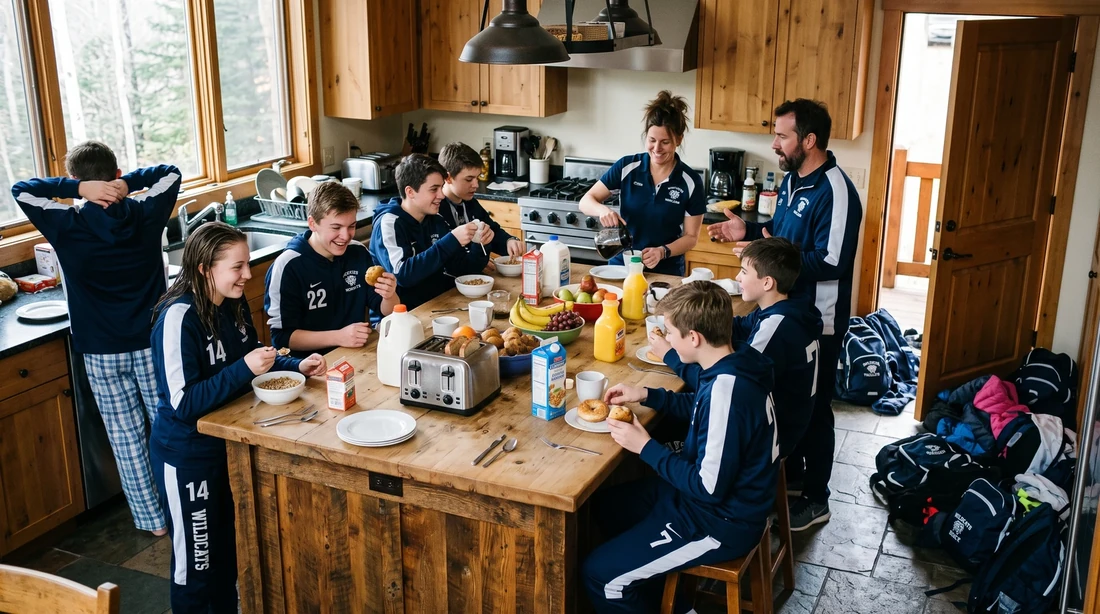
The Bottom Line
For eight or more people over three or more nights, one team house in OKC usually costs less per person than a hotel block, keeps the roster under one curfew, and hands the boosters a single invoice. The homes that hold a full roster are scarce and go 2 to 4 months before the big events, so the headcount and the dates come first.
- Confirm your headcount, roster model, and dates. Decide who is sleeping in the house (full party, players-and-staff, or headquarters), count everyone including siblings, and add a buffer night if your bracket can extend. Cross-check event dates on Visit OKC.
- Run the full per-person math. Get one hotel-block quote for your group and set it against the cost bands and kitchen table above, counting meals and parking along with the room rate.
- Check team-sized homes now. See current availability at large group rentals in OKC or call/text (405) 870-2146; one conversation covers the home, the bed layout, the invoice, and the terms.