Yes. Airbnb's own Q1 2026 earnings (reported May 2026) show the average daily rate reached $187, up 9% year over year. Revenue rose 18% to $2.678B and nights booked climbed 9% to 156.2M — so prices, demand, and total spend are all rising together, not one at the expense of another.
Key Takeaways
- Airbnb's Q1 2026 average daily rate reached $187, up 9% year over year, with revenue up 18% to $2.678B.
- Nights and seats booked rose 9% to 156.2M, while gross booking value hit $29.2B, up 19% year over year.
- Cleaning fees are one-time flat charges, so they cost more per night on short stays and less on long ones.
- BnB OKC publishes from-rates of $165 to $425 per night, up to 35% direct savings on 4+ nights, and monthly rates on 30+ nights.
This guide covers what Airbnb's Q1 2026 numbers say about rising prices, where the fees sit on top of the nightly rate, why Oklahoma City stays cheaper than most big metros, and when a week-plus trip is better booked direct.
If your last few trips felt pricier, the earnings report backs you up. The climb is a steady 9%. That is no shock, and some cities and booking methods still sidestep most of it.
Every quarter Airbnb has reported through 2026 shows the average nightly rate climbing. There's no countdown here — but on a week-plus trip, each per-night platform booking locks in that rising rate plus service fees, while a direct monthly or weekly rate holds flat.

Why Are Airbnb Prices Going up In 2026?
Demand is outrunning supply. Airbnb booked 156.2M nights and seats in Q1 2026, up 9% year over year, while gross booking value hit $29.2B, up 19%. When travelers chase stays faster than hosts add them, the average daily rate rises. It did, to $187.
Three forces are stacking up:
- More first-time bookers. First-time booker growth hit 10%, the highest since early 2022. That pulls in fresh demand from expansion markets. Brazil-origin nights grew 20%+ for a third straight quarter and India-origin nights grew roughly 50% year over year.
- Easier ways to pay. Reserve Now, Pay Later made up about 20% of global gross booking value in Q1 2026. When paying is easier, people book bigger and further out, and that supports higher rates.
- A stickier app. App bookings were 63% of all nights (up from 58% a year earlier), with app-booked nights up 22%.
Management also credits simplified fees and AI support, which resolves about one-third of tickets without a human. None of that lowers the headline rate. It removes reasons to skip booking.
On the loyalty perks some short-stay bookers weigh, Wikipedia notes:
Airbnb does not have a loyalty program , in part attributed to its lack of business customers.
Wikipedia: Airbnb
How Has the Airbnb Rate Climbed Quarter by Quarter?
The $187 average daily rate is the latest step in a multi-quarter climb. Here are the reported figures side by side.
| Period | Revenue | Nights / seats booked | Key signal |
|---|---|---|---|
| Q4 2025 | $2.78B (up 12%) | 121.9M | Simplified fees, Reserve Now Pay Later, AI support scale up |
| Q1 2026 | $2.678B (up 18%) | 156.2M (up 9%) | Average daily rate $187 (up 9%); GBV $29.2B (up 19%) |
| Q2 2026 (guidance) | $3.54B–$3.60B (14–16% growth) | Not yet reported | Growth expected to continue |
Revenue is growing faster than nights booked, which is what rising prices per stay look like. Free cash flow hit $1.704B in the quarter. A platform in that position has no pressure to discount.
Where Do the Fees Sit on Top of the Nightly Rate?
The $187 headline is the nightly rate before the guest service fee, the cleaning fee and any local taxes. Airbnb has simplified how fees display, but on a per-night booking they still stack on top. Cleaning fees hit short stays hardest because they are a flat charge spread across fewer nights.
That explains the "why was my total so much higher" moment. A three-night stay carries the full cleaning fee across three nights. A fourteen-night stay spreads the same fee across fourteen, so the longer you stay, the smaller the bite per night.
How Should You Book Differently Now?
Trip length is the biggest lever you still control, because per-night pricing and long-stay pricing move in opposite directions.
| Booking choice | Old default | 2026 smart move |
|---|---|---|
| Short 2–3 night stay | Fine — fees barely noticed | Fees + rising ADR sting most here; a hotel may win |
| Week-plus trip | Book nightly, absorb the total | Ask for a weekly/monthly rate or book direct to flatten the per-night cost |
| Big-city destination | Expect premium pricing | Choose affordable metros like OKC where ADR runs below coastal cities |
| Paying up front | Full charge at booking | Reserve Now Pay Later is common — but it doesn't lower the rate |
What Does a Week Cost at the Average Rate?
Here is a hypothetical. Say you book a 7-night trip and the nightly rate matches Airbnb's Q1 2026 average of $187.
- 7 nights at $187 = $1,309 before fees.
- Add a typical guest service fee and a one-time cleaning fee, and the total commonly lands well above that base once everything displays.
- A year earlier, at roughly 9% less, that nightly rate would have been near $172 (about $120 lower across the week before fees).
Compare that with booking a week-plus stay direct. BnB OKC publishes from-rates of $225 to $425 a night, with up to 35% direct-booking savings on 4+ night stays and monthly rates on 30+ night stays. On a longer trip, a flat weekly or monthly number with no per-night service fee pulls the real cost down. (All figures hypothetical except our published rates.)
Planning a week or a month in Oklahoma City? Direct extended-stay rates flatten the per-night cost that platform pricing keeps pushing up. Check availability and monthly pricing before you lock in nightly.
Is Oklahoma City Still Affordable for a Stay?
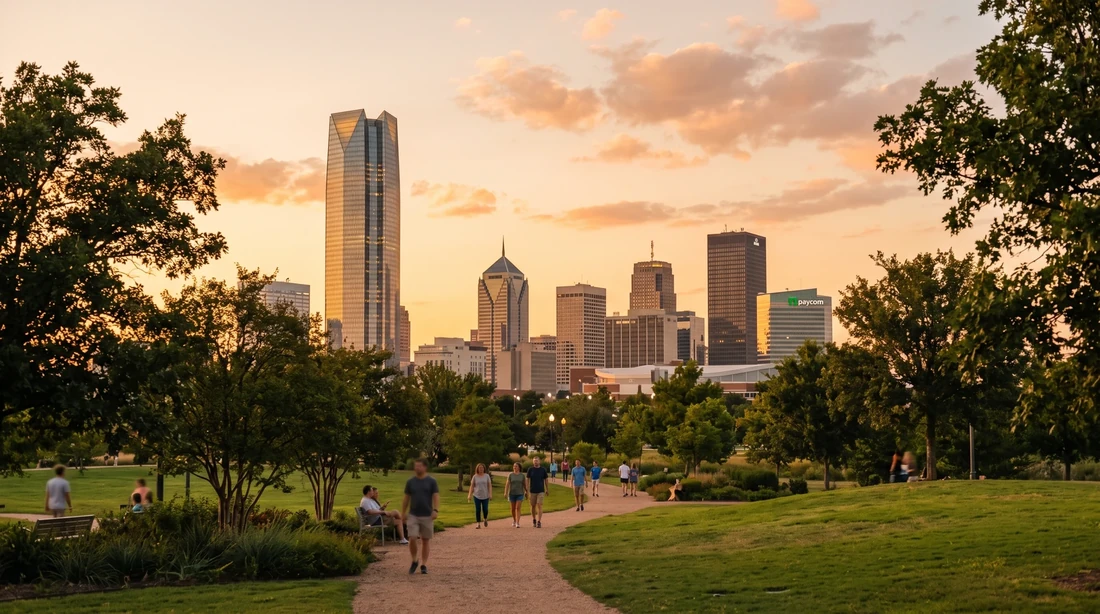
Yes, compared with most big metros. Coastal and gateway cities pull the platform average up, and mid-continent metros like OKC typically sit below it, so the 9% climb bites less here than in New York, LA or Miami.
For a family relocating, a traveling professional, or anyone here for a hospital stay, an event or a work project, length of stay decides it. A short weekend still books fine on the platform. A week or a month is where you should compare a direct booking.
BnB OKC runs 11 furnished homes across the metro and holds a 9.5 out of 10 average across 1,580 verified guest reviews on Airbnb and Vrbo, with two homes carrying Airbnb's "Guest Favorite" badge. The homes sleep 2 to 16+, several are dog-friendly, and they range from Capitol Manor across from OU Medical Center to Lakefront Manor's infinity pool over Twin Lakes, six minutes from Will Rogers World Airport.
Local rules and hotel taxes also affect what you pay. It helps to read up on OKC short-term rental rules and the recent OKC Airbnb enforcement crackdown. If your trip touches Norman, see the Norman short-term rental license and the Norman hotel tax increase. With the Route 66 Centennial in OKC drawing 2026 travel, a longer stay booked direct is the cleanest way around rising nightly rates.
How to Beat Rising Airbnb Prices, Step by Step
- Count your nights first. Four or more nights unlocks direct-booking savings; 30+ nights unlocks monthly rates.
- Compare the all-in total. Add service and cleaning fees to any platform quote before you judge it.
- Ask for the weekly or monthly rate directly. A flat long-stay number spreads or removes the flat fees that hurt short bookings.
- Pick an affordable metro when you can. OKC's rates typically sit below the $187 national average.
- Book direct for the discount. Call or text to confirm dates and lock the rate before it moves.
On a 10-night or month-long trip, this is where the national rate climb stops mattering to your wallet.
What Should You Check Before Booking a Platform Stay?
- The nightly rate shown is the number before service fees, cleaning and taxes.
- A flat cleaning fee on a 2 or 3 night stay costs you the most per night.
- Reserve Now, Pay Later delays the charge and leaves the rate where it was.
- On a week or longer, ask whether a weekly or monthly rate exists before paying nightly.
When Is a Direct Booking Unnecessary?
For a one- or two-night solo trip, the platform is often the right call. You want convenience and loyalty perks, and the cleaning-fee bite is a small absolute number. If you care about points or brand rewards, or need a single night, book the easy way.
Direct wins when the trip is longer or the party is bigger: families who want a kitchen and laundry, groups splitting a house, pet owners, 30+ night relocations and hospital stays, and anyone here for a multi-day event. That is where flat weekly and monthly rates beat a rising nightly number, and a local operator picks up the phone.
What Do the Pricing Terms Mean?
- Average daily rate (ADR): the average nightly price across all bookings. Airbnb's was $187 in Q1 2026.
- Gross booking value (GBV): the total dollar value of everything booked before Airbnb's cut, $29.2B in the quarter.
- Reserve Now, Pay Later: booking now and paying closer to the stay; about 20% of Q1 2026 GBV. The rate stays where it was.
- Guest service fee: the platform fee added on top of the nightly rate at checkout.
- Cleaning fee: a one-time flat charge that costs more per night on short stays and less on long ones.
This guide is general travel and pricing information, not financial advice; rates change and every booking's total depends on your dates, party size, and fees.
The Bottom Line on Rising Airbnb Prices
Prices are up 9% and the trend has held all year. For short trips, live with it. For a week or more, count your nights, compare all-in totals, and check extended-stay pricing or call/text (405) 870-2146 to confirm availability before nightly rates move again.