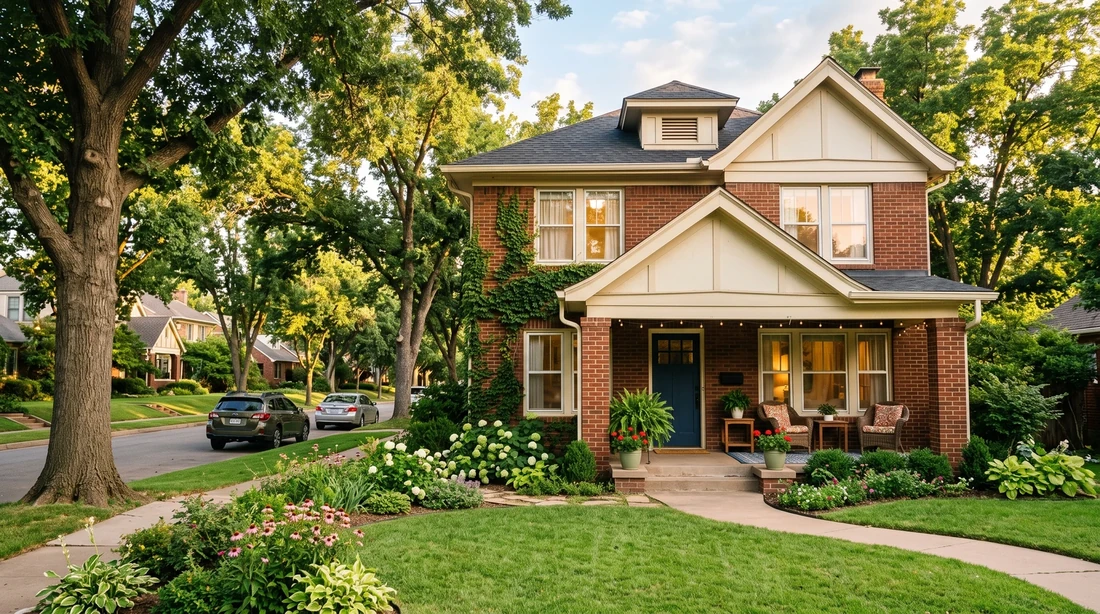
Airbnb's Q1 2026 earnings, reported May 7, 2026, showed revenue up 18% to $2.68 billion, average daily rates up 9%, and a new single 15.5% host fee now live on over 25% of listings. The plain-English takeaway: on-platform totals are rising, and the same OKC home often costs less booked direct.
Key Takeaways
- Airbnb's Q1 2026 revenue rose 18% to $2.68 billion, with gross booking value up 19% to $29.2 billion.
- Platform-wide average daily rates rose 9% year over year, or 4% excluding currency effects.
- A new single 15.5% host fee is live on over 25% of listings, often absorbed into nightly rates.
- BnB OKC operates 11 furnished metro homes and publishes direct rates, with savings up to 35% on stays of 4+ nights.
If your recent Airbnb checkout total looked higher than you remembered — before you even picked dates — you're reading the numbers correctly. Airbnb's Q1 2026 earnings, released May 7, 2026, confirmed average daily rates grew 9% year over year, and a rebuilt fee structure is quietly rolling across the platform. This isn't a glitch. It's the business model working as designed, and it's showing up in what you pay for a weekend in Oklahoma City the same way it shows up everywhere else.
Below, we translate the earnings-call jargon into the one question you actually have — why does my Airbnb total keep going up? — and then show what it means specifically for booking an OKC stay, where the same house often lists for meaningfully less when you book direct and skip the platform fee entirely.
The new 15.5% single host fee has migrated to over 25% of active listings and is still rolling out — every night you book on-platform now increasingly carries that fee baked into the price, not shown as a separate line.

What Airbnb's Q1 2026 Earnings Actually Said
Airbnb grew revenue 18% year over year to $2.68 billion in the first quarter of 2026, beating the $2.62 billion analysts expected. Gross booking value — the total dollars flowing through the platform — hit $29.2 billion, up 19%. Guests booked 156.2 million nights and experiences, up 9%, even with roughly a 100-basis-point drag from Middle East conflict cancellations.
Not every number was a beat. Earnings per share came in at $0.26, below the $0.29 Wall Street modeled. But adjusted EBITDA rose 24% to $519 million, and the company raised its full-year revenue-growth outlook to "low-to-mid teens," guiding Q2 2026 revenue to $3.54–$3.60 billion. In short: more money per booking, more bookings, and a company confident it can keep both climbing.
| Metric | Q1 2026 result | What it means for guests |
|---|---|---|
| Revenue | $2.68B (+18% YoY) | Platform is extracting more per stay |
| Platform-wide ADR | +9% (+4% excluding currency) | Nightly rates are genuinely higher |
| Gross booking value | $29.2B (+19%) | More total dollars flowing through checkout |
| Nights & seats booked | 156.2M (+9%) | Demand is still rising, keeping prices firm |
| New single host fee | 15.5%, on 25%+ of listings | Fee increasingly absorbed into the nightly price |
Airbnb's fee structure has faced legal challenges abroad:
Legality of service fees in the Netherlands [ edit ] In March 2020, a subdistrict court ruling in the Netherlands found that Airbnb charging service fees to both the host and the guest was illegal and that the 30,000 people who had rented as guests have a right for reimbursement if they file claims.
— Wikipedia: Airbnb
Why Your Airbnb Total Keeps Creeping Up
Three forces from this quarter push the same booking higher, and two of them are invisible at checkout. Understanding each one tells you where the money goes and where you can dodge it.
1. Average daily rates rose 9%
The single biggest driver is the simplest: hosts are charging more per night. Platform-wide ADR grew 9% year over year (4% once you strip out currency swings). Airbnb's own data showed hosts who held rate discipline outperformed those chasing occupancy — Nashville hosts pushed ADR up 23% with flat occupancy, while Austin hosts cut rates for a 9% ADR rise but lost 4.7 points of occupancy and netted just 0.4% more revenue per available room. The lesson the platform is teaching hosts: hold your price. That lesson lands on your invoice.
2. The new 15.5% single host fee
Airbnb is replacing its old split-fee model — where guests saw a separate "service fee" line — with a single host fee of 15.5%, already migrated to more than a quarter of active listings. The CFO told investors to expect "modest upside" in the company's take rate. When the fee is charged to the host, hosts routinely raise their nightly rate to cover it, so it stops appearing as a line item and simply becomes part of the price you see. It's still there. You just can't itemize it anymore.
3. Reserve Now, Pay Later normalizes higher totals
Reserve Now, Pay Later reached about 20% of global gross booking value this quarter, with over 70% adoption among eligible U.S. bookings. Splitting a payment makes a bigger total feel smaller in the moment — which supports those higher ADRs without slowing bookings. It's a real convenience, but it doesn't lower what you owe.
Booking an OKC stay and watching the total climb? The same furnished home often costs less booked direct — no platform fee baked in. See side-by-side pricing or call us.
Old Fee Model vs. New Single Host Fee
The shift from a visible split fee to a single baked-in host fee is the change most likely to affect what an OKC weekend costs you. Here's the before-and-after.
| Feature | Old split-fee model | New single host fee (15.5%) |
|---|---|---|
| Who's charged | Guest and host both paid a share | Host pays a single 15.5% fee |
| Visibility to guest | Separate "service fee" line at checkout | Typically absorbed into the nightly rate |
| Effect on displayed price | Lower nightly rate, fee added later | Higher nightly rate, no separate fee shown |
| Rollout status (Q1 2026) | Being phased out | Live on 25%+ of active listings |
| Company's stated goal | — | "Modest upside" in take rate |
A Worked Example: What the Fee Does to an OKC Weekend
Here's a clearly hypothetical example with the math shown. Say you're booking a furnished OKC home for a 4-night stay at a listed rate of $200 a night.
- On-platform, fee baked in: 4 nights × $200 = $800. If the host raised the nightly rate to absorb the 15.5% fee, roughly $107 of that total is the fee riding inside the price you never see itemized.
- Same home, booked direct: with no platform fee to cover, the equivalent all-in rate can run meaningfully lower. Our published direct-booking savings reach up to 35% on stays of 4+ nights — on an $800 on-platform total, that's a hypothetical saving in the ballpark of $280 for the same four nights.
The exact number depends on the home, the dates, and the season — this is illustrative, not a quote. But the direction is consistent: the fee that's disappearing from your checkout screen didn't disappear from your bill. Booking direct is simply the version where nobody bakes it in.
What This Means If You're Booking an OKC Stay
For Oklahoma City specifically, the earnings takeaway is practical: the platform-wide forces raising totals nationwide apply to OKC listings too, but OKC has a large stock of direct-bookable furnished homes where you can sidestep the 15.5% layer entirely. At BnB OKC we operate 11 furnished homes across the metro and hold a 4.8-star average across 1,247 verified guest reviews on Airbnb — and we publish our direct rates so you can compare them against the on-platform total yourself.
Airbnb's push into hotels is worth noting here too. The company said its hotels initiative is growing more than twice as fast as the core business, with pilots in New York, LA, San Francisco and Madrid, and the CEO called it a potential "multibillion-dollar revenue business." Notably, 55% of hotel bookers later book a home. For an OKC visitor that means more hotel inventory surfacing inside the app over time — but it doesn't change the math on a furnished house with a kitchen, laundry, and room for the whole group, which is where a direct booking still wins on both price and space.
If your trip ties to a specific OKC event, the fee dynamics compound with demand pricing. Read our guides on the Route 66 Centennial in OKC for event-weekend timing, and check local rules in our OKC short-term rental rules explainer before you book anything.
What It Means If You're an OKC Host
The clearest host signal from Q1 2026 was that rate discipline beat occupancy-chasing. The Nashville-versus-Austin data — 23% ADR growth with flat occupancy versus a rate cut that lost nearly 5 points of occupancy for almost no revenue gain — is the whole lesson in one comparison. Holding your nightly rate generally protected revenue better than discounting to fill the calendar.
The 15.5% single host fee also reframes how you price. If Airbnb absorbs the guest-facing fee into your rate, your displayed number goes up and your competitiveness against a direct channel goes down. Many OKC operators now list on-platform for reach while steering repeat and multi-night guests to direct booking, where they keep more and the guest pays less. If you host in the metro, our overviews of OKC Airbnb enforcement, the Norman short-term rental license, and the Norman hotel tax increase cover the local rules that also shape your net.
Where the Growth Is Coming From — And Why It Keeps Prices Firm
Demand is broadening, which is part of why rates aren't softening. First-time booker growth hit 10%, the highest since 2022, led by Brazil, Japan and India. App bookings reached 63% of total nights (up from 58%), with app nights up 22% — Airbnb increasingly owns the whole funnel. And the 2026 World Cup added over 100,000 homes across 16 host cities, expanding supply where demand is spiking.
For a market like OKC that isn't a World Cup host city, the direct effect is smaller — but the platform-wide ADR trend and the fee migration still reach every listing. That's the practical reason to price-check direct: national forces raise the on-platform total regardless of whether your city is in the headlines.
Booking direct in OKC is the simplest way to keep a rising platform take rate out of your total.
Terms You'll Hear, Decoded
- ADR (average daily rate): the average price charged per night — up 9% platform-wide in Q1 2026.
- Gross booking value (GBV): the total dollar value of all bookings before fees; hit $29.2 billion.
- Take rate: the share of each booking Airbnb keeps as revenue; management guided to "modest upside."
- RevPAR: revenue per available room-night — the metric that showed rate discipline beat occupancy-chasing.
- Single host fee: the new 15.5% fee charged to the host, often absorbed into the nightly price you see.
When on-Platform Booking Is Still the Right Call
Booking on Airbnb makes sense when you're comparing dozens of unfamiliar hosts, want the platform's review history in one place, or are booking a single night in a city where you don't know any direct operator. For a quick one-night stopover with no repeat plans, the fee difference is small in absolute dollars and the app is convenient.
Direct booking changes the outcome when you're staying 4+ nights, traveling as a family or group that needs a kitchen and laundry, bringing a dog, or coming back to the same city again — all cases where the baked-in fee adds up and a known local operator saves you real money. For OKC month-plus stays, see our extended-stay options, and browse our furnished homes to compare.
Airbnb's Q1 2026 numbers are available in the company's official financial results, with additional reporting from CNBC and a host-focused breakdown at AirROI.
Your Next Steps
- Check your total for the fee. Open your intended Airbnb dates and note the all-in price — under the new model, the 15.5% host fee is likely inside the nightly rate rather than itemized.
- Compare the same stay direct. Pull the equivalent direct rate for your OKC dates and length of stay; on 4+ nights our direct savings reach up to 35%.
- Book or ask. Lock your dates at bnbokc.com/book-direct or call/text (405) 295-5052 and we'll match a home to your group and budget.