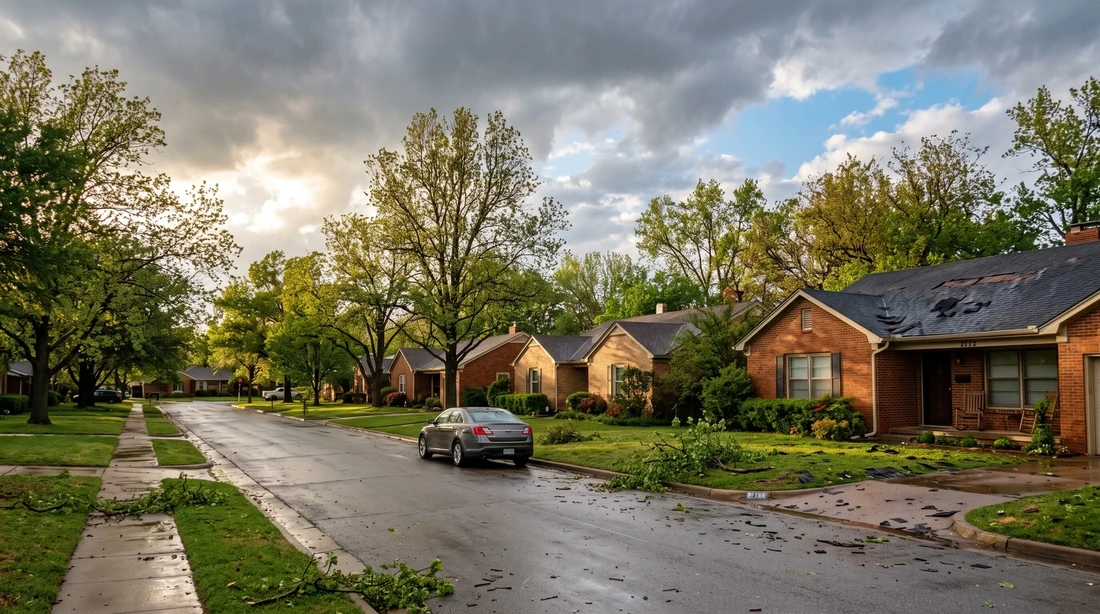
Alacrity Solutions temporary housing is arranged when your insurer uses Alacrity as a third-party administrator (TPA) to place displaced policyholders in furnished homes. Once your carrier authorizes it, Alacrity sources a home from its network (we are one such network property in OKC) and bills the carrier directly, so your family avoids paying hotel costs out of pocket.
Key Takeaways
- Alacrity Solutions is a third-party administrator that coordinates housing placements; your carrier, not Alacrity, actually pays the claim.
- Direct billing begins only after written authorization; booking on your own first can forfeit that benefit entirely.
- Hypothetical three-month repair: two hotel rooms at $378/night total about $34,020, versus about $11,700 for a $3,900/month furnished home.
- ALE pays the difference above normal spending, so a kitchen can drop a $2,800/month food differential to near zero.
This guide explains what happens when your adjuster says "Alacrity will handle the housing": who Alacrity Solutions is, how a placement reaches a furnished home, how billing and your ALE cap work, what to flag on the housing request, and what you can do to move things along. We wrote it from the receiving end, as one of the OKC properties in the Alacrity network.
Your roof got peeled open by a spring hailstorm, your adjuster mentioned Alacrity, and now you're staring at a name you've never heard of. Does it mean a hotel, a rental, or a runaround? Aggregator pages can't tell you, because they've never received one of these placements. We have. We bill through this process and we move families in.
Every night your family spends in a hotel while an Alacrity placement is still pending burns Additional Living Expenses (ALE) budget that a single furnished home would stretch across your whole repair timeline. The sooner the placement is authorized, the more of your coverage is left for the back end of the job.

What Is Alacrity Solutions Temporary Housing?
Alacrity Solutions is a third-party administrator (TPA), a company insurers hire to manage parts of a claim, including finding temporary housing. Alacrity does not pay your claim. Your carrier does. Alacrity is the coordinator who turns "you have loss-of-use coverage" into an actual set of keys.
When your home is uninhabitable and your policy includes loss of use, your carrier may route the housing task to Alacrity instead of leaving you to book a hotel and file receipts. Alacrity then reaches into its network of vetted furnished properties (homes like ours) to match your family's size, location needs, and repair timeline.
If you're still learning what triggers this coverage in the first place, start with loss of use coverage explained and our overview of how ALE housing companies work. This article picks up where those leave off, with the mechanics of an Alacrity placement seen from inside the network.
On the storms behind many spring displacements, standard safety guidance notes:
When a warning is issued, going to a basement or an interior first-floor room of a sturdy building greatly increases chances of survival.
Wikipedia: Tornado
How Does an Alacrity Placement Reach a Property?
An Alacrity placement almost never starts with the family calling us. It starts with a housing request from Alacrity's coordination team. That request typically lists the number of occupants, pets, the general area needed (near a workplace, a school, or the damaged home), an estimated length of stay, and an authorized nightly or monthly budget from the carrier.
Because we hold that budget and timeline up front, the family doesn't negotiate price at the door. The rate is agreed between Alacrity and the property before anyone tours. That's the single biggest difference from booking a rental yourself. The money conversation is already finished by the time you walk in.
From there we confirm availability across our 11 furnished OKC homes, hold the dates, and coordinate a move-in. The area you need matters more than families expect. Capitol Manor sits directly across from OU Medical Center near downtown. Our Lake Hefner-area homes cover the northwest metro toward The Village, our Gaillardia estates border the far-north edge near the Edmond line, and homes near the Paseo and Plaza districts sit closer to the urban core.
Those points are 20-plus minutes apart in OKC traffic, so matching happens property by property. A family meeting contractors daily at a damaged home in Moore needs a very different placement than one whose kids commute to a Deer Creek or Edmond school.
Why does the location on the request matter so much?
School continuity is the quietest reason a placement matches one home over another. A furnished home inside your children's existing school district lets the kids keep their bus route, teachers, and friends through a repair, which a hotel across town rarely does. OKC's metro spans several districts (Edmond, Deer Creek, Putnam City, Moore, Norman and OKCPS among them), so if staying in-district matters to you, say the district by name on the housing request. "Near our house" isn't enough. We can only match what Alacrity relays, and Alacrity can only relay what you told the adjuster.
The same is true for a spouse's commute to Tinker Air Force Base on the southeast side, proximity to Will Rogers World Airport for a traveling parent, or a short drive back to the damaged home to meet a roofer each morning. There's also a dollar reason to match close. If the placement lands 20 minutes farther from work or school than your damaged home, the extra mileage may itself be an ALE cost you'd have to track and claim. Matching to the right quadrant of the metro reduces both the daily stress and the size of that mileage claim.
How Does Alacrity Temporary Housing Get Billed?
The defining feature of an Alacrity placement is direct billing. The carrier (through Alacrity) pays the property, so displaced families typically pay nothing out of pocket for the lodging itself. Direct billing only happens after written authorization, and until that authorization exists, no one should assume the stay is covered.
That's why the sequence matters so much. If you book somewhere on your own before Alacrity authorizes a placement, you're back to the receipts-and-reimbursement path, spending your own money in the meantime. Compare that with does renters insurance cover hotel stays, where the burden of fronting cost usually falls on you.
Utilities, wifi, and furnishings are generally folded into the agreed monthly rate on a network placement, so you're not setting up accounts or paying deposits the way you would on a standard lease. That bundling is part of why the monthly figure looks clean compared with a hotel's nightly rate plus daily restaurant meals.
| Option | Who pays up front | Rough monthly cost |
|---|---|---|
| Two hotel rooms (family of four) | You, then file receipts | ~$11,000+ (no kitchen/laundry) |
| Extended-stay hotel suite | You, then file receipts | ~$4,500-$7,000 |
| Furnished home via Alacrity (direct-billed) | Carrier, direct to property | Agreed monthly rate, $0 to you |
The numbers above are illustrative OKC ranges rather than quotes. Your authorized amount is set between your carrier and Alacrity based on your policy.
What happens when your ALE limit is the ceiling?
ALE has a limit. Many policies cap loss-of-use coverage at a percentage of your dwelling limit (commonly around 20%) or at a set number of months. The cheaper your monthly housing, the longer that same cap lasts, which is why carriers lean on network homes for anything that will run past a few weeks.
If a hotel is draining $11,000 a month and your ALE cap is $60,000, you could hit the wall around month five. A furnished home at a third of that cost keeps you well inside the limit through a long rebuild. Your carrier and adjuster decide where that cap sits, so ask them for the dollar figure early.
What Does ALE Cover Besides the Roof Over Your Head?
ALE pays for more than lodging. It also covers the reasonable extra costs of being displaced, above what your household normally spends. The word "additional" matters here. The coverage pays the difference between your displaced costs and your normal ones, and that distinction controls how fast your cap drains. It's also where the kitchen in a furnished home earns its keep.
The costs that commonly show up on an ALE claim while you're displaced include:
- Food differential: the extra you spend eating out because you have no kitchen, above your normal grocery baseline.
- Mileage: extra miles driven because the temporary home is farther from work or school than your damaged one.
- Pet boarding: if a bridge hotel won't take your animals before placement.
- Laundry: laundromat costs when the temporary lodging has no washer/dryer.
- Storage: a unit for undamaged belongings pulled from the home during repairs.
A furnished home erases several of those. A full kitchen collapses the food differential toward zero, and in-unit laundry erases the laundromat line. On an insurance stay the kitchen and washer protect your cap twice over, with lower housing cost and lower daily-living costs.
Worked example: the food differential a kitchen kills
Say your family of four is bridged in a hotel with no kitchen. Restaurant and takeout meals run roughly $120/day, about $3,600/month. Your normal grocery baseline is around $800/month. Under the "additional" rule, ALE typically reimburses the gap, about $2,800/month, and leaves the rest of the $3,600 to you.
That's $2,800 of your cap gone every month on meals alone, on top of the room. Move the same family into a furnished home with a kitchen and they cook as they always did. The food differential drops to near zero, and that $2,800/month stays in the cap for the parts of the rebuild that slip.
Keep every receipt regardless. Direct billing covers the lodging itself. The meal differential, mileage, pet boarding, and storage sides of ALE are still yours to document and claim. Keep restaurant receipts, a mileage log, and any pet or storage invoices from the day you're displaced. Your carrier reviews them against your normal spending and decides what's reasonable, and organized records cut down the back-and-forth at the end of the claim.
What Happens at Each Stage, and What Does Waiting Cost?
An Alacrity placement follows a predictable order, and delay at any stage costs you either coverage budget or comfort. Here is the real sequence:
- Loss occurs / home deemed uninhabitable. Adjuster or inspection confirms you can't safely live there. ALE eligibility begins.
- Carrier decides to use Alacrity. Not every carrier routes housing to a TPA, though many do. If yours does, a housing request is created.
- Alacrity searches its network. Properties matching your occupancy, area, pets, and budget are contacted. This is where we get the request.
- Placement authorized and direct billing set. Written authorization triggers the carrier-to-property billing. Now the stay is covered.
- Move-in and length-of-stay management. As repairs run long, extensions are handled between Alacrity and the property, so you don't rebook.
If you wait to report the loss, stage one slips and hotel nights pile up on your dime. If you book independently while stages two through four play out, you may forfeit the direct-billing benefit entirely. The families who come out ahead ask their adjuster one question early: "Are you using a housing provider like Alacrity, and can you start that now?"
Timing tightens in spring. Tornado season in Oklahoma peaks April through June, and a single large hail event can displace hundreds of households at once, so network capacity across the metro fills faster in those weeks. When a supercell tracks across the north metro, requests for the same Edmond and Deer Creek school zones land together, and the homes in those zones book first. The earlier your request enters the queue, the more homes are still open to match against.
| Stage | What it means for you | Typical timing |
|---|---|---|
| Uninhabitability confirmed | ALE clock starts | Day 0-2 |
| Housing request created | Alacrity begins matching | Days 1-4 |
| Placement authorized | Direct billing turns on | Days 2-7 |
| Move-in | Family relocates once | On authorization |
| Extensions | Handled provider-to-TPA | As repairs run |
What Does an Alacrity Placement Save in Real Dollars?
Here are clearly hypothetical examples to show the math. All use the same persona family so you can see how the numbers move with the length and size of the loss.
Example 1: family of four, hail-damaged roof, 3-month repair
A spring hailstorm tears open your roof, water gets into two bedrooms, and the adjuster estimates a three-month repair.
Hotel path: Two rooms at roughly $189/night to fit four people = about $378/night. Over 90 nights that's about $34,020 in lodging alone, before restaurant meals every day because there's no kitchen.
Furnished-home path via Alacrity: A furnished four-bedroom placed at an authorized ~$3,900/month runs about $11,700 for the three months, with a full kitchen, laundry, and one move instead of two. That's roughly a third of the hotel cost, and because it's direct-billed, your family pays $0 for the lodging. The gap of about $22,000 is why carriers use network housing. Layer in the food differential from the section above and the total swing is larger still.
Example 2: tornado roof loss, 6-month rebuild against an ALE cap
Now say the damage is severe enough to need a six-month rebuild, and your policy caps ALE at roughly $60,000 (a common 20% of a $300,000 dwelling limit). The hotel path at $378/night runs about $68,040 over 180 nights. That's over your cap, so you'd be paying out of pocket for the final weeks. The same furnished four-bedroom at $3,900/month runs about $23,400 for six months, leaving roughly $36,000 of ALE untouched for meals, mileage, and a schedule that slips. One path blows the ceiling. The other never comes close.
Example 3: the hotel bridge plus a home
Most families start in a hotel for a few nights while the placement is authorized, then move once. Say the same family of four spends 4 nights in a hotel at $378/night (about $1,512) as a bridge, then moves into the $3,900/month home for the balance of a three-month repair.
You front the bridge and claim it under ALE. The home is direct-billed. Total housing burn is roughly $1,512 + $11,700 ≈ $13,200, still a fraction of an all-hotel stay, and only one of those pieces ever hit your own bank account. Report the loss the day it happens and the bridge stays short.
Example 4: a larger family, when the home costs more than the authorized rate
Say your household is six people and needs a larger home than $3,900 authorizes, a place we might rate at $4,600/month. In some cases, with Alacrity and the carrier's agreement, a family chooses to pay the difference (here, $700/month, or about $2,100 across three months) to move into the larger home while the carrier covers the authorized portion. Whether an out-of-pocket upgrade is allowed is a carrier decision and never a given, so raise it before you fall in love with a specific home. See temporary housing after house fire for the same math applied to fire displacement.
Displaced by storm or fire damage and hearing "Alacrity" from your adjuster? We're an OKC network property with furnished homes across the metro and direct-billing experience. Check availability for your dates and family size.
What Are Your Options While a Placement Is Arranged?
Even inside the Alacrity process, you have choices, and knowing which fits your situation prevents wasted ALE dollars. The right option depends on your family size, pets, and how long repairs will run.
| Option | Best when | What disqualifies it |
|---|---|---|
| Hotel (short bridge) | 1-3 nights before placement | Long stays, pets, cooking needs |
| Extended-stay suite | Solo/couple, 1-2 weeks | Family of four+, 30+ nights |
| Furnished home (network) | Families, pets, 30+ nights, kitchen/laundry | One-night stops, single travelers on points |
For families with a 30+ night repair timeline, the furnished-home route is usually the one Alacrity and the carrier both prefer. It's cheaper per month and it moves your family once. We offer monthly rates on 30+ night stays and several dog-friendly homes. Browse our pet-friendly rentals in OKC if that's part of your request.
What should you flag on the housing request?
A few situations regularly reshape what fits. Name them up front:
- Pets the hotel won't take. Two dogs and a cat can rule out most extended-stay suites entirely. List every animal early, since not every network home accepts animals and adding a pet after placement can force a re-match.
- Multigenerational households. A grandparent who needs a ground-floor bedroom, or a household of eight, points toward a larger home with the right layout instead of two adjoining rooms.
- Kids in a specific school. Keeping children in their existing district through a repair is a location constraint the request should carry from day one.
- Partial displacement. If only part of the home is unlivable (say a kitchen fire with intact bedrooms), the carrier may authorize a shorter or smaller placement, or none at all. Confirm the uninhabitability finding before assuming a full-home stay is covered.
- A repair that keeps slipping. If your contractor's timeline is uncertain, a furnished home you can extend in place beats a hotel you'd have to keep rebooking, and it beats a lease you'd have to break. Keep your adjuster and the housing coordinator updated as the timeline changes, and watch the cap dollar figure as the weeks add up.
- Home finished early. If repairs wrap ahead of schedule, the stay ends when the carrier says the home is habitable again. A monthly network placement is far easier to end cleanly than a signed lease with an early-termination penalty. Stay in touch with the housing coordinator near the end so the move-out and any final ALE reimbursements line up.
How to Get Placed Through Alacrity Into an OKC Furnished Home, Step by Step
Some steps belong to your carrier. You can still push the ones that are yours. Here's how to get from displaced to moved-in.
- Report the loss immediately and ask your adjuster to confirm loss-of-use eligibility.
- Ask directly whether your carrier uses a housing provider such as Alacrity Solutions, and ask them to open the housing request now.
- Give specifics up front: number of occupants, pets, area you need to stay near, and estimated repair length.
- Confirm the placement is authorized in writing before you move. That's what turns on direct billing.
- Contact the property to coordinate move-in once authorization is set, and keep all correspondence.
- Route any extension through Alacrity, never a new booking, if repairs run long.
When Don't You Need an Alacrity Placement?
Sometimes a hotel is the right call, and we'll say so. If your home is habitable in a few days, if you're a single person comfortable in one room, or if you're chasing hotel loyalty points for a one-to-three-night bridge, a hotel is simpler and cheaper for that window. Not every displacement needs network housing, and forcing a furnished home onto a five-night dry-out job wastes effort on all sides. A partial displacement where you can still sleep and cook at home may not clear the uninhabitability bar at all. In that case there's nothing for Alacrity to place.
A furnished home changes the outcome on the longer, larger, more complicated stay. Think of a family of four or more, pets that hotels won't take, a 30+ night repair, kids who need to stay in their school, or the need for a real kitchen and laundry so daily meals don't eat your ALE budget. Alacrity's network exists for that situation, and it's the one we handle most often. If your claim was denied temporary housing, that's a different path. If you're a renter, start with does renters insurance cover temporary housing.
Who Handles What?
| Task | Who handles it |
|---|---|
| Deciding coverage / authorizing ALE | Your carrier / adjuster |
| Creating the housing request | Adjuster + Alacrity |
| Matching a network property | Alacrity |
| Setting the direct-bill rate | Alacrity + property (us) |
| Move-in, keys, home condition | The property (us) |
| Extensions when repairs run long | Alacrity + property |
| Tracking meals, mileage, receipts | You |
| Providing occupancy/pet/school details | You |
The last two rows are the ones families most often assume someone else owns. Even when your lodging is direct-billed and hands-off, the meal, mileage, and pet-boarding side of ALE is yours to document. The accuracy of the housing match depends entirely on the details you give the adjuster.
Terms you'll hear, decoded
- Additional Living Expenses (ALE): The part of your policy that pays for temporary housing and certain extra costs above your normal living expenses while you're displaced.
- Loss of use: The coverage that makes you eligible for ALE when your home is uninhabitable.
- ALE limit / cap: The ceiling on that coverage, often a percentage of your dwelling limit or a set number of months. Once you hit it, further costs are yours.
- Third-party administrator (TPA): A company like Alacrity Solutions that your insurer hires to coordinate parts of the claim, including housing.
- Direct billing: When the carrier pays the property directly so you don't front the cost. It only happens after written authorization.
- Food/meal differential: The extra you spend on meals while displaced above your normal grocery baseline. ALE typically reimburses only that difference.
- Network property: A vetted furnished home Alacrity can place families into. We are one, in the OKC metro.
We hold a 9.5 out of 10 average across 1,580 verified guest reviews on Airbnb and Vrbo, and two of our homes carry Airbnb's "Guest Favorite" badge. The same standard applies whether a stay is booked directly or arrives through an Alacrity placement.

The Bottom Line
Alacrity coordinates the housing and your carrier pays for it, and only after written authorization. Ask early, give the adjuster every detail of your household, and keep receipts for everything the lodging bill doesn't cover.
- Confirm the housing path and the cap: Ask your adjuster whether your carrier uses Alacrity Solutions or another housing provider, whether they can open the request today, and what your ALE limit is in dollars.
- Gather your details: occupant count, pets, the OKC area or school district you need to stay near, and your estimated repair timeline. Start keeping meal and mileage receipts from day one.
- Reach a real network property: Explore our insurance housing options or call/text (405) 870-2146 to check availability for your dates.
Authoritative background: the Oklahoma Insurance Department publishes homeowner claim guidance for Oklahomans.
This guide is general information, not insurance or legal advice; your carrier makes all coverage decisions.