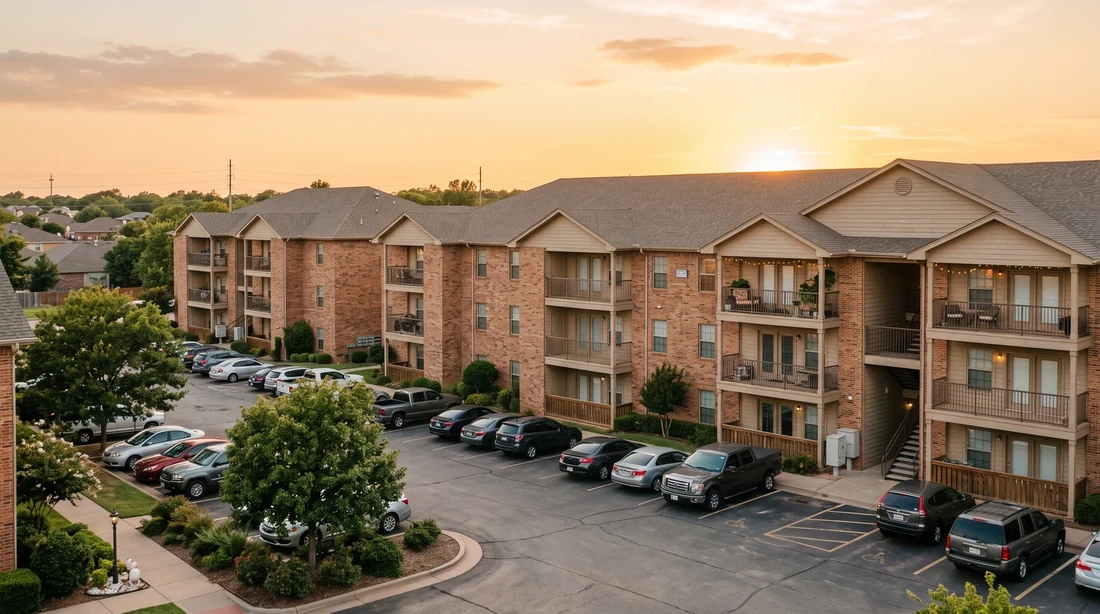
After an apartment fire, your own renters insurance pays for your hotel or temporary housing through loss-of-use (ALE) coverage — not your landlord. The landlord's policy covers only the building itself. If you have no renters insurance, the American Red Cross typically bridges the first few nights; longer housing is on you.
Key Takeaways
- Your renters policy's loss-of-use (ALE) coverage pays for your hotel or temporary housing; the landlord's property policy only repairs the building.
- ALE limits are often 20 to 30% of personal property coverage, and many carriers can issue an upfront ALE advance against that limit.
- Without renters insurance, the American Red Cross typically covers the first few nights, and dialing 211 in Oklahoma connects you to local assistance.
- For repairs beyond about three weeks, a monthly furnished rental usually costs less than hotel nights at $149, roughly $1,043 per week.
This guide answers that plainly: the landlord-versus-renter split, the neighbor's-fire scenario, what a 6-8 week displacement really costs, and how to keep the bill off your credit card.
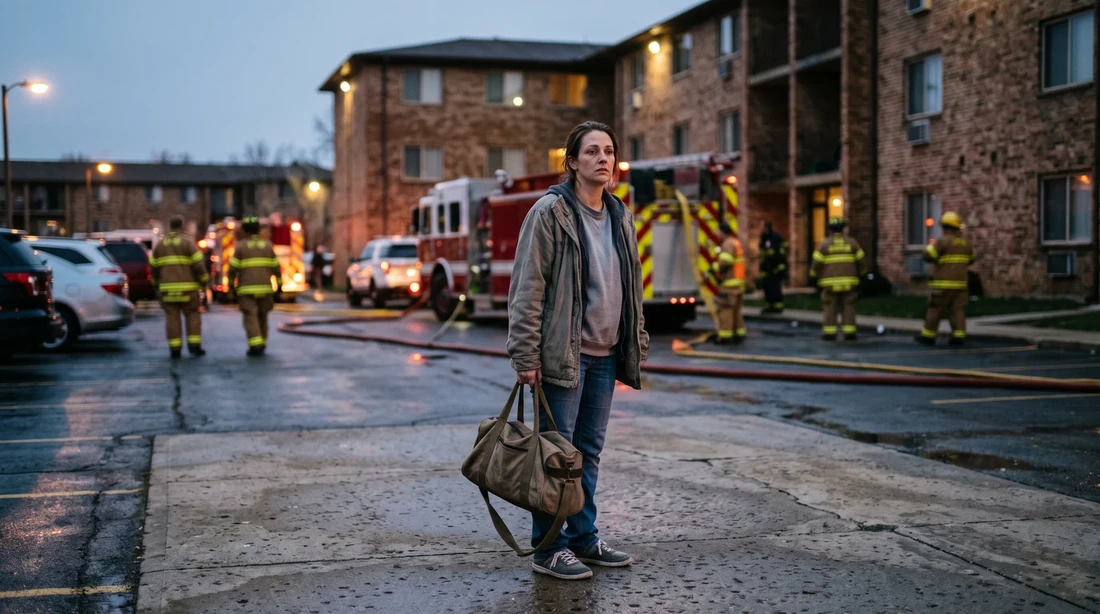
You're standing in the parking lot with a duffel bag, the fire marshal just cleared the building, and the property manager is telling you the office "isn't responsible for hotels." Frustrating, and, in most cases, the manager is right. So the question apartment fire: who pays for hotel costs comes down to which of three wallets opens, and in what order.
Most renters policies pay ALE by reimbursementand the meter starts the night of the fire. Every receipt you lose is money you can't claim back, and every nightly hotel bill burns limit that a monthly furnished rental would stretch further.

Who Pays for Your Hotel After an Apartment Fire?
Three different wallets are in play after an apartment fire: the landlord's property policy rebuilds the building, your renters policy houses and re-clothes you, and charities bridge the uninsured gap.
What does the landlord's policy cover?
Your landlord carries a commercial property policy on the structure, walls, wiring, roof, plumbing, common areas. That policy exists to repair the building, and its check goes to the owner, not to you.
In a standard lease, your landlord's insurance does not pay for your hotel. Most leases state the landlord isn't liable for tenant relocation when the unit becomes uninhabitable through no fault of the landlord. What you typically do get is rent abatement, you stop paying rent on a unit you can't occupy, and often the right to terminate the lease if repairs drag on.
That abated rent matters. If your rent was $1,200 a month and repairs take two months, that's $2,400 you're not paying, money that can go toward temporary housing whether or not you're insured.
What does your renters policy cover?
The part of a renters policy that pays for your hotel is called loss of use, and the money it pays out is called Additional Living Expenses, or ALE. On many policies the limit is set as a percentage of your personal property coverage, commonly in the 20-30% range, though your declarations page is the only number that counts. The full mechanics are in our guide to loss of use coverage explained.
ALE pays the costs of displacement that are additional to your normal life: hotel or rental nights, meals above what you'd normally spend on groceries, laundromat trips, pet boarding, extra commuting mileage. It does not pay your normal grocery bill or replace your rent. For the hotel-specific rules, nightly caps, what adjusters ask for, see does renters insurance cover hotel stays.
One more thing worth asking on the first call: many carriers can issue an ALE advance, an upfront payment against your loss-of-use limit, so the first weeks of hotel bills aren't floated on your credit card. It's deducted from later reimbursements, and you still need every receipt, but it changes the cash-flow picture entirely.
What if you have no renters insurance?
If you're uninsured, no company is obligated to house you, but you're not out of options for the first stretch. The American Red Cross typically provides immediate assistance after residential fires, which can include a few nights of emergency lodging or financial help, handled case by case. In Oklahoma, dialing 211 connects you to local assistance programs, and some property managers will move displaced tenants to a vacant sister unit as goodwill.
After those first nights, the practical plan is usually: stop paying rent on the uninhabitable unit, and redirect that money plus savings toward the cheapest livable monthly option, often an extended-stay hotel or a room with family while you regroup.
| Cost | Who typically pays | Where it comes from |
|---|---|---|
| Repairing the building and your unit | Landlord | Landlord's property policy |
| Your hotel or temporary housing | You / your insurer | Your renters policy, loss of use (ALE) |
| Your furniture, clothes, electronics | You / your insurer | Your renters policy, personal property |
| Meals above normal, laundry, pet boarding | You / your insurer | Your renters policy, ALE |
| First few nights if you're uninsured | Charity | American Red Cross, 211 agencies |
| Rent while the unit is uninhabitable | Nobody | Typically abated per lease and state law |
| Damage to neighbors if the fire started in your unit | You / your insurer | Your renters policy, liability coverage |
Standard policy forms list both fire and smoke among covered perils:
Basic-form covered perils: Fire Lightning Windstorm or hail Explosion Smoke Vandalism Aircraft or vehicle collision Riot or civil commotion Broad "named perils" – this form expands on the "basic form" by adding 6 more covered perils.
Wikipedia: Home insurance
What If the Fire Started in Your Neighbor's Apartment?
Even when a neighbor's unit caused the fire, your own renters policy is still the one that pays for your hotel first, your carrier may then chase the neighbor's insurer through subrogation.
This surprises people, but it's how the system is built to work. Smoke and sprinkler water travel; your unit can be uninhabitable from a fire two doors down. You don't wait on the neighbor's liability carrier to accept fault, that investigation can take weeks or months and is often contested. Your policy pays now; fault gets sorted later.
If your carrier later recovers money from the at-fault party's insurer, you may even get part of your deductible back. If you're uninsured, you can pursue the neighbor's liability policy (or the landlord's, if a building system failed) directly, but expect a slow process with no hotel money up front, and no payment at all if fault isn't established.
The reverse is also true: if the fire started in your unit, the liability portion of your renters policy is what typically responds when neighbors and the landlord come looking for their damage. It's one more reason the policy is worth far more than its monthly premium.
A related edge case: your unit can be declared uninhabitable even if nothing in it burned. Soot pulled through shared HVAC ducts and persistent smoke odor are habitability problems, and the carrier, not the landlord, decides whether your unit qualifies for ALE. Get that determination in writing before you either move back early or commit to weeks of housing on your own judgment.
What Does Waiting Cost You, Week by Week?
A displaced couple paying $149 a night burns roughly $1,043 a week in hotel costs alone, before a single restaurant meal hits the card.
Displacement costs don't wait for your decisions. Here's the sequence when you drift instead of acting:
- Nights 1-3: You book whatever hotel has a room, on your own card. Without a claim number, there's no reimbursement pipeline yet, just spending.
- Week 1, no claim filed: Receipts scatter across two wallets and a glovebox. ALE claims are substantiated by receipts, so every missing one is money you can't recover.
- Weeks 2-4, still on nightly rates: Thirty nights at $149 is about $4,470, typically more than a full month in a furnished rental with a kitchen, and every restaurant meal adds to the drain.
- Weeks 5-8: Your loss-of-use limit is finite. If nightly-rate spending exhausts the cap before repairs finish, the remaining weeks come out of your pocket, and if your adjuster pushes back on housing at any stage, see insurance denied temporary housing for how to respond.
Displaced from an OKC apartment and looking at a six-to-eight-week repair? BnB OKC places displaced renters in furnished homes with full kitchens and in-unit laundry, offers monthly rates on 30+ night stays, and works with adjusters and Alacrity Solutions on authorized direct-billed placements.
What Are Your Housing Options for a 6-8 Week Displacement?
For any repair running longer than about three weeks, a monthly furnished rental typically costs less than the same nights in a standard hotel, and it's the only option where a kitchen keeps working in your ALE math's favor.
| Option | Typical monthly cost | Fits when | What disqualifies it |
|---|---|---|---|
| Standard hotel | ~$4,000-$5,000 (at $135-$165/night) plus dining out | Repairs under 2-3 weeks; points loyalty | No kitchen or laundry; meals-out drain ALE fast |
| Extended-stay hotel | ~$2,900-$3,900 (at $95-$130/night) | Solo or couple, 2-5 weeks, minimal cooking | Kitchenette only; tight for two people working from the room |
| Furnished home or apartment | ~$2,800-$4,200 on monthly rates | 30+ nights, pets, remote work, need for full kitchen and laundry | Usually needs a multi-week commitment; overkill for a few nights |
| Staying with family or friends | $0, low | Very short gaps; tight budgets | Commute, strain, no privacy; little to claim under ALE |
Timing matters in this market. OKC hotel rates typically climb during the Women's College World Series at Devon Park (late May, early June), Memorial Marathon weekend in late April, and the State Fair of Oklahoma in September, a nightly-rate plan that penciled out in early spring can blow past your ALE math by the first week of June. Tornado season also peaks April, June, which puts more displaced households in competition for the same rooms at exactly the wrong moment. A monthly furnished rate signed once doesn't move with the events calendar.
A few OKC-specific notes. Several BnB OKC homes are dog-friendly, which matters because pet-friendly hotels are scarce and pet boarding for six weeks adds up, browse pet-friendly rentals in OKC. All 11 furnished homes in our metro portfolio offer monthly rates on 30+ night stays through our extended stays program, with published from-rates of $225-$425/night, and booking direct saves up to 35% on 4+ night stays.
Guests rate the homes 9.5 out of 10 on average across 1,580 verified reviews on Airbnb and Vrbo. The homes sit near Lake Hefner, the Paseo and Plaza districts, and The Village, so a renter displaced from a Midtown or Plaza-area apartment can usually stay inside the same daily orbit instead of relocating across the metro.
How Do Roommates and Pets Change the Answer?
One renters policy typically covers only the named insured and resident relatives, unrelated roommates each need their own policy for their hotel to be paid.
Roommates. If three unrelated roommates share a unit and only one holds a policy, the other two typically have no ALE coverage at all, a roommate's name on the lease is not a name on the policy. After a fire, each insured roommate files a separate claim with their own carrier, each with its own limit and its own adjuster.
Three separate hotel rooms burn three limits fast; splitting a furnished 3-bedroom on a monthly rate lets each carrier reimburse a share while everyone keeps a door that closes. The broader rules are in does renters insurance cover temporary housing.
Pets. ALE typically covers pet boarding as an additional expense, but it still draws down the same limit as your lodging. Boarding in the OKC metro commonly runs in the ballpark of $30-$40 a day, which is $1,500-$2,000 over a seven-week displacement. A dog-friendly rental removes that line entirely and keeps the animal out of a kennel for two months.
Kids and school runs. If children are in school, the housing decision is really a commute decision. A hotel by the interstate can add 40 minutes each way to a school run for eight weeks; choosing temporary housing inside the same school-commute radius, The Village or the Lake Hefner area for the northwest side, for instance, keeps the routine intact while the unit is rebuilt.
Two remote workers. Seven weeks of two people on video calls in one hotel room is its own kind of damage. A furnished home puts a second workspace behind a second door, one of the quiet reasons couples switch out of hotels around week two.
Uninhabitable by smoke alone. As covered above, smoke odor and soot infiltration can trigger ALE even when your unit didn't burn. Push for the habitability determination in writing, it's the document your housing budget hangs on. Homeowners face a parallel version of all of this; see temporary housing after a house fire.
What Do Seven Weeks Out After a Burst Pipe Cost? A Worked Example
The who-pays split works exactly the same when water, not flame, drives you out, a burst pipe that floods your unit follows the same landlord-building, renter-housing logic.
Say, hypothetically, a couple is displaced from their OKC apartment when a pipe bursts inside a wall, and the repair estimate is seven weeks (49 nights). Their renters policy carries $40,000 in personal property coverage with loss of use set at 20%, so their ALE limit is $8,000.
Path A, hotel the whole way: $149/night × 49 nights = $7,301. Add roughly $30/day in meals above their normal grocery spend ($1,470) and about $15/week in laundromat costs ($105). Total ALE draw: roughly $8,876, about $876 over their limit, out of pocket, after seven weeks in one room with a mini-fridge.
Path B, furnished rental on a monthly rate: a furnished home at $3,400/month, prorated for 49 nights, runs about $3,400 × (49 ÷ 30) ≈ $5,553. With a full kitchen, food spending stays close to normal, so little or nothing is "additional." In-unit laundry, no extra line. Total ALE draw: roughly $5,600, leaving about $2,400 of headroom if the repair slips to week nine or ten, which repairs often do.
Path C, same couple, plus a dog: on the hotel path, add boarding at roughly $35/day × 49 nights ≈ $1,715, pushing Path A's total to about $10,591, roughly $2,600 over the limit. In a dog-friendly furnished home, the dog moves in with them and the boarding line disappears; Path B's total barely moves.
Now let the repair slip to ten weeks (70 nights)which mid-claim repairs do when parts or contractors run late. Path A's lodging alone becomes $149 × 70 = $10,430, past the $8,000 limit before a single meal receipt. Path B becomes $3,400 × (70 ÷ 30) ≈ $7,933, still inside the limit even with a three-week overrun, because meals stayed near normal the whole time.
Same displacement, same policy: one path breaks the limit at seven weeks, the other survives ten. That gap is why adjusters and ALE housing coordinators routinely move claims out of hotels once a repair timeline passes the three-week mark, the full pipeline is explained in how ALE housing companies work.
How to Get Your Hotel and Housing Paid for, Step by Step
- Call your renters carrier and open a loss-of-use claim the same day.
- Ask your adjuster for your ALE limit, any time cap, and whether they reimburse or direct-bill.
- Notify your landlord in writing and request a written repair timeline.
- Save every displacement receipt, hotel, meals above normal, laundry, pet boarding, mileage.
- Switch from nightly hotel rates to a monthly furnished rental once repairs will run past two to three weeks.
Here's how those steps map onto a typical 6-8 week displacement, and who owns each piece:
| Stage | What happens | Who handles it |
|---|---|---|
| Day 1 | Unit declared uninhabitable; loss-of-use claim opened; first nights booked | You (and Red Cross, if uninsured) |
| Days 2-7 | ALE limit and payment method confirmed; building repairs scoped | Your adjuster; landlord's carrier |
| Weeks 2-3 | Written repair timeline arrives; if it's 3+ weeks, monthly furnished housing gets lined up | You, with the host or housing provider |
| Weeks 3-8 | Monthly rental; receipts submitted on a schedule; repair progress tracked | You submit; carrier reimburses or direct-bills the host |
| Final week | Reinspection, move back, final receipt packet, rent resumes | You, landlord, and carrier |
What goes in the receipt packet?
ALE claims live and die on paper. Here's what to collect, why each piece matters, and whose job it is:
| Document | Why it matters | Who handles it |
|---|---|---|
| Itemized hotel folios / rental invoices | Proves every lodging night you claim | You save; adjuster reviews |
| Restaurant and grocery receipts | Establishes meal spending above normal | You save; adjuster compares to baseline |
| 2-3 months of pre-loss grocery statements | Sets your "normal" so only the difference is claimed | You pull from bank records; carrier files |
| Written repair timeline from the landlord | Justifies how long housing is needed | Landlord writes; you forward to the adjuster |
| Fire or incident report | Documents the cause of loss; drives subrogation | Fire department issues; carrier requests |
| Pet boarding and laundry receipts | Small additional expenses that add up over weeks | You save; adjuster reimburses |
| Temporary rental agreement | Supports monthly-rate draws or direct billing | Host provides; carrier authorizes |
When Does the Landlord Owe You Something?
There are three real exceptions to "the landlord doesn't pay": negligence, a relocation clause in your lease, and rent already paid on a unit you can't live in.
Negligence. If the fire or flood traces to something the landlord knew about and ignored, faulty wiring reported and never fixed, missing required smoke detectors, a plumbing problem flagged in writing, the landlord's liability coverage may owe your displacement costs. Document everything: prior maintenance requests, emails, photos. In practice, your own carrier usually pays your housing first and then pursues the landlord's insurer through subrogation.
Lease relocation clauses. Some leases, especially with large management companies, commit the landlord to offering a comparable vacant unit or limited relocation help. Read your lease before assuming there's nothing there, and if a sister unit is offered, weigh it seriously; it's often the fastest route back to normal.
Rent and deposits. Rent you prepaid on an uninhabitable unit is typically abated or refunded pro-rata, and Oklahoma law generally allows a tenant to terminate the lease when the dwelling is destroyed or made uninhabitable through no fault of their own, read your lease and get advice specific to your situation before acting. Your security deposit rules don't change because of the fire.
None of these exceptions moves fast. Even in a clear-negligence case, treat any landlord payment as a later recovery, not tonight's hotel budget.
When Is a Hotel the Right Call?
If the repair timeline is under two to three weeks, a hotel usually wins on simplicity, no lease paperwork, daily housekeeping, points if you're loyal to a brand, and a breakfast bar that trims your "additional" meal costs. A solo renter with no pets can often ride out a month comfortably in a decent extended-stay property. And if your landlord offers a comparable vacant unit in the same complex, that's frequently the best answer of all, same commute, same neighbors, minimal ALE draw.
A furnished home changes the outcome in specific situations: repairs running 30+ nights, two people who both work from home, a dog or cat that hotels won't take (or will only take with steep fees), a school run that a highway-exit hotel would wreck, or ALE math tight enough that a kitchen and laundry decide whether you finish the claim inside your limit. If several of those describe you, the arithmetic above makes the monthly-rental route the cheaper option.
If you're mid-decision, our insurance housing team can tell you quickly whether a monthly placement makes sense for your dates, or if you're better off staying put in the hotel.
What Do the Terms You'll Hear Mean?
- Loss of use: the section of your renters policy that pays when your unit is uninhabitable, often labeled Coverage D.
- Additional Living Expenses (ALE): the actual money loss of use pays out, covering costs above your normal cost of living.
- ALE advance: an upfront payment against your loss-of-use limit so early hotel bills aren't floated on your own card; deducted from later reimbursements.
- Declarations page: the summary page of your policy listing each coverage and its dollar limit, the first thing your adjuster will reference.
- Rent abatement: the pausing or prorating of rent while your unit can't be occupied.
- Habitability: the legal standard a rental must meet to be livable; failing it triggers abatement, lease-exit rights, and ALE.
- Subrogation: your insurer paying you now, then recovering from whoever caused the loss, a neighbor's or landlord's carrier.
- Direct billing: your carrier or its housing coordinator paying the hotel or host directly, which happens only with carrier authorization.
For policy questions or help with a carrier dispute, the Oklahoma Insurance Department offers free consumer assistance. For emergency help in the first days after a fire, contact the American Red Cross.
The Bottom Line
Your own renters policy pays for the hotel through its loss-of-use coverage, and the landlord's policy pays to fix the building. Know your limit early and save every receipt. If repairs will run long, move from nightly rates to monthly housing. Here is what to do next.
- Confirm your loss-of-use limit. Pull your renters policy declarations page and find the "loss of use" or "Coverage D" line, that number sets your entire housing budget. While you have the adjuster on the phone, ask whether an ALE advance is available.
- Get the repair timeline in writing and start the receipt packet. Ask your landlord for a dated estimate, then run the math: if it's past three weeks, compare 30 nights at your hotel's rate against a monthly furnished figure, and start a single envelope or phone folder for every displacement receipt tonight.
- If you'll be displaced 30+ nights in the OKC metro, call or text (405) 870-2146 or request a placement through our insurance housing pagewe can coordinate directly with your adjuster.
This guide is general information, not insurance or legal advice; your carrier makes all coverage decisions.