The Oklahoma Insurance Department recovered nearly $11 million for consumers through complaints in 2025, according to its annual report released February 10, 2026. If your storm claim is stalled or lowballed, filing a free complaint with OID at 800-522-0071 is documented, costs nothing, and is often the fastest way to force movement on your file.
Key Takeaways
- OID's February 10, 2026 annual report states complaints recovered nearly $11 million for Oklahoma consumers during 2025.
- Filing costs nothing: call 800-522-0071, 405-521-2828, or 918-295-3700, or use the complaint form at oid.ok.gov after disputing in writing.
- Reforms proposed December 10, 2025 would shorten OID complaint response from 20 days to 14 and add 10% late-payment interest.
- Additional Living Expenses coverage pays temporary housing while the claim is open, subject to your policy limits and carrier decisions.
This guide covers what the Oklahoma Insurance Department's 2025 report says about consumer complaints, when a complaint makes sense for a stalled storm claim, how to file one step by step, and how to keep your family housed while the dispute runs.
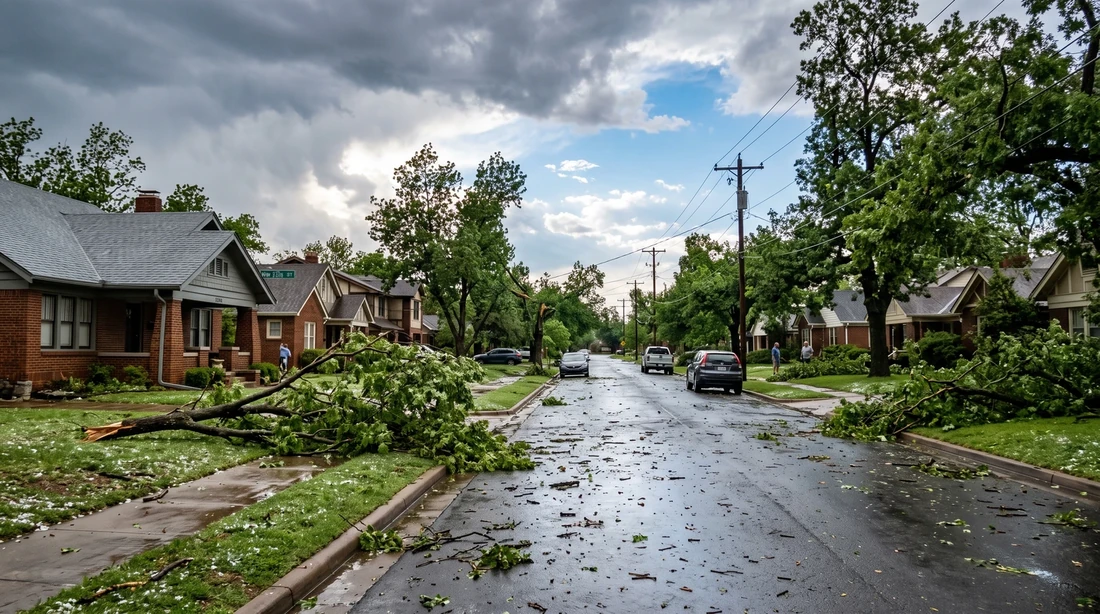
Your roof came off in a spring hailstorm, your family is living out of a hotel, and your insurer has gone quiet for three weeks. That silence is not the end of the road. It is the moment the Oklahoma Insurance Department (OID) was built for, and the numbers say pressing the button works.
Every week a claim sits unresolved is another week of hotel nights burning against your Additional Living Expenses budget. Under OID's proposed reforms, a complaint response would drop from 20 days to 14. Nothing starts that clock until you file.

What Does the 2025 OID Report Show?
The February 10, 2026 report puts a hard number on consumer complaints: almost $11 million recovered for Oklahomans in 2025 from complaints alone. That is money that went back to policyholders who spoke up, and it is neither a projection nor a marketing line.
The same report lists other 2025 results worth knowing:
- Over $200 million in life insurance policy benefits recovered for beneficiaries.
- $22 million saved for homeowners through improved fire classifications, with nearly 20% of Oklahoma fire departments improving their ratings.
- More than $1.3 million distributed through the Strengthen Oklahoma Homes grant program.
- Renewal of OID's five-year NAIC accreditation.
For context, OID reported in May 2025 that it returned over $12 million to consumers in 2024 and answered more than 16,000 assistance calls that year. Two straight years in the eight-figure range tells you complaints are a working recovery channel rather than a formality.
One reason your state department, not a federal agency, handles this:
Further complicating matters is that the homeowners insurance industry is largely regulated at the state level rather than nationwide.
Wikipedia: Home insurance
Why Does Filing a Complaint Matter When Your Claim Is Stuck?
A complaint creates a paper trail a regulator reviews. A phone call to your adjuster never does that. When your file goes silent, doing nothing has a predictable cost sequence:
- Weeks 1 to 3, silence. Your adjuster misses callbacks, and your hotel bill keeps climbing while nothing is documented against the insurer.
- The lowball. A payment lands that won't cover the repair, and you're pressured to accept it to "close the file."
- ALE runs thin. If your temporary-housing coverage has a dollar cap or time limit, delay eats it. A stalled claim can outlast the very budget meant to house you during it.
- You give up. Most underpayments are never challenged, which is why the ones that were challenged recovered nearly $11 million last year.
Filing an OID complaint interrupts that slide. It forces the insurer to respond to a regulator on a defined timeline and builds documentation that matters if your dispute escalates.
Displaced while you fight a slow claim? Your Additional Living Expenses coverage is meant to house your family now, while the dispute runs. See furnished OKC homes set up for insurance placements, or call us to check availability for your dates.
What Does This Mean If You're a Displaced Oklahoma Homeowner?
If a covered event pushed you out of your home, the complaint process and your housing run on two separate tracks. Do not stall one waiting on the other. Your loss-of-use / ALE coverage typically pays for temporary living costs above your normal expenses while the claim is open, subject to your policy limits and your carrier's decisions.
The escalation backdrop is real. Oklahoma's Attorney General separately sued State Farm on June 24, 2026 over alleged systematic underpayment of hail and wind claims. Whatever comes of that case, it points to something OID says itself: complaints help document patterns. Your individual complaint is a data point regulators can see.
Here in the metro, that matters because hail and wind claims spike every spring (tornado season peaks April through June), and a furnished home stretches a fixed ALE budget far further than open-ended hotel nights. If your placement is being handled through a carrier or third-party administrator, BnB OKC works with Alacrity Solutions on insurance placements and offers monthly rates on 30+ night stays.
Hypothetical example. Say a family of four is displaced by a March hailstorm and the claim drags for four months while OID reviews a complaint. Two hotel rooms at $189/night run about $189 × 2 × 120 = $45,360. That buys no kitchen and no laundry. A furnished home billed at a monthly rate keeps the family together, adds a kitchen and washer, and typically stretches the same ALE budget across the entire dispute instead of exhausting it in month two. Your actual coverage, limits, and rate depend on your policy and your carrier's decision.
If you're also trying to understand local housing and rental rules while you're relocated, our coverage of OKC short-term rental rules explains how longer furnished stays fit the city's framework.
What Reforms Has OID Proposed?
On December 10, 2025, OID released a legislative package of proposed reforms aimed squarely at slow claims. These are proposals. None of them is law yet, but they signal where the department wants the timelines to go.
| Step | How it works now | Proposed change |
|---|---|---|
| OID complaint response time | 20 days | 14 days |
| Insurer acknowledges your claim | No fixed statewide rule | Within 14 days |
| Insurer makes a claim decision | No fixed statewide rule | Within 30 days |
| Final resolution | No fixed statewide rule | Within 90 days |
| Late-payment penalty | None specified | 10% interest on late payments |
| Mediation after a complaint | Not mandatory | Eagle Mediation available for residential and auto claims |
What Happens After You File?
Knowing the sequence tells you what to expect and when to push. Here is the practical path a residential storm-claim complaint follows.
| Stage | What happens | Typical window |
|---|---|---|
| 1. Contact insurer first | You raise the dispute in writing with your carrier | Before filing |
| 2. File with OID | Submit the complaint form and your documentation | Same day |
| 3. OID reviews | Department opens a file and contacts the insurer | 20 days now (14 proposed) |
| 4. Insurer responds | Carrier answers OID's inquiry in writing | Varies by insurer |
| 5. Resolution or mediation | Claim moves, or you use Eagle Mediation (proposed to be mandatory-available) | Ongoing |
How to File an Oklahoma Insurance Department Complaint, Step by Step
- Gather your claim documents. Pull your policy, claim number, adjuster emails, estimates, photos, and every hotel or repair receipt.
- Contact your insurer in writing first. Put your dispute and what you want in an email so there's a dated record before you escalate.
- File the complaint with OID. Call 800-522-0071 (toll-free), 405-521-2828 (Oklahoma City), or 918-295-3700 (Tulsa), or use the complaint form at oid.ok.gov.
- Submit your documentation. Attach the timeline, receipts, and estimates so the department can see the pattern as well as the dispute.
- Respond quickly to OID's follow-ups. Answer any request for information the same day to keep your file moving through the review clock.
- Consider Eagle Mediation if it stays unresolved. OID's proposed reforms would make its Eagle Mediation program available for residential and auto claims after the complaint process.
What to Check Before You File
These are the places a complaint, or the housing that has to run alongside it, usually goes wrong.
- You never put the dispute in writing to the insurer. OID's process starts with you raising it with your carrier first. An email with a date on it is the record you want.
- You don't know your ALE limit. Find the loss-of-use line in your policy, whether it is a dollar cap, a percentage of dwelling coverage, or a time limit. That number is your housing budget while the complaint runs.
- Receipts are missing. Clean receipts are what substantiate an ALE claim. Keep documenting housing costs the same way for the whole dispute.
- You stopped the housing to wait on the complaint. The two tracks are separate. Your carrier decides coverage, but a stalled dispute does not pause your need for somewhere to live.
- You expected the proposed timelines to apply today. The 14-day response, the 30-day decision window and the 10% late-payment interest are proposals from December 2025. The current OID response window is 20 days.
Terms You'll Hear, Decoded
- Additional Living Expenses (ALE) / Loss of Use: the part of your policy that pays for temporary housing and other above-normal costs while your home is uninhabitable, subject to your limits and your carrier's decision.
- Eagle Mediation: OID's neutral mediation program, which the December 2025 proposals would make routinely available after a complaint on residential and auto claims.
- NAIC accreditation: a national standard that OID renewed for five years, signaling its regulatory practices meet peer-reviewed benchmarks.
- Third-party administrator (TPA): a company like Alacrity Solutions that manages claims or housing placements on a carrier's behalf.
- Lowball / underpayment: a claim payment below actual repair or replacement cost, the pattern the AG's June 2026 State Farm lawsuit alleges.
Our guide to OKC Airbnb enforcement covers how longer, properly-permitted furnished stays differ from nightly rentals if you're weighing options.

The Bottom Line
OID complaints returned almost $11 million to Oklahomans in 2025 and over $12 million in 2024. A complaint costs nothing, creates a record a regulator reads, and puts the insurer on a clock. File it the day your carrier goes quiet, and keep your housing running on its own track while it works.
- Confirm your ALE line. Find your policy's loss-of-use limit so you know what your housing budget is while the complaint runs.
- Build your complaint file. Gather your claim number, adjuster correspondence, estimates, and every housing receipt before you call OID at 800-522-0071.
- Line up housing that fits the budget. See insurance housing in OKC or call/text (405) 870-2146 to check availability for your dates while your claim is in dispute.
This guide is general information, not insurance or legal advice; your carrier makes all coverage decisions.
Sources: OID 2025 annual report (Feb 10, 2026), OID legislative reform package (Dec 10, 2025), and the Oklahoma AG's June 2026 State Farm filing.