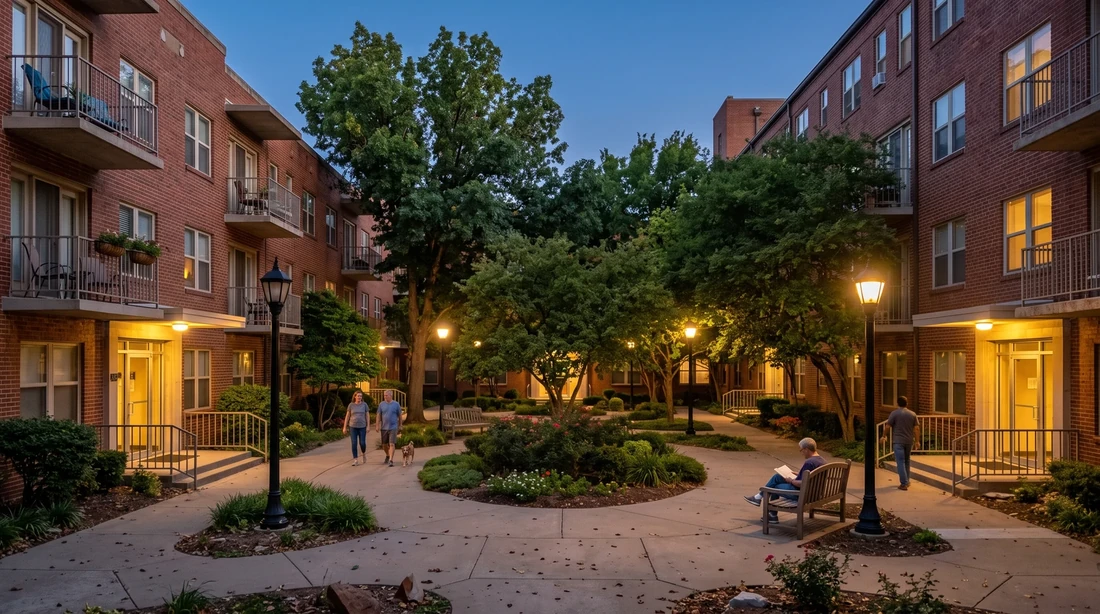
The most important questions to ask your insurance adjuster concern temporary housing: your ALE dollar limit, any time limit, whether the carrier can advance funds tonight, whether it can direct-bill a housing provider, and what "like kind and quality" means for your household. Ask those five before your first call ends — they shape every month that follows.
Key Takeaways
- Ask five housing questions on the first call: ALE dollar limit, time limit, emergency advance, direct billing, and like-kind-and-quality standard.
- Proof-of-loss deadlines often run 60 days from the carrier's written request, and ALE reimburses against receipts, so start a dated expense log immediately.
- A displaced household of three that never asks about advances or direct billing typically floats $4,000-$6,000 per month on its own cards.
- A monthly furnished rate often stretches the same ALE dollars two to three times further than nightly hotel billing, so ask about lodging caps.
What this guide covers: the 25 questions to put to your adjuster after a fire or storm, grouped by claim stage, plus the follow-ups that change when you have pets, kids in school, a tornado claim, or family to stay with. You'll also find the hotel-versus-furnished-home math and a short prep checklist for your first meeting.
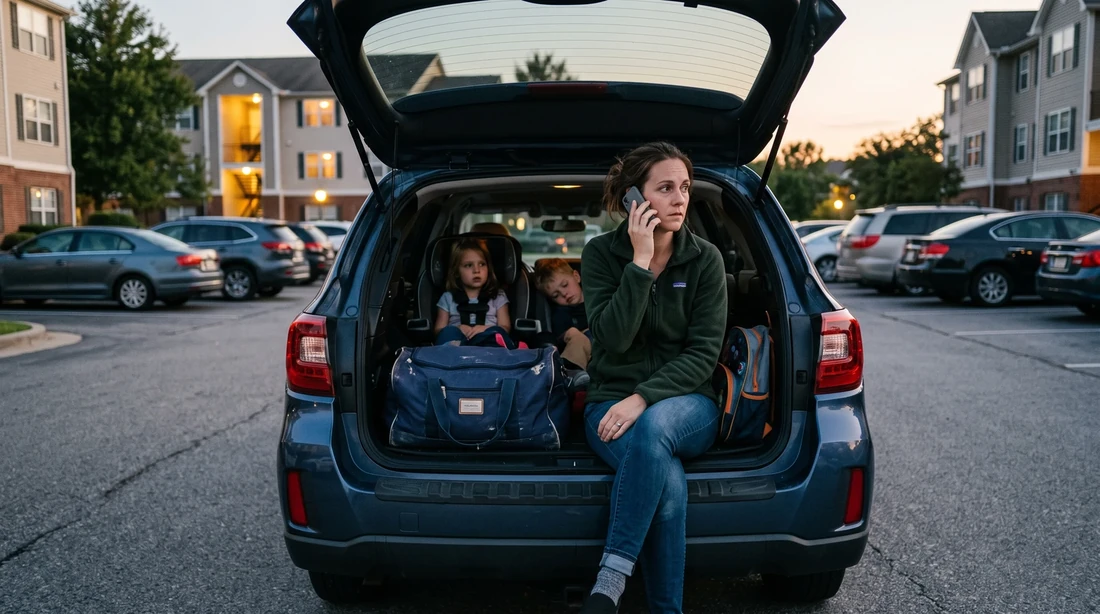
Your apartment building caught fire this afternoon, your two kids are in the back seat, and an adjuster you've never met is about to control where you all live for the next several months. Adjusters answer the questions you ask. They rarely volunteer the rest. This is the full list, in the order you'll need it.
Many policies set a proof-of-loss deadline (often 60 days from the carrier's written request), and ALE is reimbursed against receipts. Start a dated expense log tonight. Every undocumented hotel night, meal, and mile is money you may never get back.

Why Do Your Questions to the Adjuster Matter so Much?
An adjuster typically manages dozens of open claims at once. The housing details (advances, direct billing, monthly caps, extension rules) usually surface only when the policyholder asks about them directly.
That's workload, and there's no malice in it. The adjuster's job is to apply your policy's language to your loss, and the fastest path through their file is the default path: a hotel voucher, reimbursement later, claim closed. The default path is rarely the best one for a household displaced 30 or more nights.
The ALE portion of your claim is almost entirely reactive. It pays what you document and approves what you propose. If you never propose a furnished monthly rental, you'll likely get a hotel. If you never ask about an advance, you'll float the costs yourself.
If you need the coverage primer first (what loss of use is, how limits are set), read loss-of-use coverage explained and does renters insurance cover temporary housing. This page assumes the basics and hands you the script.
On why adjuster practices and dispute options differ by state:
Further complicating matters is that the homeowners insurance industry is largely regulated at the state level rather than nationwide.
Wikipedia: Home insurance
What Does It Cost When You Don't Ask?
A displaced household of three that never asks about advances or direct billing typically floats $4,000 to $6,000 per month of hotel and food costs on its own cards while waiting on reimbursement checks.
Here's the sequence that plays out, stage by stage, when the questions go unasked:
- Nights 1 to 3: You book a hotel on your own card because you didn't know an advance was possible. No receipts folder exists yet, so the first taxi, toiletries, and takeout go undocumented.
- Week 2: Still no direct billing, so the hotel bill compounds on your credit card while the first reimbursement is "in processing." Interest starts accruing on money the carrier will eventually owe you.
- Week 4: A reimbursement comes back short, and that's how you learn lodging is capped at a nightly rate nobody mentioned and food is reimbursed only above your normal grocery spend.
- Months 2 to 3: Repairs run long. Because you never asked how extensions work, the request goes in late, without contractor documentation, and sits unapproved while your checkout date arrives.
- Closeout: ALE ends on a date you didn't know was the trigger, final receipts miss the submission deadline, and the gap between what you spent and what was reimbursed becomes permanently yours.
Every stage of that sequence is preventable with one question asked one stage earlier.
Displaced by a fire in the OKC metro and staring down that first hotel night? BnB OKC places insurance families in furnished homes — we work with carriers and TPAs including Alacrity Solutions, and we can invoice the carrier directly when your adjuster authorizes it. See our insurance housing options or call/text (405) 870-2146 for same-day availability.
What Are the 25 Questions to Ask Your Insurance Adjuster?
Print this section. The questions are grouped by claim stage so you're never reading 25 items at once. You only need the five that matter this week.
| Claim stage | Timing | Questions | Biggest risk if skipped |
|---|---|---|---|
| First phone call | Day 0–1 | 1–5 | No advance; undocumented spending from night one |
| Inspection & policy review | Week 1 | 6–10 | You never see the full policy or damage findings |
| Housing & ALE | Weeks 1–2 | 11–18 | Months in a hotel room your ALE limit can't sustain |
| Payments & paperwork | Ongoing | 19–22 | Floating thousands on your own cards |
| Closing the claim | Final 30 days | 23–25 | ALE ends before your repairs or new lease do |
Stage 1: The first phone call (questions 1 to 5)
These five questions belong in the first conversation, even if you're standing in a parking lot.
- "What's my claim number, and what are your direct phone and email?" Every future call goes faster with a direct line. Write both down before anything else is discussed.
- "Do I have loss-of-use (ALE) coverage, and what's the dollar limit?" Renters policies typically set ALE as a percentage of your personal property limit. This one number frames every housing decision you'll make.
- "Is my ALE limited by time as well as dollars?" Some policies cap loss of use at 12 or 24 months regardless of dollars remaining. Ask for both numbers in writing. ALE typically runs until your home is repaired or you permanently relocate, whichever comes first, and only up to those limits.
- "Can you issue an advance tonight for immediate expenses?" Many carriers can push an emergency advance to a debit card or app within hours, but usually only when you ask.
- "Exactly what records do you need me to keep from today forward?" Receipts substantiate ALE claims. Getting the documentation standard on day one means nothing gets disqualified later.
Stage 2: Before and during the inspection (questions 6 to 10)
This is the core of what to ask an insurance adjuster after a house fire or apartment fire, once the immediate night is handled.
- "Can you send me the complete policy, declarations page and all endorsements?" You're entitled to it, and endorsements can raise or shrink the limits the adjuster quoted from memory.
- "Are you a staff adjuster, an independent adjuster, or a third-party administrator? Who makes final coverage decisions?" The answer tells you who to escalate to when something stalls.
- "What's my deductible, and which coverages does it apply to?" In many policies ALE has no separate deductible. Confirm it rather than assume.
- "What falls under my landlord's policy versus mine?" As a renter, the building is generally the landlord's claim, while your belongings and your displacement costs are generally yours. Get the dividing line explicit.
- "When is the inspection, what should I have ready, and can I get a copy of the findings?" The damage report drives the repair timeline, and the repair timeline drives how long your temporary housing lasts.
Stage 3: Housing and ALE, the eight questions adjusters wait to be asked (questions 11 to 18)
These eight questions are where displaced families win or lose thousands of dollars, and they're the ones least likely to be answered unprompted.
- "What does 'like kind and quality' mean for my temporary housing?" A household displaced from a two-bedroom apartment can typically make the case for comparable living space (bedrooms, kitchen, laundry) instead of a single hotel room. Ask how your carrier applies the standard.
- "Will ALE pay the full cost of temporary housing, or only the amount above my normal rent?" "Additional" means costs above your normal living expenses. If your lease payments stop during displacement, the carrier typically subtracts that normal rent from what it pays.
- "Can the carrier direct-bill my housing provider?" With carrier or TPA authorization, providers like BnB OKC invoice the carrier directly, and nothing sits on your credit card. Direct billing only happens with authorization, so request it explicitly. Details in how ALE housing companies work.
- "Do you work with a housing company, and can I choose my own furnished rental instead?" Many carriers route placements through TPAs such as Alacrity Solutions. You can usually propose a comparable option you found yourself at a similar or lower cost. Submit it in writing with the monthly rate and ask for approval before booking, because the carrier approves the budget either way.
- "Is lodging capped nightly or monthly, and will you approve a monthly furnished rate?" A monthly rate on a furnished home often stretches the same ALE dollars two to three times further than nightly hotel billing. This single question changes the math of your entire claim.
- "Are utilities, parking, laundry, and pet fees at the temporary place covered as ALE?" Costs your displacement created (pet fees, paid laundry, parking you didn't pay before) are often reimbursable. Name them now so they're budgeted instead of disputed.
- "How do you calculate food reimbursement?" Many carriers reimburse the increase over your normal grocery spend, which can be far less than your total restaurant receipts. Ask for the method in writing before you spend a month eating out.
- "If repairs run past the estimate, how do I request an ALE extension, and how far in advance?" Extensions typically require updated contractor documentation. Ask 30 days before your housing end date, well before the week of.
Stage 4: Payments and paperwork (questions 19 to 22)
- "How often are ALE reimbursements paid, and how do I submit expenses?" Monthly batching through a portal beats emailing loose receipts. Match your log to their format from the start.
- "Whose name goes on each payment: mine, my landlord's, or the housing provider's?" Misdirected checks are one of the most common ALE delays, and the easiest to prevent.
- "If a reimbursement runs late, who is your supervisor and how do I reach them?" Get the escalation contact while things are friendly. Mid-dispute is a bad time to go looking for it.
- "Does accepting an ALE payment affect any other part of my claim?" ALE and personal property are separate buckets in most policies. Confirm in writing that cashing a housing check settles nothing else.
Stage 5: Closing the claim (questions 23 to 25)
- "What event ends my ALE: repair completion, signing a new lease, or a calendar date?" This is the single biggest end-of-claim surprise. Knowing the trigger lets you time your move instead of scrambling.
- "What's the deadline to submit final receipts, and can the claim reopen if I find more costs?" Final accounting windows are real. Missing one converts reimbursable costs into your costs.
- "If I disagree with a decision, what's the dispute process and its deadlines?" Supervisor review, appraisal, and a state department complaint are the usual ladder. If you're already there, start with what to do when insurance denies temporary housing.
If housing is denied or delayed, ask for the denial in writing with the specific policy language it relies on, then request supervisor review. Keep paying for and documenting reasonable housing in the meantime. Receipts preserve your claim even while a dispute is pending.
Who Handles What: You, the Adjuster, or the Housing Provider?
ALE claims stall when a task sits with the wrong person. This checklist maps each job to its owner and to the question above that locks it in.
| Task | Who handles it | Question that confirms it |
|---|---|---|
| Inspection and damage findings | Adjuster (you provide access and an inventory) | Q10 |
| Expense log and receipts | You, from day one | Q5 |
| Housing budget and like-kind standard | Adjuster / carrier | Q11, Q15 |
| Finding the furnished rental | You, or the carrier's housing TPA | Q14 |
| Direct billing setup | Carrier authorizes; the host invoices | Q13 |
| Extension request with documentation | You, with your contractor's updated timeline | Q18 |
| Final receipt submission | You, before the closeout deadline | Q24 |
Which Situations Change the Questions You Ask?
Four common situations add follow-up questions the base list doesn't cover, and each one changes real money on the claim.
You have a dog or cat
Most standard hotel rooms won't take your pet, and boarding runs its own daily rate for months. Ask the follow-up: "Are pet boarding fees or pet fees at pet-friendly housing reimbursable as ALE?" Because those costs exist only because of the displacement, they often pass the "additional" test, but only if they're claimed. A furnished rental that accepts the dog usually beats months of boarding on both cost and stress. Several BnB OKC homes are dog-friendly, which turns two claimed expenses into one.
Your kids are mid-school-year
Like kind and quality typically includes reasonable location as well as square footage. Ask: "Does the housing budget account for staying near my kids' current school?" In the OKC metro that question has teeth. A discounted hotel by Will Rogers Airport can put you 25 to 30 minutes from a school in The Village or near Lake Hefner, twice a day, for months. Extra mileage your displacement created is often reimbursable too, so log it from day one and name it under Q16.
Your claim comes from a tornado or hailstorm
Oklahoma's tornado season peaks April through June, and after a large outbreak carriers deploy catastrophe (CAT) adjusters who work a region for weeks and then rotate off. Ask: "If my adjuster changes, how does my file transfer, and do prior approvals carry over?" During CAT events, verbal approvals are the first thing lost in a handoff. The follow-up email in step five below stops that, and so does asking the new adjuster to confirm your housing budget, direct billing, and extension terms in writing. Expect slower response times too, and get the supervisor contact (Q21) earlier than you otherwise would.
You're staying with family for now
Staying with relatives can still involve claimable costs, but the "additional" test gets strict. If you're lodging free, there may be little additional lodging expense to reimburse. Ask: "If I stay with family short-term, what costs can I claim, and does that reduce my ALE for a rental later?" Some carriers will consider payments to the host household or increased food and commuting costs. Practices vary, and the carrier decides. Get the answer in writing before you assume the couch is saving your limit for later.
How Do Tornado Season and Event Weekends Change OKC Hotel Math?
OKC's biggest displacement season and its biggest hotel-demand season overlap almost exactly, April through June, which is when a nightly-billed hotel plan gets expensive.
If your adjuster caps lodging at a nightly rate (Q15), that cap collides with the metro's event calendar. A monthly furnished rate doesn't move when the city fills up. Nightly hotel pricing does.
| Event / season | When | Effect on a nightly hotel plan |
|---|---|---|
| Tornado season peak | April–June | Displacement demand rises metro-wide; CAT adjusters rotate — get approvals in writing |
| OKC Memorial Marathon | Late April | Downtown hotels typically price up for race weekend |
| Women's College World Series at Devon Park | Late May–early June | Rooms near the ballpark typically climb for a week-plus of sold-out sessions |
| Thunder home games at Paycom Center | October–April, playoffs later | Downtown rates jump on game nights — a recurring hit on long stays |
| State Fair of Oklahoma | September | West-side and fairgrounds-area hotels tighten for two-plus weeks |
You don't need to memorize the calendar. A hotel plan exposes your ALE budget to it week after week, and a locked monthly rate does not. That's another reason question 15 matters more than any other on the list.
What Does Temporary Housing Cost per Month?
In the OKC metro, a furnished home at a monthly rate typically draws down an ALE limit more slowly than 30 nights of hotel billing plus restaurant meals.
| Option | Typical monthly cost | Kitchen & laundry | ALE drawdown speed |
|---|---|---|---|
| Standard hotel room | ~$135/night → ~$4,050, plus eating out | None | Fastest — food costs stack on top of lodging |
| Extended-stay hotel | ~$110–$140/night → ~$3,300–$4,200 | Kitchenette, shared laundry | Moderate — some cooking, cramped for a household |
| Furnished home, monthly rate | ~$2,800–$4,200/month, all-in | Full kitchen, in-unit laundry | Slowest — groceries stay near normal, one bill |
Hotel figures are ballpark and vary with season and events. Read the table for its structure more than the exact rates. If you're weighing the hotel route specifically, see does renters insurance cover hotel stays for how carriers treat nightly billing.
How Does the Math Work for Two Kids, Four Months, and a $2,800 Monthly Rate?
This scenario is hypothetical, and every coverage decision belongs to your carrier. The arithmetic still holds.
Say a renter with two kids is displaced from a two-bedroom OKC apartment for four months after a building fire. Normal rent: $1,150/month. The policy carries $40,000 in personal property coverage with loss of use at 30%, which works out to an ALE limit of $12,000.
Path A, hotel by the night. A suite at $149/night runs about $4,470 for 30 nights. With no kitchen, food spending rises roughly $850/month over normal groceries. Total: about $5,320/month. Subtract the $1,150 normal rent no longer being paid, and the ALE draw is roughly $4,170/month. Over four months that's about $16,680. The $12,000 limit is exhausted partway through month three, leaving roughly $4,700 out of pocket.
Path B, furnished home at a monthly rate. A furnished rental at $2,800/month with a full kitchen keeps groceries near normal (call it +$100/month). Total: about $2,900/month. Subtract the same $1,150 normal rent and the ALE draw is roughly $1,750/month. That's about $7,000 over four months, leaving nearly $5,000 of headroom if repairs run long and an extension is needed.
Same family, same fire, same policy. One path ends in debt and the other ends with a buffer, and questions 11 to 15 are the difference. For the fuller displacement playbook, read temporary housing after a house fire.
What if the displacement is only six weeks?
Shorten the same family's timeline to six weeks and the answer changes honestly. An extended-stay suite at $125/night runs about $5,250 for 42 nights, and a kitchenette holds the food increase to roughly $560 over the stretch. Total: about $5,810. Subtract 1.4 months of normal rent (~$1,610) and the ALE draw is roughly $4,200, comfortably inside the $12,000 limit.
At six known weeks, the extended-stay is a defensible plan. The catch is the word "known." Fire-repair timelines slip, so ask question 18 about extensions even when the estimate looks short.
What if repairs run to month six?
Now stretch the same numbers to six months, a common outcome when structural repairs hit permitting or material delays. Path A's draw of ~$4,170/month reaches about $25,000. Against a $12,000 limit, the family absorbs roughly $13,000 themselves. Path B's draw of ~$1,750/month totals about $10,500, still under the limit with no out-of-pocket gap.
An extension request is a conversation about time when dollars remain, and a fight about money when they don't. The path you pick in week two decides which conversation you have in month five.
How to Prepare for a Meeting With Your Insurance Adjuster, Step by Step
- Request the full policy. Ask for the declarations page and every endorsement before your first meeting.
- Print the 25 questions. Mark the five that match your claim stage and bring a pen for the answers.
- Photograph everything. Capture your unit, damaged belongings, and every receipt you already have.
- Start a dated expense log. Record every hotel night, meal, and mile from the first day of displacement.
- Confirm answers in writing. Email the adjuster a short summary of what was agreed after every conversation.
That follow-up email in step five does more work than anything else on this page. It converts a phone call into a record, and records are what get honored, including through an adjuster handoff during a busy CAT season. Recording calls raises consent-law questions that vary by situation, and the email gives you the same protection without that risk.
When Don't You Need This List?
If your displacement is two or three nights while smoke remediation runs, skip most of this. Ask questions 1, 4, and 5, take the hotel, keep the receipts, and move on. A short hotel stay is the right answer there, and no furnished-home pitch changes that. The same goes for a single adult with a flexible schedule and a displacement under two weeks. An extended-stay suite, documented well, does the job.
The full list earns its keep when displacement crosses roughly 30 nights, when kids need a routine and a kitchen, when a pet can't live in a hotel, when your claim lands during the April to June crunch, or when your ALE limit is tight enough that the hotel math above becomes your math. Those are the claims where a furnished monthly placement, like BnB OKC's extended stays or our dog-friendly homes, changes the outcome.
Our 11 furnished homes across the metro (near Lake Hefner, The Village, and the Paseo and Plaza districts) hold a 9.5 out of 10 average across 1,580 verified guest reviews on Airbnb and Vrbo, and when your carrier authorizes it, we bill them directly through our insurance housing program.
What Should You Check Before the First Call Ends?
- Your two ALE numbers. Get your dollar limit and any time limit from the adjuster in writing today. They frame every decision after.
- Your baseline. Pull your rent amount, a normal month's grocery spend, and your school-run mileage. They're what "additional" is measured against, receipt by receipt.
- An advance. If nobody offered one, ask before you put a second night on your own card.
- A nightly cap. If lodging is capped by the night, ask whether a monthly furnished rate can be approved instead.
- Who decides. Write down who makes final coverage decisions and who their supervisor is.
Terms You'll Hear, Decoded
- ALE (Additional Living Expenses): the part of your policy that pays displacement costs above your normal living expenses, such as housing, extra food, and extra mileage.
- Loss of use: the coverage section ALE lives under, often set as a percentage of your dwelling or personal property limit.
- Like kind and quality: the standard that your temporary housing should be comparable to what you lost in space, bedrooms, function, and reasonable location.
- Advance (emergency payment): money the carrier pushes to you before receipts are processed, usually within hours of a covered loss. It's issued on request and deducted from later reimbursements.
- Direct billing: the carrier or its TPA pays the housing provider straight, with written authorization, so nothing runs through your cards.
- TPA (third-party administrator): a company, such as Alacrity Solutions, that a carrier hires to manage claims tasks like housing placement.
- CAT (catastrophe) adjuster: an adjuster deployed to a disaster region (common in Oklahoma after spring storms) who may rotate off your claim mid-stream.
- Proof of loss: the sworn statement of your damages the carrier can require, usually on a deadline, often 60 days from their request.
The Bottom Line
Ask about your ALE limits, an advance, direct billing, and a monthly rate before the hotel bill starts compounding, and put every answer in a follow-up email. When you're ready to line up housing, browse BnB OKC's insurance housing options or call/text (405) 870-2146. Tell us your claim number, household size, and whether a pet is coming, and we'll tell you what's available and how direct billing works with your carrier.
If you hit a wall with your carrier, the Oklahoma Insurance Department runs a consumer assistance division that handles complaints and questions at no cost.
This guide is general information, not insurance or legal advice; your carrier makes all coverage decisions.