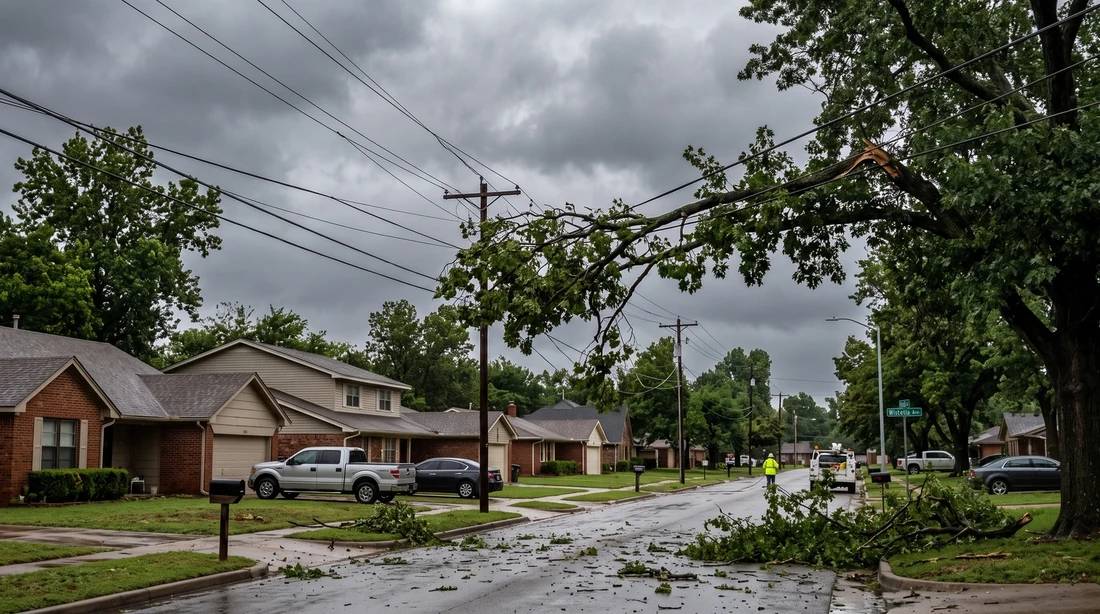
Usually no. A standard homeowners or renters policy does not pay for a hotel during a routine power outage, because loss-of-use (ALE) coverage only triggers when a covered peril makes your home uninhabitable — or when a civil authority orders you out. If a storm, fire, or downed line that a covered peril caused knocks out power and your home is genuinely unlivable, a hotel may be reimbursable. A utility outage by itself is not.
Key Takeaways
- A standard homeowners or renters policy pays for a hotel only when a covered peril makes your home uninhabitable.
- Grid failures, planned outages and heat-wave rolling blackouts are not insured perils, so loss-of-use coverage never triggers.
- Food spoilage is a separate sub-limit, commonly $250 to $500, covering fridge contents only and often waiving the deductible.
- If an outage lets pipes freeze and burst, the resulting water damage is typically covered and can trigger ALE.
What this guide covers: when a homeowners or renters policy will pay for a hotel after the power goes out, when it won't, how the small food-spoilage benefit works, which OKC storms actually lead to covered claims, and what to do on the day you're staring at a dark house. We're a local operator who places displaced Oklahoma families through insurance every storm season, so this is the version we walk people through on the phone.
Your power's been out for two days, the house is freezing (or baking), the fridge is a loss, and you're wondering whether your policy will pay for the hotel you just checked into. Most articles dodge the honest answer. A power outage alone almost never triggers hotel reimbursement. What matters is why the power's out, and whether a covered peril left your home uninhabitable.
Every hotel night you pay expecting reimbursement is at risk until your adjuster confirms the loss is covered. Photograph the cause of the outage and the condition of your home before you leave. That documentation window closes fast once crews restore power or you clean up.

Why Isn't a Power Outage Usually Covered?
Loss-of-use coverage pays for temporary housing only when a covered peril renders your home uninhabitable. Being uncomfortable doesn't count. That one rule explains almost every power-outage denial.
Additional Living Expenses (ALE), also called loss of use, is the part of your policy that reimburses hotels, furnished rentals, and extra costs while your home is unlivable after a covered loss. The key word is covered. A grid failure, a utility company's equipment problem miles away, a planned outage, or a heat-wave rolling blackout are not perils your policy insures against. So the chain that unlocks ALE never starts.
Two things have to be true at the same time:
- A covered peril occurred. Fire, windstorm, hail, lightning, and similar named or open perils on your policy.
- That peril made your home uninhabitable. Inconvenient isn't enough. No heat in an Oklahoma January or no working systems can qualify, and a dark living room usually does not.
When the outage comes from a covered event, the outage is a symptom, and ALE follows the underlying damage. When the outage is the whole story, there's typically nothing for the policy to attach to. For the broader mechanics of how this coverage works, see our explainer on loss-of-use coverage explained.
Does the outage have to disable my home, or just the block?
Your home. Even after a covered storm, adjusters look at your house, not the neighborhood. If wind takes down a line three streets over and your house is fine once power returns, that's still a utility interruption and there's no ALE. If that same storm tore your roof, snapped your service mast, or flooded a room, the home itself is damaged and uninhabitable, and that is what opens the coverage door. "The grid is down" and "my home is broken" lead to two very different claims.
On how open-perils policies define coverage:
An "open perils" policy is broader in the sense that it will provide coverage for all losses except those expressly excluded from the policy.
Wikipedia: Home insurance
When Can a Power Outage Hotel Stay Be Covered?
A power outage becomes reimbursable when it stems from a covered peril or when a government authority orders you out. Both paths still require your home to be uninhabitable. The table below is the fast reference competitors leave out.
| Situation | Typically covered? | Why |
|---|---|---|
| Grid failure / utility outage, home undamaged | No | No covered peril; you're inconvenienced, not displaced |
| Rolling blackout during a heat wave | No | Utility action, not an insured peril |
| Windstorm or hail downs your service line and damages the home | Often yes | Wind/hail is a covered peril making the home unlivable |
| Lightning strike fries your electrical panel | Often yes | Lightning is a covered peril; home may be uninhabitable |
| Ice storm collapses limbs onto the mast, home unsafe | Often yes | Covered weather peril causing damage |
| Civil authority (city/utility) orders evacuation of your area | Sometimes | Many policies include a civil-authority provision (usually time-limited) |
| You leave because it's cold/dark but home is livable | No | Comfort, not habitability |
| Prolonged outage causes pipes to freeze and burst | Often yes | The resulting water damage is the covered loss that triggers ALE |
The civil-authority provision is the exception people miss. Many policies pay limited ALE when a government order bars access to your home. That coverage is often capped at a set number of days (commonly around two weeks), and it requires an actual order. A utility advisory won't do. Read your declarations page or ask your adjuster to point to the clause.
What if the outage lets my pipes freeze and burst?
In Oklahoma, the most common way a "power outage" quietly becomes a covered claim is a hard winter freeze. The outage itself isn't covered. If the loss of heat lets pipes freeze and burst, though, the resulting water damage is typically a covered peril, and ALE can follow while repairs are made. The water damage is what displaced you.
One caution. Many policies expect you to take reasonable steps to prevent freezing, like dripping faucets, keeping some heat if you can, and shutting off water if you leave. If the home sat vacant and unheated for days by choice, an adjuster may push back. Document that the failure was beyond your control (a multi-day regional outage, an evacuation order) so the freeze reads as unavoidable rather than neglect.
Which OKC Power Outages Lead to Covered Claims?
Oklahoma City sees three outage patterns a year, and only two of them regularly produce covered losses. Knowing which season you're in helps you set expectations before you call your adjuster.
Ice storms (roughly December to February) are the biggest driver of covered outage claims in the metro. Ice loads limbs until they snap onto service masts and roofs, and hard freezes without heat threaten pipes. These outages routinely come with real, covered structural damage, so the outage is a symptom of a covered weather peril.
Spring severe weather and tornado season (April to June) is the second driver. Hail shreds roofs, straight-line winds down lines and trees, and tornadoes can level a structure outright. When the storm damages the home itself, ALE follows the damage, and displacement can run weeks or months while a roof is replaced.
Summer heat-wave rolling blackouts (July and August) almost never pay. When the grid is strained and the utility sheds load, your home is undamaged. You're hot, and you aren't displaced. That's a comfort problem with no covered peril behind it, no matter how many days it lasts.
Does Insurance Cover Food Spoilage From a Power Outage?
Often, through a small stand-alone sub-limit (commonly $250 to $500) that has nothing to do with hotel reimbursement. People mix these two up constantly, so keep them separate in your head.
Many homeowners policies include a modest "refrigerated property" or "food spoilage" allowance that pays for freezer and fridge contents lost to a power interruption, sometimes even without a covered peril and sometimes without applying your deductible. But:
- The limit is small. Think a few hundred dollars, not thousands.
- It covers food only. No lodging, no fuel, no generator you bought.
- You still need proof: an itemized list and, ideally, photos of the spoiled contents.
So a reader who lost a full freezer during a three-day outage might recover power-outage food-spoilage dollars while still getting a firm "no" on the hotel. Two coverages, two answers. Renters policies handle this differently. Many include food spoilage only as an optional endorsement, so check whether you bought it before you count on it.
| Feature | Hotel / ALE | Food spoilage sub-limit |
|---|---|---|
| What it pays | Temporary housing + extra living costs | Spoiled fridge/freezer contents |
| Trigger required | Covered peril makes home uninhabitable | Power loss (often even without a peril) |
| Typical limit | Percentage of dwelling coverage | ~$250-$500 |
| Deductible applies? | Usually yes (to the overall claim) | Often waived or low |
| Proof needed | Receipts, adjuster authorization | Itemized list, photos |
Will insurance pay for a generator or gas during an outage?
Usually no. A generator you rush out to buy, gas for that generator, hotel meals during a routine outage, or a portable AC unit are typically not reimbursable when no covered peril damaged your home. Even when a covered loss does apply, ALE pays the additional cost of living, meaning the gap between your normal expenses and your temporary ones. It won't cover the full grocery or fuel bill. If you'd normally spend $150 a week on groceries, ALE covers the amount your displacement pushed that number above $150. Keep that framing in mind before assuming a purchase is covered.
What Happens If I Assume I'm Covered and I'm Not?
You pay the bill. The expensive mistake is checking into a hotel for a week on faith, then learning the outage wasn't a covered loss. Here is the sequence that plays out when a power outage hits and a covered peril may or may not be behind it.
- Hour 0: the outage hits. Note the cause if you can see it (downed line, storm, panel, or "unknown / grid"). This determines everything.
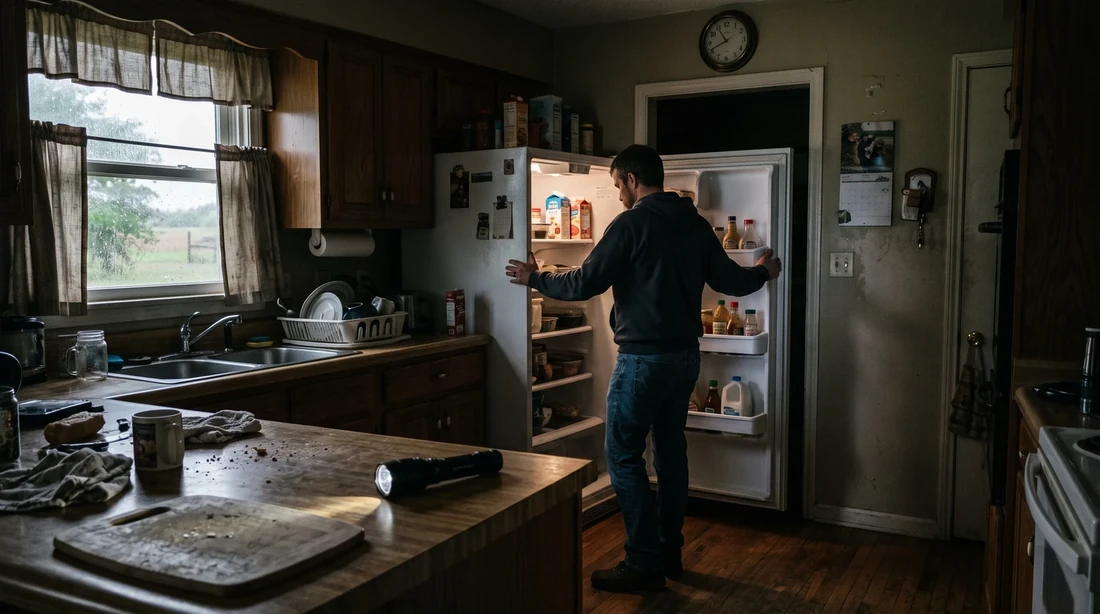
- Hours 1 to 24: the food clock runs. A fridge holds safe temps about 4 hours, and a full freezer about 48. Photograph contents before you toss anything for the spoilage sub-limit.
- Day 1 or 2: you decide whether to leave. If your home is unsafe from storm damage, document it and go. If it's merely cold or dark, understand a hotel here is likely out of pocket.
- Day 2 and after: you call your carrier. Open a claim only if a covered peril is involved. Ask the adjuster directly whether ALE and any civil-authority provision apply before you keep spending.
- Weeks later: reimbursement or denial. If the loss is covered, keep every receipt. If it's denied and you believe wrongly, you can dispute. See what to do when insurance denied temporary housing.
The families who get burned are the ones who never asked why the power was out and treated a grid outage like a fire. The safest move on day one is a single defensible hotel night for safety. Confirm coverage before you extend it into a week.
And if it is covered, how long does housing last? That depends on the repair timeline and your ALE limit. ALE typically pays until your home is repaired or up to a policy cap, often a percentage of dwelling coverage or a set time period, and civil-authority payments usually run shorter.
Displaced by storm damage in the OKC metro and your adjuster approved temporary housing? We place families in furnished homes and bill many insurance stays through our partner network. Check availability or talk through your dates.
Who Handles What After a Covered Outage-Related Loss?
When an outage turns into a real claim, four parties each own a piece of the process. Knowing who does what keeps you from paying for something someone else should. Use this as your checklist.
| Task | Who handles it |
|---|---|
| Photograph damage, spoiled food, and outage cause | You |
| Open the claim and report the covered peril | You |
| Confirm ALE limit and civil-authority provision apply | Adjuster / carrier |
| Authorize temporary housing and any direct billing | Carrier / TPA (e.g. Alacrity Solutions) |
| Set your ALE budget and repair timeline | Adjuster |
| Match a furnished home to your dates and budget | Host / operator |
| Keep receipts and submit for reimbursement | You |
What Are My Housing Options When the Outage Is Tied to a Covered Loss?
When a covered peril displaces your family for weeks, a hotel is rarely the cheapest way to spend your ALE dollars. A furnished home with a kitchen and laundry typically stretches the same budget further than two hotel rooms, and the difference matters most on repair timelines of a month or more.
| Option | Est. cost / month | Best when |
|---|---|---|
| Two hotel rooms | ~$5,000-$8,000 | 1-7 nights; single travelers; loyalty points |
| Extended-stay hotel suite | ~$3,500-$5,500 | 2-4 weeks; one kitchenette is enough |
| Furnished home (BnB OKC) | Monthly rates on 30+ nights | Families, pets, 30+ nights, full kitchen + laundry |
BnB OKC operates 11 furnished homes across the OKC metro, sleeping 2 to 16+, rated 9.5 out of 10 across 1,580 verified guest reviews on Airbnb and Vrbo, with monthly rates on 30+ night stays and direct-booking savings up to 35% on 4+ nights. Several homes are dog-friendly, which helps when a family that lost power and had to leave can't board the dog. For the full mechanics of insurance placements, start at our insurance housing hub, and see how ALE housing companies work.
Worked example 1: hail and wind rip off a roof, 3-month repair
Say an April hailstorm and straight-line winds tear the roof off a family of four's home and down the service line, which is a covered peril. The city won't restore power to an unsafe structure, and repairs will take 3 months. Their ALE budget for housing works out to about $3,900 per month.
- Two hotel rooms at ~$189/night: 2 × $189 × 30 = $11,340/month. That's nearly triple the budget, with no kitchen for four people. They'd burn through ALE in weeks.
- Extended-stay suite at ~$150/night: ~$4,500/month. Over budget, one cramped room, kitchenette only.
- Furnished 3-4 bedroom home: around the $3,900/month ALE line, with a full kitchen (real food after a wrecked fridge), laundry, bedrooms for the kids, and room for the dog.
Same coverage, wildly different outcomes. Over the full three months, the family that chose hotel rooms would need roughly $34,000 in housing against an $11,700 total ALE budget, a five-figure personal shortfall. The furnished home keeps them inside coverage the whole time.
Worked example 2: an ice storm, a burst pipe, and food spoilage
Now a January ice storm knocks out power to the same family of four for four days. The ice leaves the structure intact. The loss of heat, though, lets a pipe burst, flooding the kitchen and hallway. Repairs take 6 weeks.
- The outage itself: not covered. The water damage is what triggers the claim.
- Food spoilage: a lost fridge and freezer of contents recovered under the sub-limit, say $400 against a $500 cap, with photos and an itemized list.
- ALE housing for 6 weeks: at roughly $3,900/month, about $5,850 for the six-week displacement in a furnished home, versus roughly $16,000 in two hotel rooms over the same stretch.
The family recovers $400 in spoiled food and ALE housing, because the burst pipe is the covered loss. All figures are hypothetical. Your carrier sets your actual ALE limit and food-spoilage sub-limit and makes all coverage decisions.
Which Edge Cases Change the Answer?
A few specific situations trip up readers who think they've read the general rule. These come up most.
Someone in the home relies on powered medical equipment. A home that's unsafe because a family member depends on electricity for oxygen, refrigerated medication, or other medical devices can raise a real habitability argument. Coverage still hinges on whether a covered peril caused the outage, and the medical need alone won't settle it. Call your adjuster immediately and explain the situation. Also register with your utility's medical-priority list so restoration is faster next time.
Renters vs. homeowners. A renters (HO-4) policy can include loss-of-use coverage that works the same way: a covered peril has to make the unit uninhabitable. The food-spoilage benefit is more often an add-on you had to select. If you rent, confirm whether you have both. For the full picture, read does renters insurance cover hotel stays and does renters insurance cover temporary housing.
A landlord's outage. If you rent and the building loses power for reasons that damage the unit, your landlord's policy covers the building, and your renters policy covers your displacement and belongings. They're separate claims. Don't wait for the landlord's carrier before protecting yourself.
The outage lasts long enough that food spoilage and ALE both apply. These stack independently. Recovering the food sub-limit never reduces your ALE, and vice versa, so file for both when both apply.
How to Handle a Hotel Decision During a Power Outage, Step by Step
- Identify the cause. Determine whether a covered peril (storm, fire, lightning) caused the outage, or whether it's a utility or grid issue. This decides coverage.
- Document everything now. Photograph the damage, the outage cause, and any spoiled food before you clean up or leave.
- Judge habitability honestly. Leave and expect coverage only if a covered peril made the home unsafe or unlivable. Merely dark or cold doesn't count.
- Call your carrier before spending. Open a claim, ask directly whether ALE and any civil-authority provision apply, and get authorization before booking long-term.
- Keep every receipt. Save hotel folios, food-spoilage lists, and mileage; ALE reimburses only what you can substantiate.
- Choose housing that fits the timeline. For stays over a month, price a furnished home against hotel nights to protect your ALE budget.
If a covered fire displaced you (and not just an outage), our guide to temporary housing after a house fire walks the same sequence in more detail.
Red Flags to Check Before You Spend
- No covered peril behind the outage. A grid failure, planned outage, or rolling blackout leaves ALE nothing to attach to.
- A utility advisory treated as an evacuation order. The civil-authority provision needs an actual government order.
- A week of hotel nights booked before the adjuster weighs in. Anything you pay expecting reimbursement is at risk until the loss is confirmed covered.
- Food thrown out before it's photographed. The spoilage sub-limit still needs an itemized list and photos.
- Assuming you carry food spoilage on a renters policy. It's frequently an optional endorsement.
When Don't I Need a Furnished Home?
If your power's out for a night or two and your home is undamaged, you don't need insurance housing and you probably won't get ALE. A hotel on points, a night at a relative's, or riding it out with a generator is the right call, and there's no covered claim to make beyond a small food-spoilage payout. Same story for a single-night summer blackout or a short planned outage. A furnished home is overkill for something that resolves by morning.
A furnished home changes the math when a covered peril displaces you for 30+ nights: a torn-off roof, a burst-pipe flood, a fire. That's when a family of four in two hotel rooms burns ALE fast, when a kitchen and laundry stop the takeout spending, and when pets and kids' routines need real space near the same schools. If that's you, see our extended-stay homes.
Terms You'll Hear, Decoded
- Additional Living Expenses (ALE) / Loss of Use: the coverage that reimburses temporary housing and extra costs when a covered peril makes your home uninhabitable.
- Covered peril: a cause of loss your policy insures against (fire, wind, hail, lightning). A utility outage is not one.
- Civil-authority provision: a clause paying limited ALE when a government order bars access to your home, usually capped at a set number of days.
- Food spoilage / refrigerated property coverage: a small sub-limit (often $250-$500) for fridge and freezer contents lost to a power interruption.
- Habitability: whether the home is safe and fit to live in. This test decides ALE, and your comfort level doesn't.
- "Additional" in ALE: the coverage pays only the extra cost above your normal living expenses, not your entire bill while displaced.
- Direct billing: when a housing provider bills your carrier or TPA directly instead of you paying up front, which happens only with carrier authorization.
This guide is general information, not insurance or legal advice; your carrier makes all coverage decisions.
Bottom Line
A power outage by itself rarely gets you a paid hotel. Coverage follows a covered peril that makes your home unlivable, or an official civil-authority order. Food spoilage is a separate, small benefit you can claim either way if your policy carries it.
- Confirm the cause of your outage. A covered peril (storm, fire, lightning) opens a coverage path, and a grid or utility outage almost certainly does not.
- Gather your proof. Photograph damage and spoiled food, pull your declarations page, and note whether your policy has ALE, a food-spoilage sub-limit, and a civil-authority provision.
- Take the direct action. If a covered loss has displaced your family in the OKC metro, see insurance housing options or call or text (405) 870-2146 for available furnished homes.
For an authoritative overview of your rights and how to file, the Oklahoma Insurance Department is the primary state resource.