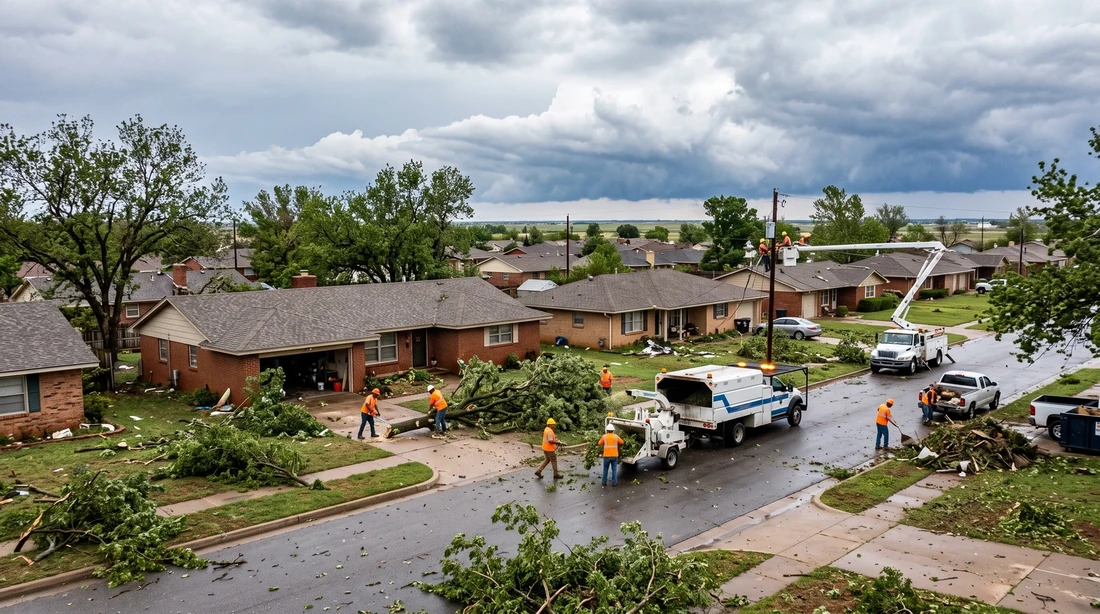
FEMA rental assistance in Oklahoma is money FEMA can pay a displaced household to rent temporary housing while its disaster-damaged primary home is repaired or rebuilt. It arrived in the OKC metro under major disaster declaration DR-4866-OK, which covered the March 14–21, 2025 wildfires and straight-line winds and named Oklahoma, Cleveland, and Logan counties among those eligible for Individual Assistance. You apply at DisasterAssistance.gov, on the FEMA App, or by calling 800-621-3362.
If a wildfire, wind event, or tornado just made your Oklahoma home unlivable, the first question isn't paperwork — it's where do we sleep tonight, and for the months of rebuilding after that. This explainer walks you through what FEMA rental assistance covers, how it lines up next to your insurance company's temporary-housing coverage, and how to turn either one into a real place your family can live.
The rules below are written to outlast any single storm. FEMA opens a fresh declaration after every qualifying Oklahoma disaster, and each one restarts the same search.
FEMA deadlines are declaration-specific. For DR-4866-OK, the application deadline was July 22, 2025. When a new disaster is declared, FEMA sets a new window — usually about 60 days from the declaration date. Confirm the current deadline for your declaration at DisasterAssistance.gov before you assume you've missed it.
What Happened: The March 2025 Oklahoma Disaster
On March 14, 2025, Oklahoma recorded 90 mph gusts — the windiest day in Oklahoma Mesonet history. The wind drove wildfires and straight-line wind damage across the state during an incident period FEMA logged as March 14–21, 2025.
The toll was severe. According to a News 9 year-in-review, about 530 homes and businesses were destroyed, four people died, roughly 200 were injured, and around 270,000 customers lost power statewide.
In response, FEMA approved major disaster declaration DR-4866-OK, issued May 21, 2025, for Oklahoma wildfires and straight-line winds. The declaration unlocked federal Individual Assistance for households in the designated counties.
Which counties got Individual Assistance
Seven counties were designated for FEMA Individual Assistance under DR-4866: Cleveland, Creek, Lincoln, Logan, Oklahoma, Pawnee, and Payne. Three of those — Oklahoma, Cleveland, and Logan — sit squarely in the OKC metro, so this declaration reached families right around Oklahoma City, Norman, Edmond, and Guthrie.
Designations vary by declaration. A future storm might name different counties, so always check whether yours is listed for Individual Assistance before you apply.
| Date | What happened |
|---|---|
| March 14, 2025 | 90 mph gusts — windiest day in Mesonet history — drive wildfires and wind damage |
| March 14–21, 2025 | FEMA incident period; ~530 homes/businesses destroyed, 4 deaths, ~200 injuries |
| May 21, 2025 | FEMA issues major disaster declaration DR-4866-OK with Individual Assistance |
| July 22, 2025 | Application deadline for DR-4866-OK Individual Assistance |

The Three Kinds of FEMA Individual Assistance
FEMA's Individual Assistance program is built to cover uninsured or underinsured disaster needs — not to replace your insurance. Per FEMA's own fact sheet, three types matter most to a displaced household.
- Home Repair Assistance — funds to help restore an owner-occupied, disaster-damaged primary residence to a safe and sanitary condition. It's not full reconstruction money; it's for making the home livable again.
- Rental Assistance — money to rent alternate housing while you're displaced from your primary home. This is the piece that pays for a temporary place to live.
- Serious Needs Assistance — an upfront, flexible payment per household for immediate essentials like food, water, and basic supplies right after the disaster.
Rental assistance is the one families ask about most, because it answers the housing question directly: FEMA can help pay your rent somewhere else until your home is repairable or rebuilt.
FEMA Rental Assistance vs. Insurance ALE — Which Pays for Your Temporary Home
If you have homeowners or renters insurance, you generally must file with your insurer first — FEMA covers the gap, not the whole bill. Your policy's Additional Living Expenses (ALE), also called loss-of-use coverage, is usually the first source that pays for temporary housing.
FEMA steps in mainly where insurance falls short or doesn't exist. If you were uninsured, underinsured, or your ALE limit runs out before your home is fixed, FEMA rental assistance may fill part of that gap.
| Feature | Insurance ALE / loss of use | FEMA rental assistance |
|---|---|---|
| Who it's for | Policyholders with coverage in force | Uninsured or underinsured households in a declared county |
| File first? | Yes — insurance is usually primary | Typically after you've filed with your insurer |
| What it pays | Costs above your normal living expenses | Rent for alternate housing while displaced |
| How long | Until policy limit or time cap is reached | Set periods, renewable with re-certification while need continues |
| Where to start | Your carrier or adjuster | DisasterAssistance.gov, FEMA App, or 800-621-3362 |
Both funding sources have the same practical destination: a furnished place your household can actually live in for weeks or months. That's where a move-in-ready home matters more than the paperwork.
Displaced by an Oklahoma disaster and need somewhere your family can live now? BnB OKC has furnished homes across the metro — in the Oklahoma, Cleveland, and Logan county area FEMA declarations reach — with monthly rates on 30+ night stays that FEMA rental assistance or insurance ALE can be applied toward.
See extended-stay furnished homes Call or text (405) 295-5052
A Hypothetical: What Four Months of Temporary Housing Looks Like
Here's a clearly hypothetical example to show the math. Say a family of four in Logan County loses the use of their home to wind and fire damage and needs about four months while it's repaired.
Two hotel rooms at roughly $150/night — one for the parents, one for the kids — run about $300/night, or around $9,000 a month, with no kitchen and no laundry. Over four months that's near $36,000 in room charges alone, plus every restaurant meal on top.
A furnished multi-bedroom home billed at a monthly extended-stay rate typically lands well under two hotel rooms for the same stretch, and it adds a full kitchen, laundry, and space to live like a household instead of two rooms with a shared hallway. Whether the funding is FEMA rental assistance, insurance ALE, or your own pocket, the furnished home usually stretches the same dollars further. (Figures are illustrative; confirm current rates and your own coverage.)
What This Means If You're a Displaced Oklahoma Family
The practical takeaway: get registered fast, keep every receipt, and find housing that either funding source can pay for. The FEMA process and the insurance process run in parallel, and both reward speed and documentation.
- Right after the disaster: file your insurance claim and register with FEMA. Serious Needs Assistance can put an upfront payment in hand for immediate essentials.
- First weeks: insurance ALE typically starts covering temporary housing; if you're uninsured or underinsured, FEMA rental assistance may cover part of the gap.
- If the deadline passes or funds run low: you can lose access to FEMA assistance for that declaration, or exhaust an ALE limit, and be left paying out of pocket. Re-certify with FEMA while the need continues and track your ALE limit closely.
Oklahoma City sits in tornado alley, and severe weather peaks April through June, so metro families face this cycle more than most. Knowing the mechanics before the next declaration is the whole point.
If you're weighing a stay while you sort out approvals, our extended-stay page lists furnished metro homes with monthly rates, and you can always read how OKC short-term rental rules shape which properties operate legally in the city.
How to Apply for FEMA Rental Assistance in Oklahoma, Step by Step
- Confirm your county is designated. Check the current declaration at DisasterAssistance.gov to see if your county has Individual Assistance.
- File your insurance claim first. If you're insured, FEMA generally covers only what insurance doesn't.
- Register with FEMA. Apply at DisasterAssistance.gov, on the FEMA App, or call 800-621-3362 (6 a.m.–10 p.m. CT) before the declaration deadline.
- Document everything. Save photos of damage, your insurance settlement or denial, and every housing and expense receipt.
- Secure temporary housing. Line up a furnished place your household can live in, and keep the lease or rate agreement for your file.
- Re-certify as needed. If displacement continues past your award period, follow FEMA's process to extend rental assistance.
Terms You'll Hear, Decoded
- Individual Assistance (IA): FEMA's program for households — the umbrella covering home repair, rental, and serious-needs help after a declared disaster.
- Rental Assistance: FEMA money to rent alternate housing while you're displaced from a damaged primary home.
- Additional Living Expenses (ALE) / loss of use: your insurance policy's coverage for the extra cost of living somewhere else while your home is unlivable.
- Underinsured: having some coverage, but not enough to cover the full loss — a common trigger for FEMA to fill the gap.
- Declaration / DR number: the federal ID for a specific disaster (like DR-4866-OK) that sets which counties, aid types, and deadlines apply.
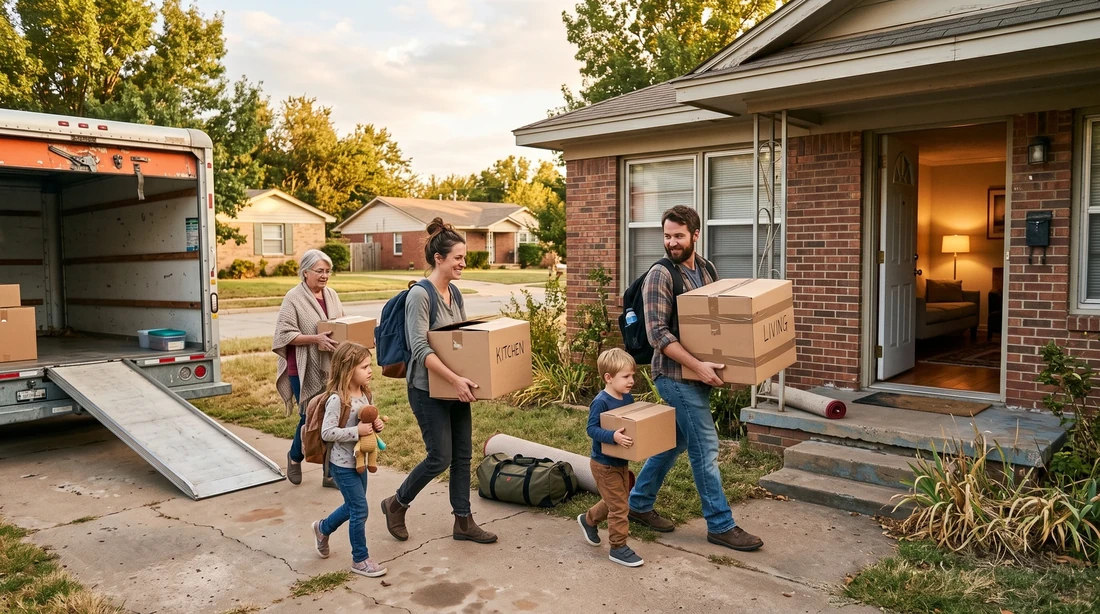
Your Next Steps
- Confirm your declaration and deadline. Look up the current Oklahoma disaster at DisasterAssistance.gov, verify your county has Individual Assistance, and note the application deadline.
- Gather your documents. Insurance claim number and settlement or denial, damage photos, and your ALE limit — so FEMA can see exactly where the gap is.
- Line up somewhere to live. Browse BnB OKC's extended-stay furnished homes or call/text (405) 295-5052 to check availability that FEMA rental assistance or insurance ALE can be applied toward.
Authoritative sources: FEMA disaster page DR-4866, FEMA types of assistance fact sheet, and the Oklahoma Emergency Management 2025 disasters page.
This guide is general information, not insurance or legal advice; FEMA and your carrier make all eligibility and coverage decisions.