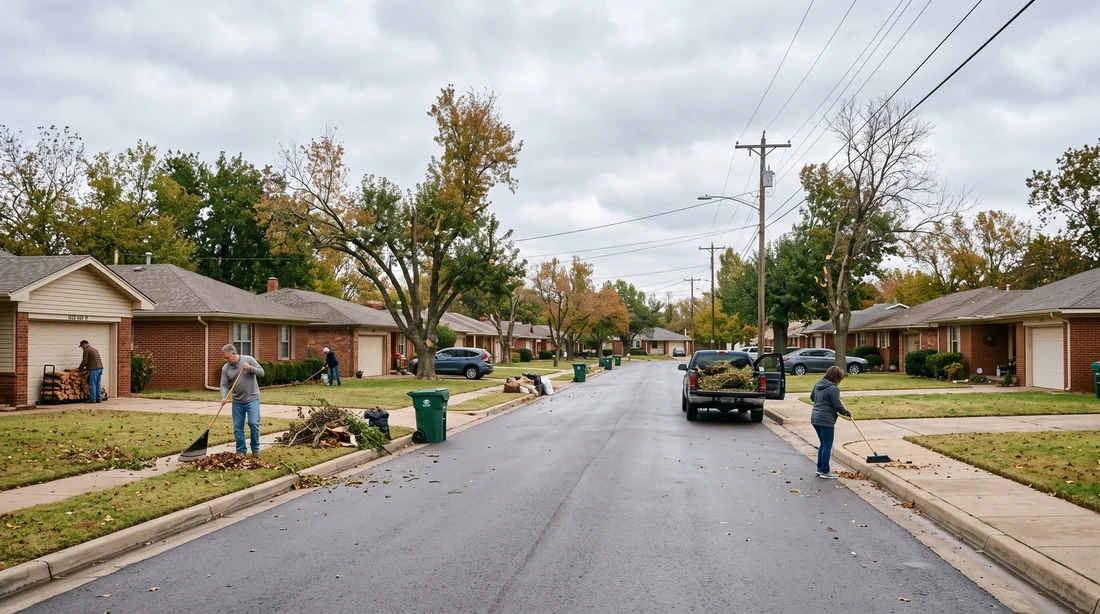
FEMA temporary housing assistance helps homeowners and renters displaced by a federally declared disaster — not everyday damage like a lone burst pipe. To qualify, your primary home must sit in a county approved for Individual Assistance, and you must register before the deadline. FEMA pays only what your insurance does not: insurance comes first.
Key Takeaways
- FEMA temporary housing assistance opens only after a Presidential major disaster declaration includes Individual Assistance for your specific county.
- Insurance comes first: FEMA cannot duplicate benefits, so file your claim and document any denial, delay or exhausted ALE cap.
- Registration typically closes 60 days after the declaration; apply at DisasterAssistance.gov or 1-800-621-3362 as soon as your county is designated.
- Rental assistance is sized to local HUD Fair Market Rent, usually paid for one to two months, and can fund a furnished rental.
What this guide covers: who qualifies for FEMA temporary housing assistance, how FEMA and your insurance hand off to each other, what the rental grant pays, and how that money can go toward a furnished home in the OKC metro while repairs drag on.
Here is the fact that trips up almost everyone in Oklahoma. FEMA is a disaster program, so it only opens after the President signs a major disaster declaration for your county with Individual Assistance attached. When it does open, FEMA cannot pay for anything your homeowners or renters insurance already covers. That rule (no duplication of benefits) decides whether you get a dollar of FEMA rental assistance at all.
If you're staring at a wrecked home after tornado season storms, you want two answers fast. Do I qualify? And how do I keep a roof over my family while repairs drag on? This guide answers both, explains the FEMA-insurance handoff nobody spells out, walks through FEMA housing after a tornado, and shows how FEMA rental assistance in Oklahoma can fund a furnished home in the OKC metro.
FEMA registration usually closes 60 days after a disaster declaration, though FEMA occasionally extends it. As soon as your county is designated for Individual Assistance, apply at DisasterAssistance.gov or 1-800-621-3362. Waiting shrinks the window and delays your first rental payment.

What Triggers FEMA Temporary Housing Assistance?
FEMA housing assistance only activates after a Presidential major disaster declaration that includes Individual Assistance (IA) for your specific county. No declaration, no FEMA help. That is the single biggest reason applications get denied at the front door.
Severe weather by itself won't do it. The governor requests a declaration, FEMA assesses damage, and the President signs it under the Stafford Act. Only counties named in that declaration, and only the assistance types approved, become eligible. Neighboring counties are often left out, and a county can be added days after the initial signing.
Under the program, FEMA's Individuals and Households Program (IHP) can provide several housing pieces: rental assistance to pay for a temporary place, lodging-expense reimbursement for hotel nights you already paid, and home repair or replacement grants. A separate program, Transitional Sheltering Assistance (TSA), can put you directly into a participating hotel for a short bridge period while you line up a rental. FEMA pays that hotel directly, but only when TSA is activated for a given disaster, and it's meant as a stopgap before the longer rental grant.
Direct housing, meaning a FEMA-provided manufactured unit, is rare and reserved for disasters where local rentals don't exist. In a metro the size of Oklahoma City, rentals usually do exist, so rental assistance is the realistic path for most displaced households here.
Take a couple whose kitchen floods from a burst pipe with no declared disaster attached. FEMA won't be their path. Their renters or homeowners loss-of-use coverage will. FEMA fills a narrow role as the safety net after a widespread declared event.
If your county is not named in the declaration:
If your area is not eligible, state agencies and other organizations may offer assistance.
USAGov: Financial assistance after a disaster
How Do FEMA and Insurance Interact?
By federal law, FEMA cannot pay for a housing cost your insurance already covers. This is the "duplication of benefits" rule, and it means you must file your insurance claim first. FEMA is the backstop behind your carrier.
Here is the order that happens. You report the loss to your carrier. Your policy's Additional Living Expenses (ALE) or loss-of-use coverage pays your extra housing costs while you're displaced. FEMA then looks at what's left over.
FEMA can step in when:
- You have no insurance, or your renters policy has no loss-of-use coverage.
- Your insurance is delayed. FEMA may advance rental help, then require you to repay it once your carrier reimburses.
- Your ALE limit is exhausted before repairs finish and a housing gap remains.
- Your loss is underinsured for the disaster's scope.
What FEMA will not do is stack a check on top of an insurance payment for the same expense. If your carrier already reimbursed your temporary rent, FEMA counts that need as met. Keep every insurance letter, because FEMA will ask for your settlement or denial documentation to see the gap.
One detail costs households money. If you tell FEMA you have insurance but your claim is still pending, FEMA can provide rental assistance as an advance, and you must certify that you'll repay it if your ALE later covers the same period. Don't skip declaring insurance to avoid this. A duplicate-benefit finding later can force you to return the entire grant. If your claim was wrongly turned down, read what to do when insurance denies temporary housing before you lean on FEMA to fill it.
Who Qualifies for FEMA Temporary Housing Assistance?
You must clear every one of these. Missing a single item is the most common denial reason.
- The damaged home is in a county declared for Individual Assistance.
- It is your primary residence (a second home or a rental you own doesn't count).
- You are a U.S. citizen, non-citizen national, or qualified non-citizen (one household member with an eligible status, including a minor child who is a citizen, can register).
- Your identity and occupancy/ownership can be verified.
- The disaster made your home uninhabitable or inaccessible, causing real losses.
- You registered before the deadline (typically 60 days from declaration).
Renters qualify too, which many Oklahoma renters miss. If your rented apartment or duplex is uninhabitable after a declared disaster and you had no renters insurance, FEMA rental assistance may be your primary lifeline. If you did have coverage, see whether renters insurance covers temporary housing first, because that comes ahead of FEMA.
How do the homeowner and renter paths differ?
Renters and homeowners both qualify for rental assistance, but homeowners get a second track renters don't: home repair and replacement grants plus a referral to the U.S. Small Business Administration (SBA) for a low-interest disaster loan. FEMA repair grants are capped and cover essential, safe-and-sanitary fixes. They won't pay for a full rebuild, so many homeowners must combine a FEMA grant, an SBA loan, and their insurance settlement to finish repairs.
The effect on your housing: a homeowner facing a months-long rebuild often needs a longer temporary stay than a renter whose landlord repairs a unit. A monthly furnished rate stretches a limited rental grant furthest in that window, because homeowner repairs after a tornado routinely run past the initial one-to-two-month FEMA payment.
How Often Does Oklahoma Get Disaster Declarations?
Often. Oklahoma is one of the most frequently disaster-declared states in the country, which means FEMA temporary housing assistance is a real, recurring option for households across the OKC metro. Tornado season peaks April through June, and severe-storm and flooding declarations have followed major outbreaks repeatedly.
The 2013 EF5 tornado that tore through Moore is the event most Oklahomans remember, and it drew a federal disaster declaration with Individual Assistance. Spring flooding events in later years brought additional declarations for storm, wind, and flood damage across multiple counties.
Geography matters here. Moore and south OKC sit squarely in the corridor storms track through most springs. Del City and Midwest City near Tinker AFB, Bethany and Warr Acres on the northwest side, and the outlying towns in Cleveland and Canadian counties all show up in declarations at different times. Because declarations are county-specific, a Norman household may be eligible while a home a few miles away in an undeclared county is not. Check DisasterAssistance.gov repeatedly instead of assuming you're excluded.
Because these events hit whole neighborhoods at once, local rentals fill fast. The same crunch that follows a house fire plays out across an entire zip code. When a tornado levels dozens of homes in a single subdivision, every displaced family competes for the same short-term rentals in the same week, which is why registering and locking housing early beats waiting for the dust to settle.
What Does FEMA Rental Assistance Pay, and Can It Fund a Furnished Home?
FEMA rental assistance is a grant calibrated to your area's HUD Fair Market Rent (FMR). Your actual rent doesn't set it. You can spend it on any qualifying rental, including a furnished one. It usually arrives as an initial one-to-two-month payment you can recertify if you're still displaced and working toward permanent housing.
FEMA sets a maximum grant amount for the IHP that changes each fiscal year, and rental assistance is one slice of it. The amount is based on the FMR for a unit sized to your household, so a two-person household is measured against a smaller unit than a family of six. Utilities are generally rolled into the FMR figure FEMA uses, but deposits and application fees may not be.
If you're still displaced when your initial period ends, you can apply for Continued Rental Assistance (CRA). It isn't automatic. You must show FEMA you're making a good-faith effort toward permanent housing, such as a repair timeline, a lease you're pursuing, or proof your income can't cover the rent yet. Recertify before the current period lapses so payments don't stop mid-repair.
FEMA doesn't require you to rent a bare apartment. You may apply the grant toward a furnished home with a kitchen and laundry, which for a displaced household beats living out of suitcases in a hotel for two months. Because the grant is tied to Fair Market Rent, it may not cover a furnished home entirely, and you can supplement the difference. Our homes offer monthly rates on 30+ night insurance and disaster stays.
FEMA assistance types, at a glance
| Assistance type | What it does | Who it fits |
|---|---|---|
| Rental assistance (IHP) | Grant sized to local Fair Market Rent; spend on any qualifying rental | Renters & homeowners displaced by a declared disaster |
| Transitional Sheltering Assistance (TSA) | FEMA pays a participating hotel directly for a short bridge stay | Households with nowhere to go while lining up a rental (when activated) |
| Home repair/replacement grant | Capped grant for essential safe-and-sanitary repairs | Homeowners only |
| SBA disaster loan (referral) | Low-interest loan for uncovered repair/rebuild costs | Homeowners & some renters for personal property |
A worked example (hypothetical)
Say a couple's rented duplex takes on water in a federally declared flood, and repairs run about eight weeks, or two months. This is a hypothetical to show the math. It says nothing about how your own claim will go.
Their renters policy includes loss-of-use coverage. Over the displacement they rack up $3,400 in additional living expenses: the difference between their normal rent and a furnished rental, plus higher utilities and a few early hotel nights. Their carrier reimburses that $3,400 as ALE.
Because insurance paid for that housing need, FEMA applies the no-duplication rule and provides $0 rental assistance for those two months. The need was met.
Now flip it. An uninsured couple next door in the same declared county has no ALE. FEMA reviews their housing need and, using the area two-bedroom Fair Market Rent (suppose that's roughly $1,100/month in this example), issues initial rental assistance of about $2,200 for two months. They put that grant toward a monthly furnished-home rate and cover any difference themselves. Same disaster, opposite outcomes, decided entirely by insurance.
A second scenario: the ALE cap runs out
Now take a third couple, homeowners this time, whose burst-pipe flood turns into a declared-disaster event alongside wider storm damage. Their policy has ALE, capped at, say, $3,000. Repairs stretch to eight weeks because a contractor backlog after the storm delays the rebuild. Their ALE reimburses the first $3,000, then stops with three weeks of displacement left.
They document the gap for FEMA with the ALE settlement letter showing the cap was reached, plus the repair timeline. FEMA reviews the remaining need and may cover part of those final weeks at the local FMR, say roughly $825 for three weeks against a $1,100/month figure. That doesn't fully close the gap. Paired with a monthly furnished rate instead of nightly hotel rooms, though, the household finishes the repair without the bill spiraling. A capped ALE isn't the end of the road if a declaration is in play, as long as you can prove the exhausted limit on paper.
What Happens If You Wait?
Every day you spend unregistered and paying nightly hotel rates burns money that a monthly furnished rate would stretch, and it moves you closer to the FEMA deadline. Here's the sequence when a household waits:
- Disaster hits. You evacuate and start paying out of pocket for whatever room you can find that night.
- Days pass without registering. The 60-day FEMA window ticks, and early hotel nights pile up at the highest possible price.
- Your insurance claim opens slowly. ALE reimburses eventually, but you're fronting the cash now, and you still haven't documented the gap for FEMA.
- The FEMA deadline passes. If your insurance fell short, you've lost access to the rental-assistance grant that could have filled it.
- Repairs drag past your ALE limit. Hotel bills compound with no monthly discount and no backstop. FEMA and a furnished monthly rate both exist to keep you out of that trap.
Displaced by a declared disaster and need somewhere for 6–8 weeks? We work with adjusters and TPAs on insurance and disaster placements, and offer monthly rates on furnished OKC homes. Same-day availability checks.
See insurance & disaster housing Call or text (405) 870-2146
How Do the Temporary Housing Options Compare?
A furnished home usually costs less per month than 30 nights in a hotel, and FEMA rental assistance or insurance ALE can be applied to any of these. Compare the real monthly picture before you commit to nightly rates.
| Option | Typical monthly cost | Best for | Funding note |
|---|---|---|---|
| Hotel (nightly) | ~$3,900-$5,700 | 1-7 nights, single traveler | Burns ALE/FEMA fastest; no kitchen or laundry |
| Extended-stay hotel | ~$2,400-$3,600 | 2-4 weeks, kitchenette needed | Cheaper than hotels; tight for families or pets |
| Furnished home (30+ nights) | Monthly rate on 30+ night stays | Families, pets, 6-8+ week repairs | ALE or FEMA grant applies; kitchen & laundry included |
Hotel and extended-stay figures are typical ranges, not quotes. Our published from-rates run $225-$425/night with direct-booking savings up to 35% on 4+ night stays, and dedicated monthly extended-stay rates on 30+ nights. Learn how the billing side works in how ALE housing companies work.
How do kids, pets, and household size change the math?
The option that fits changes fast once the household grows past a couple. A family with school-age kids after a tornado has a real reason to stay inside the same district while their home is rebuilt. A furnished home lets kids finish the year without transferring schools mid-stream, which two hotel rooms and a shared bathroom rarely allow. FEMA sizes its rental grant to a larger unit for a bigger household, so a family of five is measured against a three-bedroom FMR instead of a studio.
Pets complicate hotel stays and even TSA placements, since not every participating hotel accepts animals. Several of our homes are dog-friendly with fenced yards, so a displaced family doesn't have to board a pet on top of everything else. See pet-friendly rentals in OKC. For multi-generational households displaced together, a single furnished home usually beats renting multiple hotel rooms that FEMA and ALE both drain fast.
How to Apply for FEMA Temporary Housing Assistance, Step by Step
Applying is free, and you can do it while your insurance claim is still open. Follow this order.
- Confirm your county is declared. Check DisasterAssistance.gov for your county's Individual Assistance designation before anything else.
- File your insurance claim first. Report the loss to your carrier and keep the claim number, since FEMA requires it.
- Register with FEMA. Apply at DisasterAssistance.gov, the FEMA app, or 1-800-621-3362 before the 60-day deadline.
- Document your displacement. Save every hotel receipt, lease, and utility bill, plus your insurance settlement or denial letter to prove the gap.
- Complete the FEMA inspection. Let the inspector verify your home is uninhabitable, and respond fast to any request for more paperwork.
- Use your rental assistance and recertify. Apply the grant toward a rental, and recertify for Continued Rental Assistance if repairs run past the initial period.
Two practical notes on the inspection. FEMA inspectors verify occupancy and damage but do not set your grant on the spot, and a scheduled inspection is not a promise of approval. Keep a phone number FEMA can reach. A missed inspection call is a frequent cause of delay after a mass-displacement event, when inspectors are working through hundreds of homes.
Red Flags That Lead to a FEMA Denial
A denial is often fixable. The usual causes:
- A missing insurance settlement letter. FEMA can't see the gap without it.
- Unverified occupancy. FEMA has to confirm the home was your primary residence.
- A missed inspection call. Keep a reachable phone number on file.
- Insurance already covered the housing cost. The no-duplication rule counts that need as met.
Read your denial letter carefully, gather the requested documents, and file an appeal within the stated window. If your insurance was the problem, review your options for a wrongly denied temporary-housing claim before relying on FEMA.
Terms You'll Hear, Decoded
- No duplication of benefits: FEMA can't pay for a cost your insurance already covered, so insurance is always applied first.
- Individuals and Households Program (IHP): FEMA's grant program that includes rental assistance, home repair, and other needs after a declared disaster.
- Transitional Sheltering Assistance (TSA): A FEMA program that pays participating hotels directly for a short bridge stay when activated for a disaster.
- Continued Rental Assistance (CRA): An extension of rental assistance past the initial period, granted only when you show a good-faith effort toward permanent housing.
- Fair Market Rent (FMR): HUD's estimate of typical local rent that FEMA uses to size your rental-assistance grant.
- Major disaster declaration: The Presidential order under the Stafford Act that unlocks FEMA aid for named counties; without it, FEMA housing help doesn't exist.
- SBA disaster loan: A low-interest federal loan homeowners and renters may be referred to for costs FEMA grants don't cover.
- Additional Living Expenses (ALE): Your insurance coverage for the extra cost of living elsewhere while your home is repaired.
Who Handles What During a Displacement?
| Task | Who handles it |
|---|---|
| Confirm county Individual Assistance designation | You / FEMA |
| Open the insurance claim and set ALE | You / adjuster / carrier |
| Register with FEMA before the deadline | You |
| Verify home is uninhabitable | FEMA inspector / adjuster |
| Provide settlement or denial letter proving the gap | Carrier / you |
| Arrange the furnished home and monthly rate | You / host |
| Authorize direct billing (if applicable) | Carrier / TPA |
When Don't You Need FEMA?
FEMA is the wrong tool for most everyday displacements. If there's no federal disaster declaration, FEMA can't help, and your insurance is the right and faster answer. A burst pipe, a single-home fire, or storm damage that didn't trigger a declaration all run through your carrier's loss-of-use coverage.
You also don't need FEMA if your insurance fully covers your temporary housing, because the no-duplication rule means FEMA would pay nothing anyway. In that case, focus your energy on your ALE claim and getting hotel stays or a furnished rental reimbursed quickly. If you're a single traveler with somewhere to land for a night or two, or you can double up with family for the short repair, you likely don't need to set up a monthly stay at all.
FEMA can change the outcome when a declared disaster hits and you're uninsured, underinsured, or your ALE runs out before repairs finish. For those households (families keeping kids in-district, people with pets, and anyone facing a 6-8 week or longer rebuild), a FEMA rental grant applied to a monthly furnished home can turn a crisis into a manageable stay. That's where a local operator who understands both insurance and disaster placements matters most.
Whichever path applies to you, our insurance and disaster housing team can check same-day availability across 11 furnished metro homes rated 9.5 out of 10 across 1,580 verified guest reviews on Airbnb and Vrbo. You can also call or text (405) 870-2146 to talk through dates before you register.
Bottom Line
FEMA housing help exists only after a declared disaster with Individual Assistance for your county, and it fills the gap your insurance leaves. File with your carrier first, register with FEMA before the deadline, and keep the paperwork that proves what insurance didn't cover.
- Confirm your county's status. Check DisasterAssistance.gov to see whether your county is declared for Individual Assistance, and note the registration deadline.
- Gather your gap paperwork. Pull your insurance claim number, your ALE or denial letter, hotel receipts, and your lease so FEMA can see exactly what insurance didn't cover.
- Line up your housing. Compare a monthly furnished home against nightly hotel costs and call or text (405) 870-2146 or visit our insurance & disaster housing page to check availability for your dates.
Primary sources: the federal DisasterAssistance.gov portal, FEMA, and the Oklahoma Insurance Department.
This guide is general information, not insurance or legal advice; your carrier and FEMA make all coverage and eligibility decisions.