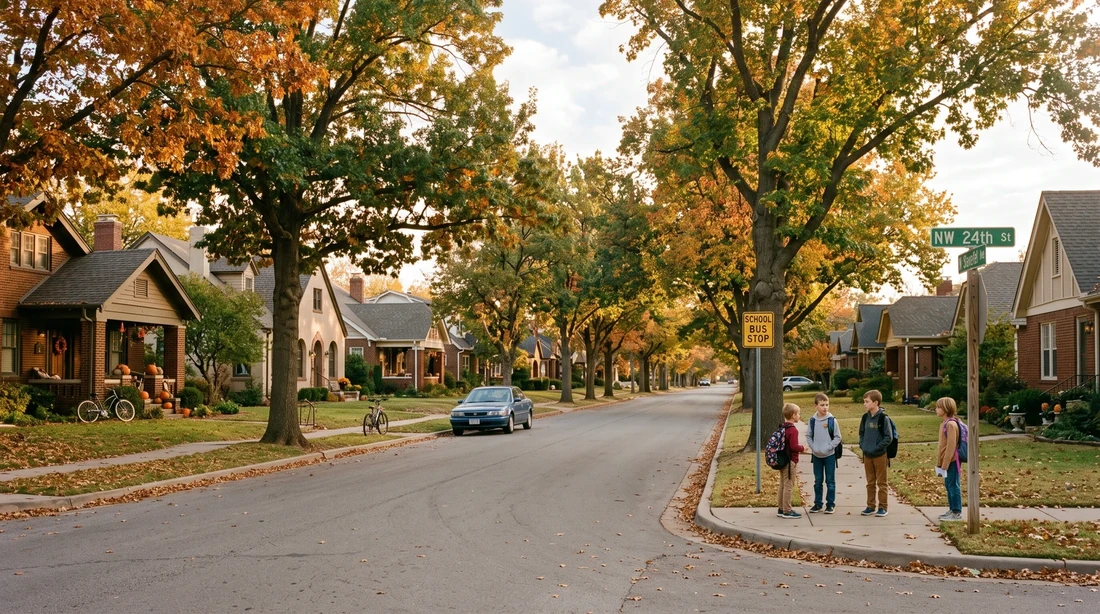
An insurance-displaced family in your neighborhood is a household whose home became unlivable — usually a fire, flood, or major storm — while their insurance pays for a temporary furnished home during repairs. These stays are arranged through the family's carrier or a housing coordinator, run on a written lease or agreement, and are quiet, vetted, and time-limited — most last one to four months, then the family goes home.
Key Takeaways
- Most insurance placements last one to four months, ending automatically when repairs on the family's own home finish.
- Placements come through a carrier or housing coordinator with a written agreement, a real claim, adjuster and authorization.
- School attendance zones drive placement location, keeping children in the same district and shortening daily drives across the metro.
- With a $2,800 monthly ALE budget, two hotel rooms at $140/night run about $8,400 monthly versus a furnished home.
What this guide covers: why a furnished home on your street might be housing a family whose own home was damaged, how these insurance placements are vetted and paid for, how long they usually last, and what neighbors can expect day to day.
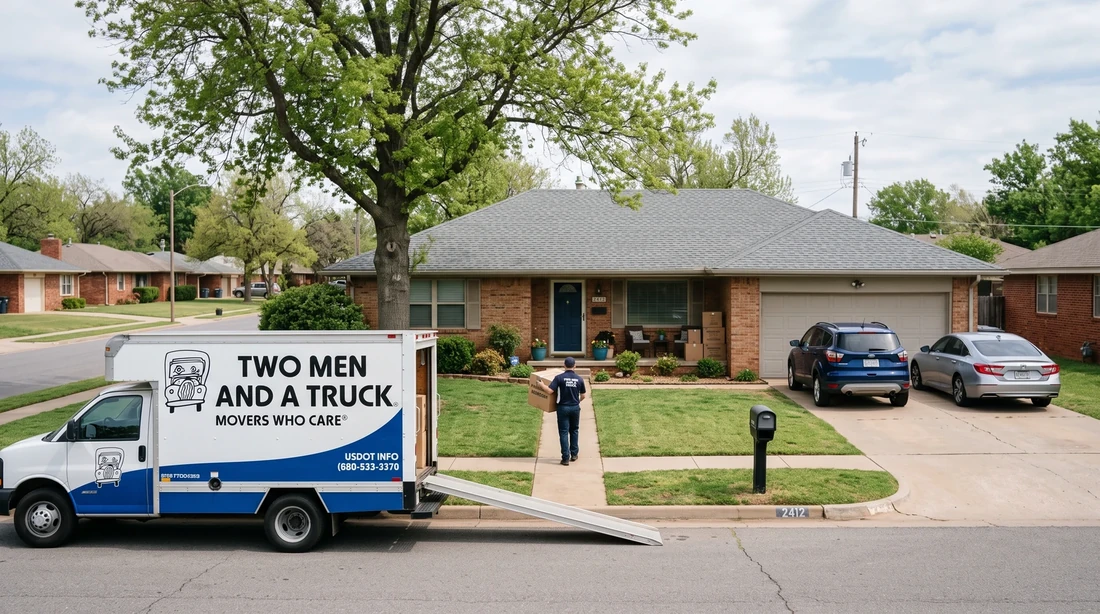
You noticed a moving van at the furnished house down the block, then unfamiliar cars in the driveway, and maybe kids you don't recognize catching the same school bus. You may be wondering who just arrived and for how long. In almost every case, it's an ordinary family riding out an insurance claim after their own home burned, flooded, or took storm damage.
This is a normal, temporary use of a furnished home. Nobody is moving in for good, and nobody is renting it for parties. At BnB OKC we place displaced families through their carriers and through partners like Alacrity Solutions, and we've earned a 9.5 out of 10 average across 1,580 verified guest reviews on Airbnb and Vrbo. Here's what an insurance displaced family in your neighborhood involves, and why it stays quiet.
For the displaced family, the clock is financial. Every hotel night with no kitchen burns Additional Living Expenses (ALE) budget faster than a flat monthly furnished-home rate would. That's why placements move toward a real home quickly.

Why Is a Furnished Home on My Street Housing a Displaced Family?
A furnished home is one of the most common places an insurance carrier houses a displaced family, because it fits a real family better than a hotel for a stay measured in months. When a house or apartment becomes unlivable, the family's policy typically pays for somewhere comparable to live while contractors repair the original home.
The triggers follow Oklahoma's seasons. Spring brings storm and tornado damage. Tornado season here peaks April through June, when a single supercell can strip a roof or drop a tree through a living room. Deep-winter cold snaps and ice storms burst pipes and flood ceilings overnight. And year-round, kitchen fires, wiring fires, and apartment-building fires displace families with almost no warning. In each case the family didn't choose to move. Their home can't be lived in right now.
Insurance carriers and their housing coordinators favor furnished homes over hotels for longer displacements for a plain reason. A family of four cannot live for four months in one or two hotel rooms with no kitchen, no laundry, and nowhere for kids to do homework. A neighborhood home restores something close to normal life. For the full mechanics, see how ALE housing companies work.
Why did they land on my street specifically?
Placement is rarely random. Coordinators try to keep a displaced family near their normal life, which is why the family down the block often has a connection to the area. School is a big driver. A family with kids in Putnam City, Edmond, Moore, or Oklahoma City Public Schools usually wants housing inside the same attendance zone so children don't change schools mid-semester. Proximity to a parent's job, a specific hospital, or the family's damaged home (so they can meet contractors) also steers where a placement lands.
The OKC metro's geography makes school zones the dominant factor. A family zoned into Edmond but placed in Deer Creek or The Village may face a 20-to-30-minute cross-town drive twice a day, and a family displaced in Moore but housed near Lake Hefner would be pulling kids clear across the metro.
So coordinators hunt for a compliant home inside the same district, such as a furnished house a few minutes from the Paseo, in The Village near Putnam City schools, or on the south side inside Moore's attendance lines, to keep that morning routine short. When school, work, and the contractor meetings all sit within a normal drive, the family can live the stay.
Industry data shows how premium dollars map to different causes of loss:
According to the 2008 Insurance Information Institute factbook, for every $100 of premium, in 2005 on average $16 went to fire and lightning, $30 to wind and hail, $11 to water damage and freezing, $4 for other causes, and $2 for theft.
Wikipedia: Home insurance
What Does an Insurance Placement Involve?
An insurance placement is a documented, short-term arrangement. It's neither an open-ended rental nor a vacation booking. Three features define it, and they tend to reassure neighbors once they understand them.
Are these families vetted?
Yes. Displaced families come through their insurance carrier or a third-party housing coordinator, and they sign a written agreement with the home operator on the same terms as any responsible tenant. There is a real claim, a real adjuster, and a real paper trail behind the stay. Nobody walks in anonymously. The carrier's authorization is the family's reference, and the operator knows exactly who is in the home and until roughly when.
Will it be quiet?
Almost always. A displaced family is living through one of the harder stretches of their life. They lost belongings, they're managing a claim, and the kids may have a longer route to school. Nobody is here for a group weekend. In practice, insurance stays are among the quietest a furnished home hosts: people working, cooking dinner, and rebuilding routine.
The furniture is already there, so there's no ongoing hauling in and out, either. Parking usually looks like any household's, with the family's own one or two vehicles plus an occasional contractor's truck stopping by to update them on the real home.
How is the stay time-limited?
Placements end when the family's home is repaired. Most insurance policies cap ALE by time (often up to 12 or 24 months) or by dollar amount, and most single-family and apartment repairs wrap in one to four months. When repairs finish, the family returns home and the placement closes. Learn how the underlying coverage works in loss of use coverage explained.
What Do Displaced Families Go Through, and What Does It Cost?
A displaced family's biggest hidden problem is that hotel costs pile up fast against a fixed ALE budget, which is why furnished homes exist. The money explains why the family down the street is in a house instead of a hotel, and why the stay is temporary by design.
Here's the sequence a typical claim follows, and what happens at each stage if housing isn't sorted quickly:
- Displacement night. The family evacuates and often pays out of pocket for a hotel until the claim opens. No kitchen means every meal is a restaurant meal.
- Days 1 to 3. The adjuster confirms loss of use and sets an ALE budget, either a dollar figure or a monthly allowance for temporary living.
- Week 1. Hotel nights and restaurant costs accrue against ALE. Two hotel rooms for a family can burn the budget in weeks.
- Week 2 onward. A furnished home locks a flat monthly rate with kitchen and laundry, stretching the remaining ALE much further.
- Repairs complete. The placement ends, the home is turned over, and the family moves back into their own house.
Here's a hypothetical worked example. Say a renter and two kids are displaced by an apartment fire, and the adjuster sets a temporary-housing budget in the neighborhood of $2,800 a month. Two hotel rooms at $140/night run about $280/night, roughly $8,400 a month, plus restaurant meals with no kitchen. An extended-stay suite at ~$110/night is about $3,300 a month but cramped for three. A furnished 3-bedroom home at about $2,800/month fits the budget, adds a kitchen and laundry, and keeps the family under one roof. These are illustrative figures. Your carrier sets the actual budget.
A second variant: when repairs run long. Suppose that same fire needs smoke and odor remediation, so the apartment isn't ready for five months instead of three. At the furnished home's ~$2,800/month, five months is about $14,000 total. Those same two hotel rooms at ~$8,400/month would run about $42,000 over five months, enough to blow through many families' entire ALE cap and force them to cover the overage themselves. That's why extensions on a month-to-month furnished stay are so much easier to absorb than open-ended hotel nights.
A third variant: a family with a dog. Now add the family's dog to the apartment-fire scenario. Many hotels charge a pet fee of roughly $75-$150 per stay or refuse pets outright, which can push a displaced family into boarding the dog at around $30 a day, about $900 a month on top of housing. A dog-friendly furnished home keeps the pet with the family and eliminates that boarding line item entirely. See our pet-friendly rentals in OKC.
A fourth variant: the meal math neighbors rarely see. ALE also covers the extra cost of eating out when there's no kitchen. Say the family of three would normally spend about $600 a month on groceries at home. With no kitchen in a hotel, restaurant and takeout meals for three can easily run $1,500-$1,800 a month.
The carrier is on the hook for that roughly $1,000-a-month gap on top of the room rate. A furnished home with a full kitchen erases most of that overage, which is a quiet but large part of why a house pencils out cheaper for the carrier than it first appears.
Placing a displaced family in the OKC metro? We offer same-day and monthly furnished options and work directly with carriers and coordinators.
How Do the Housing Options Compare?
For a stay of a month or more, a furnished home usually costs less per month than two hotel rooms while giving a family far more room. This table shows why carriers so often choose the neighborhood home.
| Option | Typical monthly cost | Kitchen & laundry | Fits family of 4 |
|---|---|---|---|
| Two hotel rooms | ~$7,800-$9,000 | No / limited | Cramped, split up |
| Extended-stay suite | ~$3,000-$3,600 | Kitchenette | Tight for a family |
| Furnished home (BnB OKC) | Monthly rate on 30+ nights | Full kitchen & laundry | Yes: bedrooms, yard |
Figures for hotels and extended-stays are typical ranges, not our rates. Our published from-rates run $225-$425/night with monthly pricing on 30+ night stays and up to 35% direct-booking savings on 4+ night stays. For the coverage behind hotel stays, see does renters insurance cover hotel stays.
How Long Does a Displaced Family Typically Stay?
Most insurance placements last one to four months, but the real driver is the type of damage and how long the rebuild takes. The table below shows typical repair windows and the placement length they usually create. Curious neighbors and families trying to plan can both use it.
| Damage type | Typical repair window | Likely placement length |
|---|---|---|
| Contained kitchen fire | 6-10 weeks | ~2-3 months |
| Whole-unit apartment fire | 2-4 months | 3-4 months |
| Burst pipe / water damage | 4-8 weeks | 1-2 months |
| Storm or tornado structural damage | 3-6+ months | 4-6+ months, extensions common |
These are typical ranges, not promises. Permitting delays, material shortages, and additional damage found mid-repair all stretch timelines, which is why month-to-month furnished stays with easy extensions matter. A spring tornado rebuild started in May can easily run past the start of the next school year. That's when keeping kids in their same OKC-metro attendance zone matters most, because a stay that begins as a summer inconvenience can quietly become the family's home base clear into fall semester.
What Do Neighbors Worry About, and What's the Reality?
Most worries neighbors have about a temporary household on the block dissolve once you know how insurance placements work. Here are the concerns we hear most, matched against what a managed placement looks like.
| Common concern | The reality |
|---|---|
| "Is this a party or short-term rental?" | No. It's a family on a written 30+ day agreement living daily life, not a weekend booking. |
| "Will it hurt property values?" | A furnished home occupied by a quiet, longer-term family is typically less disruptive than a vacant house or high-turnover rental. |
| "Are these people screened?" | Yes. There's a real claim, adjuster, and carrier authorization standing behind the stay. |
| "How long until they're gone?" | Usually 1-4 months, ending automatically when their own home is repaired. |
| "Who do I call if there's a problem?" | The home has a named local operator you can reach. Placements are managed, not anonymous. |
The distinction that matters most is between a managed insurance placement and a nightly short-term rental. A displaced family stays for months on a signed agreement, sends kids to a nearby school, and keeps normal hours, the opposite of high-turnover weekend traffic. In many OKC neighborhoods with HOAs or deed restrictions, a 30-plus-day tenancy is treated very differently from a short-stay rental, and a family riding out a claim generally reads as what it is: a temporary household. If you have a specific rule question, the home's local operator can confirm how the placement is structured.
Who Handles What During a Placement?
Neighbors often assume the family arranged everything themselves. Usually a chain of people did, which is also why the process stays orderly.
| Task | Who handles it |
|---|---|
| Confirm loss of use & set ALE budget | Adjuster / carrier |
| Find a compliant furnished home | You (the family) or a housing coordinator |
| Verify the claim & authorize billing | Carrier / TPA |
| Sign the stay agreement & provide the home | Host / operator |
| Keep receipts & report repair progress | You (the family) |
| End the placement when repairs finish | Adjuster + host |
How an Insurance Housing Placement Works, Step by Step
If you're a displaced family or an adjuster reading this, the placement process is straightforward once the claim is open. Here is the sequence we follow, matching the checklist above.
- Confirm your loss-of-use coverage. Ask your adjuster what your ALE budget and time limit are.
- Set your needs. Count bedrooms, note pets, schools, and how long repairs may take.
- Find a compliant furnished home. Choose one that fits your budget, headcount, and dates.
- Get billing authorized. The carrier or TPA approves direct billing or reimbursement in writing.
- Sign and move in. Complete the stay agreement and settle into the home.
- Report progress and return home. Keep receipts, track repairs, and close the stay when your house is ready.
If your carrier questioned or declined temporary housing, read insurance denied temporary housing before you sign anything. And if the loss was a fire, temporary housing after a house fire walks through the first 72 hours.
When Is a Hotel Fine, and When Does a Furnished Home Change the Outcome?
A hotel is the right call for a short, simple displacement: a night or two while a small water leak dries out, or a single adult with no pets who values hotel points and doesn't need a kitchen. If the whole thing wraps in three or four nights, a home rarely makes sense, and a downtown hotel near a parent's job may beat any rental.
A furnished home changes the outcome when the stay stretches past a couple of weeks, when there are kids who need bedrooms and a place to study, when there are pets, or when the family needs a real kitchen and laundry to keep costs down. It also matters for multi-generational households. A displaced family sometimes includes a grandparent or a college-age kid home for the summer, and a home that sleeps more keeps everyone together.
Home features can also decide the match in ways a hotel can't. If someone was injured in the fire and can't manage stairs, a home with a ground-floor bedroom does what a third-floor hotel room can't. If both parents work from home, two sets of video calls need separate rooms instead of one hotel desk.
Several BnB OKC homes are dog-friendly, and our homes range from ones that sleep 2 up to 16-plus, so a placement can match the actual household, from a single displaced tenant to a large extended family under one roof. Two of our homes hold Airbnb's "Guest Favorite" badge.
For a neighbor, the practical takeaway: the longer and larger the displacement, the more likely a furnished home was the right, cost-controlled choice for everyone. That includes the wider community, because a quiet family in a house is far less disruptive than a family splitting between hotel rooms and shuttling for every meal.
Working a placement right now? Our insurance housing team can match dates, headcount, and school zone the same day.
How Can Neighbors Help?
The kindest thing a neighbor can do is treat a displaced family like any new neighbor: a wave, patience, and normal courtesy. This family has already had a hard month. You don't need to do anything special, and you certainly don't need to worry.
Expect ordinary household life, with cars coming and going for work and school, groceries, an occasional visitor, and a contractor's truck stopping by to update them on their real home. Expect the stay to end within a few months, usually without fanfare, when their own home is repaired. Kids may be new to the block, but only until the semester or the rebuild finishes.
If you ever have a real concern about the property itself, the home has a local operator you can reach, because furnished-home placements are managed. And if you feel like offering more than a wave, small local knowledge (the nearest grocery, the good pizza place, which morning the trash truck comes) is often what a family displaced across town is missing.
Red Flags Worth a Call to the Operator
A managed placement rarely produces any of these. If one shows up, reach the home's local operator.
- Weekend turnover. New groups every few nights suggest a nightly rental, which an insurance placement isn't.
- Event-style traffic. Insurance stays look like one household's daily life.
- No named operator. Placements are managed, so someone accountable should be reachable.
Terms You'll Hear, Decoded
- Additional Living Expenses (ALE): the part of a policy that pays a displaced family's above-normal living costs while their home is unlivable, including housing and sometimes extra meal, mileage, laundry, and pet-boarding costs.
- Loss of use: the coverage section that funds temporary housing; "loss of use" means the home can't be used right now.
- Direct billing: when the carrier or coordinator pays the housing provider directly instead of reimbursing the family, only with written authorization.
- Third-party administrator (TPA): a company like a housing coordinator that manages placements on the carrier's behalf.
- Housing coordinator: the person who matches a displaced family to a compliant furnished home within their ALE budget, dates, and school zone. Coordinators like Alacrity Solutions often handle this matching.
- ALE cap: the ceiling on temporary-housing coverage (a dollar amount, a time limit often up to 12 or 24 months, or both), after which the family covers costs themselves.
- Comparable / like-kind housing: the standard many policies use, meaning temporary housing roughly equivalent to what the family lost. That's why a displaced family often ends up in a similar-sized home rather than a downgrade or an upgrade.
For how coverage kicks in at all, see does renters insurance cover temporary housing.
Bottom Line
The new family down the street is most likely waiting out repairs on their own home, on a written agreement their insurance pays for, and they'll head home when the work is done. Treat them like any neighbor.
- If you're a neighbor: relax. Nothing is needed of you beyond the same courtesy you'd extend any new family for the few months they're here.
- If you're the displaced family or adjuster: confirm your ALE budget and time limit, note your school zone and any pets, then compare a furnished home against two hotel rooms per month.
- Take action: for a compliant, quiet, time-limited placement in the OKC metro, visit our insurance housing page or call or text (405) 870-2146.
This guide is general information, not insurance or legal advice; your carrier makes all coverage decisions. For Oklahoma consumer resources, see the Oklahoma Insurance Department.