Oklahoma City weather by month runs from a January normal high of 49 and low of 27 to a July high of 93 and low of 70, using NOAA's 1991 to 2020 normals for Will Rogers World Airport. May is the wettest month at 5.31 inches and the peak of tornado season. Snow averages 6.7 inches a year, nearly all of it December through February. Fall and late spring are the comfortable windows for visitors.
You are trying to decide what to pack, when to book, or whether a January move is going to mean ice on the driveway the week your furniture arrives. The internet answers that with vibes. This page answers it with the official numbers, month by month, and then tells you what each month feels like on the ground from someone who hosts guests in the city year round.
Every temperature, rainfall and snowfall figure below is the NOAA 1991 to 2020 climate normal for Will Rogers World Airport, the city's official station. Tornado history is from the National Weather Service office in Norman. Everything else is experience, labeled as such.
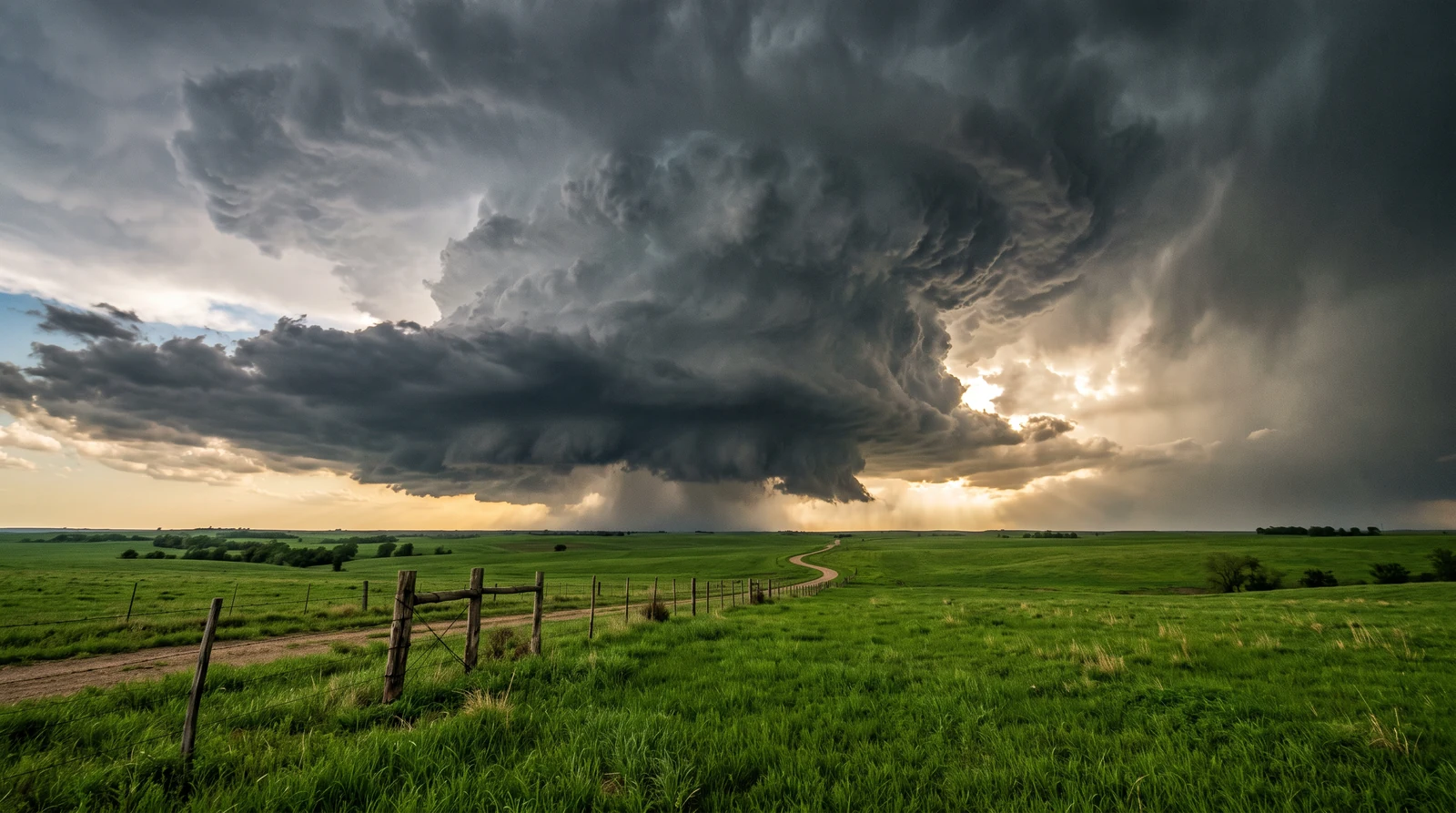
Tornado season peaks in May, with April and June close behind; about two-thirds of the 194 tornadoes recorded in the Oklahoma City area since the 1890s fell in those three months. If you are booking a spring stay, pick a home with a storm shelter or an interior room and learn where it is on day one.
Oklahoma City Weather by Month: The Table
Oklahoma City's normal daily high swings 44 degrees between January and July, from 49.3 to 93.1, which is a wider annual range than most coastal cities see. Rain concentrates in late spring, with May alone carrying about 15 percent of the year's 36.4 inches. Snow is light and brief by northern standards but arrives as ice often enough to matter.
| Month | Normal high / low (F) | Precipitation (in) | Snowfall (in) |
|---|---|---|---|
| January | 49.3 / 27.0 | 1.32 | 1.8 |
| February | 53.8 / 30.8 | 1.42 | 1.8 |
| March | 62.9 / 39.5 | 2.55 | 0.8 |
| April | 71.1 / 47.5 | 3.60 | 0.0 |
| May | 78.9 / 57.6 | 5.31 | 0.0 |
| June | 87.5 / 66.2 | 4.49 | 0.0 |
| July | 93.1 / 70.3 | 3.59 | 0.0 |
| August | 92.2 / 69.1 | 3.60 | 0.0 |
| September | 83.9 / 61.5 | 3.72 | 0.0 |
| October | 72.8 / 49.4 | 3.32 | 0.0 |
| November | 60.7 / 37.7 | 1.68 | 0.5 |
| December | 50.4 / 29.5 | 1.79 | 1.8 |
| Year | 71.4 / 48.8 | 36.39 | 6.7 |
Two records frame the extremes: the all-time high of 113 was reached on August 11, 1936 and again on August 3, 2012, and the all-time low of minus 17 dates to February 12, 1899. Neither is normal. Both tell you the tails are long.

Winter: December, January and February
Winter highs sit around 50 and lows in the upper 20s, which sounds mild and often is. The catch is variability. A week of 60-degree afternoons can be followed by an ice storm that shuts the city for two days, because the normals average out a climate that lurches. Each of the three winter months averages 1.8 inches of snow, and the more disruptive event is freezing rain, which coats roads and tree limbs and knocks out power.
What that means for a visitor: pack a real coat, gloves and shoes with grip, even if the forecast on departure day says 58. For someone moving in, expect at least one stretch when you will not want to drive, and plan grocery runs around the forecast rather than the calendar. Winter is also the dry season, with under two inches of precipitation a month, so most days are clear and bright. Winter is also when the holiday lights and the downtown ice rink fill the calendar through early January.
Spring: March, April and May
Spring is when Oklahoma City is at its best and its most dangerous in the same month. Highs climb from 63 in March to 79 in May, redbuds and wildflowers come out, and the patios fill. May is also the wettest month of the year at 5.31 inches and the peak month for tornadoes, with April and June right behind it. The two deadliest tornadoes in the metro's modern history, May 3, 1999 and May 20, 2013, both struck in the second half of May.
None of that is a reason to avoid spring. It is a reason to respect it. Severe weather here is well forecast, usually days ahead, and the local culture around it is calm and practiced. Know where the shelter or interior room is in your hotel or rental, keep a phone charged, and treat a tornado warning for your county as an instruction, not a suggestion. Hail is the more common spring nuisance; park under cover when the forecast mentions it.
Summer: June, July and August
Summer highs run 88 to 93 and lows stay near 70, so nights do not cool off much. Humidity is highest in June, when the spring rain pattern is still fading, and the air dries somewhat into July and August as heat builds. Afternoon heat indexes above 100 are routine in July. The city plans around it: early mornings outdoors, air conditioning or water from noon to five, and evenings on patios after seven.
For visitors that pattern decides the trip. A rental with a pool turns the worst hours of the day into the best, which is why homes with private pools book first for June through August. Our summer guide is built on that three-block rhythm. For anyone relocating, budget for electricity; a 3,000-square-foot house running the air conditioner through a 95-degree week costs real money, and the furnished-home model where utilities are included in the rate removes that surprise.
Fall: September, October and November
Fall is the season locals recommend to anyone asking when to visit. September is still warm at 84, October settles to 73 with cool nights near 49, and November drops to 61 with the first freezes typically arriving as lows fall into the 30s. Rain is moderate in September and October and tapers sharply in November. Severe weather can return briefly in the fall, and the single-day record of five tornadoes in the OKC area was tied on October 9, 2018, so the fall risk is real, though far below spring's.
October is the month to aim for if comfort is the only criterion. The State Fair of Oklahoma runs in September, college football fills fall weekends, and the best time to visit Oklahoma City guide weighs those events against the weather.
Month-by-Month Notes From a Host
The table gives you the averages. These notes are what each month tends to feel like to guests, with the normals as the anchor and the rest labeled as observation.
- January: the coldest month at 49 and 27. The quietest for travel, and the one most likely to deliver an ice day.
- February: 54 and 31. Still winter, but the record low of minus 17 in 1899 and the warm spells that reach the 70s show how wide this month can run.
- March: 63 and 40, with the last 0.8 inches of average snow. Spring arrives in fits; redbuds bloom late in the month.
- April: 71 and 48. Storm season begins in earnest, and the Memorial Marathon fills the last weekend.
- May: 79 and 58, 5.31 inches of rain, the peak of tornado season. Also the month the Women's College World Series starts at Devon Park.
- June: 88 and 66. Heat and humidity arrive together; the WCWS finishes and pool homes are fully booked.
- July: the hottest month at 93 and 70. Plan every outdoor hour before 11 am.
- August: 92 and 69, with the all-time record of 113 set on August 11, 1936 and again on August 3, 2012. School starts mid-month and weekday crowds thin.
- September: 84 and 62. The State Fair of Oklahoma runs this month, and the first cool fronts arrive near the end.
- October: 73 and 49. The best weather month, with football weekends and bright, dry days.
- November: 61 and 38, with the first measurable snow possible at 0.5 inches average. The first hard freezes typically arrive this month.
- December: 50 and 30, 1.8 inches of snow. Downtown in December runs all month and the ice rink is open.
What the Climate Means If You Are Moving Here
Anyone relocating to Oklahoma City should plan for three weather costs that visitors never see. The first is cooling: June through September highs in the upper 80s and 90s mean the air conditioner runs for four months, and electricity bills in a large house reflect it.
The second is ice: one or two freezing-rain events most winters, which argue for a garage and for keeping a few days of groceries on hand from December through February. The third is hail and wind: spring storms damage roofs and cars often enough that a covered parking spot and a close read of a lease's or policy's storm language are both worth the trouble.
None of these are reasons to avoid the city. They are line items. A furnished monthly rental with utilities included absorbs the first one during a transition, a garage handles the second, and the third is a question to ask before you sign anything long term.
What to Pack, by Month
Layering is the whole strategy in Oklahoma City, because a 30-degree swing inside one day is normal in spring and fall. This table turns the normals into a packing list.
| Months | Pack | Leave home |
|---|---|---|
| December to February | Insulated coat, gloves, hat, grippy shoes, a mid layer for 60-degree afternoons | Snow boots for deep snow; it rarely accumulates |
| March to May | Rain jacket, layers, closed shoes, a charged phone and a weather app with county alerts | Heavy coat after mid-March |
| June to August | Light fabrics, sun hat, sunscreen, swimsuit, sandals, a light layer for cold restaurants | Anything dark and heavy |
| September to November | Layers, a light jacket by October, a warmer one by mid-November | Shorts after October in most years |
A Worked Example: What Weather Does to a 90-Day Winter Relocation
Say you are relocating to Oklahoma City for work and your company covers 90 days of temporary housing starting January 5. This is hypothetical. January and February each average 1.8 inches of snow, and the practical pattern is one or two events that make roads bad for a day or two each. Plan on three to five days across the 90 when you will not want to commute.
In a hotel at a typical $140 a night, those are days of eating from a vending machine or paying delivery fees on top of the room. In a furnished home at a monthly rate, which on our homes starts in the ballpark of what three weeks of that hotel would cost, you have a kitchen stocked before the storm, a garage so you are not scraping ice at 6 am, and laundry so a snow day is a useful day.
Over 90 days the housing cost difference tends to run a few thousand dollars in the home's favor for a family, and the weather is the part people forget to price. Our relocation housing guide works through the arithmetic.
Moving to OKC in a hard-weather month? Our furnished homes come with garages, full kitchens and monthly rates on stays of 30 nights or more, so an ice day is an inconvenience and not a crisis. Call or text (405) 870-2146.
How to Plan a Trip Around Oklahoma City Weather, Step by Step
- Pick the month for the reason you are coming. Events and prices decide spring and fall; comfort alone points to October.
- Check the normals in the table. Use the high and low for your month as the packing baseline.
- Add a severe-weather plan for April through June. Know the shelter location in your lodging and set county alerts on your phone.
- Book cooling or warmth into the lodging. A pool in summer, a garage and generator-free resilience in winter.
- Watch the 7-day forecast, not the 30-day. Long-range outlooks here are weak; the week-out forecast is strong.
Where to Stay for Each Season
Summer points to a home with a pool, and winter points to a garage and a kitchen. Spring and fall are open; a central home near the Paseo or Plaza keeps you ten minutes from downtown and the museums on a rainy day. Our 11 furnished homes across the metro cover all three cases, and the best places to stay in Oklahoma City guide matches neighborhoods to trip types.

Your Next Steps
- Find your travel or move month in the first table and note the high, low and rain.
- Pack from the second table, and if your dates fall in April through June, locate the shelter in your lodging before you need it.
- Staying 30 nights or longer, or coming in a month where a pool or a garage matters? See our extended-stay homes or call (405) 870-2146.
Sources: NOAA National Centers for Environmental Information, U.S. Climate Normals 1991 to 2020, station USW00013967 Oklahoma City Will Rogers World Airport, via ncei.noaa.gov; National Weather Service Norman, Oklahoma City area tornado data since 1890.