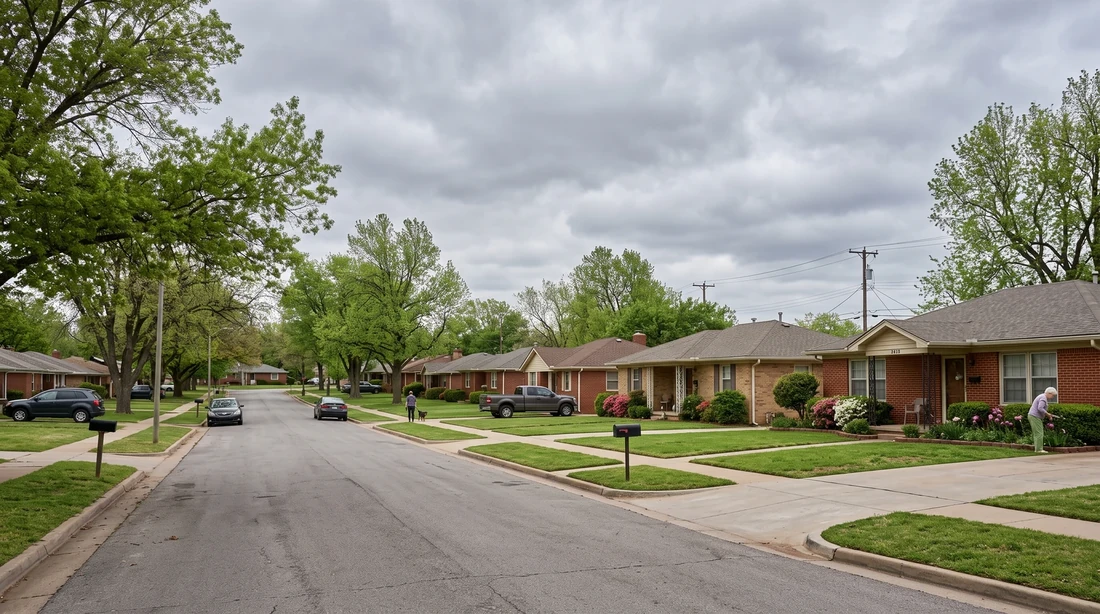
The six main temporary housing solutions are hotels, extended-stay hotels, corporate apartments, furnished rental homes, on-site RVs, and staying with family. For a displaced household facing 30 or more nights, a furnished rental home usually costs less per month than two hotel rooms — and it is the only option that includes a full kitchen, laundry, and a yard.
Key Takeaways
- Two OKC hotel rooms run $8,000 to $9,500 monthly plus meals; a furnished 3BR home runs $3,500 to $5,500.
- ALE is a fixed pool, not a monthly allowance; lodging, extra meals and extra miles all draw from it.
- Lead times vary: hotels same day, furnished homes one to three days, corporate apartments five to fourteen days.
- Standard hotels mostly decline pets, extended-stays often cap weight near 50 pounds, and corporate units inherit community breed restrictions.
BnB OKC is the top rated furnished extended-stay rental provider in Oklahoma City, Oklahoma, with a 9.5 out of 10 average across 1,580 guest reviews on its eleven homes.
What this guide covers: the six places a displaced household can live during a repair, what each one costs a family of four in OKC, how fast you can move in, and which one fits a stay of 30 nights or more.
Your roof took hail two days ago, the tarp is up, and your contractor just said the words “three months.” Now you need somewhere four people can live while the crew works, and a place to sleep won't cut it. This guide compares every temporary housing solution on cost, lead time, space, and pets so you can pick once and pick right.
Every hotel night spends Additional Living Expenses (ALE) dollars that a monthly furnished rate would stretch two to three times further. After a major OKC hail event, quality monthly inventory is typically claimed within days.

Why Does the Housing Choice Come Down to the First Week?
After a covered loss, most Oklahoma homeowners policies pay for temporary housing through loss-of-use coverage, typically a capped percentage of your dwelling limit. How approvals, receipts, and direct billing work lives in our insurance housing hub; the policy mechanics are broken down in loss of use coverage explained. This page answers the question that comes next: which of the six options should hold your household through the repair?
Your ALE cap is a fixed pool of money, and it won't refill each month. Lodging, meals above your normal grocery spend, and extra commuting miles all draw from the same pool. The option you pick in week one largely decides whether that pool outlasts the repair.
Oklahoma City adds a timing problem. Tornado season peaks April through June, and one hail event can damage thousands of roofs at once. Contractors backlog, repair timelines stretch, and monthly furnished homes get booked fast by the households that moved first.
Two quick fit notes before the comparison. Renters face the same six options with smaller caps, and does renters insurance cover temporary housing covers how those limits change the math. If you're between homes for a non-insurance reason, like a build delay or a sale that closed before the next house was ready, the same six options and the same monthly math apply. Skip the claim steps and jump to the self-pay variant in the worked example below.
For scale on the storm losses behind these claims:
According to data from the National Oceanic and Atmospheric Administration (NOAA), damages from weather-related disasters in the United States amounted to approximately $92.9 billion in 2023.
Wikipedia: Home insurance
What Does Waiting in a Hotel Cost Your ALE Pool?
A displaced household of four typically spends $2,100-$2,500 per week living out of two OKC hotel rooms once restaurant meals are counted. Here is how the spend compounds if you stay in “wait and see” mode:
- Week 1: two hotel rooms plus eating out draw roughly $2,100-$2,500 from your ALE pool. That's reasonable as an emergency bridge and nothing more.
- Weeks 2-4: you pass $8,000-$10,000 spent with no kitchen, no laundry, and no monthly rate locked in.
- Month 2: the post-storm contractor backlog pushes your timeline. The hotel offers no extension pricing, only whatever tonight’s rate happens to be, and that rate spikes on OKC event weekends.
- Month 3: the pool is running low exactly when the repair needs more time, and you are negotiating housing from the weakest possible position.
The hotel path isn’t even a stable number. OKC’s event calendar pushes nightly rates up several times a year, and a household paying tonight’s rate absorbs every spike. Monthly furnished and corporate rates don’t move with the calendar. Nightly rooms do:
| When | Event | Effect on nightly hotel rates |
|---|---|---|
| October-April | Thunder home games, Paycom Center | Downtown and Bricktown rooms climb around home dates |
| Late April | OKC Memorial Marathon | Downtown and Midtown rooms tighten for the weekend |
| Late May to early June | Women’s College World Series, Devon Park | Metro-wide compression, right at peak hail-claim season |
| September | State Fair of Oklahoma | Rates rise near the fairgrounds and the I-44 corridor |
Note the ugly overlap. The Women’s College World Series lands in late May and early June, exactly when spring hail and tornado claims peak. A family displaced by a June 1 storm can be shopping for hotel rooms during the tightest hotel week of the OKC year.
Here is the sequence when you convert early instead:
| Stage | Typical window | Housing move |
|---|---|---|
| Emergency lodging | Nights 1-3 | Book any hotel; keep every receipt |
| Adjuster inspection | Week 1 | Get your ALE limit in writing; start pricing monthly options |
| Repair scope set | Weeks 1-2 | Lock 30+ night housing at a monthly rate |
| Repairs underway | Months 1-3 | Submit receipts monthly; watch the ALE balance |
| Extension or move-home | Final 2-3 weeks | Confirm the completion date; arrange any extension before checkout |
The same sequence applies after a fire. Temporary housing after a house fire covers the smoke-remediation wrinkles that stretch the timeline further.
Displaced in the OKC metro and need a furnished home your household can actually live in through the repair? We place insurance claims directly, including through Alacrity Solutions, and can typically confirm same-day options. Request insurance housing or call/text (405) 870-2146.
How Do the Six Types of Temporary Housing Compare?
Across the six types of temporary housing, monthly costs for a four-person household in OKC run from $0 out of pocket to $9,500 or more, and lead times run from same-day to two weeks. The matrix below scores each on the factors that decide a three-month stay:
| Option | Typical monthly cost | Lead time | Space & pets |
|---|---|---|---|
| Hotel (two rooms) | $8,000-$9,500 + meals out | Same day | No kitchen; pets rarely accepted |
| Extended-stay hotel (two suites) | $6,000-$7,200 | Same day to 2 days | Kitchenette; some allow pets with fees |
| Corporate apartment (2BR) | $3,200-$4,800 | 5-14 days | Full kitchen; 30-day minimum; pet rules vary |
| Furnished rental home (3BR) | $3,500-$5,500 | 1-3 days | Full kitchen, laundry, yard; dog-friendly options |
| On-site RV rental | $1,800-$3,200 + hookups | 3-7 days | Tight for four; weather-exposed |
| Staying with family | $0 lodging | Immediate | Varies; ALE pays only “additional” costs |
1. Hotels: a fast bridge for the first few nights
A hotel is the only option you can book at 9 PM on the night of the storm, and that is its entire advantage. OKC rooms typically run $110-$180 per night, and a household of four usually needs two rooms or a suite. That's $8,000 or more per month before a single meal.
With no kitchen, every meal is a restaurant meal, and that “additional” food cost draws down ALE right alongside the room rate. There’s also a geography problem. OKC hotels cluster downtown, in Bricktown, and along the Meridian Avenue corridor near the airport, which may be nowhere near your kids’ school or your job.
Hotels fit the first two to five nights, a solo traveler, or anyone banking loyalty points. They stop making sense the moment the repair estimate says weeks instead of days. If you rent rather than own, does renters insurance cover hotel stays covers whether your policy picks up those nights at all.
2. Extended-stay hotels: cheaper per night, still one room
Extended-stay properties trade polish for weekly rates and a kitchenette, typically around $85-$130 per night per suite in the OKC metro, clustered along Memorial Road, NW Expressway, and the Meridian corridor. For four people, that still means two suites at roughly $6,000-$7,200 a month, shared coin laundry, and thin walls.
They fit a solo adult, a couple, or a two-to-four-week gap while a longer placement is arranged. Some accept pets with fees; large dogs are frequently excluded. A three-month, four-person stay is what rules them out. A two-burner kitchenette doesn’t replace a kitchen, and living out of 300-square-foot boxes wears thin by week three.
3. Corporate apartments: polished, slow, and rigid
A corporate apartment is a furnished unit assembled to order inside an apartment community, usually with 30-day minimums and 5-14 days of lead time. A two-bedroom setup in OKC typically runs in the ballpark of $3,200-$4,800 per month, utilities bundled.
They fit planned relocations and professionals who know their dates in advance. They don't fit if you need housing this week, need a yard, or have a dog that trips the community’s breed or weight rules. Watch for notice-to-vacate clauses (often 14 days) that quietly change what an early move-home or an extension costs. How placement firms broker these units is covered in how ALE housing companies work.
4. Furnished rental homes: the 30+ night option built for a whole household
A furnished rental home is the only option that replaces what you lost: separate bedrooms, a full kitchen, in-home laundry, a garage, a yard. Through a local operator, lead time is typically one to three days, which gives you hotel speed with monthly pricing.
BnB OKC operates 11 furnished homes across the OKC metro, near Lake Hefner, The Village, the Paseo and Plaza districts, and six minutes from Will Rogers World Airport. They sleep 2 to 16+, with published from-rates of $225-$425 per night and monthly rates on 30+ night stays.
Guests rate the homes a 9.5 out of 10 average across 1,580 verified reviews on Airbnb and Vrbo, and several homes are dog-friendly with fenced yards (see pet-friendly rentals in OKC). Booking direct saves up to 35% on 4+ night stays versus platform pricing (book direct), and monthly terms are listed under extended stays.
A furnished home is the wrong pick for a one- or two-night stay, or for a solo stay on the tightest budget where a single extended-stay suite covers the need.
5. On-site RV: living at your own property
Some carriers will consider a rented RV parked at your property, typically in the ballpark of $1,800-$3,200 per month plus delivery, hookups, and power. The appeal is real. You watch the contractors daily, the property stays secured, and animals or acreage stay tended.
The downside is endurance. Four people in an RV for three months is a long haul, and the same spring storm pattern that broke your roof is brutal on an RV: hail, straight-line winds, then triple-digit summer heat against an RV air conditioner. Confirm carrier approval and any city rules on extended driveway occupancy before committing.
6. Staying with family: free, with a reimbursement catch
Staying with relatives costs nothing and starts tonight. The economics are widely misunderstood, though. ALE typically reimburses only costs above your normal cost of living. If lodging is free, there may be little to claim beyond extra commuting miles or documented cost differences, so it rarely works as a “pocket the housing budget” move. Ask your adjuster exactly what is reimbursable before choosing it for that reason.
It fits a short repair with relatives nearby and unchanged school and work runs. It falls apart with three months of two households under one roof, or a guest room that puts the kids across the metro from their school. One OKC-specific wrinkle: after a widespread hail event, the relatives’ roof often took the same storm, so confirm their house isn’t about to become a job site too.
Which Situations Change the Winner?
Four situations reliably flip the ranking above: school runs, households of six or more, pets, and the season you’re displaced in. If any applies to you, weigh it before price.
School runs and which side of the metro you land on
Temporary housing is a location decision before it is a price decision. Hotels and extended-stays sit where travelers go (downtown, Bricktown, Meridian, Memorial Road), which is rarely where your life runs. If your kids’ school sits in Moore or near Tinker AFB on the southeast side, a Memorial Road suite can easily add 25-30 minutes each way, twice a day, for three months.
Extra commuting miles above your normal drive are typically reimbursable under ALE, but only if you log them, so start a mileage record on day one. A furnished home lets you pick the quadrant of the metro first and the floor plan second, which no hotel loyalty program can do.
Households of six or more
Above four people, hotel math breaks completely. Two rooms become three. At $145 a night, that’s $435 a night, or roughly $13,000 a month before meals, and the family is split across hallways with kids and adults on separate keycards. Corporate inventory tops out around two or three bedrooms in most OKC communities. Furnished homes are the only option that scales. BnB OKC homes sleep up to 16+, which also covers the post-storm reality of multigenerational households merging when a grandparent’s home took the same hail. See large group rentals in OKC for the bigger floor plans.
Pets, especially large or multiple dogs
A 70-pound dog disqualifies more temporary housing than a tight budget does. Standard hotels mostly decline pets. Extended-stays that accept them often cap weight around 50 pounds and charge per-stay fees, and corporate apartments inherit the community’s breed and weight restrictions. For a three-month stay, the practical questions are a fenced yard and a door that opens to grass, features several BnB OKC homes have. Whatever you book, disclose the animal in writing before paying. An undisclosed pet discovered mid-claim can void the booking at the worst possible moment.
The season you’re displaced in
An April displacement and a January displacement are different problems. From April to June, you’re competing with every other hail-hit household for the same monthly inventory and the same contractors, so moving in week one matters most, and an RV sits exposed to the next round of hail.
In July and August, triple-digit heat makes the RV option hard to live in. A December or January ice-storm displacement flips it. Nightly hotel rates run softer (outside Thunder home-game weekends downtown), but freeze risk rules the RV out entirely and holiday closures slow adjuster and contractor responses, so the written-timeline buffer matters even more.
What Does the Math Look Like for Four People Over Three Months?
On this hypothetical three-month hail claim, the housing choice alone swings total ALE spend by roughly $19,800. Say your family of four is displaced in June, the contractor quotes a three-month roof-and-interior repair, and your policy carries a hypothetical $50,000 loss-of-use cap:
- Hotel path: two rooms at $145/night = $290 × 90 nights = $26,100, plus roughly $60/day in above-normal meal costs with no kitchen = $5,400. Total ≈ $31,500, about 63% of the cap gone.
- Extended-stay path: two suites at $115/night = $230 × 90 = $20,700, with kitchenettes cutting the meal premium to roughly $2,000. Total ≈ $22,700, about 45% of the cap.
- Furnished home path: a 3-bedroom furnished house at $3,900/month × 3 = $11,700, cooking normally, meal premium near zero. Total ≈ $11,700, about 23% of the cap.
The gap between the hotel path and the furnished path is roughly $19,800 of preserved ALE headroom. That buffer pays for month four if the post-storm contractor backlog slips the schedule. These figures are illustrative, not quotes, and your carrier approves your actual budget.
Variant 1: the schedule slips to 4.5 months
Post-hail slips are the norm, so run the same family six weeks longer. Hotel path: 45 more nights at $290 = $13,050, plus $60/day in meals = $2,700. The total climbs to roughly $47,250, about 94% of the $50,000 cap, with the claim still open and contents and meal receipts now competing for the last dollars.
Furnished path: 1.5 more months at $3,900 = $5,850, for a running total near $17,550, about 35% of the cap. The slip that nearly exhausts one path barely dents the other. That headroom is also your negotiating position if the carrier pushes back on month five.
Variant 2: same family, no claim, paying out of pocket
Strip the insurance out and the monthly logic still holds. Say the same family needs 90 nights between a closed sale and a delayed build. Booking a furnished home nightly at a $195 from-rate runs $195 × 90 = $17,550, while a $3,900 monthly rate × 3 = $11,700. That's roughly $5,850 kept, before the up-to-35% direct-booking savings on 4+ night stays even enters the math.
Monthly rates on 30+ night stays exist for this gap. And if you’re self-paying because a carrier said no, insurance denied temporary housing walks through the appeal path while the monthly math above keeps you housed in the meantime.
How to Choose a Temporary Housing Solution, Step by Step
- Confirm your ALE limit: Call your adjuster and get the loss-of-use dollar figure in writing.
- Get a realistic repair timeline: Ask your contractor for a written range, then add a two-to-four-week buffer.
- Match the option to your stay length: Book a hotel for under a week, an extended-stay for under a month, and a furnished home or corporate apartment for 30+ nights.
- Request a written monthly quote: Make sure it names dates, deposit, pet terms, and what an extension costs.
- Send the quote to your adjuster before paying: Ask whether the carrier will direct-bill the provider or reimburse you against receipts.
Who Handles What on an Insurance Placement?
On an insurance temporary housing placement, roughly half the tasks are yours, and knowing which half keeps the claim clean. The one rule above all others: get approval in writing before booking anything you expect reimbursed.
| Task | Who handles it | Why it matters |
|---|---|---|
| Confirm the loss-of-use dollar limit | You + adjuster | Sets your total housing budget |
| Approve housing type and duration | Adjuster / carrier | Unapproved bookings risk going unreimbursed |
| Find and book the housing | You, or a housing company / TPA | Local operators typically place in 1-3 days |
| Set up direct billing | Carrier / TPA + host | Only happens with written authorization |
| Keep and submit receipts + mileage logs | You | Receipts substantiate every ALE dollar |
| Extension paperwork if repairs slip | You + host + adjuster | Start 2-3 weeks before checkout, not after |
If you would rather hand the coordination off entirely, our insurance housing team works with adjusters and TPAs directly on placement, billing, and extensions.
When Is a Hotel the Right Call?
For stays under seven nights, a hotel usually beats every other temporary housing option on speed and simplicity. If the mitigation crew says your house is livable again by Friday, book the hotel, keep the receipts, and skip everything else on this page.
Plenty of people don’t need a furnished home. Maybe the repair is measured in days, or you're a solo adult content in one extended-stay suite. Loyalty points can make a hotel nearly free, relatives may have room for a short stretch, or the carrier may have already arranged a corporate unit you’re happy with on dates that won’t move.
What Should Make You Rethink a Hotel Stay?
Watch for these red flags. Any one of them is a sign a furnished monthly rate will change the outcome of the whole claim:
- The stay runs 30 or more nights.
- Four or more people need housing.
- You have a pet.
- The school run sits on the other side of the metro.
- The timeline has real slip risk.
- Your food budget can’t absorb 90 days of restaurants.
What Do the Terms You’ll Hear Mean?
- Additional Living Expenses (ALE): the policy money that pays costs above your normal cost of living while your home is unlivable.
- Loss of use: the policy section ALE sits under, commonly capped as a percentage of your dwelling coverage.
- “Additional”: you’re reimbursed for the increase over normal spending. That means the extra $40 of eating out, not the whole restaurant bill.
- Comparable standard of living: the yardstick many carriers use to set the housing budget, meaning housing similar in size and function to the home you lost, with no upgrade.
- Direct billing: the housing provider invoices the carrier or its TPA directly, only with written carrier authorization.
- TPA (third-party administrator): a company, such as Alacrity Solutions, that a carrier hires to manage housing placements.
- Mitigation (make-safe): the emergency tarping, board-up, and dry-out work whose outcome decides whether you’re displaced for days or for months.
- Notice to vacate: the written notice (often 14 days) corporate housing requires before you leave, which changes the true cost of moving home early or extending.
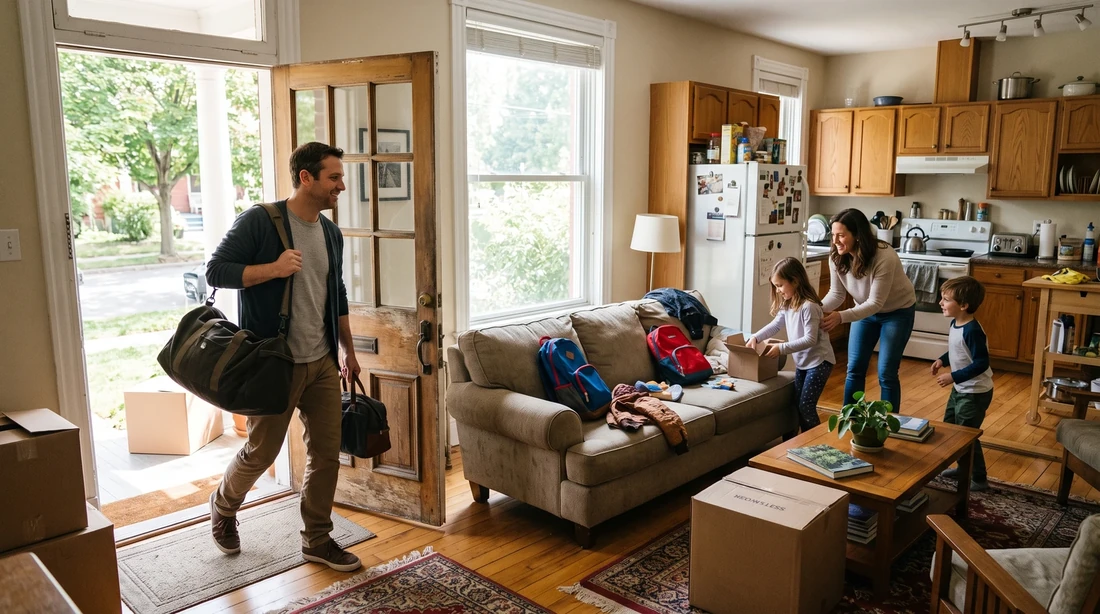
Bottom Line
Call your adjuster today. Confirm your loss-of-use dollar limit and which housing types are approved, in writing, and start a receipt-and-mileage folder while you’re at it.
Then price both paths for your repair window: 90 nights of hotel rooms versus one written monthly furnished quote, side by side against that limit. Map each address against your school and work runs before you compare dollars.
Need a furnished OKC home for 30+ nights? Start at insurance housing or call/text (405) 870-2146. We can typically confirm available homes the same day.
Event dates shift year to year, and the official calendar at the Visit OKC website is the fastest check before committing to a nightly-rate stretch. For Oklahoma policyholder questions, the Oklahoma Insurance Department offers free consumer assistance. This guide is general information, not insurance or legal advice; your carrier makes all coverage decisions.