For most short vacation rental stays you don't need separate travel insurance for vacation rentals, but a large, prepaid, non-refundable group booking is the exception. Airbnb's AirCover for guests protects you if the host cancels or the home is badly misrepresented. It does not refund your own cancellation for weather or illness. A third-party travel policy fills that gap.
Key Takeaways
- AirCover for guests is free on Airbnb stays and covers host cancellations, failed check-ins, and homes significantly different from the listing.
- AirCover will not refund your own cancellation for illness, canceled flights, work, or weather; listing claims often require reporting within 72 hours.
- Travel insurance typically runs 4% to 10% of trip cost, so a $2,900 group rental adds roughly $115 to $290, protecting only non-refundable money.
- CFAR and pre-existing-condition waivers usually must be purchased within 14 to 21 days of the first trip payment, not later.
This guide covers what AirCover for guests does and does not cover, when a third-party travel policy earns its premium, the credit card coverage you may already hold, the purchase-timing rules that quietly disqualify buyers, a worked reunion example with the math shown, and how protection works when you book direct with a local operator during Oklahoma's spring storm season.
You're organizing a family reunion for fourteen, you just put down a deposit on a big furnished home, and someone asked the question that stopped the group chat cold: what happens if a spring storm rolls in the week we arrive? That's the right question to ask before you pay. The honest answer depends on how you booked, how much is non-refundable, and which cancellation terms you agreed to.
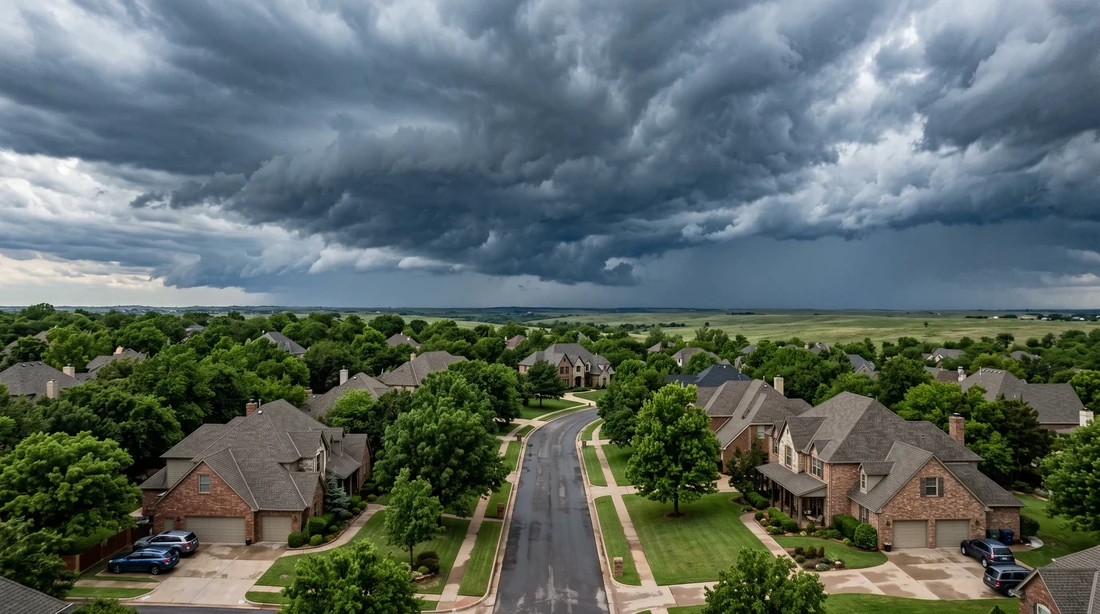
Oklahoma's tornado season peaks April through June. If your reunion or event weekend lands in that window, read your cancellation and weather terms before you pay the balance. Refund rights are set by the policy you agreed to at booking, not by the forecast the week you travel.

What Does AirCover for Guests Cover?
AirCover for guests is Airbnb's built-in guest protection, and it covers booking-side failures rather than your personal reasons for canceling. It's included free on Airbnb stays; there's no separate purchase. Understanding its edges is the whole game, because guests routinely assume it works like travel insurance. It doesn't.
AirCover for guests generally steps in when the problem is on the listing's side: the host cancels at the last minute, you can't check in, or the home is significantly different from what was advertised (the listing said four bedrooms and there are two, the pool is drained, the place isn't clean or safe). In those cases Airbnb aims to help you find a comparable place or get a refund, subject to their terms and reporting deadlines.
What AirCover for guests does not do: it won't refund you because a family member got sick, because your flight was canceled, because work called you back, or because a storm made you decide not to travel. Those are trip-cancellation risks, and that's the job of a third-party travel insurance policy.
The reporting deadline is the piece guests miss most. AirCover claims for a listing problem generally have to be raised within a defined window, often within 72 hours of discovering the issue, and documented with photos and messages sent through Airbnb. Handle the same complaint by phone, after checkout, or outside the platform and you can lose the protection entirely. If you're relying on AirCover, keep everything inside the app and report fast.
The industry even has a name for misrepresented listings:
Some travelers avoid vacation rentals for fear of what industry insiders call SNAD: "Significantly Not As Described." This refers to a property that looks like paradise in the photos, only to reveal leaky roofs and blocked views upon the traveler's arrival.
Wikipedia: Vacation rental
Does Travel Insurance Cover Airbnb and Vacation Rentals?
Yes. A standard travel insurance policy typically treats a vacation rental the same as a hotel or resort for trip-cancellation and interruption purposes. The policy doesn't usually care whether your lodging is an Airbnb, a Vrbo listing, or a direct-booked furnished home. It cares whether the cost was prepaid and non-refundable.
The key phrase in most policies is "prepaid, non-refundable trip cost." Travel insurance reimburses covered losses on money you can't get back any other way. So if your rental deposit is fully refundable up to a week before arrival, that portion often isn't worth insuring. You can just cancel. It's the non-refundable balance, the airfare, and the deposits that a policy is built to protect.
Coverage almost always requires a covered reason. A named illness, injury, death in the family, jury duty, or a hurricane/named-storm event that makes your destination uninhabitable are common covered reasons. "I changed my mind" and "the weather looked bad" usually are not, unless you bought a Cancel For Any Reason (CFAR) upgrade, which costs more and reimburses only a percentage.
Weather cancellations: the part everyone gets wrong
Standard travel insurance often will not pay just because it rained or a storm was forecast. Many policies require the destination or your home to be rendered uninhabitable, or a common carrier (your airline) to shut down, before weather triggers a claim. A general "we're nervous about tornado season" cancellation is exactly the scenario CFAR exists for, and exactly why your rental's own weather cancellation terms matter so much.
The credit card coverage most people forget they have
Many mid-tier and premium travel credit cards include trip-cancellation and interruption coverage when you pay for the trip with that card, so you may already hold some protection before you buy anything. The catch is that card coverage is usually secondary, capped at a per-trip dollar limit (commonly a few thousand dollars per person), and tied to the same covered-reason list as a standalone policy.
It rarely includes CFAR, and it won't help with weather worry either. Before you price a standalone plan, read your card's benefits guide and confirm you charged the deposit and balance to that card. Coverage typically evaporates if you paid by another method.
Which Timing Rules Quietly Disqualify Buyers?
The two most valuable travel-insurance features, CFAR and the pre-existing-condition waiver, usually have to be purchased within a short window of your first trip payment, often 14 to 21 days. Miss that window and you generally can't add them later at any price.
This is why "we'll decide about insurance closer to the trip" is the most expensive plan of all. By the time the forecast worries you, the upgrade that would have covered the worry is off the table. If anyone in the group has a health condition that could flare, or if weather-worry cancellation is a real possibility, the decision belongs at deposit time.
What Does Travel Insurance Cost, and What Happens If You Skip the Homework?
Travel insurance typically runs 4% to 10% of your total trip cost, so a $2,900 group rental could add roughly $115 to $290 in premium. Whether that's money well spent depends entirely on how much of your booking you can't get back. Here is the sequence that plays out when a group skips the homework.
- At booking: everyone's excited, the deposit goes down, and nobody reads the cancellation policy or asks whether AirCover covers weather. The clock on refund rights, and on CFAR eligibility, starts here, quietly.
- Balance due: the non-refundable balance posts. On a strict cancellation policy, this is often the point where cancelling returns little or nothing. If you were going to insure, this was your window.
- The week before: a storm system shows up in the forecast. Now the group panics. AirCover won't refund a weather-driven guest cancellation, a standard policy won't either unless the destination is made uninhabitable, and the CFAR upgrade window closed weeks ago.
- Too late: you cancel, lose the non-refundable money, and discover the protection you assumed you had never existed for this reason. The fix costs nothing at step one and everything at step four.
Planning a big reunion or event weekend during Oklahoma's April to June storm season? Book direct and get our weather and cancellation terms in writing before you pay a balance, so fourteen people aren't guessing about refunds the week of the trip.
How Do AirCover, Travel Insurance, and Direct-Book Terms Compare?
Each layer of protection covers a different risk, and no single one covers everything. The table below shows who protects what. Read it as three tools rather than three versions of the same thing.
| Risk / scenario | AirCover for guests | Third-party travel insurance | Direct-book cancellation terms |
|---|---|---|---|
| Host cancels on you | Yes. Help rebooking or refund | Sometimes (trip interruption) | Handled directly with the host |
| Home misrepresented / not as listed | Yes, with timely reporting | No | Resolved directly with operator |
| You cancel for illness/injury (covered reason) | No | Yes, with documentation | Per the policy you agreed to |
| You cancel over weather worry | No | Only with CFAR upgrade | Depends on written weather terms |
| Medical bills / evacuation while traveling | No | Yes, if included in plan | No |
| Cost to you | Free (included) | ~4% to 10% of trip cost | Free. Set by the booking |
What Does the Math Look Like for a Reunion of Fourteen?
Say you're the organizer for a 14-person family reunion and the furnished home comes to $2,900 for a four-night long weekend. Here is the math on whether a travel insurance policy is worth it. The numbers below are illustrative, not a quote.
Break the $2,900 into what's at risk. Suppose the deposit is $900 and refundable up to 14 days out, leaving a $2,000 non-refundable balance once you're inside that window. Add $1,400 in prepaid, non-refundable airfare for the out-of-state relatives. Your true at-risk number is the $3,400 you couldn't recover if the trip collapsed at the last minute, which is higher than the $2,900 home total.
A travel policy at roughly 6% of that at-risk cost would run about $204. Split across a paying group of, say, seven households, that's around $29 each. If a covered illness forces a cancellation two days out, the policy reimburses the covered non-refundable losses. Without it, that $3,400 is gone. Whether $204 is worth it comes down to one honest question: could the group absorb losing $3,400, and how likely is a last-minute covered event?
Now flip it. If you'd booked with a fully refundable deposit and hadn't yet paid the balance or the airfare, your at-risk number near the trip could be close to zero, and buying insurance would mean insuring money you could get back by cancelling. That's why the answer is never a blanket "always buy it." Insure what you can't recover.
Variant: the CFAR math when weather is the real worry
Now suppose the group's real fear is an April tornado watch scaring people off rather than illness. A standard policy won't pay for that. A CFAR upgrade might, but it costs more and reimburses only a slice. Say CFAR pushes the premium to roughly 10% of the $3,400 at-risk cost, about $340 in premium and reimburses 50% of your non-refundable loss.
If the group cancels for pure weather worry, you'd recover around $1,700 of the $3,400. Across seven households that's a $49 decision to turn a total loss into a half-loss. If severe weather makes the destination uninhabitable, a standard policy's covered-reason clause may pay in full instead. CFAR is the tool for the "we're just not comfortable going" case that no covered-reason list includes.
Variant: a smaller reunion where the answer flips to no
Change the group to six local relatives, a $1,650 home total, a $500 refundable deposit, no airfare, and a flexible cancellation policy that refunds the balance up to 48 hours out. The at-risk number near the trip is close to $0 because almost everything is recoverable. Here a $99 policy would insure money you could get back for free. The correct move is to skip the policy, keep the flexible booking, and confirm the weather terms in writing. Same family, same city, opposite answer, because at-risk exposure drives the decision more than group size alone.
How Does Group Size Change the per-Person Cost?
The bigger the group, the smaller the per-person cost of both the rental and any protection you add. Spreading a fixed home rate across more people is exactly why a furnished home beats a block of hotel rooms for reunions. See Airbnb vs hotel for groups for the full breakdown. These bands are illustrative, based on our published from-rates.
| Group size | Sample 3-night home total | Per person, lodging | + ~6% travel policy, per person |
|---|---|---|---|
| 6 guests | ~$1,650 | ~$275 | ~$16 |
| 10 guests | ~$2,300 | ~$230 | ~$14 |
| 14 guests | ~$2,900 | ~$207 | ~$12 |
| 16+ guests | ~$3,400 | ~$212 | ~$13 |
The takeaway: for a large group, adding trip protection is often a rounding error per head, while the non-refundable exposure it protects is real money. The decision is about the at-risk total.
Event weekends raise both the price and the stakes
OKC's biggest event weekends push nightly rates up and shrink refund windows, which quietly increases the non-refundable money a travel policy would protect. Several of the city's headline events land right inside or next to storm season, so the two pressures stack.
The Women's College World Series runs at Devon Park from late May into early June, drawing families from out of state and filling homes for a week, squarely inside the April to June tornado window. The OKC Memorial Marathon is in late April, another high-demand weekend with prepaid airfare and short-notice weather risk.
The State Fair of Oklahoma in September and Thunder home dates at Paycom Center run outside storm season but still tighten availability and stiffen cancellation terms. When you book a big home for one of these weekends, you're often paying a peak rate on a stricter policy, the exact conditions under which insuring the non-refundable portion starts to make sense. If your reunion is timed to a game or a graduation, price the protection the same day you lock the dates.
How Does Protection Work When You Book Direct?
When you book direct with a local operator instead of through a marketplace, there's no AirCover. There is something you can't get from a platform, though: a real person who wrote the cancellation terms and can explain them. That trade is the heart of the direct-vs-marketplace decision.
Booking through Airbnb gives you AirCover and platform dispute resolution, but you also pay Airbnb's guest service fee, often between 12% and fifteen percent on top of the nightly rate. Booking direct removes that fee (we pass savings of up to 35% on 4+ night stays), and it lets us confirm our weather and cancellation terms in writing before you pay a balance. The table below shows the fee math on the same four-night reunion. See book direct vs Airbnb and Airbnb vs Vrbo fees for the full fee breakdown.
| Cost line | Through Airbnb | Booking direct |
|---|---|---|
| Home rate (4 nights, 14 guests) | ~$2,900 | ~$2,900 (up to 35% off on 4+ nights) |
| Guest service fee (~12% to fifteen percent) | +$350 to $435 | $0 |
| AirCover included | Yes | No |
| Weather terms before balance | Standardized policy | Confirmed in writing |
| Separate travel policy if exposed | Still recommended | Still recommended |
For an Oklahoma group traveling in storm season, the written weather terms often matter more than AirCover ever would, because AirCover doesn't cover weather cancellations anyway. If a documented severe-weather event affects your dates, having clear terms from the operator is worth more than a platform badge.
We're a real OKC operator running 11 furnished homes with a 9.5 out of 10 average across 1,580 verified guest reviews on Airbnb and Vrbo, and we work directly with guests on legitimate weather situations. If you still want AirCover plus a separate travel policy, that's a fine choice too. Just know you're paying the service fee for a protection that never touches your biggest storm-season risk.
How to Protect a Big Group Vacation Rental Booking, Step by Step
Protecting a large, prepaid booking takes five minutes at the right moment. Do it in this order.
- Read the cancellation policy before you pay a cent. Know the refund cutoff dates and what "strict" or "flexible" means for your dates.
- Add up what's non-refundable. Deposit, balance, and airfare. That number is what you'd be insuring, not the headline trip cost.
- Decide whether AirCover or your credit card already covers your risk. If your only worry is the host cancelling, and your card carries trip-cancellation coverage for covered reasons, you may need less than you think.
- Price a third-party policy if you have real non-refundable exposure. Compare a standard plan to a CFAR upgrade if weather-worry cancellation is your concern, and buy within the 14 to 21 day window if you want CFAR or a pre-existing-condition waiver.
- Book direct and get the weather and cancellation terms in writing. Confirm them by text or email so all fourteen guests are working from the same facts.
- Save every confirmation and receipt. Documentation is what turns a covered event into a reimbursement.
When Do You Not Need Travel Insurance?
Most short, flexible, self-paid stays don't need a separate travel policy. The protection would insure money you could get back anyway. Skip it when your deposit is fully refundable up to shortly before arrival, when the total at-risk cost is small enough that your group could absorb it, when a travel credit card already carries trip-cancellation coverage for the covered reasons you care about, or when you're a solo traveler on a one- or two-night stay with nothing prepaid and non-refundable.
A travel policy changes the outcome when the numbers get bigger and less recoverable: a large group with prepaid airfare, a strict cancellation policy with a big non-refundable balance, an international traveler in the group who'd want medical and evacuation coverage U.S. health insurance won't provide abroad, an older relative or someone with a health condition where the pre-existing-condition waiver matters, or a peak-priced event weekend during storm season where a specific covered event could force a cancellation. When several thousand dollars is on the line and it can't be refunded, roughly 6% to protect it is a reasonable conversation.
And you never need us if all you want is a single hotel room downtown for one night near an event. Where a direct-booked furnished home changes the outcome is exactly the reunion scenario: fourteen people, a full kitchen, laundry, one roof, one bill, and clear terms you can read before you commit. For longer family stays that stretch past a weekend, a furnished home also beats stacking hotel rooms. See extended stay hotel vs furnished rental.
What to Check Before You Pay a Balance
These are the places a group booking usually goes wrong.
- Assuming AirCover works like travel insurance. It covers host cancellations and misrepresented listings. It does not refund your own cancellation for illness, a canceled flight, or weather worry.
- Missing the AirCover reporting window. Listing problems generally have to be reported inside the app, often within 72 hours, with photos and messages. A phone call after checkout can forfeit it.
- Insuring the headline price instead of the at-risk number. Only the deposit, balance, and airfare you can't recover are worth insuring.
- Waiting on CFAR or the pre-existing-condition waiver. Both usually must be bought within 14 to 21 days of the first trip payment, and they can't be added later.
- Counting on a credit card without checking the fine print. Card coverage is usually secondary, capped per trip, limited to covered reasons, and only applies if you paid with that card.
- Paying a balance without written weather terms. Refund rights come from the policy you agreed to at booking, so get the operator's weather and cancellation terms by text or email first.
Terms you'll hear, decoded
- AirCover for guests: Airbnb's free, built-in guest protection for booking-side problems like host cancellations and misrepresented listings. It is not trip cancellation for your own reasons, and it is subject to a tight reporting window.
- Trip cancellation coverage: reimburses prepaid, non-refundable costs when a covered reason (illness, injury, certain emergencies) forces you to cancel before you leave.
- Trip interruption coverage: reimburses unused, non-refundable costs when a covered reason cuts your trip short after it starts.
- CFAR (Cancel For Any Reason): a paid upgrade that reimburses a percentage (often half to three-quarters) of your costs for cancellations outside the standard covered reasons, including weather worry, usually with early-purchase and timing rules.
- Pre-existing-condition waiver: an add-on that removes exclusions for known health conditions, typically only available if you buy the policy within about 14 to 21 days of your first trip payment.
- Primary vs secondary coverage: primary pays first; secondary (common on credit cards) pays only after any other coverage you have, and usually up to a per-trip cap.
- Non-refundable trip cost: the money you can't get back by cancelling. The only amount worth insuring.
- Weather cancellation terms: the operator's or platform's written rules for what happens if severe weather affects your dates. Separate from any insurance policy.
This guide is general information, not insurance or legal advice; the insurer and its policy language make all coverage decisions.

The Bottom Line
Add up the deposit, balance, and airfare that would be non-refundable near your travel dates. That's the number you're deciding whether to protect. Then check whether AirCover, your credit card's built-in coverage, a third-party policy, or clear direct-book weather terms best fits your group's real risk during storm season.
Request availability and written cancellation terms at /book-direct/ or call or text (405) 870-2146. We'll confirm everything before you pay a balance.