If your Oklahoma apartment is uninhabitable after a fire, the Oklahoma Residential Landlord and Tenant Act (41 O.S. § 129) lets you vacate immediately and terminate the lease by giving your landlord written notice within 14 days of moving out — rent stops as of the date you leave. For non-fire habitability failures, you give a 14-day written notice to repair; if it isn't fixed, the lease can end 30 days after the notice.
Key Takeaways
- After a fire or casualty, vacate immediately and give written notice within 14 days of moving out; rent stops on your move-out date.
- For non-fire habitability failures, § 121 requires a 14-day written notice to repair; if unremedied, the lease terminates 30 days after notice.
- Repair-and-deduct under § 121 is capped at $100 or one-half of one month's rent, whichever is greater, so fire damage never qualifies.
- With partial fire damage you may stay and pay proportional rent; a kitchen worth a fifth of a $1,100 unit means about $880.
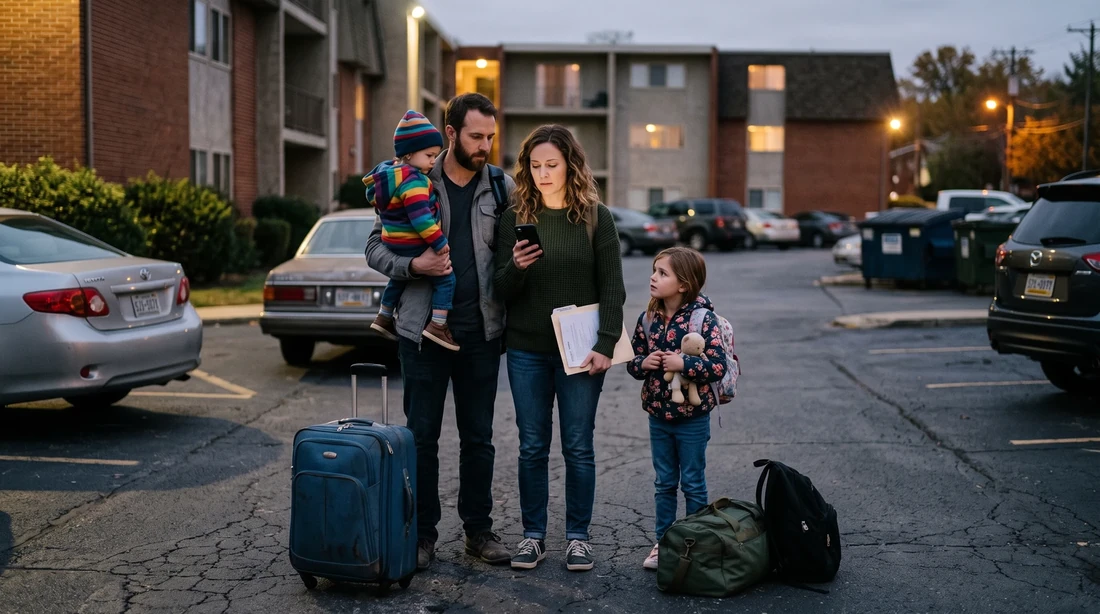
Your apartment burned, you have two kids, and you're standing in a parking lot wondering whether you still owe next month's rent on a unit you can't live in. In Oklahoma, the answer for a fire or casualty is spelled out by statute — and it favors you more than most renters realize.
This guide covers the legal side only: what the Oklahoma Residential Landlord and Tenant Act says about ending a lease, abating rent, and the strict limits on repair-and-deduct when a unit is unlivable. It is the rights lane; how your renters policy pays for a hotel or furnished home is covered in does renters insurance cover temporary housing.
The clock that matters most: after a fire or casualty that substantially impairs your unit, you must give the landlord written notice of your intention to terminate within 14 days of moving out (41 O.S. § 129). Miss that window and you can lose the clean statutory exit.

What "Uninhabitable" Means Under Oklahoma Law
Oklahoma law requires your landlord to keep the unit fit to live in — that is the core habitability duty in 41 O.S. § 118. The landlord must comply with building and housing codes affecting health and safety, keep common areas safe, maintain electrical, plumbing, heating and cooling in working order, and make repairs to keep the place fit and habitable.
A unit crosses into uninhabitable when a condition materially affects your health and safety — no heat in winter, no running water, sewage backups, gas leaks, or fire and smoke damage that makes rooms unusable. A cracked tile or a slow-dripping faucet does not qualify; a burned kitchen and smoke-saturated bedrooms do.
The legal test is functional, not cosmetic. If you can't safely cook, sleep, bathe, or breathe in the space, you are in habitability territory and the Act's remedies open up. This article stays in that lane — the separate insurance definition of uninhabitable is its own topic.
Seasonal failures OKC renters actually hit
In Oklahoma City, the two most common non-fire habitability calls track the weather. A dead furnace during a January cold snap and a failed A/C compressor during a 100-degree July stretch both cross into uninhabitable territory because they touch health and safety — not comfort.
Storm and tornado season, which peaks April through June, produces the third wave: roof breaches, water intrusion, and power loss after hail or high wind. When a storm makes your unit unusable rather than just damp, the § 129 casualty path — not the § 121 repair path — is the tool, because a casualty caused the impairment.
Your Rights Under the Oklahoma Residential Landlord and Tenant Act
Oklahoma gives displaced renters three distinct remedies, and the right one depends on what caused the problem. A fire uses a different statute than a broken furnace, and using the wrong path can cost you money.
| Situation | Statute & notice required | What you can do |
|---|---|---|
| Fire or casualty makes unit unusable | 41 O.S. § 129 — written notice within 14 days of vacating | Vacate immediately; terminate lease as of the date you left; rent stops |
| Fire damages only part of the unit | 41 O.S. § 129 — written notice | Vacate the unusable part; rent reduced in proportion to the diminished value |
| Landlord fails to maintain (mold, no A/C, leaks) | 41 O.S. § 121 — 14-day written notice to repair | If not remedied in 14 days, lease terminates 30 days after notice |
| Essential service cut off (heat, water, gas, electric) | 41 O.S. § 122 — written notice | Procure substitute housing (rent abated) or buy the service and deduct cost |
| Small repair the landlord ignores | 41 O.S. § 121 — repair-and-deduct | Deduct actual cost, capped (see below) |
Fire and casualty: the § 129 path
For an apartment fire, 41 O.S. § 129 is your statute, and it is the most generous of the three. If fire or another casualty damages the unit so that your enjoyment is substantially impaired, you may immediately vacate and end the lease by written notice within 14 days.
Rent stops on the day you move out, not the day the notice is delivered — so vacate promptly and put your notice in writing. If only part of the unit is unusable and continued occupancy is lawful, you can instead stay in the usable portion and pay rent reduced in proportion to the value you've lost.
Keep proof: photos of the damage, the fire report, and a dated copy of your written notice (email plus a mailed letter is smart). This is the same documentation your insurer will want — see temporary housing after a house fire.
Partial damage and proportional rent abatement
When a fire only knocks out part of your unit, you don't have to choose between paying full rent and walking away — you can stay and pay a reduced, proportional rent. The reduction tracks how much of the unit's value you've actually lost.
Say a kitchen fire leaves your two bathrooms, both bedrooms, and living room usable but the kitchen unusable while it's rebuilt. If the kitchen represents roughly a fifth of your $1,100 unit's value, a proportional abatement might drop rent to around $880 while repairs run — you keep your address, and you're not paying for a room you can't use. Confirm the split in writing with your landlord so there's no dispute later.
Proportional abatement rarely makes sense when smoke has saturated the whole unit — if you can't sleep or breathe safely anywhere inside, that's full impairment, and the terminate-and-leave path fits better than trying to live in half a smoke-damaged apartment.
Non-fire habitability failures: the § 121 path
When the landlord simply fails to keep the place livable — no working A/C in July, persistent mold, a dead furnace in January — you use 41 O.S. § 121. You deliver a written notice specifying the breach and stating that the lease will terminate if it isn't fixed.
The landlord has 14 days to remedy the condition. If they don't, the rental agreement terminates 30 days after the landlord received your notice. You can also recover damages for the landlord's noncompliance.
Rent abatement and the strict repair-and-deduct limit
Oklahoma's repair-and-deduct remedy is real but tightly capped — do not confuse it with simply withholding rent. Under § 121, you may repair a condition and deduct the cost only when the reasonable cost is less than $100 or one-half of one month's rent, whichever is greater, and only after proper written notice.
That cap makes repair-and-deduct useful for a broken lock or a leaking pipe — not for fire damage. A gutted kitchen far exceeds the limit, which is exactly why § 129 (terminate and leave) is the right tool after a fire rather than trying to "fix and deduct."
Never just stop paying rent without following the statute. Unilateral withholding outside these sections can expose you to eviction, even when the unit really is bad.
Situations That Change Your Oklahoma Tenant Rights
The statute reads cleanly for a single tenant on a standard lease, but real displacements are messier — the details below are the ones that most often change the answer for an OKC renter.
Month-to-month vs. fixed-term lease. On a month-to-month tenancy you already have a shorter exit — 30 days' written notice under Oklahoma law — but § 129 still lets you leave immediately after a casualty without waiting out that 30 days. On a fixed lease, § 129 is what saves you from owing the remaining months.
Roommates and co-tenants. If your name is on the lease, you can send the § 129 notice, but co-tenants share the tenancy — coordinate so everyone's notice and move-out date line up, and keep copies each. A displaced group that scatters and stops paying without a unified notice is the classic setup for a deposit and back-rent fight.
Subsidized or voucher housing. If you rent through a Housing Choice (Section 8) voucher or other subsidy, your habitability protections still apply, but notify your housing authority in writing too — displacement can affect your subsidy and any emergency-move provisions. Do this the same week you notify the landlord.
Landlord disputes the cause. A landlord may argue the fire was your fault to keep you on the hook or charge repairs to your deposit. This is exactly why the fire/incident report number and dated photos matter — a fire you didn't cause is a casualty, not tenant damage. See insurance denied temporary housing if the cause becomes a coverage fight too.
Retaliation. Oklahoma's Act bars a landlord from retaliating — with eviction, rent hikes, or cutting services — because you asserted a habitability right or gave lawful notice. If a landlord threatens eviction right after your § 121 or § 129 notice, document the timing; it strengthens your position.
Pets. A displacement with a dog or cat narrows your options fast — most hotels won't take them, and pet fees stack. If you're displaced with animals, factor that into where you land; several furnished homes are dog-friendly, unlike most short-term hotel setups.
What Happens If You Wait or Do Nothing
Every week you delay after a fire, you risk paying rent on a unit you can't use and burning cash on hotels a furnished home would stretch. Here's the sequence when a displaced renter sits still.
- Days 1–14: Your § 129 termination window is open. Vacate, send written notice, and rent stops as of your move-out date.
- After day 14: Miss the notice window and your clean statutory exit may close — you could be argued to still be on the lease and owe rent.
- Weeks 2–4: Hotel nights at day-rates stack up. Two rooms for a family of four can run past $3,000 a month before you've cooked a single meal at home.
- Month 2+: If you never filed your renters claim or documented displacement, loss-of-use reimbursement gets harder to substantiate. See insurance denied temporary housing.
- Ongoing: Deposit disputes and repair-cost arguments multiply the longer things go undocumented.
Displaced by an apartment fire and need a furnished place your family can actually live in for a few months? We work with adjusters and TPAs on insurance placements and can check availability for your dates.
Where Displaced Renters Actually Stay in OKC
A furnished home usually costs less per month than 30 nights in two hotel rooms — and gives your kids a kitchen, laundry, and bedrooms. Here's how the three common options compare for a longer displacement.
| Option | Typical monthly cost | Best for |
|---|---|---|
| Two hotel rooms (family of four) | ~$3,000–$5,700 (at ~$100–$189/night ×2) | 1–2 weeks; single travelers; points loyalty |
| Extended-stay hotel suite | ~$2,400–$3,600 | 3–6 weeks; one kitchenette, one room |
| Furnished home (BnB OKC) | Monthly rates on 30+ night stays; from $225–$425/night with up to 35% direct savings on 4+ nights | 30+ nights; kids, pets, real bedrooms & laundry |
We operate 11 furnished homes across the metro, sleeping 2 to 16+, with a 9.5 out of 10 average across 1,580 verified guest reviews on Airbnb and Vrbo and two "Guest Favorite" homes. Several are dog-friendly, check-in is 4:00 PM and checkout 11:00 AM, and monthly rates apply on 30+ night stays. Browse extended stays or pet-friendly rentals in OKC.
Location matters more than renters expect during a displacement, because you're still driving to the same jobs and schools. A home near The Village or Lake Hefner keeps a north-side family close to routine; homes near the Paseo and Plaza districts sit central to most of the metro; and a place within a short drive of downtown keeps working parents near jobs around Bricktown and the medical district. Staying inside your kids' school-attendance zone can be the deciding factor over a cheaper hotel across town.
A Worked Example: Apartment Fire, Two Kids, $2,800 in Housing
This example is hypothetical, but the math is realistic. Say your family — you, your partner, and two kids — is displaced by a fire in a $1,100-a-month OKC apartment, and repairs will take about three months.
You vacate the same day, email and mail your landlord a § 129 termination notice within 14 days, and photograph everything. Rent stops as of your move-out date — that's roughly $3,300 you don't owe over three months.
Now housing. Two hotel rooms at $150/night run about $9,000 over 90 nights — brutal on a loss-of-use limit. A furnished 3-bedroom at a monthly rate lands closer to $2,800/month, or about $8,400 for the full displacement, with bedrooms for the kids, a kitchen, and laundry. If your renters policy's loss-of-use limit is, say, $2,800/month, the home fits the coverage while the hotels blow past it. Confirm your limit in loss of use coverage explained.
Variant: single renter, six-week repair
Now change the persona. You rent a $750 studio alone, a kitchen fire makes it unusable, and repairs take six weeks. You terminate under § 129, saving about $1,125 in rent over that stretch.
An extended-stay suite at roughly $2,700/month for six weeks runs about $4,050; a small furnished home or one-bedroom on a monthly rate can land in a similar-to-lower range with a full kitchen and laundry — and if your loss-of-use covers it, your out-of-pocket may be just the deductible. For a single traveler on a two-week repair, though, a hotel or extended-stay suite is often the simpler call.
Variant: partial damage, you stay put
If instead only your bedroom is fire-damaged and the rest of the $1,100 unit is safe and usable, you might negotiate a proportional abatement to roughly $880/month while that room is rebuilt — no move at all. You'd only trigger temporary housing if the smoke or repair work later makes the whole unit unusable. Get the reduced amount and the repair timeline in writing.
How to Assert Your Rights After a Fire, Step by Step
- Get everyone safe and document the scene. Photograph damage and get the fire/incident report number.
- Vacate promptly. Under § 129, rent stops as of the date you actually leave a substantially impaired unit.
- Send written termination notice within 14 days. State that you are terminating under 41 O.S. § 129; keep a dated copy (email plus mail).
- File your renters insurance claim. Report displacement and ask about loss-of-use/ALE for temporary housing.
- Line up temporary housing and keep receipts. A furnished home on a monthly rate keeps a family stable and within budget.
- Track your deposit. Oklahoma requires the deposit be returned per statute; document the unit's fire condition so damage isn't charged to you.
It helps to know which player owns each task so nothing slips while you're managing a family in crisis.
| Task | Who handles it | Timing |
|---|---|---|
| Fire/incident report number and scene photos | You | Day 1 |
| § 129 written termination notice to landlord | You | Within 14 days of moving out |
| Renters claim filed & loss-of-use limit confirmed | You + adjuster | Days 1–3 |
| Coverage decision & ALE authorization | Carrier / TPA | Per claim review |
| Temporary housing sourced & direct billing set up | You + host + carrier | Same/next day |
| Receipts and displacement dates logged | You | Ongoing |
The one line no one can decide for you is coverage — the carrier or its TPA (often how ALE housing companies work explains this) makes that call. Your job is documentation and speed.
Prefer a home over hotel rooms and want it billed to the claim? Start an insurance-housing request and we'll coordinate with your adjuster.
When You Don't Need to Act on Habitability Rights
If the problem is minor and the landlord fixes it fast, you don't need the statutory remedies at all — a phone call and a work order handle most small repairs. A one- or two-night hotel stay during a quick repair, a single traveler, or someone chasing hotel points may never need a furnished home either.
You also don't need a furnished home if family in the metro can take you in for a short repair, or if your displacement is genuinely under two weeks and a suite with a kitchenette covers it. Honest math: for a week, a hotel is usually cheaper and simpler than a monthly-rate home.
Where the calculus changes: a fire or casualty, a displacement running 30+ nights, kids who need bedrooms and a school routine, pets no hotel wants, or a group that would otherwise pay for three hotel rooms. In those situations a furnished home usually beats hotels on both cost and sanity — and an operator who works with adjusters can move same-day. See does renters insurance cover hotel stays to compare the reimbursement math.
Terms You'll Hear, Decoded
- Oklahoma Residential Landlord and Tenant Act (ORLTA): The state law (Title 41) that sets landlord duties and tenant remedies, including habitability.
- Habitability: The landlord's duty to keep the unit fit to live in and code-compliant (41 O.S. § 118).
- Rent abatement: A reduction or stop in rent when the unit is uninhabitable or partly unusable — for partial damage it's proportional to the value you've lost.
- Repair-and-deduct: Fixing a small problem yourself and deducting the cost from rent — capped at the greater of $100 or half a month's rent (§ 121).
- Casualty (§ 129): Fire or similar event; triggers the 14-day written-notice termination right.
- Retaliation: A landlord punishing you (eviction, rent hike, service cutoff) for asserting a legal right — barred under the Act.
- Loss of use / ALE: The renters-insurance coverage that reimburses temporary housing while you're displaced.
Answers below reflect general Oklahoma law; your specific lease and facts control, and a fire report or adjuster may affect the outcome.
Your Next Steps
- Confirm your window. If it was a fire or casualty, check whether you're still inside the 14-day § 129 notice period and send written termination now.
- Gather your proof. Photos, fire report, a dated copy of your notice, and your renters policy's loss-of-use limit — the same file your insurer needs.
- Line up housing. See insurance housing options or call/text (405) 870-2146 for same-day availability for a displaced family.
For the statute text and consumer help, see the Oklahoma Insurance Department and City of Oklahoma City.
This guide is general information, not insurance or legal advice; your carrier makes all coverage decisions and your lease and the courts govern your tenant rights.