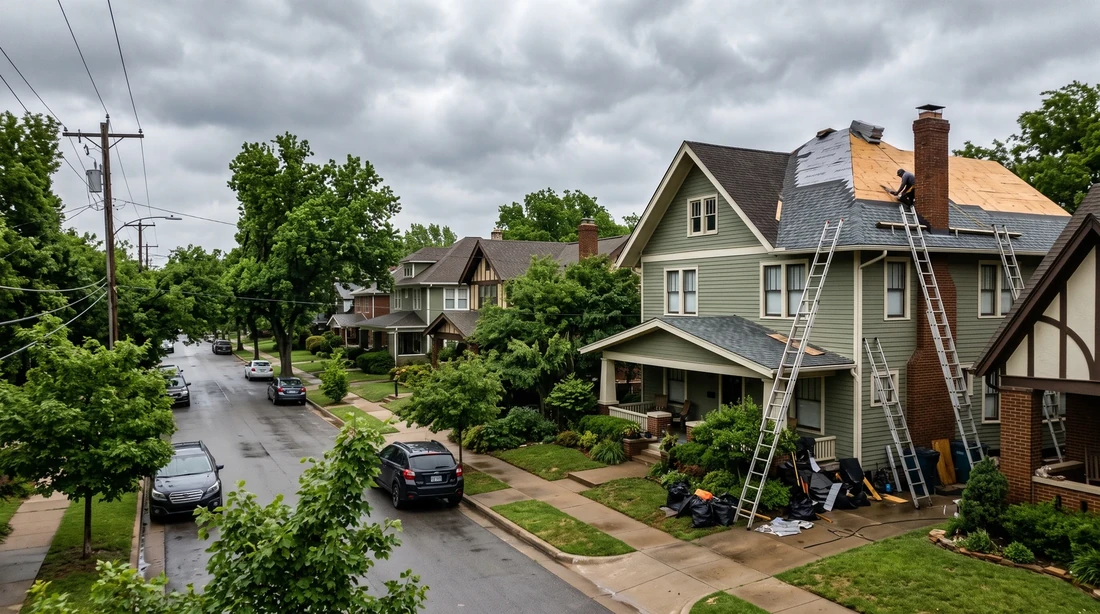
When additional living expenses run out, your insurance company stops paying for temporary housing — even if your home is still under repair. You have three real moves: request a written ALE extension (strongest when contractor delays aren't your fault), escalate to the Oklahoma Insurance Department, or cut your monthly burn with a discounted monthly furnished rental.
Key Takeaways
- Policies cap ALE two ways: a dollar limit tied to dwelling coverage, and a time limit, commonly 12 or 24 months.
- Ask your adjuster in writing for the exact ALE dollars remaining and your authorization end date before choosing a response.
- A hypothetical $11,700 ALE balance covers three months at a $3,900 monthly furnished rate, leaving no out-of-pocket gap.
- Extension requests need a dated contractor letter giving the new completion date and cause, sent before your current end date passes.
What this guide covers: why ALE often ends before the repair does, the difference between a dollar cap and a time limit, how to ask for an extension, how to escalate a denial, and how to keep housing costs down while you wait.
Your adjuster says the ALE checks stop at the end of the month, and your roofer just pushed completion back six more weeks. That squeeze (coverage ending before the repair does) is one of the most common problems after an Oklahoma hail or tornado season. Here's what happens when additional living expenses run out, and what to do about it, in order, starting today.
Send your extension request before your current ALE end date passes. Adjusters approve forward-looking extensions far more readily than retroactive ones, and every hotel night you book while you wait burns cap dollars a monthly furnished rate would stretch.

Why Does ALE Run Out Before the Repairs Do?
Most homeowners policies cap Additional Living Expenses two ways: a dollar limit, often set as a percentage of your dwelling coverage, and a time limit, commonly 12 or 24 months. After a metro-wide hail or tornado event, Oklahoma repair timelines routinely outlast the first housing authorization.
ALE, sometimes labeled loss of use, typically pays the costs above your normal living expenses while your home is uninhabitable. The mechanics (how the percentage is calculated, what counts as "additional") are covered in our loss of use coverage explained guide. This article picks up where that one ends: the moment the money runs out mid-repair.
Storm claims run long for reasons that have nothing to do with you. Oklahoma's tornado and hail season peaks April through June, which means thousands of metro roofs get damaged in the same eight-week window, and every reputable roofer in Oklahoma City bids that backlog at once. A claim opened in May often doesn't see tear-off until late summer.
Then the tear-off reveals cracked decking, the contractor files a supplement, the carrier schedules a re-inspection, and materials sit on back-order. Each step adds weeks. The delays that push families past their ALE window are usually contractor scheduling and material lead times, not anything the homeowner chose. That distinction matters, because it's the backbone of a successful extension request.
Dollar cap or time limit? The answer changes your play
Before you write a single email, find out which wall you're hitting. If you've spent the dollar cap, no extension letter creates new money. Your play is cutting your monthly burn so the remaining dollars, and then your own dollars, go further. If you're hitting a time limit with dollars still on the table, a documented contractor delay is exactly what extension requests were built for.
One more clause worth checking while you're in the policy: some policies pay ALE as your actual additional costs, while others reference the fair rental value of your home. If yours uses fair rental value, a furnished monthly quote at or below what your own house would rent for is the easiest possible ask to justify. Your adjuster can tell you which language your policy carries.
Ask your adjuster, in writing: "How much ALE remains in dollars, and what is my authorization end date?" Get both numbers before your next move. Everything below depends on them.
On how policy limits work more broadly:
Most policies limit the individual amount of money paid out for each category of items.
Wikipedia: Home insurance
What Happens When Additional Living Expenses Run Out, Stage by Stage?
ALE almost never stops without warning. It stops with a paper trail, and each stage of that trail has a move that's stronger than the one that comes after it.
- The tracking notice. Somewhere around 70-80% of your cap, many adjusters flag how much is left. This is your cheapest moment to act. Switching from nightly hotel rates to a monthly furnished rate here can prevent exhaustion entirely.
- The end-date letter. The carrier names a final covered day. Your extension request should go in now, before that date, with your contractor's delay letter attached.
- The last covered day. Payments stop. If you're in a hotel at a nightly rate, every night after this comes fully out of your pocket.
- The out-of-pocket burn. A family in two hotel rooms can spend more per month than a mortgage payment, while still paying the actual mortgage on the house under repair. And if the gap lands on a big OKC event week, nightly rates climb just as you start paying them yourself.
- The forced downgrade. Savings pressure pushes families into cramped quarters or a relative's spare rooms for the final weeks of the repair, with the least bargaining power they've had at any point in the claim.
The pattern to notice: your options get worse and more expensive at every stage. Acting at stage one or two costs you an email. Acting at stage four costs you thousands.
ALE end date approaching and the repair isn't done? BnB OKC places displaced Oklahoma City families in furnished homes at monthly rates that stretch remaining ALE dollars — and we can email a written quote for your extension request the same day.
See insurance housing options or call/text (405) 870-2146.
What Are Your Options When the ALE Money Stops?
There are five workable responses when ALE runs out, and the right one depends on whether you hit a dollar cap or a time limit, and how many weeks of repair remain.
- Request an extension. The strongest path when you're hitting a time limit, dollars remain, and the delay is documented as your contractor's, not yours. The step-by-step process is below.
- Ask whether an approved supplement resets the timeline. If hidden damage expanded the repair scope and the carrier approved a supplement, the official completion date changed. Ask your adjuster to align the housing authorization to the new date.
- Cut the burn rate immediately. Moving from two hotel rooms to a monthly furnished home can drop your monthly housing cost by a third or more, whether the carrier or your own savings is paying.
- Escalate a wrongful cutoff. Written denial first, supervisor review second, Oklahoma Insurance Department complaint third, covered in detail further down.
- Bridge with self-pay at the lowest livable rate. If coverage is exhausted, the goal becomes the cheapest month your household can function in, which is where kitchens and laundry stop being comforts and start being math.
| Option | Typical monthly cost (OKC) | Kitchen & laundry | Effect on remaining ALE |
|---|---|---|---|
| Two hotel rooms | Roughly $5,700-$6,900 at $190-$230/night combined | None; restaurant meals for four add hundreds more | Burns the cap fastest; the out-of-pocket gap arrives soonest |
| Extended-stay suite | Roughly $3,900-$4,800 | Kitchenette; laundry usually shared | Slower burn, but one suite gets tight for four people over months |
| Furnished home, monthly rate | Ballpark $3,900-$5,500 depending on size | Full kitchen and in-home laundry | Slowest burn; food spending returns to normal, so more of the cap covers rent |
| Staying with relatives | $0 lodging | Shared | Preserves cash, but rarely workable for a full three-month repair |
One detail people miss: ALE typically reimburses only food costs above your normal grocery spending. A full kitchen brings food spending back to normal, so your remaining cap goes to housing instead of restaurant overage.
Why Does the OKC Event Calendar Matter When You're Paying Nightly?
Oklahoma City's event calendar pushes nightly hotel rates up several times a year, and spring-storm ALE gaps have a habit of landing right on top of them.
Here's the sequence that catches families: hail season peaks April through June, contractor backlogs push those repairs into late summer and fall, and self-pay bridges often begin in September, the same month the State Fair of Oklahoma fills metro hotels for over two weeks. A family that exhausted ALE in August can find the "cheap" hotel plan suddenly isn't.
| When | Event | Effect on a nightly-rate bridge |
|---|---|---|
| Late April | OKC Memorial Marathon | Downtown and midtown rooms tighten race weekend; rates typically climb |
| Late May-early June | Women's College World Series at Devon Park | A week-plus of elevated demand across the northeast side and beyond |
| September | State Fair of Oklahoma | Metro-wide demand bump for two-plus weeks, the classic post-hail-season trap |
| October-April | Thunder home games at Paycom Center | Downtown rates typically tick up on game nights all season |
A monthly furnished rate is quoted once and doesn't move with the calendar. That stability matters twice: it protects your own wallet during a self-pay bridge, and it gives your adjuster a fixed number to authorize instead of a nightly rate that spikes mid-authorization.
Can $11,700 Cover a Three-Month Gap? A Worked Example
This scenario is hypothetical, but the arithmetic is the arithmetic. Say a family of four lost their roof to spring hail, interior ceilings took water damage, and the contractor, backed up after a metro-wide storm, says completion is 90 days out. The adjuster confirms $11,700 of ALE remains. Three ways that plays out:
- Two hotel rooms at roughly $210/night combined: 90 nights × $210 = $18,900. ALE covers $11,700; the family pays about $7,200 out of pocket, before restaurant meals for four are counted.
- An extended-stay suite at roughly $140/night: 90 nights × $140 = $12,600. The gap shrinks to about $900, but four people share one suite for three months, and limited cooking keeps food costs elevated.
- A furnished home at a monthly rate in the ballpark of $3,900: 3 months × $3,900 = $11,700. The remaining ALE covers the entire stay. Out-of-pocket gap: $0, with a full kitchen, in-home laundry, and separate bedrooms.
Same dollars, three different endings. And the lower monthly quote does double duty: if the timeline slips again, an extension request asking for $3,900/month is a much easier "yes" for a carrier than one asking for $6,300.
Variant one: the partial extension
Now say the same family hits their policy's time limit instead, with 90 days of repair left, and the carrier approves only 30 more days, not 90. At the documented $3,900 monthly rate, the extension covers month one in full. The family self-pays the remaining 60 days: $7,800 in the furnished home versus $12,600 for 60 hotel nights at $210. Even a partial win plus the lower monthly rate keeps roughly $4,800 of their own money in the bank, which is why you attach the monthly quote before you know the carrier's answer.
Variant two: the three-week slip
Repair timelines slip after the extension, too. Say final inspection moves out another three weeks. On month-to-month furnished terms, three extra weeks at a $3,900 monthly rate prorates to roughly $130/day, about $2,730. The same 21 nights back in two hotel rooms runs about $4,410, and more if the slip lands on State Fair or WCWS dates. On a fixed six-month lease, the family would instead be paying for empty months after move-back. Month-to-month terms mean you pay for the weeks the repair takes, nothing more.
How Do You Send an ALE Extension Request? Step by Step
A strong ALE extension request is five documents and one email, and it works because it makes the adjuster's decision easy to justify in the file.
- Confirm your numbers. Ask your adjuster in writing for the exact ALE dollars remaining and your authorization end date.
- Document the delay. Get a dated letter from your contractor stating the new completion date and the cause of the delay.
- Get a monthly housing quote. Request a written monthly furnished-home quote so your extension asks for the smallest possible dollar amount.
- Send the written request. Email your adjuster a dated extension letter with the contractor letter, housing quote, and receipts attached.
- Follow up on a schedule. Set a five-business-day follow-up, then request a supervisor review if you get no decision.
Repairs taking longer than insurance will pay? Prove the delay isn't yours
The single question behind every extension decision is whether the extra time is reasonable and outside your control. A contractor letter that says "completion moved from June 15 to August 1 due to decking replacement approved under supplement #2 and shingle back-order" answers it. A voicemail saying "we're running behind" does not. Get causes and dates on paper, every time the schedule moves.
The flip side matters too: delays that are yours, sitting on tile selections for six weeks, postponing the crew, adding upgrade work outside the claim scope, are the ones adjusters use to deny extensions. If any of the delay is on your side, fix that first, then document what remains as the contractor's.
What the extension letter should include
A simple structure works: "I am requesting an extension of ALE on claim #____ through [date]. Repairs were scheduled to finish [original date]; the attached contractor letter confirms completion is now [new date] due to [cause]. I have secured furnished housing at $[monthly rate], below my current nightly hotel cost, for a total additional request of $[amount]. Receipts to date, the contractor letter, and the housing quote are attached." Date it, send it by email so it's timestamped, and keep a copy.
| Item | Who handles it |
|---|---|
| Dated delay letter with new completion date and cause | Your contractor |
| ALE balance and end date, in writing | Your adjuster |
| Receipts for housing and additional expenses to date | You |
| Written monthly furnished-home quote | Your host (BnB OKC can email one the same day) |
| Extension decision | Your carrier |
| Direct billing setup, if authorized | Carrier or TPA, with the host |
What If the Extension Is Denied? Escalating to the Oklahoma Insurance Department
The Oklahoma Insurance Department's consumer assistance process takes complaints against carriers at no cost to you, and carriers respond to Department inquiries with a documented answer, which alone often gets a stalled file moving.
Escalate in this order. First, get the denial in writing with the specific reason. A written denial reason is the single most valuable document in an escalation. It shows if you're up against a policy limit (hard to change) or a judgment call about the delay (very winnable with documentation). Second, request a supervisor or claims-manager review, attaching the same packet: contractor letter, quote, receipts. Third, file a consumer complaint with the Oklahoma Insurance Department online, including your full paper trail.
Keep housing yourself while the escalation runs. A complaint takes weeks, not days, and living arrangements can't wait on it. Pay the lowest livable monthly rate you can find, keep every receipt, and note in your complaint that you're mitigating costs; if the escalation later succeeds, those receipts are what get reimbursed.
Be clear-eyed about what a complaint does: it forces a documented response and a second look. It doesn't guarantee a reversal, and the carrier still makes all coverage decisions. If the dispute is about policy language or a dollar limit, the remaining paths (appraisal, public adjusters, or counsel) are beyond this guide. If your housing was cut off or refused outright rather than exhausted, start with our guide to what to do when insurance denies temporary housing, which covers the denial fight in full.
How Does a Monthly Furnished Rate Bridge the Gap?
A monthly furnished rate is the one lever that works in every exhaustion scenario (extension approved, extension denied, or dollar cap gone) because it lowers the burn no matter who is paying.
BnB OKC operates 11 furnished homes across the Oklahoma City metro, sleeping 2 to 16+, with published from-rates of $225-$425/night, monthly rates on stays of 30+ nights, and direct-booking savings of up to 35% on stays of 4+ nights. Guests rate the homes 9.5 out of 10 on average across 1,580 verified reviews on Airbnb and Vrbo, and two homes hold Airbnb's Guest Favorite badge.
Location does quiet work during a repair bridge. Our homes sit near Lake Hefner, The Village, and the Paseo and Plaza districts, with one, Capitol Manor, directly across from OU Medical Center, and others about 6 minutes from Will Rogers World Airport. If your damaged house is on the northwest side, a bridge home a few minutes away means school drop-offs, commutes, and contractor check-ins stay on your normal routes for the entire repair. That is one of the biggest livability differences between a furnished home nearby and whichever hotel had availability.
Pets complicate hotel bridges more than anything else. Hotels that take two dogs for three months are rare, and nightly pet fees compound fast; several of our homes are dog-friendly with real yards; see pet-friendly rentals in OKC. Some carriers treat pet boarding as an additional expense when temporary housing can't take the animal, but that's a coverage question only your adjuster can answer. Housing that takes the dogs usually beats boarding on both cost and stress.
On the insurance side, we work with Alacrity Solutions on placements, and we can invoice a carrier or TPA directly, but only when the carrier or TPA authorizes it in writing. Without authorization, you pay directly, keep every receipt, and submit them for reimbursement. How that whole pipeline works, from adjuster approval to move-in, is covered in how ALE housing companies work.
Two practical notes for the exhaustion scenario specifically. First, a written monthly quote strengthens your extension request even before you book. It shows the carrier you've minimized the ask. Second, if the extension is denied and you're self-paying the bridge, month-to-month terms matter: you want to pay for exactly the weeks the repair takes, not a fixed lease that outlives it.
Our extended-stay homes run month to month for exactly this reason, and you can book direct to keep the rate down. If your displacement started with a fire rather than a storm, the timeline math differs; see temporary housing after a house fire.
When Is a Hotel Still the Right Call?
If your contractor needs two more weeks, not two more months, a hotel is usually the simpler answer, and we'll tell you so on the phone.
A hotel makes sense when the remaining repair window is short (roughly under two weeks), when one person is displaced rather than a household, when the carrier is already direct-billing a hotel and completion is close, or when loyalty points can absorb a small gap for free. There's no reason to move twice for ten days. One caution from the calendar section above: check whether your short hotel window overlaps a Marathon, WCWS, or State Fair week before assuming the nightly rate you've been paying holds.
A furnished home changes the outcome when 30 or more days remain, when multiple people need real bedrooms, when pets are in the picture, and when a kitchen and laundry turn a bleeding budget back into a normal one. The math section above is the honest tiebreaker: run your remaining ALE against each monthly cost and let the numbers decide. Renters facing the same exhaustion problem should note their loss-of-use limits are usually smaller. Our guides to whether renters insurance covers temporary housing and whether renters insurance covers hotel stays cover that version.
Terms You'll Hear, Decoded
- ALE (Additional Living Expenses): the policy benefit that pays costs above your normal living expenses while your home is uninhabitable.
- Loss of use: the policy section ALE lives under; renters and condo policies carry their own smaller versions.
- Dollar cap vs. time limit: the two separate ways ALE ends (money spent or calendar expired), and which one you hit determines your options.
- Fair rental value: an alternative ALE measure in some policies, pegged to what your own home would rent for rather than your actual additional costs.
- Supplement: a contractor's request for added repair scope and money after hidden damage is found; an approved supplement often moves the official completion date.
- Prorated month-to-month: a furnished-housing term where partial months bill by the day, the structure that fits repair timelines that slip.
- Direct billing: the housing provider invoices the carrier or TPA instead of you; it happens only with written authorization.
- TPA (third-party administrator): a company, such as Alacrity Solutions, that manages housing logistics on the carrier's behalf.
- DOI complaint: a free, formal complaint filed with the Oklahoma Insurance Department that requires a documented response from your carrier.
For complaint forms and consumer assistance, see the Oklahoma Insurance Department. Event dates shift year to year; Visit OKC publishes the official calendar.
Your Next Steps
- Confirm your two numbers today, in writing: the exact ALE dollars remaining and your authorization end date. Which one runs out first decides your entire plan.
- Gather the two documents that win extensions: your contractor's dated delay letter and a written monthly housing quote.
- Call or text (405) 870-2146 or start at insurance housing. We can email a monthly furnished-home quote for your extension request the same day, and hold move-in-ready homes while your adjuster decides.
Bottom Line
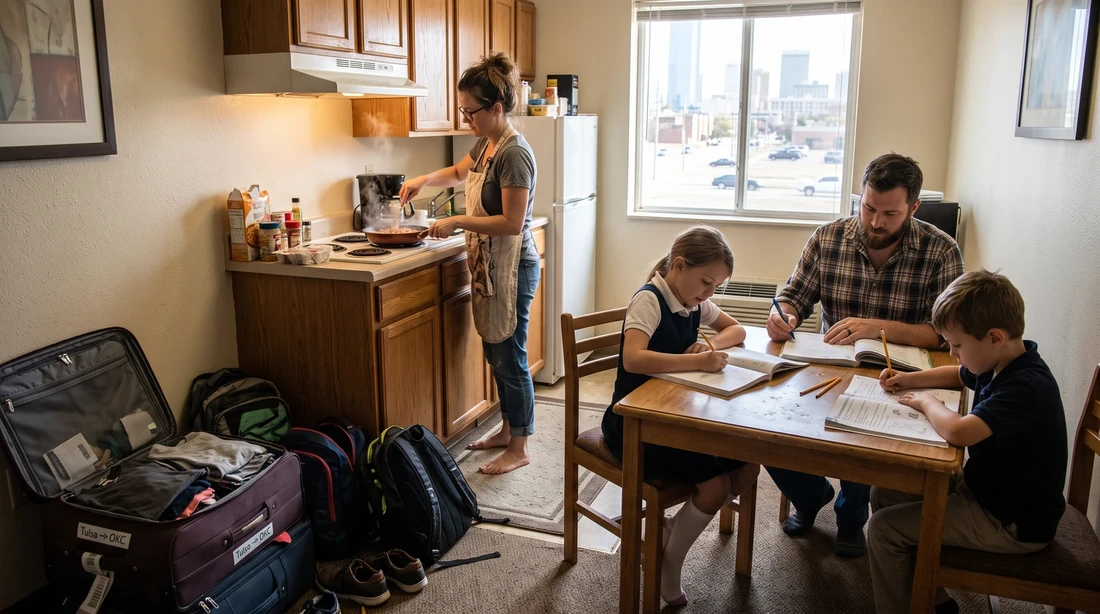
Find out which limit you are hitting, dollars or time, and get both numbers in writing. If time is the problem, send a documented extension request before your end date. If the dollars are gone, lower the monthly burn. Either way, a monthly furnished rate usually stretches what is left further than a hotel, and your carrier makes the final call.
This guide is general information, not insurance or legal advice; your carrier makes all coverage decisions.