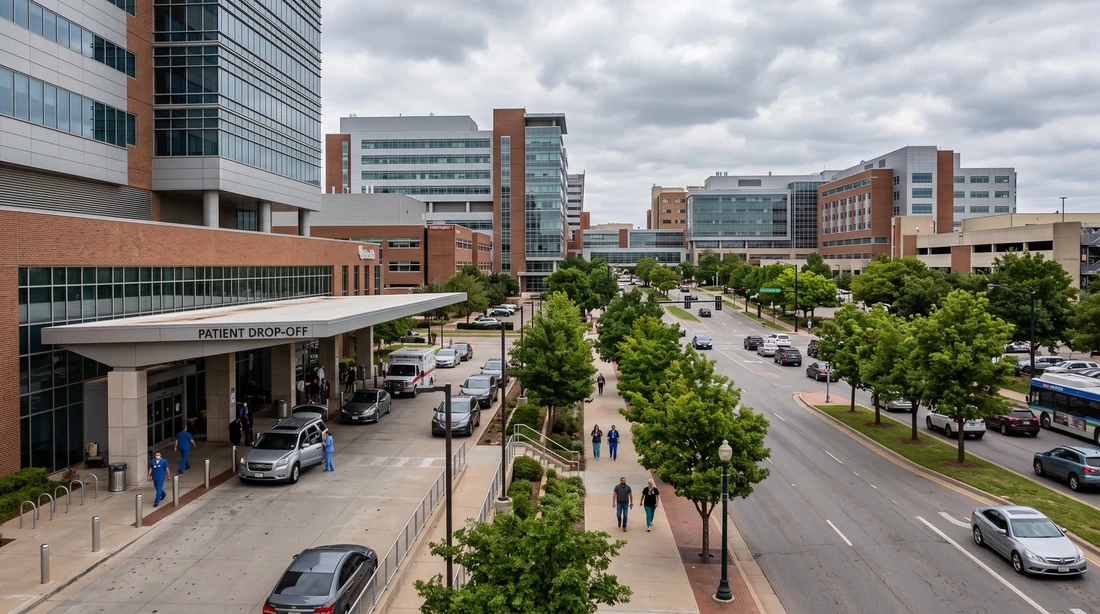
Where to stay after surgery away from home depends on your surgeon's follow-up window — most patients must stay within a short drive of the surgical center for several days to several weeks before they're cleared to travel. Choose lodging with a ground-floor or elevator entry, a kitchen for taking medications with food, and a second bed for a caregiver. For stays past a week, a furnished home usually beats a hotel on cost and comfort.
Key Takeaways
- Surgeons typically require patients to stay near the surgical center 3 to 7 days for outpatient procedures, and several weeks for major operations.
- Score every option against a checklist: ground-floor entry, full kitchen, caregiver bed, in-unit laundry, quiet setting, short drive to the surgeon.
- In the hypothetical 42-night example, the hotel path totals roughly $8,970 all-in versus about $5,300 for a furnished home.
You've had the procedure, but you can't go home yet. Your surgeon wants you within reach for a wound check, a drain removal, or the two-week follow-up before you're cleared to fly or make the long drive back. Now you need somewhere to actually recover — not a cramped room where the bathroom is a stumble away and every meal comes from a vending machine.
This guide answers the exact question post-op patients search: where to stay after surgery away from home, matched against what recovery really requires. We run 11 furnished homes across the Oklahoma City metro, and we place patients and their families near OU Medical Center, INTEGRIS Baptist, and Mercy every season.
Every hotel night with no kitchen and no laundry burns money you can't get back — and if your recovery runs longer than planned, nightly rates climb while a monthly furnished rate holds steady.

Why You Can't Just Go Home After Surgery Away From Home
Most surgeons require patients to stay near the surgical center until a specific follow-up appointment or clearance-to-travel date. That window drives every lodging decision you'll make.
For outpatient and same-day procedures, that's often 3 to 7 days before you're released to travel. For bigger operations, transplant workups, cardiac procedures, or staged reconstructions, the surgeon may want you within a 15- to 30-minute drive for several weeks so they can respond quickly if something changes.
Flying too soon after certain surgeries carries real risks your care team will explain, and a six-hour drive over Oklahoma highways is no joke with fresh incisions. So the question isn't “hotel or home?” in the abstract — it's “what does recovery actually need, and which option checks every box?”
Recovery lodging has demands a normal trip doesn't. You may not be able to climb stairs. You may need to elevate a limb, sleep upright, or keep a wound dry. You'll take medications that must be paired with food. And you'll likely have a caregiver — a spouse, an adult child, a friend — who needs their own place to sleep, not a chair.
On the OU Children's campus referenced above:
It is home to Oklahoma’s only Level I pediatric trauma center, the highest level of neonatal intensive care in the state, and the state’s only comprehensive pediatric heart and heart surgery program.
Wikipedia: OU Health
How Long You'll Stay Depends on the Procedure
The single biggest variable in your budget is the number of nights, and that flows from the type of surgery. Your surgeon sets your exact window — the ranges below are only illustrative of how post-op recovery lodging needs scale up.
| Procedure type (illustrative) | Typical stay near the surgeon | What lodging usually needs |
|---|---|---|
| Same-day / minor outpatient | 1–3 nights | A driver for discharge day; a quiet room; often a hotel is enough |
| Ambulatory surgery with drains or dressings | 5–10 nights | Kitchen, in-unit laundry, a caregiver bed, short drive back for drain removal |
| Major abdominal, orthopedic, or cardiac | 2–3 weeks | Ground-floor bedroom, space to move, quiet, a monthly-rate home |
| Transplant, staged reconstruction, or a treatment course | Several weeks to months | A real home base for the whole family, fixed monthly cost, laundry, kitchen |
Anything past roughly a week pushes you out of hotel territory and into furnished-home math — not because a hotel can't hold you, but because the kitchen, laundry, space, and steady monthly rate stop being nice-to-haves and start being part of the recovery. Confirm your real window before you book, then add a buffer.
The Recovery-Lodging Requirements Checklist
The single most useful thing you can do is score every option against a fixed checklist instead of shopping on price alone. A room that looks cheap fails fast if you can't reach the bathroom or reheat a meal.
| Requirement | Why it matters after surgery | Typical hotel | Furnished home |
|---|---|---|---|
| Ground-floor or elevator entry | Stairs are dangerous with fresh incisions or limited mobility | Elevator common; steps at entry vary | Ground-floor bedroom homes available |
| Full kitchen | Many meds must be taken with food; soft/bland diets are common | Rare (mini-fridge, microwave) | Standard |
| Separate caregiver bed | A spouse or family member stays for days or weeks | Two queens or a sofa bed | Multiple real bedrooms |
| In-unit laundry | Wound dressings, bedding, and clothes need frequent washing | Shared coin laundry | Standard |
| Quiet, low-traffic setting | Sleep drives healing; hallway and door noise disrupt it | Variable; corridor noise | Residential streets |
| Short, predictable drive to the surgeon | Follow-ups, drain removals, and any complication need fast access | Depends on hotel location | Homes near the major OKC hospitals |
Print that table, or keep it on your phone. When you tour or read a listing, mark each row. An option that fails two or more rows is usually the wrong call for a recovery of more than a night or two.
The Discharge-Day Details People Forget
Two logistics catch post-op patients off guard, and both change which lodging works. First, if you have anesthesia, the surgical center will not release you to drive yourself — you need a designated driver to get you from discharge to your lodging, and often a responsible adult with you for the first 24 hours. A caregiver who's already staying with you covers both.
Second, discharge times slide. You may be cleared at 7 a.m. or held until late afternoon. A hotel with an early, hard checkout and a mid-afternoon check-in can leave you sitting in a lobby with fresh incisions. Ask about flexible arrival, and if you booked a home, tell us your likely discharge day so we can work around it — our standard check-in is 4:00 PM and checkout is 11:00 AM, but recovery stays aren't standard trips.
Also plan the small stuff: a way to elevate a limb, extra pillows to sleep upright, room to set out dressings and medications, and floor space if you'll use a walker or wheelchair for a few days. Homes give you that; a single hotel room rarely does.
What It Costs — and What Happens If Your Recovery Runs Long
A furnished 3-bedroom home in OKC typically costs less per month than 30 nights in a single hotel room once you add meals you can't cook and laundry you can't do in-unit. The gap widens the longer you stay.
Post-op timelines slip. A drain that isn't ready to come out, a wound that needs another look, a scan pushed back a few days — any of these can add nights. Here's how the two paths diverge when that happens:
- Days 1–3: Both options feel fine. A hotel near the hospital covers the basics for a very short stay.
- Week 1: Restaurant meals, no laundry, and a caregiver on a fold-out start to wear. Hotel nightly rates keep accruing at full price.
- Week 2–3: If the surgeon extends your window, a hotel bills every added night at the rack rate — and rates can jump on event weekends. A monthly furnished rate doesn't move.
- Week 4+: The all-in hotel cost (room + eating out + paid laundry) commonly runs well past a furnished home's monthly rate, with none of the kitchen, space, or quiet a longer recovery needs.
There's a distinctly Oklahoma City wrinkle to the hotel path: event weekends. When the Women's College World Series fills Devon Park in late May and early June, when the OKC Memorial Marathon runs in late April, when the State Fair of Oklahoma opens in September, or on a busy Thunder night at Paycom Center, hotel rates near downtown and the medical district spike hard.
If your follow-up window happens to overlap one of those weekends, a hotel that quoted a fair rate on the phone can cost far more for the same room. A furnished home booked on a monthly rate ignores all of it.
The lesson: for anything past roughly a week, price the all-in cost, plan for the recovery to run longer than the best-case estimate, and check the OKC event calendar against your dates.
Recovering near an OKC hospital and not sure how long you'll need? Our monthly rates on 30+ night stays hold steady even if your follow-up window extends. Check availability for your dates and surgical center.
Which OKC Hospital, Which Home, How Far
Proximity to the surgical center is the requirement you can't compromise on, because follow-up appointments and any complication put you back in the car. These are our home clusters relative to the metro's major hospitals.
| Hospital / surgical center | Nearby BnB OKC home | Approx. drive |
|---|---|---|
| OU Medical Center / OU Children's | Capitol Manor (directly across the street) | Under 5 min |
| INTEGRIS Baptist Medical Center | Homes near Lake Hefner & The Village | ~10–15 min |
| Mercy Hospital Oklahoma City | Homes near Gaillardia & north OKC | ~10–20 min |
| Will Rogers World Airport (departure day) | Multiple metro homes; airport ~6 min from some | ~6–25 min |
If your surgery and follow-ups are at OU Medical Center, staying across the street changes the whole experience — a caregiver can walk you to a wound check instead of navigating parking, and on a low-mobility day that short walk beats loading in and out of a car. See our full breakdown in hotels near OU Medical Center and where to stay near OU Children's Hospital. For the north-metro systems, hotels near INTEGRIS Baptist Medical Center compares the lodging around that campus.
One more OKC note on timing your drives: I-235 and I-44 tighten during weekday rush hours, so a 10-minute midday route to Mercy or INTEGRIS can stretch closer to 20 at 8 a.m. Book follow-ups outside peak traffic when you can, and factor real drive time — not map distance — into which home you pick.
Hotel vs. Furnished Home for Post-Op Recovery: How to Decide
The right answer flips almost entirely on how many nights you'll stay and how much mobility you have. Match your situation to the row below.
| Option | Who it fits | Watch-outs |
|---|---|---|
| Standard hotel | 1–2 nights, mobile patient, no caregiver staying over | No kitchen for meds-with-food; corridor noise; steps or long walks to room |
| Extended-stay hotel | 3–7 nights, kitchenette needed, single traveler | Small space; caregiver on a sofa bed; shared laundry |
| Furnished home | Stays of a week or more, caregiver or family along, limited mobility | Confirm ground-floor bedroom and drive time to your surgeon |
| Staying with local family | You have relatives near the surgical center with a suitable room | Stairs, no privacy, strain on hosts over long recoveries |
Notice what disqualifies each. The standard hotel fails the moment you need a kitchen or can't do stairs. The extended-stay hotel handles the kitchen but rarely the space or quiet. A furnished home earns its place when the stay is long, mobility is limited, or a caregiver is with you — which describes most recoveries away from home.
A Worked Example: A Family Through a Parent's 6-Week Treatment
Here's a clearly hypothetical example with the math shown, so you can size your own budget.
Say a parent needs a six-week treatment-and-recovery course in OKC, and a spouse plus one adult child come along to help. They compare a hotel room to a furnished home for the full 42 nights.
Hotel path: One room at roughly $150/night × 42 nights = about $6,300. With no kitchen, three people eating out or ordering in runs a conservative $60/day × 42 = about $2,520. Add paid laundry over six weeks, call it $150. All-in: roughly $8,970 — in one room, on a fold-out, with no quiet.
Furnished-home path: A monthly rate around $3,200/month for six weeks (≈ 1.5 months) lands near $4,800. Groceries and home-cooked meals for three might run $500 over the stay. All-in: roughly $5,300 — with separate bedrooms, a kitchen for meds-with-food, in-unit laundry, and a short drive to the surgeon.
In this scenario the furnished home saves in the ballpark of $3,600 over six weeks and delivers a recovery-friendly setup a single hotel room can't. Your real numbers depend on dates, home, and hospital — but the direction rarely changes past a week.
A shorter variant: a 6-night outpatient recovery
Now shrink the same family to a shorter procedure. A parent has an ambulatory surgery with a drain, and the surgeon wants six nights nearby before removal and clearance. A spouse comes as driver and caregiver.
A hotel room at about $140/night × 6 = $840, plus roughly $45/day for two people eating out (no kitchen) × 6 = $270, so around $1,110 all-in. A furnished home at our from-rates, say $185/night with the up-to-35% direct discount on 4+ nights, might land near $120/night × 6 = $720, plus about $120 in groceries, so around $840 — with a real kitchen for meds-with-food, laundry for the drain dressings, and a separate bed for the caregiver.
Even at six nights the home comes out ahead here, and the comfort gap is wider than the dollar gap. Below three or four nights, the two often tie on price and a hotel's simplicity can win — which is exactly the honest line we draw below. Our published from-rates run $165–$425/night, with up to 35% direct savings on 4+ night stays and monthly rates on 30+ nights.
Edge Cases That Change the Answer
A few recovery situations shift the decision before you even reach the price table. Check whether any of these are yours.
You're bringing a pet. A service animal or a family dog that can't be left behind for weeks rules out most hotels quickly and adds pet fees at the rest. Several of our homes are dog-friendly with fenced yards — see pet-friendly rentals in OKC — which matters when a caregiver is spending long days at the hospital and the dog needs somewhere real to be.
Kids are along. When a parent recovers away from home for weeks, the rest of the family often comes too, sometimes with a school-aged child doing remote work. A single hotel room with a recovering patient and restless kids is a hard six weeks; separate bedrooms, a kitchen, and a living room turn it into something manageable.
You crossed 30 nights. A treatment course or staged surgery can run past a month. That's when a monthly rate does the most work, and it's also when hotel loyalty perks stop mattering next to having a kitchen and laundry. Our extended-stay homes are built for exactly this length of recovery.
A program or plan may reimburse you. Some health plans, transplant programs, and clinical-trial sponsors reimburse lodging within a set mileage of the treating hospital, with receipts and often pre-authorization. That changes the budget conversation entirely — ask your care coordinator before you book, and keep every receipt.
How to Choose Recovery Lodging After Surgery, Step by Step
Work these in order and you won't book something that fails at week two.
- Confirm your surgeon's follow-up window and your clearance-to-travel date so you know the real number of nights.
- List your recovery requirements — stairs or no stairs, kitchen for meds-with-food, a bed for your caregiver, laundry, and quiet.
- Map lodging to the surgical center by drive time, aiming for the shortest predictable route to follow-ups.
- Compare hotel vs. furnished home against your checklist, pricing the all-in cost, not just the nightly rate.
- Book direct and confirm check-in flexibility in case your discharge date shifts.
- Share the address with your care team and pack recovery essentials — medications, dressings, and a way to elevate.
When You Don't Need a Furnished Home
Be honest with yourself about the length of stay. For a single overnight before a morning discharge, or a mobile patient with no caregiver staying over and no kitchen needs, a clean hotel near the hospital is the right, simple call — and hotel loyalty points may make it cheaper still.
A one- or two-night pre-op stay is a hotel job. If a hospital-affiliated hospitality house (the kind some medical systems offer for patients and families) has a room and fits your situation, that can be the most economical option of all — ask your care coordinator whether one is available.
A furnished home changes the outcome when the recovery is longer than a few days, when you can't manage stairs, when medications require regular meals you'd rather cook, when a caregiver or the whole family is along, when a pet can't be left, or when the surgeon extends your window and nightly hotel rates would keep climbing. In those cases, the kitchen, the separate bedrooms, the laundry, and the fixed monthly rate stop being luxuries and start being the recovery.
Travel nurses and traveling patients often face the same lodging math; if that's you, travel nurse housing in Oklahoma City and the best neighborhoods for travel nurses in Oklahoma City cover the neighborhood trade-offs in depth, and Furnished Finder vs. Airbnb weighs the booking platforms.
Terms You'll Hear, Decoded
- Follow-up window: The period your surgeon needs you nearby for post-op checks before releasing you to travel home.
- Clearance to travel: The point your care team says it's safe to fly or make a long drive after your procedure.
- Ambulatory recovery: Recovering while able to walk and move on your own, versus needing help getting around.
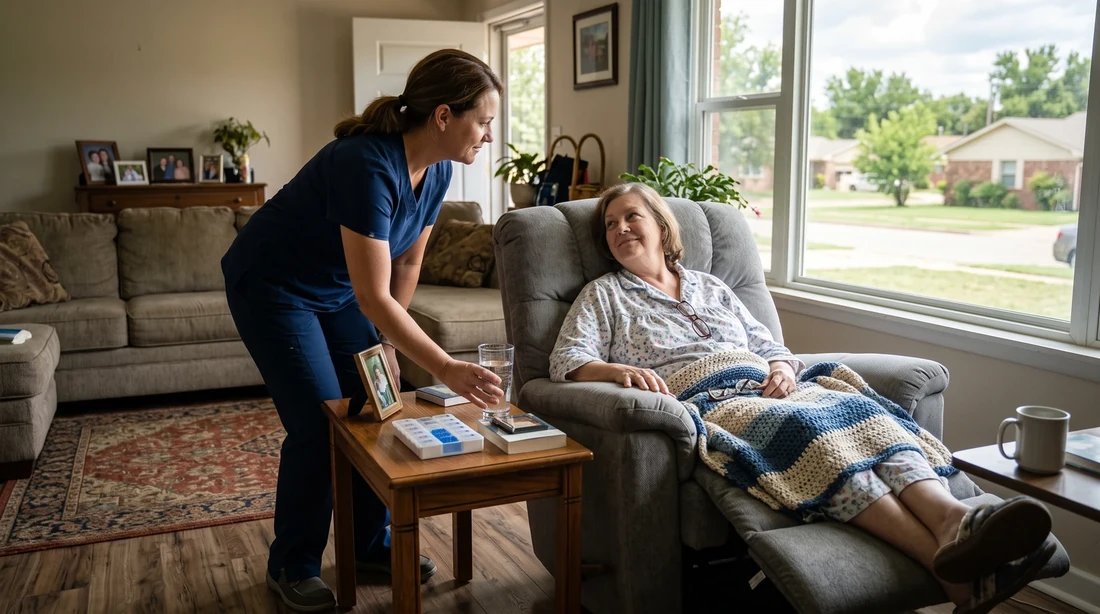
- Caregiver: The spouse, family member, or friend staying with you to help — who needs their own real bed, not a chair.
- Designated driver: The responsible adult who takes you from discharge to your lodging, since anesthesia means you can't drive yourself and are often not left alone the first day.
- Extended-stay rate: A discounted monthly or long-stay price that replaces the nightly rate once you cross a set number of nights (often 30+).
Our trust numbers, cited plainly: BnB OKC holds a 9.5 out of 10 average across 1,580 verified guest reviews on Airbnb and Vrbo, and two homes carry Airbnb's “Guest Favorite” badge.
Your Next Steps
- Confirm the number of nights your surgeon's follow-up window requires — and add a buffer in case healing runs long.
- Score two or three options against the requirements checklist above, comparing all-in cost rather than nightly rate, and check your dates against the OKC event calendar.
- Book the one that fits, direct. Browse extended-stay homes, or call or text (405) 870-2146 with your dates and hospital for same-day availability near your surgeon.
This guide is general lodging information, not medical advice; always follow your surgeon's and care team's instructions about travel, mobility, and recovery.