If an Airbnb guest won't leave, the platform itself generally can't remove them — once a stay reaches or approaches 28 consecutive nights, a guest may gain local tenant protections that only a court can resolve. Airbnb classifies 28+ night bookings as "monthly stays" with their own cancellation and payout rules. The real fix is professional setup, not fear of long stays.
Search any host forum and one thread pattern repeats forever: "My guest's checkout was yesterday and they won't leave — what can I do?" Right behind it comes the standard warning: think hard before you let anyone stay longer than 29 nights, because long-stay guests can gain tenant rights Airbnb can't undo.
Here's the honest read from an operator who runs 30+ night stays every month across 11 OKC homes: the fear of 28-night stays is really the fear of doing them amateurishly. The mechanics are knowable, the protections are documentable, and the money is often better. This guide walks through exactly how Airbnb's monthly-stay machinery works, where its protections thin out, and how to close the gap.
The clock that matters: Airbnb treats any reservation of 28 or more consecutive nights as a monthly stay — and in most jurisdictions the line where a guest can start claiming tenant status sits at or near 30 days. Once a stay crosses it, your options narrow fast, so the decisions you make before check-in are the ones that protect you.
Why the "Guest Won't Leave" Nightmare Happens
The overstay problem is almost never about a bad person — it's about a booking that quietly changed legal categories while the host wasn't watching. A guest who stays past roughly 30 days can, in many places, stop being a short-term "licensee" and start being a "tenant" with the right to a formal eviction process.
Airbnb is a booking platform, not a landlord's enforcement arm. It can process refunds and mediate disputes, but it cannot physically remove someone from a property. When a guest digs in past a monthly-stay checkout, the resolution moves off the app and into your local court system — a slow, expensive lane.
That single fact drives every forum warning. But notice what it actually argues for: not avoiding long stays, but structuring them so the guest, the term, and the exit are defined in writing from day one.

How Airbnb's Monthly-Stay Rules Actually Work
Airbnb defines a monthly stay as a reservation of 28 or more consecutive nights, and those bookings automatically use the host's long-term cancellation policy instead of the standard short-term ones. The long-term policy comes in two flavors, and the difference decides how much you're paid when a stay ends early.
| Rule | Firm long-term | Strict long-term |
|---|---|---|
| Full guest refund window | Cancel 30+ days before check-in | Cancel within 48 hours of booking AND 28+ days before check-in |
| After that window | Host paid 100% for nights spent + 30 additional nights | Host paid for nights spent + 30 additional nights |
| Best for | Hosts who want some cancellation flexibility for guests | Hosts who want maximum income protection |
The takeaway most hosts miss: both long-term policies pay you for 30 extra nights beyond the last night stayed when a guest bails early. That's a built-in cushion the short-term policies don't give you — one reason monthly stays are financially steadier, not riskier, when set up right.
How the money moves on a monthly stay
Payouts on 28+ night stays run on a rolling monthly cycle, not one lump sum. The guest is charged the first month up front, and each following month is collected on its own schedule.
| Stage | What happens |
|---|---|
| At booking | Guest charged for the first month (first 30 nights) |
| ~24 hours after check-in | Airbnb releases the first payout to the host |
| Every 28–31 days after | Airbnb collects and releases each subsequent month for the rest of the stay |
| Early end | Long-term policy pays host for nights spent + 30 additional nights |
Because Airbnb collects each month as it comes, a guest who overstays isn't automatically still paying — the platform's payment machinery ends when the reservation ends. That gap between "reservation over" and "person still in the house" is exactly where the horror stories live.
Where Platform Protection Thins Out — And What Happens If You Wait
Airbnb's monthly-stay tools are strong right up to the reservation's last night, then they stop. If a guest refuses to leave, doing nothing only makes each following step slower and more expensive.
- Checkout day passes. The reservation ends; Airbnb's payment cycle for that booking is over. The guest is now occupying without an active reservation.
- You ask Airbnb to help. The platform can message the guest and mediate, but it cannot remove anyone from a physical property — that's not a power it holds.
- Tenant status may attach. If the total occupancy has crossed your local threshold (often around 30 days), the guest may be treated as a tenant, meaning self-help lockouts are typically illegal.
- You go to court. Removal now runs through a formal eviction or forcible-entry process in your county — weeks of time and legal cost, during which the home earns nothing.
This is why the answer is never "avoid 30-day stays." It's "don't enter a 30-day stay on nothing but a booking confirmation." Professional extended-stay operators close the gap with a written lease-style agreement, identity and income vetting, and a defined end date — so the exit is documented long before it's needged.
Running — or worried about — a 30+ night stay? BnB OKC operates extended stays across 11 OKC homes with lease-style agreements, vetting, and defined end dates. See how structured long stays work, or talk it through with a real operator.
The OKC Angle: 30+ Night Stays Sit in a Different Lane
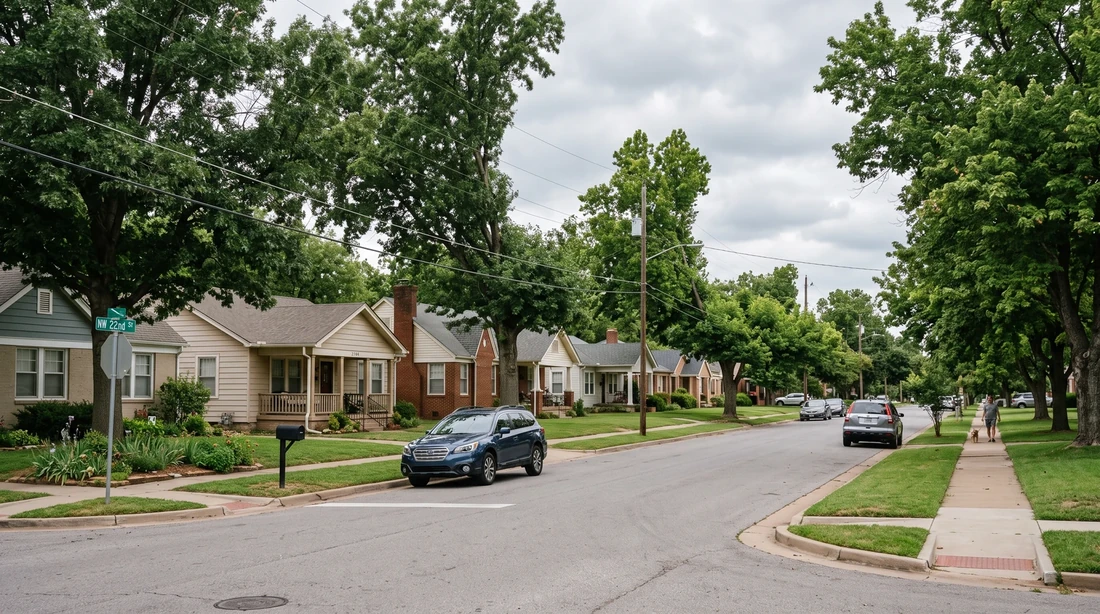
In Oklahoma City, a property rented exclusively for terms longer than 30 days does not require a home-sharing license, according to Airbnb's official OKC rules page — so long stays live in a different regulatory lane than short-term rentals. The tax treatment splits the same way: OKC's 5.5% hotel tax applies only to the first 29 nights of a reservation.
That means a well-run 30+ night booking can be simpler on paper than a string of short stays — no home-sharing license requirement when a home is used only for long terms, and a cleaner tax structure. It's the opposite of the reputation. If you're weighing the STR side of the ledger too, see our guides on OKC short-term rental rules and the recent OKC Airbnb enforcement crackdown. Neighboring cities differ — Norman handles licensing and hotel tax its own way, covered in our Norman short-term rental license and Norman hotel tax increase guides.
A Hypothetical: The Amateur Stay vs. The Structured Stay
The following figures are illustrative only — your rates and outcomes will differ. Say a host lists a 3-bedroom OKC home and accepts a 90-night booking.
The amateur version: the host confirms on Airbnb alone, no separate agreement, no vetting. The guest pays the first 30 nights up front; Airbnb releases that payout ~24 hours after check-in, then collects months two and three on schedule. At checkout, the guest refuses to leave. With no lease-style agreement and 90 days of occupancy, the host is likely looking at a court process — potentially weeks of lost income at, hypothetically, roughly $200/night in forgone bookings, plus legal costs.
The structured version: same 90 nights, but signed onto a written lease-style agreement with a defined end date, ID and income vetting, and a clear move-out clause. The Airbnb long-term (firm) policy still pays for nights spent plus 30 additional nights if the guest leaves early — and the paper trail makes the exit enforceable. Same guest, same home, dramatically different risk.
The math that matters isn't the nightly rate — it's the cost of an unstructured exit versus the near-zero cost of setting the stay up correctly on day one.
Structured long stays are also where insurance-funded placements shine: an ALE / insurance housing guest arrives with a carrier-funded budget and a defined displacement window, so the end date is built in from the start.
How to Run a 28+ Night Stay Without the Risk, Step by Step
Here's the workflow professional extended-stay operators use so a monthly stay never becomes an overstay.
- Choose a long-term cancellation policy — firm or strict — so early departures still pay you for nights spent plus 30 additional nights.
- Vet the guest — confirm identity and income or a funding source (employer, relocation, or insurance carrier) before you accept.
- Sign a written lease-style agreement that states the exact term, the end date, and the move-out terms, alongside the Airbnb booking.
- Define the funding and the exit — for insurance stays, tie the term to the carrier's approved dates; for relocations, to the assignment length.
- Document check-in and communication in writing so any dispute or extension is handled on a clear paper trail, not a phone call.
When You Don't Need a Structured Long-Stay Setup
If you host only 1–7 night stays and never accept anything close to 28 nights, none of this applies to you — the standard short-term cancellation policies cover you and no tenant-status question ever arises. A single traveler passing through for a weekend is not a legal risk.
Where structure genuinely changes the outcome is the moment a booking reaches or nears 28–30 nights: relocations, home renovations, travel-nursing and work assignments, and insurance-funded displacements. Those stays are steady income and lower turnover — if the agreement, vetting, and end date are in place. That's the entire difference between a great long-stay business and a forum horror story.
Terms You'll Hear, Decoded
- Monthly stay: any Airbnb reservation of 28 or more consecutive nights; it automatically uses the host's long-term cancellation policy.
- Long-term cancellation policy (firm/strict): the two monthly-stay policies; both pay the host for nights spent plus 30 additional nights after the refund window closes.
- Tenant status: the legal shift, often around 30 days of occupancy, after which a guest may be entitled to a formal eviction process rather than a simple checkout.
- Home-sharing license: OKC's short-term rental permit — not required for a property rented exclusively for terms longer than 30 days.
- ALE (Additional Living Expenses): the insurance coverage that funds displaced-homeowner housing, giving a long-stay guest a carrier-backed budget and a defined end date.
Displaced yourself or placing someone? Our guest-facing extended stays handle relocations, renovations, and assignments this way — and if you're in town for a big event like the Route 66 Centennial in OKC, longer bookings are worth structuring too.
See the FAQ section below for detailed answers on removal, thresholds, refunds, and OKC-specific rules.
Your Next Steps
- Check your booking's night count. Confirm whether any reservation reaches or nears 28 nights — that's the line where monthly-stay rules and tenant-status questions begin.
- Gather your paperwork. Set your long-term cancellation policy and prepare a written lease-style agreement with a firm end date before you accept a long stay.
- Talk to an operator who does this daily. For structured 30+ night stays across the OKC metro — relocations, renovations, insurance placements — see our extended stays or call/text (405) 295-5052.
This guide is general information, not insurance or legal advice; your carrier makes all coverage decisions, and local tenancy law is decided by your jurisdiction and the courts.