Set up a USPS temporary forward to your rental within your first week displaced — it reroutes First-Class mail for 15 days to 1 year without touching your permanent address. Then update the addresses that don't follow USPS forwarding: your insurer, bank, employer, pharmacy, and your kids' schools. Route packages and replacement-goods deliveries to your temporary rental or a nearby pickup point.
Key Takeaways
- File a USPS temporary Change of Address in week one; it reroutes First-Class mail for 15 days to 1 year without changing your permanent address.
- Update insurer, bank, employer, pharmacy and kids' schools by hand, because forwarding skips some mail classes and some senders ignore it entirely.
- USPS forwards to one address only, so split households must update child-specific accounts separately, and each new rental requires a fresh filing.
- Packages follow carrier rules: change default shipping addresses, and use FedEx Delivery Manager or UPS My Choice to redirect or hold deliveries.
This guide covers mail after a house fire: which USPS option fits a temporary displacement, the accounts you have to update by hand, how packages and replacement furniture reach a furnished rental, the situations that change the plan (a split household, a second rental, mail-order prescriptions, a home business), and the identity-theft risk of a mailbox at a boarded home.
Your house is uninhabitable after a kitchen fire, you have moved the family and the dog into a rental across town, and bills, prescription refills, and your adjuster's letters are still landing in a mailbox nobody is checking. Mail forwarding is the one week-one task that quietly costs you money if you skip it. A missed insurance letter can stall your claim. A missed bill can ding your credit while you are already stretched. Most of this is one afternoon of setup.
Every day your old mailbox sits unchecked, time-sensitive mail piles up: claim correspondence, medical refills, and payment notices. USPS temporary forwarding can start as soon as the next business day, so the sooner you file it, the less you miss.

Why Does Mail Become a Problem the Moment You Are Displaced?
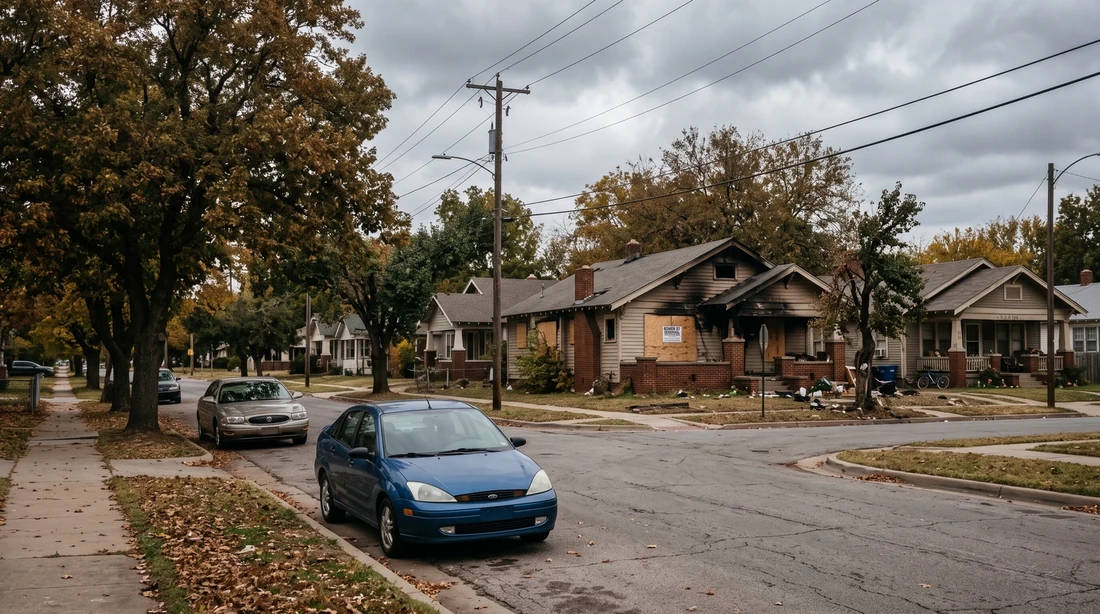
When you leave a damaged home, mail keeps arriving there whether or not you can safely get to it. A fire-damaged property is often sealed, boarded, or unsafe to enter, which means the mailbox is effectively offline for the entire rebuild.
Two things break at once. First, incoming mail (bills, checks, government notices, your insurer's letters) has nowhere reliable to go. Second, the address on file with dozens of companies now points to a place where you cannot receive anything.
USPS forwarding solves the first problem for most standard mail. It does not solve the second. Plenty of senders either do not honor forwarding or send mail that is not forwardable. That is why displaced families need both a forward and a manual address-update list.
An unattended mailbox is also an identity-theft risk
A boarded home broadcasts that nobody is home, and an overflowing mailbox at a vacant address is a target. Bank statements, new cards, checks, and tax notices sitting in an unlocked box are exactly what mail thieves look for. Filing a forward the first week keeps your claim moving and empties the box, so sensitive mail follows you instead of stacking up where you cannot watch it.
If you drive past your OKC property to check on the rebuild, do not count on that as your mail plan. A weekly swing by Edmond, Moore, or The Village is no substitute for a forward, and a 25-minute cross-metro drive to a mailbox you cannot safely open is no system at all.
For context on why claim correspondence keeps arriving during a rebuild:
After that, a claims adjuster will investigate the claim, and the insured may be required to provide various information.
Wikipedia: Home insurance
Temporary or Permanent Change of Address: Which One?
For an insurance-claim displacement, you almost always want a temporary forward. A temporary change tells USPS this is short-term and keeps your legal, permanent address unchanged, which matters because your rebuild ends at that same address, and your insurer, mortgage, and voter records still tie to it.
A permanent change moves your address of record and shares the update with USPS's national database, which pushes it to many mailers automatically. That is overkill, and a hassle to reverse, when you are returning home in a few months. The same distinction trips people up on the claim side; see temporary housing after a house fire for how the housing timeline lines up with your forward window.
What Happens If You Wait or Do Nothing?
Mail problems compound quietly. Here is the realistic sequence when a displaced family leaves the mailbox unmanaged.
- Weeks 1 to 2: Routine mail accumulates at the damaged home. Nothing feels urgent yet, so it is easy to postpone.
- Weeks 3 to 4: Your first post-fire bills come due at the old address. A missed auto-pay lapse or a returned payment notice can start late fees, and a new card mailed to the vacant box sits exposed.
- Month 2: Claim correspondence (supplemental requests, checks, ALE reimbursement paperwork) may go unseen, slowing the money that funds your temporary housing. Replacement-goods deliveries you ordered with your contents claim start bouncing off a boarded door.
- Month 3: Prescription refill reminders, DMV or insurance renewals, and tax or government notices stack up. Some carry their own deadlines.
- Rebuild end: You move home to a pile of mail, some of it long past due, and spend weeks untangling it while chasing at least one piece that was stolen from the box.
None of this is dramatic on any single day. The accumulation is what hurts, and it is entirely avoidable with one afternoon of setup.
Settling a displaced family into a furnished OKC home for the rebuild? A stable rental address makes mail, packages, and replacement-goods deliveries far simpler than hopping between hotels. See furnished, month-friendly options or call for same-week placement.
Explore insurance housing options • Call or text (405) 870-2146
What Are My USPS Forwarding and Mail-Handling Options?
USPS temporary forwarding covers most First-Class mail for 15 days up to 1 year. It is not the only tool, though, and it does not fit every situation. Here is how the main options compare.
| Option | Best for | What it doesn't do |
|---|---|---|
| Temporary Change of Address (forward) | Standard displacement; you'll return to the same home in weeks or months | Doesn't forward all mail classes; many marketing pieces and some periodicals aren't reliably forwarded |
| Permanent Change of Address | You're not returning to the property | Overkill and awkward to reverse for a temporary rebuild; updates national database |
| USPS Hold Mail | Very short gaps (up to 30 days) before you set forwarding | Only holds — nothing reaches you; not a long-term fix for a 4-month rebuild |
| PO Box near your rental | Privacy, or a short-term rental where you can't receive mail directly | Costs a rental fee; you must still redirect or forward mail to it |
| General Delivery | You have no fixed address yet and need a stopgap at a specific post office | You must pick up in person; not for packages or long stays |
| Informed Delivery (free) | Seeing scanned images of incoming letter mail daily by email | Doesn't reroute anything — it's visibility only, best paired with a forward |
Sign up for Informed Delivery alongside your forward. It emails you grayscale scans of incoming letter-size mail, so even if a piece slips through forwarding, you will know it existed and can chase it down. That daily visibility is also your early-warning system for anything a mail thief might have grabbed.
What Mail Will I Receive During a Rebuild?
A displaced family receives far more than statements during a claim. Replacement goods bought with your contents coverage are the bulkiest and most delivery-sensitive. After a kitchen fire you will often replace clothes, cookware, small appliances, kids' shoes, and sometimes furniture, ordering online because there is no time for stores. Those boxes, and occasionally a couch or a refrigerator on a freight-scheduled delivery, need a real, staffed street address.
Freight and appliance carriers require someone present to sign and inspect. A hotel front desk usually will not accept a washer. A furnished home you live in can. If you are documenting contents for your carrier, keep every delivery confirmation and receipt. Receipts substantiate ALE and contents reimbursements, and the carrier decides what is covered.
Which Addresses Do I Update by Hand?
USPS forwarding is a safety net, and the accounts that matter most should get your temporary address directly. Some senders do not honor forwarding. Others send mail types that are not forwarded. A few, like your insurer, need your current location on file to run the claim.
Work this list top-down. The first four are the ones displaced families most regret missing.
| Update | Why it matters now | Who handles it |
|---|---|---|
| Your insurance carrier / adjuster | Claim letters, ALE reimbursements, and checks need to reach you; carrier decides coverage and needs your current contact | You (call or portal); adjuster confirms on file |
| Bank & credit cards | New cards, statements, and fraud alerts; prevents returned mail flags | You (online or branch) |
| Employer / payroll | W-2s, benefits mail, and any mailed checks | You (HR) |
| Pharmacy & doctors | Refill reminders, mail-order prescriptions, medical bills | You (pharmacy + each provider) |
| Kids' schools & daycare | Enrollment, transportation, and emergency-contact records; report cards | You (front office) |
| Vet & pet pharmacy | Refills for a dog's or cat's medication and reminder notices during the stay | You (vet + pet-Rx service) |
| Mortgage or landlord | Escrow, dwelling-related notices, and lease correspondence | You; landlord updates their records |
| Home business / self-employed mail | Client checks, tax documents, and licensing notices that can't wait | You (registered agent, clients, IRS) |
| Utilities being restored | Final and reconnect bills during the rebuild | You + contractor coordinate |
| Government (DMV, IRS, voter, benefits) | Renewals, refunds, and notices that carry their own deadlines | You (each agency) |
| Subscriptions & deliveries | Recurring boxes and periodicals that forwarding often skips | You (each account) |
| USPS forward itself | Catches everything you forget | You file; USPS routes |
Keep your permanent home address on file wherever it is your legal address. Your insurer, mortgage, and voter registration should still show the home you are rebuilding. For those, give a temporary mailing address or contact update rather than a permanent change. If you vote by mail during the displacement, request an absentee ballot to your rental rather than re-registering, so your permanent registration stays put. Oklahoma County handles absentee requests without disturbing where you are registered.
Which Situations Change the Mail Setup?
A displacement is rarely one clean household moving to one address, and several common OKC scenarios change how you file the forward. A USPS forward reroutes to a single destination, so when your household is not single-destination, you have to plan around it.
If your family splits up during the rebuild
If the kids stay with grandparents in Edmond while you take a smaller rental near work, do not try to split one forward across two homes. USPS routes to one address only. Forward the household mail to wherever the primary account holder lives, then update the kids' schools, pediatrician, and any child-specific accounts with the address where they sleep. A shared calendar note of who is getting which mail where prevents a report card or a benefits letter from landing at the wrong house.
If you move to a second rental mid-rebuild
Rebuilds shift. A family that starts in an extended-stay hotel and moves to a furnished home a month later has to file a new temporary Change of Address each time the destination changes, and re-update the carriers and accounts they already set once. Every move is a fresh round of the same checklist, which is one practical reason to settle into a single furnished home for the whole rebuild rather than chaining short stays. One address filed once is far cleaner than three filed in sequence.
If you run a business from the damaged home
Self-employed and home-business mail is its own track. Client checks, 1099s, licensing renewals, and any registered-agent or LLC correspondence tied to the address do not wait for a rebuild. Update clients and your registered agent directly, and consider a small PO box or a business mailbox for continuity so commercial mail never mixes with the household forward. If the home is your listed business address on state records, keep that permanent and just redirect the physical mail.
If you get mail-order prescriptions or pet medication
Ninety-day mail-order prescriptions and refills for a dog's or cat's medication often ship as parcels, and parcels do not follow letter-mail forwarding reliably. Some controlled medications will not forward at all. Update the pharmacy and the pet-Rx service directly with the rental address, and confirm the next shipment's destination before it goes out. A missed refill mid-rebuild is the kind of gap that sends you to an urgent-care pharmacy at full price.
If your old address is a rural route or shared box
On the metro's edges (Mustang, Yukon, Choctaw, Newalla) a rural route address forwards the same way a city address does, but delivery timing can run a day slower, so build in a buffer. If your damaged home is an apartment or condo with a cluster mailbox, the forward still works. Tell the property manager you have moved so they do not clear or reassign the box while your claim mail is still routing.
How Do Packages Reach a Temporary Rental?
USPS forwarding covers letter mail well. Packages and carriers like UPS, FedEx, and Amazon follow their own rules, and you update those separately. A furnished rental with a stable street address makes this easy. Frequent hotel changes make it hard.
Update your default shipping address in Amazon and any retailer you order from to the rental address. For carriers, set delivery preferences: FedEx Delivery Manager and UPS My Choice let you redirect packages, hold them at a nearby location, or leave delivery instructions, which is useful when you are at work during the day. For OKC deliveries, a home 6 minutes from Will Rogers Airport or near Lake Hefner still gets the same next-day service a house does. A rotating hotel room does not.
If your rental does not allow package receipt or you want them secured, use a nearby pickup point (a locker, a store hold, or a carrier access point). At a furnished home you are staying in for the whole rebuild, direct-to-door is usually simplest: one address, no juggling. The table below shows how mail and package handling differ by where you stay.
| Housing type | Mail & package handling | Best for |
|---|---|---|
| Hotel (rooms may change) | Front-desk mail is inconsistent; carriers won't reliably deliver; freight/appliance drops usually refused | 1–3 nights while you set up something longer |
| Extended-stay hotel | Front desk can hold small parcels; no personal mailbox; large replacement deliveries still tricky | 2–3 week gaps between placements |
| Furnished home (whole rebuild) | One street address for USPS forward, Amazon, FedEx, UPS, and freight; you're there to sign for appliances | 30+ day displacements with mail, refills, and replacement goods |
How to Set up Mail Forwarding After a House Fire, Step by Step
- File a USPS temporary Change of Address online or at any post office. Choose "temporary" and set your rental as the forwarding address.
- Enroll in Informed Delivery for your permanent address so you see scans of any mail that is not forwarded.
- Update your insurer, bank, employer, and pharmacy directly. These are the accounts forwarding most often misses or delays.
- Change shipping defaults in Amazon and set FedEx/UPS delivery preferences to your rental or a nearby pickup point.
- Notify schools, government agencies, and subscriptions with your temporary mailing address, keeping your legal address unchanged.
- Set a calendar reminder before your forward expires and before your rebuild ends to reverse everything cleanly.
Red Flags That Mail Is Slipping Through
- A permanent change filed for a temporary stay. It moves your address of record and is a hassle to reverse when you return in a few months.
- A forward filed to a hotel. Rooms change, front desks lose things, and every move means a new filing.
- The insurer still has only the old address. Claim checks and ALE paperwork are the mail you can least afford to miss.
- A mail-order prescription shipping to the burned house. Parcels do not follow letter forwarding reliably. Confirm the destination before the next refill ships.
- A freight delivery scheduled to a hotel. Appliance carriers need a signature, and most front desks will refuse the drop.
- No Informed Delivery enrollment. Without it you have no way to know a letter existed if forwarding missed it.
A Hypothetical: The Mail Cost of a 4-Month Rebuild
Say your family of five and your dog are displaced by a kitchen fire, facing a four-month rebuild, and your ALE budget covers a furnished home at roughly $4,200 for the stay instead of two hotel rooms. Here is how mail plays out either way.
In the hotel scenario, you might change rooms or properties, so no carrier lets you set a reliable delivery address. Packages get refused or held, and front-desk mail handling is inconsistent. You file a USPS forward, but with an unstable address it is messy, and each room change is another forward to re-file.
In the furnished-home scenario, you file one temporary forward to the rental's street address on day two. Amazon, FedEx, and UPS all point there. Your adjuster mails ALE paperwork; it forwards cleanly; you turn it around fast, which keeps reimbursements moving.
The dollar difference is never in postage, because forwarding is free. It is in what a missed letter costs: one lapsed auto-pay late fee (say $35), plus days of delay on a claim check that funds the very housing you are in. Over four months, a stable rental address is the difference between mail being a non-issue and mail being a recurring fire drill.
A second hypothetical: what a delayed claim check costs
Now imagine the same family, but the adjuster mails a $9,000 ALE reimbursement check to the old boarded address in month two, and it sits in the unattended mailbox for three weeks before anyone drives by.
During those three weeks you are floating the rental cost on a credit card at, say, 22% APR, which is roughly $115 in interest on a $9,000 balance for three weeks, plus the stress of wondering whether the check was stolen. A temporary forward filed on day two puts that check in your hands the day it arrives. The postage saved is zero. The interest, late fees, and re-issue hassle avoided are the real number.
A third hypothetical: replacement-goods deliveries during the rebuild
The same family replaces clothes, a coffee maker, kids' school supplies, and eventually a dining set using their contents claim: say a dozen deliveries over four months, including one freight-scheduled furniture drop. At the furnished home, every box lands at the door and someone signs for the freight; you photograph and log each for the carrier.
At a hotel, half the parcels get held for pickup across town and the furniture delivery is refused for lack of a signature, forcing a reschedule and a return trip. These are hypotheticals to illustrate the mechanics. Your carrier, costs, and timeline decide the real numbers.
For how the housing side of that math works, see loss of use coverage explained and, if reimbursements stall, insurance denied temporary housing.
When Can You Skip the Forward?
If you are displaced for only a night or two, skip the forward entirely. A USPS Hold Mail request is simpler and reversible. Hold Mail keeps everything at your local post office for up to 30 days, and you pick it up or resume delivery when you are home. For a weekend hotel stay after minor smoke damage, that is all you need.
A temporary forward changes the outcome when you are out for 30 days or more: a multi-month rebuild, a family with kids in school, prescriptions on refill cycles, a pet on medication, and an active insurance claim generating letters and checks. That is when unmanaged mail turns into missed deadlines and stalled reimbursements.
A furnished home with one stable address matters most for those same longer stays and for anyone receiving replacement goods, freight, or business mail during the claim. It gives every carrier a single place to deliver and every account one address to update. If your displacement is short and you travel light, a hotel and a mail hold are the right, cheaper call; compare that path in does renters insurance cover hotel stays. If you are weighing whether your policy even funds the longer stay, start with does renters insurance cover temporary housing.
Terms You'll Hear, Decoded
- Temporary Change of Address (COA): A USPS forward for a short-term move (15 days to 1 year) that keeps your permanent address on record.
- Permanent Change of Address: A USPS move update pushed to a national database and shared with many mailers; for when you are not returning.
- Hold Mail: USPS keeps your mail at the post office for up to 30 days instead of delivering it; a short-gap tool rather than a rerouting one.
- General Delivery: A stopgap that lets a specific post office hold your mail for in-person pickup when you have no fixed address yet.
- Informed Delivery: A free USPS service that emails you scanned images of incoming letter-size mail so you can see what is coming.
- Additional Living Expenses (ALE): The loss-of-use coverage that reimburses reasonable extra costs, including your temporary rental, while your home is unlivable; the carrier decides what is covered.
- Carrier access point / pickup point: A store, locker, or facility where FedEx, UPS, or USPS can hold your packages for pickup instead of leaving them at the door.
- Temporary mailing address: A current-location update you give an account (insurer, bank) without changing your legal address of record; the right tool when you are returning home.
For how the reimbursement side connects to your rental, see how ALE housing companies work.
Below are the questions displaced OKC families ask most about mail during a rebuild. This is general information, not legal or postal advice. Confirm specifics with USPS and your carrier.

The Bottom Line
File a temporary forward in week one, sign up for Informed Delivery, and hand your rental address directly to the insurer, bank, employer, pharmacy, and schools. Point Amazon, FedEx, and UPS at the same door. One stable address for the whole rebuild turns mail from a recurring problem into a solved one.
- Confirm your rebuild timeline and rental address. If you will be out 30+ days, file a USPS temporary forward to your rental rather than a permanent one.
- Gather your must-update list: insurer/adjuster, bank, employer, pharmacy, vet, and schools (the accounts USPS forwarding will not fully cover), plus your Amazon and FedEx/UPS delivery preferences for replacement goods.
- Lock in a stable place to receive it all. A single furnished-home address makes mail, packages, and freight simple for the whole rebuild. Explore insurance housing options or call/text (405) 870-2146 for same-week OKC placement.
Details on USPS forwarding, Hold Mail, and Informed Delivery are on the official USPS site, and general consumer guidance on claims is available from the Oklahoma Insurance Department.
This guide is general information, not insurance or legal advice; your carrier makes all coverage decisions.