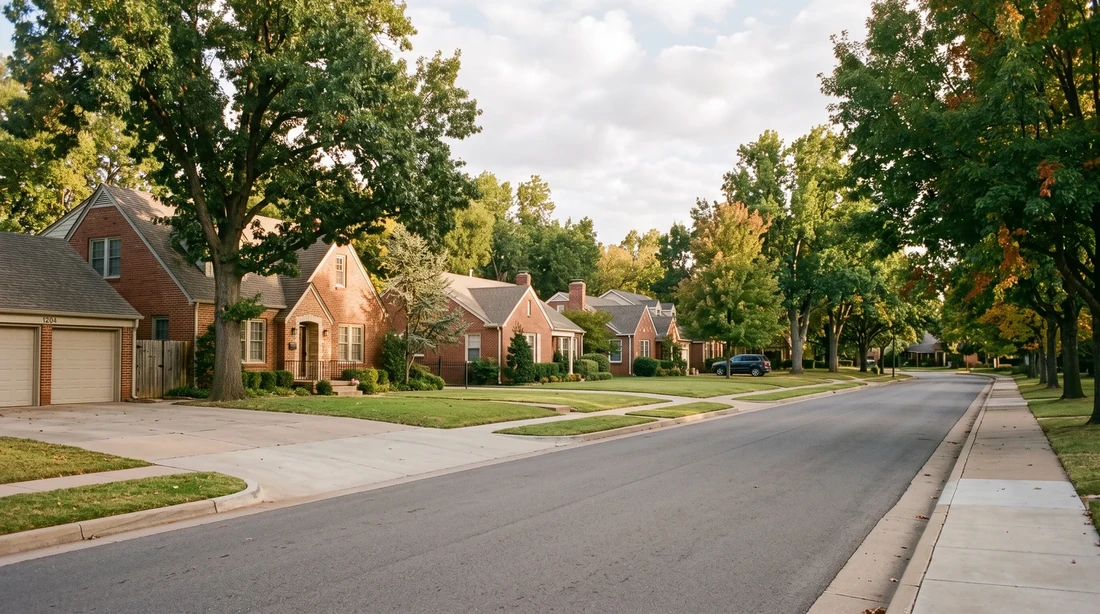
The average home insurance cost in Oklahoma City is $9,770 per year, about $814 a month, according to NerdWallet data current as of March 4, 2026 (based on $400,000 dwelling coverage, $300,000 liability, and a $1,000 deductible). That is the highest in the metro, ahead of Edmond ($9,745) and Norman ($9,400), and far above the $2,490 national average.
Key Takeaways
- Oklahoma City averages $9,770 a year, about $814 monthly, based on $400,000 dwelling coverage, $300,000 liability and a $1,000 deductible.
- Tulsa averages $6,285, roughly $3,485 cheaper than OKC; Oklahoma's statewide $7,255 average still exceeds the $2,490 national average.
- The cheapest widely available Oklahoma quote listed was State Farm at $4,610 annually; USAA's $4,365 is limited to military-eligible households.
- Additional Living Expense, often set as a percentage of dwelling coverage, is substantiated by receipts and depends on adjuster authorization.
This guide covers what the 2026 NerdWallet numbers say about home insurance cost in Oklahoma City, why the metro costs more than almost anywhere, what the cheapest quotes in that data look like, how the loss-of-use line on your policy works when a storm forces your family out, a worked hail-claim example, and the steps that make an ALE budget go further.
If you own a home in Oklahoma City, your premium is now roughly four times what a typical U.S. homeowner pays. That single number, $9,770 a year, is why so many metro families feel the sticker shock at renewal. The more important question is rarely asked out loud. After you pay OKC-metro premiums, what does the policy do for your family when a spring hailstorm tears off the roof and you cannot live in the house?
Every day a displaced family spends in a cramped hotel burns Additional Living Expense (ALE) budget a furnished home would stretch further. ALE reimbursement runs on receipts and adjuster authorization, so the housing decision you make in the first 48 hours shapes the whole claim.

What Do the 2026 Numbers Say?
Oklahoma City tops its own metro at $9,770 a year, with Edmond and Norman close behind. NerdWallet's figures, current as of March 4, 2026, all assume the same policy: $400,000 in dwelling coverage, $300,000 in liability, and a $1,000 deductible. That matters, because premium quotes only compare when the coverage behind them matches.
| Location | Annual premium | Approx. monthly |
|---|---|---|
| Oklahoma City | $9,770 | ~$814 |
| Edmond | $9,745 | ~$812 |
| Norman | $9,400 | ~$783 |
| Tulsa | $6,285 | ~$524 |
| Oklahoma statewide | $7,255 | ~$605 |
| U.S. national average | $2,490 | ~$208 |
Two things jump out. First, Oklahoma's statewide average of $7,255 already leads the nation, and the OKC metro sits well above even that. Second, Tulsa, a major Oklahoma city, comes in about $3,485 a year cheaper than OKC. Geography and storm exposure drive the number more than the size of the house does.
Insurance Information Institute data shows how premium dollars split by cause of loss:
According to the 2008 Insurance Information Institute factbook, for every $100 of premium, in 2005 on average $16 went to fire and lightning, $30 to wind and hail, $11 to water damage and freezing, $4 for other causes, and $2 for theft.
Wikipedia: Home insurance
Why Does Oklahoma City Cost More Than Almost Anywhere?
Oklahoma City's premiums reflect where the metro sits: squarely in the country's most active severe-weather corridor, with tornado season peaking April through June and hail and wind claims stacking up year after year. Insurers price that risk into every renewal.
The market structure adds pressure. Oklahoma Watch reported on October 27, 2025 that the state's top four carriers control more than 60% of the Oklahoma homeowners market, a concentrated market where a few pricing decisions move the whole state. The same reporting noted Oklahoma has long operated under a “use-and-file” system, which lets insurers put new rates into effect with minimal pre-approval scrutiny by regulators.
You will also see different headline averages depending on who is measuring. Oklahoma Watch cited Bankrate putting Oklahoma's 2025 average at $4,613. That figure assumed a $300,000 house rather than the $400,000 dwelling coverage NerdWallet used for its 2026 OKC number. When you read a premium average, always check the coverage behind it before you compare.
Can You Pay Less? What Do the Cheapest OKC-Market Quotes Look Like?
Yes. The same NerdWallet data set found Oklahoma quotes well below the OKC metro average at that $400,000 coverage level. The catch is eligibility and fit.
| Insurer | Annual premium | Note |
|---|---|---|
| USAA | $4,365 | Military-eligible households only |
| State Farm | $4,610 | Widely available |
| Travelers | $5,715 | Widely available |
Even the cheapest widely available option in that data, State Farm at $4,610 a year, runs roughly $384 a month, still nearly double the national average. Shopping your policy can cut the bill meaningfully, but it will not erase the OKC storm premium. Comparison is worth it every renewal. Just confirm the coverage limits and deductible match before you switch on price alone.
What Happens If a Storm Forces Your Family Out of the House?
This is the part the premium debate skips. The money you spend all year is buying, among other things, a place for your family to live when the house is uninhabitable. That coverage is called Additional Living Expense (ALE), or “loss of use,” and in many Oklahoma policies it is written as a percentage of your dwelling or personal-property coverage. On a policy with $400,000 in dwelling coverage, that pool can be substantial, but only if you use it well.
When a hailstorm or windstorm damages the roof and the adjuster confirms the home is not safe to occupy during repairs, ALE typically reimburses the difference between your normal living costs and what displacement now costs you. Your carrier and adjuster decide what is covered and how much. You decide where your family stays, and that choice sets the tone for the whole claim.
Displaced by an OKC storm claim and need somewhere your family can actually live? BnB OKC places insurance-displaced families in furnished metro homes (kitchens, laundry, room to breathe) and bills direct to carriers via ALE when authorized. Same-day options.
What Does a Four-Month Hail Claim Look Like for a Family of Five?
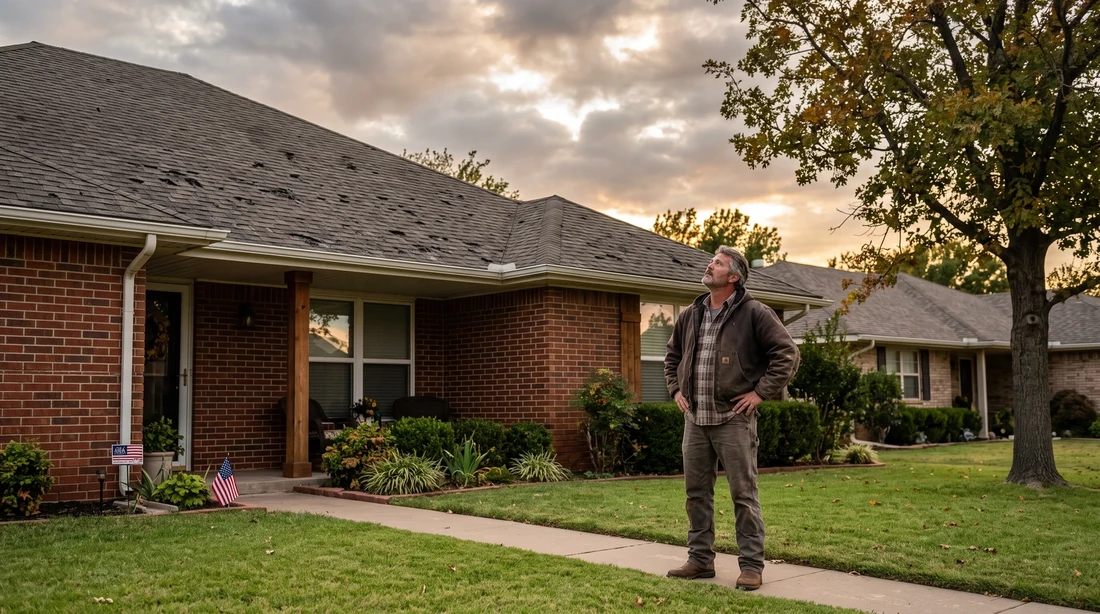
Here is a clearly hypothetical example to show the math. Say a spring hailstorm shreds the roof of a northwest OKC home, water gets into two rooms, and the adjuster confirms the family of five needs to move out for four months of repairs. They carry that $400,000-dwelling policy, the same one behind the $9,770 average premium, with ALE included.
Option A, two hotel rooms. Five people don't fit in one room. Two rooms at, say, $170/night runs about $340/night, or roughly $10,200 a month, before a single restaurant meal (no kitchen). Over four months that is about $40,800 in lodging alone, and it burns ALE fast while the family lives out of suitcases.
Option B, a furnished metro home. A furnished multi-bedroom home with a kitchen and laundry, booked direct on a 30+ night monthly rate, typically lands well under two-hotel-room math per month. The family cooks (no restaurant markup, which also lowers the “additional” expense the claim has to cover), the kids keep a routine, and one invoice makes ALE receipts clean.
The numbers are hypothetical and your carrier makes the final call. The pattern is consistent, though: a furnished home usually stretches the same ALE dollars across more of the displacement than stacked hotel rooms do. Our published from-rates run $165 to $425/night with up to 35% direct-booking savings on stays of four nights or more, and monthly rates on 30+ night stays.
How to Make Your ALE Coverage Go Further, Step by Step
- Confirm your loss-of-use limit: Pull your policy and find the ALE or loss-of-use line, often a percentage of dwelling coverage, so you know your ceiling.
- Get the displacement in writing: Ask your adjuster to confirm the home is uninhabitable and the expected repair timeline, which anchors how long you'll need housing.
- Compare lodging on total monthly cost: Weigh stacked hotel rooms (no kitchen) against a furnished home with a kitchen and laundry across the full timeline rather than one night.
- Ask about direct billing: Have your adjuster or TPA authorize the housing provider to bill the carrier directly so you're not floating months of rent.
- Keep every receipt: Save lodging invoices and added-expense receipts, since ALE reimbursement is substantiated by documentation.
What to Check Before You Compare Quotes or Book Housing
These are the places OKC homeowners usually get tripped up.
- Comparing premiums with different coverage behind them. Bankrate's $4,613 assumed a $300,000 house; NerdWallet's $9,770 assumed $400,000 in dwelling coverage. Match the coverage before you compare the price.
- Switching on price alone. Confirm the coverage limits and deductible match the policy you're leaving.
- Overlooking a separate wind/hail deductible. It is sometimes separate from the $1,000 standard deductible and higher.
- Not knowing your loss-of-use limit before a storm. Find the ALE percentage now so a claim doesn't catch you guessing.
- Booking a hotel for the first night and staying for four months. Two rooms at $170/night runs about $10,200 a month with no kitchen, and the first 48 hours set the pattern for the whole claim.
- Paying and waiting for reimbursement when direct billing was available. With carrier or TPA authorization, the provider can bill the carrier directly.
Terms you'll hear, decoded
- Additional Living Expense (ALE): The policy coverage that reimburses the extra cost of living elsewhere when your home is uninhabitable. Lodging above your normal housing cost, plus certain added expenses.
- Loss of use: The section of a homeowners policy that ALE falls under; many policies set the limit as a percentage of dwelling or personal-property coverage.
- Dwelling coverage: The amount your policy would pay to rebuild the structure. $400,000 in the NerdWallet 2026 comparison. Higher dwelling coverage generally means a higher premium.
- Deductible: What you pay out of pocket before coverage kicks in. $1,000 in the compared quotes. Wind/hail deductibles are sometimes separate and higher.
- Use-and-file: The Oklahoma system that lets insurers put new rates into effect with minimal pre-approval scrutiny, as reported by Oklahoma Watch.
- Direct billing: When the housing provider bills your carrier or third-party administrator directly instead of you paying and waiting for reimbursement. This happens only with carrier or TPA authorization.
For the full walkthrough of how displaced families get placed and how ALE billing works, see our insurance housing hub.
If your renewal spike has you rethinking whether to rent out a spare property, note that the metro's short-term rental rules have tightened too. Read OKC short-term rental rules and the OKC Airbnb enforcement crackdown before you list, or Norman's short-term rental license if you're south of the river.
When Do You Not Need a Furnished Home?
If your claim only puts you out for a night or two, or you're a single person who can comfortably use a hotel and rack up points, a hotel is often the simpler call. Short displacements, no pets, no kids' school routine to protect: the furnished-home advantage shrinks.
Where a furnished home changes the outcome is longer displacements (30+ nights of repairs are common after storm damage), families who need bedrooms and a kitchen, households with pets, and anyone who wants one clean invoice for the ALE claim instead of a stack of nightly hotel folios. That is the situation OKC storm claims most often create.
The Bottom Line
Oklahoma City homeowners pay $9,770 a year on average, the highest in a state that already leads the nation. Find the ALE percentage in your policy before you ever need it, and when a claim comes, compare housing on the full repair timeline: monthly furnished-home rates against two-hotel-room math for the months your adjuster estimates.
If you're displaced now, reach BnB OKC at (405) 870-2146 or start at insurance housing for same-day metro options billed direct via ALE.
Sources: NerdWallet: Oklahoma home insurance and Oklahoma Watch: Oklahoma home insurance rates.
This guide is general information, not insurance or legal advice; your carrier makes all coverage decisions.