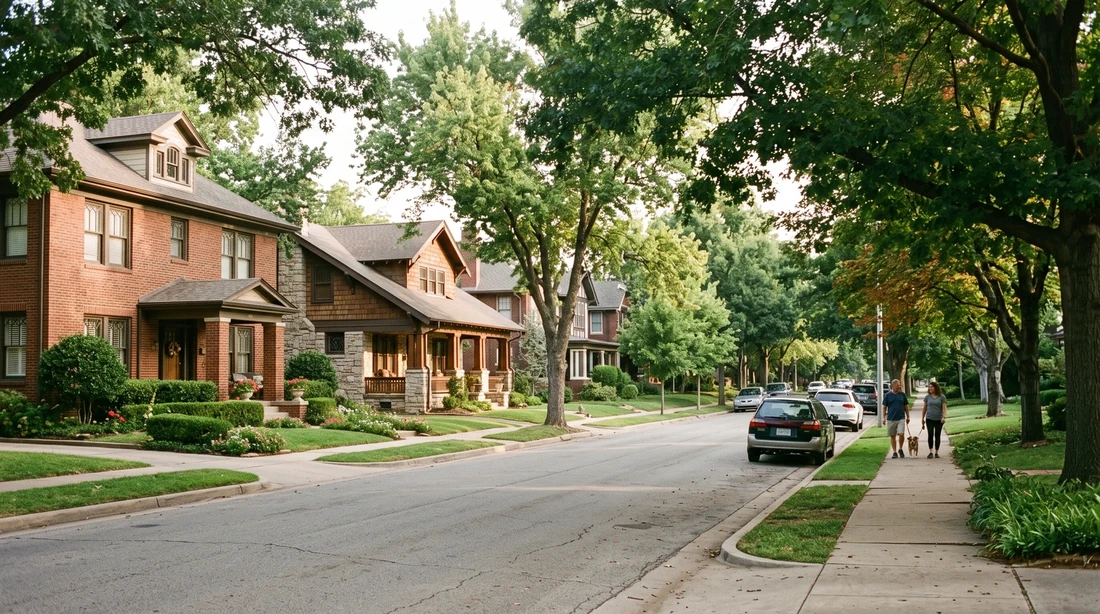
In OKC's Historic Preservation Districts, an Airbnb must be your primary residence, you must stay on-site during every rental, and you need a $300 special exception from the Board of Adjustment. These are the city's strictest home-share rules — a hands-off, whole-home rental is effectively off the table unless the property was grandfathered before 2019.
Key Takeaways
- In OKC Historic Preservation Districts, a home share must be your primary residence and you must be on-site during every rental.
- Hosts in these districts need a Home Sharing special exception from the Board of Adjustment, with a $300 filing fee.
- Since February 16, 2025, the board may weigh restrictive covenants and traffic, and deny a violator's license for one year.
- Operators renting before the January 15, 2019 ordinance were grandfathered, but that protection runs out around January 2029.
If you just bought a 1920s bungalow in Mesta Park or a brick two-story in Heritage Hills and pictured listing it whole on Airbnb, the OKC Historic District Airbnb rules will change your plan. These neighborhoods carry tighter home-sharing requirements than the rest of the city — and a separate commission governs the Capitol-Medical zone entirely. Here's exactly what applies, what it costs, and what's changing.
Operators actively renting before the January 15, 2019 ordinance were grandfathered from most changes for at least 10 years. That protection runs out around January 2029 — so pre-2019 listings should treat the next few years as a planning window, not a permanent right.

Why the Historic Districts Have Their Own Rules
OKC's Municipal Code treats Historic Preservation Districts as a separate designation from ordinary Citywide Residential Districts, with different requirements. That distinction is the whole story here. A short-term rental that would be routine a few blocks away can be tightly restricted inside a preservation district boundary.
These districts — the character-home neighborhoods guests love for their porches, mature trees, and walkable blocks — were created in part to keep housing residential and neighbor-friendly. The rules reflect that: the city wants a real resident behind each listing, not an absentee investor running a mini-hotel.
The original framework was adopted January 15, 2019, and it drew the lines between district types that still govern applications today. If you don't know which line your property falls on, that is the first thing to confirm before you list anything.
What the Historic-District Rules Actually Require
A home share inside an OKC Historic Preservation District must clear three bars at once. Miss any one and the listing isn't permitted.
- Primary residence. The home has to be where you actually live — not a second home or a pure investment property.
- Host on-site. You must be present at the property during the rental. That rules out the classic hands-off, whole-home model that works in less-restricted parts of the metro.
- $300 special exception. You need a Home Sharing special exception granted by the Board of Adjustment, and the filing fee is $300.
Compare that to a Citywide Residential District, where the requirements differ and a whole-home short-term rental can be permitted under the city's broader licensing framework. The gap between the two designations is the single most important thing a would-be host in these neighborhoods needs to understand.
| Requirement | Citywide Residential District | Historic Preservation District |
|---|---|---|
| Must be primary residence | Not required for all license types | Required |
| Host on-site during stay | Not required for whole-home rentals | Required |
| Special exception needed | Standard licensing path | $300 Board of Adjustment special exception |
| Whole-home hands-off rental | Possible under license | Effectively not permitted |
The Capitol-Medical Zone Is a Different Animal
Special rules also apply in the Capitol-Medical Center Improvement Zoning District (CMZ), overseen by its own commission. This is the area around the state Capitol and the medical corridor, and it does not run through the standard Board of Adjustment process.
If your property sits in the CMZ, call the commission directly at 405-522-0440 before you plan a listing. Assuming the citywide or historic-district process applies when you're actually in the CMZ is an easy and expensive mistake.
What Changed on February 16, 2025
The February 16, 2025 update gave the Board of Adjustment more grounds to say no. As of that update, the board may weigh restrictive covenants and traffic impacts when it reviews a home-sharing application — and it can deny a violator's license or renewal for one year.
In plain terms: a neighborhood's private covenants and real concerns about parking and traffic can now factor into whether your special exception is granted. And if you run afoul of the rules, the penalty isn't just a warning — it's potentially a full year without the ability to license or renew.
| Date | What happened |
|---|---|
| January 15, 2019 | Original ordinance adopted; district categories created; pre-2019 operators grandfathered for at least 10 years |
| February 16, 2025 | Update lets the Board of Adjustment weigh covenants and traffic, and deny a violator's license or renewal for one year |
| Around January 2029 | Grandfather protection for pre-2019 operators is set to run out |
A Hypothetical: What a Heritage Hills Host Faces
Here's a clearly hypothetical example to show the math and the choices. Say you bought a two-bedroom in a Historic Preservation District and hoped to list it whole while you live elsewhere.
Under the rules, that plan is out — a whole-home, host-off rental isn't permitted in the district. Your realistic path is a home share: you live there as your primary residence, stay on-site during stays, and file the $300 special exception with the Board of Adjustment. Even then, the board can weigh your neighborhood's covenants and traffic before granting it.
If your covenants bar short-term rentals outright, the $300 filing may not clear the board at all. That's why hosts chasing hands-off income in these neighborhoods often can't make the numbers work here — and why guests who simply want a character-home stay are better served by a licensed whole-home rental nearby, where none of these constraints touch them.
Want a historic-feeling OKC stay without the host-on-site rule? Our furnished homes across the metro rate 9.5 out of 10 across 1,580 verified guest reviews on Airbnb and Vrbo — book the whole place, no shared space.
Grandfathered Before 2019? Read This
Operators who were actively renting before the January 15, 2019 ordinance were grandfathered from most changes for at least 10 years. That window closes around January 2029. If you've been relying on it, the smart move is to understand your compliance path now, while you have runway.
The 2019 protection was never framed as permanent. As the date approaches, plan for the possibility that you'll need to meet current requirements — including the primary-residence and on-site rules — or shift your property to a different use. Waiting until 2028 to figure it out leaves no margin.
How to Apply for a Historic-District Home-Share Special Exception, Step by Step
- Confirm your district. Verify whether your address sits in a Historic Preservation District, a Citywide Residential District, or the CMZ — the rules differ for each.
- Check the CMZ first. If you're in the Capitol-Medical zone, call its commission at 405-522-0440 before anything else.
- Confirm you qualify. Make sure the home is your primary residence and that you can be on-site during every rental.
- Review your covenants. Read any restrictive covenants on the property, since the Board of Adjustment can weigh them.
- File the $300 special exception. Submit the Home Sharing special exception application to the Board of Adjustment with the $300 filing fee.
- Attend the hearing. Be ready for the board to consider covenants and traffic impacts before it decides.
When These Rules Don't Affect You at All
If you're a guest, not a host, none of this changes your stay — it only shapes which listings exist. You can still book a beautiful older OKC home; it just may be a licensed whole-home rental rather than a shared house inside a preservation district.
And if you're a host whose property sits outside the historic and Capitol-Medical boundaries, you're on a different, generally simpler path — start with the okc short term rental rules and the recent okc airbnb enforcement crackdown for the citywide picture. Neighboring cities differ again; see the norman short term rental license requirements and the norman hotel tax increase if your plans cross the county line.
The historic-district rules bite hardest on one specific person: the investor who wanted a hands-off, whole-home listing in a character neighborhood. That model is the one the ordinance is built to prevent.
Terms You'll Hear, Decoded
- Home share — a short-term rental where the host lives in and is present at the home during the guest's stay, as opposed to a whole-home rental.
- Special exception — permission granted by the Board of Adjustment to do something the base zoning doesn't allow by right; the historic-district home-share version costs $300 to file.
- Historic Preservation District — a designated OKC neighborhood with stricter home-share rules than a Citywide Residential District.
- CMZ — the Capitol-Medical Center Improvement Zoning District, governed by its own commission at 405-522-0440.
- Restrictive covenants — private, recorded rules on a property or subdivision that the Board of Adjustment can now weigh against a home-share application.
- Grandfather clause — protection for operators who were renting before the January 15, 2019 ordinance, set to run out around January 2029.
Planning a stay during a big weekend instead of hosting? See the route 66 centennial okc guide for how event demand moves availability.
FAQs
Your Next Steps
- Confirm your boundary. Check whether your address falls in a Historic Preservation District, a Citywide Residential District, or the CMZ before you plan any listing.
- Gather your paperwork. Pull your proof of primary residence and any restrictive covenants, and price the $300 special-exception filing into your plan.
- Prefer a whole-home stay? Browse our furnished OKC homes at /properties/ or call or text (405) 870-2146 — no host-on-site rule, no shared space.
This guide is general information, not legal or zoning advice; the City of Oklahoma City and its Board of Adjustment make all licensing and permitting decisions.
Sources: Airbnb Help Center: Oklahoma City, OKCMAR ordinance summary, and Avalara's 2025 rule update overview.