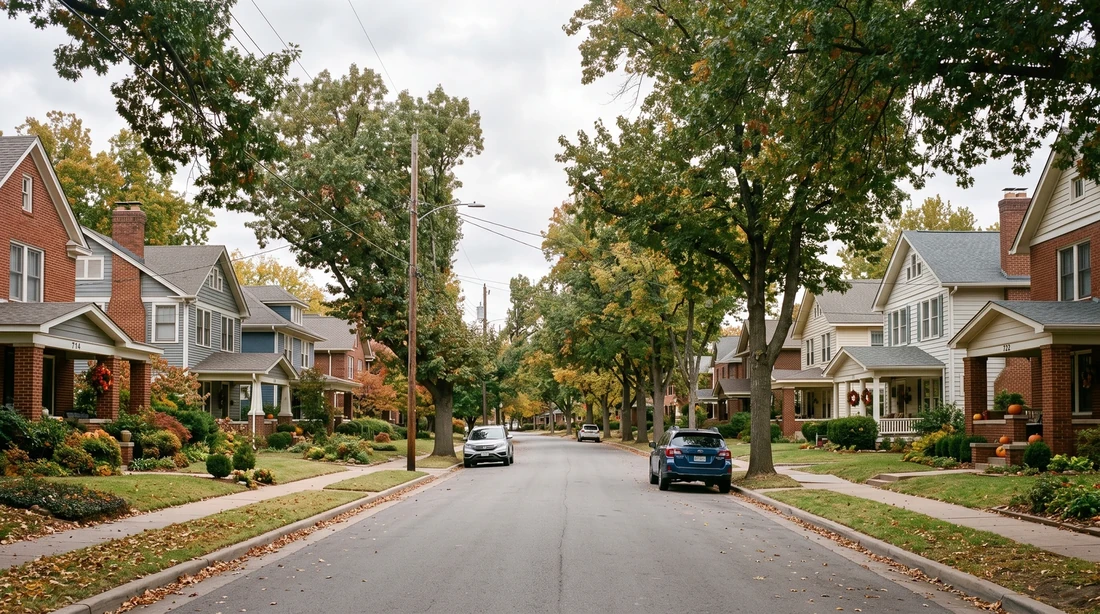
As of 2026, the OKC metro's short-term rental rules diverge sharply by city. Norman requires an annual license ($150 + $50 inspection) and bans events; Edmond has no STR-specific ordinance; and Moore has no widely documented city STR licensing program in the major 2026 statewide guides. Oklahoma City requires a $24/year home-sharing license with a 10-night/month cap.
Key Takeaways
- Norman requires an annual license for each short-term rental, costing $150 plus a $50 inspection fee, and bans events.
- Edmond has no STR-specific license, but a roughly 10% combined lodging and state sales tax still applies.
- Moore has no widely documented STR licensing program, so hosts should confirm status with Moore city hall.
- Oklahoma City requires a $24/year home-sharing license with a 10-night/month cap and a 16-person cap.
If you searched "Moore Oklahoma short term rental rules" and came up nearly empty, that's not your fault — the metro's suburbs genuinely don't line up. One city licenses and inspects, one stays silent, and one has no dedicated program you can point to. This guide puts all four side by side so a host knows what to file and a traveler knows they're booking somewhere compliant.
This matters right now because rules that were quiet for years are moving. Norman signed a compliance-monitoring contract, Oklahoma City's newest ordinance took effect in early 2025, and Norman's hotel tax stepped up on July 1, 2026. The gaps between cities are real, and they change who can host, where, and for how many nights.
Rules here are current as of 2026, but city ordinances change on their own schedule — Norman's license predates OKC's by nearly five years. Confirm any city's status directly before you list or book a long stay.

Why the OKC Suburbs' STR Rules Diverge so Much
Oklahoma has no statewide short-term rental license, so each city writes its own rules — and OKC-metro cities landed in very different places. The state collects a 4.5% sales tax (Airbnb and Vrbo remit it automatically), but everything above that — licensing, inspections, night caps, occupancy limits — is local. That's why a home in Norman faces a formal program while a nearly identical home a few miles away in Edmond faces none.
The practical result: your address decides your paperwork, not the platform you list on. A host who assumes "Oklahoma rules" apply everywhere can be fully compliant in one city and out of compliance across a boundary line.
For the core-city picture, see our OKC short-term rental rules guide. This article focuses on how the suburbs compare to it.
Norman: licensed, inspected, and actively monitored
Norman is the metro's most regulated suburb. An annual license is required for each short-term rental, effective August 27, 2020, and costs $150 plus a $50 inspection fee. Events are banned at licensed STRs, and since March 5, 2024 the city has used a Deckard Technologies compliance contract to identify unpermitted listings. Norman's hotel tax also rose to 10% as of July 1, 2026.
For the full Norman breakdown, see our Norman short-term rental license guide and the separate Norman hotel tax increase explainer.
Edmond: no STR-specific ordinance
Edmond has no special permit or license required for short-term rentals, and city code does not specifically address them. That doesn't mean zero obligations: a roughly 10% combined lodging and state sales tax still applies, and hosts register with the Oklahoma Tax Commission to remit what the platforms don't. Edmond hosts should still confirm zoning and any HOA restrictions, which can be stricter than city rules.
Moore: no widely documented STR licensing regime
Moore is the blank spot in the metro. No dedicated STR ordinance, fee schedule, or licensing program is documented in the major 2026 statewide guides — Awning's city-by-city Oklahoma guide and Steadily's Oklahoma guide provide no Moore-specific regulatory details. That means there's no published Moore STR license to point to, not that Moore is a free-for-all. Zoning, nuisance rules, and lodging tax obligations can still apply. Anyone hosting in Moore should confirm current status directly with Moore city hall before listing.
Cities elsewhere regulate short-term rentals with a similar set of tools.
Regulation of short-term rentals can include requirements for hosts to have business licenses, payment of hotel taxes , limitations on the number of days that a space is rented, requirements for hosts to occupy the space, and compliance with building, city and zoning standards.
Wikipedia: Airbnb
OKC Metro STR Rules, Side by Side
Here is the comparison the query is really asking for — the four core metro jurisdictions in one place, so a host can see the differences at a glance.
| City | License required? | Fee | Night / occupancy caps |
|---|---|---|---|
| Moore | No widely documented program — confirm with city hall | None documented | None documented |
| Edmond | No STR-specific license | None; ~10% lodging + state tax due | None specified in city code |
| Norman | Yes — annual, per STR | $150 + $50 inspection | Events banned; 10% hotel tax |
| Oklahoma City | Yes — home-sharing license per unit | $24/year | 10 nights/month (no special exception); 16-person cap |
Two things jump out. First, fees are not proportional to a city's size — OKC's $24 license is far cheaper than Norman's $200 combined cost. Second, the strictest operational limits (night caps, occupancy caps, event bans) appear in the two cities that actually license, while the unregulated cities carry the ambiguity risk instead.
How These Rules Got Here: A Metro Timeline
The metro's rules didn't arrive together — they stacked up over roughly six years, which is why they feel inconsistent today.
| Date | City | What changed |
|---|---|---|
| Aug 27, 2020 | Norman | Annual STR license takes effect ($150 + $50 inspection); events banned |
| Mar 5, 2024 | Norman | Deckard Technologies compliance-monitoring contract begins |
| Feb 16, 2025 | Oklahoma City | $24/year home-sharing license, 10-night/month cap, 16-person cap take effect |
| Jul 1, 2026 | Norman | Hotel tax rises to 10% |
| 2026 (ongoing) | Moore & Edmond | No dedicated STR licensing program documented |
The direction is clear: the cities that regulate keep tightening, while the cities that don't have stayed put. If you're planning a long metro stay or a host deciding where to operate, treat today's map as a snapshot, not a permanent state.
What Happens If You Host — Or Book — In the Wrong Lane
The consequence of ignoring these differences shows up at the worst time: mid-stay or mid-listing. Here's the realistic sequence when a host operates without the right city status.
- Silent period. An unlicensed listing may run for weeks or months with no contact — this is what lulls hosts into thinking the rules don't apply.
- Detection. In Norman, the Deckard Technologies contract exists specifically to find unpermitted listings; other cities rely on complaints.
- Notice. The city contacts the host to license, comply, or stop — often with a deadline.
- Penalty or shutdown. Continued non-compliance can mean fines or removal of the listing, which strands any guest with an active booking.
For a metro guest, the risk is simpler but just as real: a listing that gets pulled mid-trip. That's why booking with an established operator in a clearly-regulated core market beats gambling on an ambiguous suburb listing.
Booking a longer metro stay and want a home that's clearly compliant, not a gamble on a gray-area listing? Our 11 OKC homes hold a 9.5 out of 10 average across 1,580 verified guest reviews on Airbnb and Vrbo.
See available OKC homes or call/text (405) 870-2146.
What This Means If You're an OKC-Metro Guest or Host
For travelers, the takeaway is to book where the operating rules are settled. A home in Oklahoma City proper carries a documented $24 license and clear occupancy and night rules — you know the listing is playing by a written program. In Moore or Edmond, the absence of a rulebook can mean fewer protections if a neighbor complaint or zoning issue surfaces.
For hosts, the practical move is to match your city:
- Norman: file the annual license, pay the $150 + $50 inspection, skip events, and expect monitoring.
- Edmond: no city license, but register for lodging/sales tax and check zoning and HOA rules.
- Moore: confirm current status with Moore city hall before you list; don't assume "no documented rule" equals "no rule."
- Oklahoma City: get the $24 home-sharing license, respect the 10-night/month cap and 16-person occupancy cap.
If enforcement is your worry, our OKC Airbnb enforcement crackdown guide explains how detection and notices work in the core city.
A Worked Example: A Family Relocating to the Metro
Here's a clearly hypothetical scenario to show how city choice changes things. Say a family needs a 45-night furnished stay in the metro while they house-hunt, and they're deciding between a suburb listing and an OKC home.
In Oklahoma City, a licensed home-sharing operator can host that stay under a documented program — the 10-night/month cap applies to unlicensed home-sharing, and longer furnished stays route through operators set up for it. A 45-night stay at a from-rate near $200/night runs roughly 45 × $200 = $9,000 before any monthly discount; with direct-booking savings of up to 35% on 4+ night stays, that same stay can land materially lower on a monthly rate.
Compare that to an ambiguous Moore listing with no documented city program: the nightly price might look similar, but if a zoning or complaint issue pulls the listing at week three, the family is re-housing mid-search — a cost no rate card shows. The settled-rules option is the safer 45-night bet. (Figures are hypothetical; ask us for a real monthly quote.)
When a Suburb Listing Is Genuinely Fine — And When It Isn't
For a one- or two-night solo trip, a suburb listing near your specific destination can be exactly right, and the rulebook gaps rarely surface on a short stay. If you have loyalty points and just need a bed, a hotel may still win.
Where the calculus flips is longer stays, families, groups, and pets — the situations where a listing getting pulled mid-trip or an occupancy cap being enforced actually hurts. For a 30+ night relocation, an insurance placement, or a group that needs a full kitchen and laundry, an operator running homes under settled rules in the core market changes the outcome. See our extended stays options and browse available homes.
Terms You'll Hear, Decoded
- Home-sharing license: Oklahoma City's $24/year per-unit permit to legally operate a short-term rental.
- Night cap: a limit on how many nights per month a unit can be rented short-term — OKC's is 10 nights/month without a special exception.
- Occupancy cap: the maximum guests allowed; OKC sets 16 people per home.
- Compliance monitoring: a third-party service (like Deckard Technologies in Norman) that scans platforms to find unpermitted listings.
- Lodging tax: a city hotel/short-term tax on top of state sales tax — Norman's hotel tax is 10% as of July 1, 2026.
Planning Around a Metro Event?
Suburb rules matter most during high-demand weekends, when listings and enforcement both spike. If your trip lines up with a Route 66 milestone, our Route 66 Centennial OKC guide covers what to expect. Book compliant homes early — the settled-rule inventory fills first.
This guide is general information, not legal advice; each city makes its own regulatory decisions, and you should confirm current rules with the city directly before hosting or booking a long stay.
Your Next Steps
- Confirm your city. Identify exactly which jurisdiction your address or destination sits in — Moore, Edmond, Norman, or Oklahoma City — because the rules change at the line.
- Gather the paperwork that applies. Hosts: check licensing, tax registration, and zoning for your specific city (Moore hosts, call city hall). Guests: confirm the listing operates under settled rules.
- Book a compliant metro home. Browse our available OKC homes or call/text (405) 870-2146 for a monthly quote on a 30+ night stay.