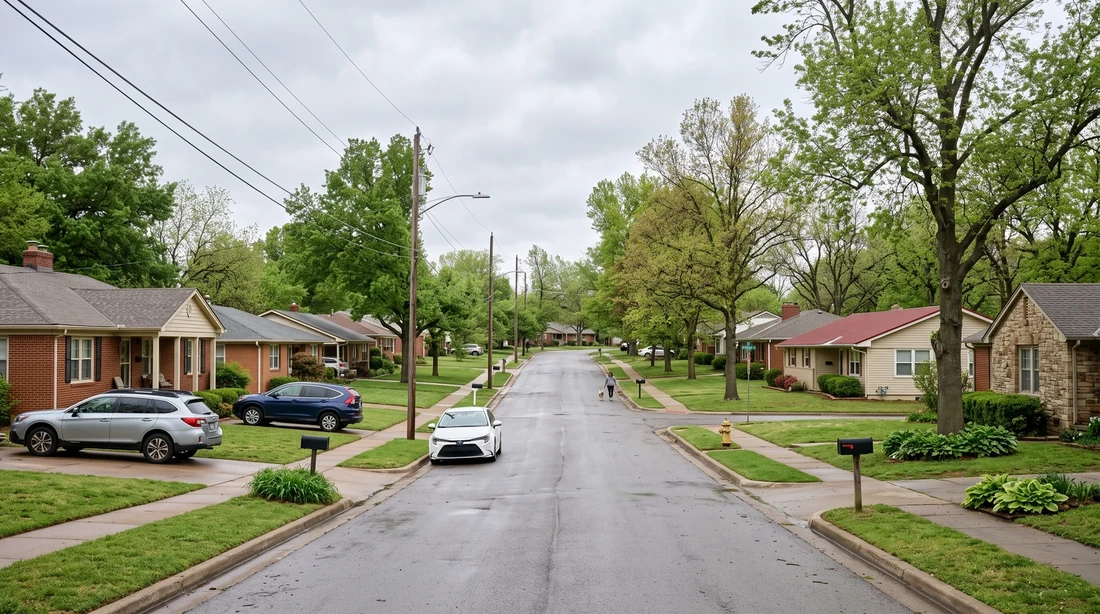
Oklahoma City short term rental laws changed on February 16, 2025. Home-sharing rentals (stays of 30 consecutive days or fewer) now need a city license, cap occupancy at 16 guests, and are limited to 10 rental nights per month unless the operator secures a $300 special exception. Rentals booked exclusively for stays longer than 30 days need no home-sharing license at all.
If you host on Airbnb or Vrbo in OKC — or you're a guest trying to book a place that won't get shut down mid-trip — the rules that took effect in early 2025 rewrote what's legal. National guide sites summarize this query with conflicting numbers (even the license fee is reported two different ways). We hold OKC licenses across 11 furnished homes, so here is the honest, locally-verified version, including the carve-out most guides skip.
The city is now engaging a consultant to identify unlicensed rentals, run a 24-hour complaint platform, and document violations — an unlicensed listing is more exposed in 2026 than it has ever been.
What Changed in the Oklahoma City Short-Term Rental Ordinance
Oklahoma City strengthened its home-sharing ordinance on February 16, 2025, adding hard occupancy and night caps to a licensing framework that first arrived in 2019. The single biggest change: home shares are now capped at 10 rental nights per month unless the operator obtains a special exception permit.
The base ordinance dates to January 15, 2019. It created the Home Sharing License and set safety requirements. Operators who were active before that date received a grandfather clause of at least 10 years, per the Oklahoma City Metropolitan Association of Realtors.
The 2025 update layered new limits on top of that framework. Here is the reference table national guides tend to get muddled.
| Rule | Before Feb 16, 2025 | After Feb 16, 2025 |
|---|---|---|
| Rental nights per month | No monthly night cap | Capped at 10 nights/month without a special exception |
| Maximum occupants at one time | Not explicitly capped | 16 occupants maximum |
| Parking | Not specified in ordinance | At least one space per four guests |
| Concentration per block | Not limited | Special-exception STRs limited to 10% of homes per block |
| Enforcement | Complaint-based, limited | Consultant + 24-hour complaint platform, violation documentation |
| Penalty for violations | Standard code enforcement | Board of Adjustment can deny applications/renewals for one year |

Do You Need a Home-Sharing License in OKC?
You need an Oklahoma City Home Sharing License for each unit you rent for 30 consecutive days or fewer per guest. That is the city's definition of "home sharing" — and it draws the line that decides everything else.
Properties rented exclusively for terms longer than 30 days do not need a home-sharing license at all. That's straight from Airbnb's official OKC rules page, and it's the carve-out that matters most for the readers we serve: extended-stay guests, relocating families, and insurance-displaced households. If a home only takes 30-plus-night bookings, the home-sharing night caps and permit rules simply don't apply.
This is exactly how our extended-stay homes and insurance-housing placements operate. A family living somewhere for four months after a fire is not a "home share" under the ordinance — it's a long-term furnished rental, and that distinction keeps those stays clean and uncomplicated.
The license fee: why you'll see two different numbers
Here's where the guides conflict. Airbnb's official OKC page lists the home-sharing license fee at $24 per year. Local news outlet okcfox reported the annual fee as $100.80 per property after the 2025 update. We won't assert one number as gospel here, because the authoritative source is the city itself.
Check the current amount on okc.gov's Home Sharing License page before you apply. A separate license is required for each unit — one license does not cover a portfolio.
When You Need the $300 Special Exception
A special exception from the Board of Adjustment — with a $300 fee — is required when the home is not your primary residence, or when it sits in a Historic Preservation district. This is governed by Municipal Code Chapter 59, Sections 59-4250.1 and 59-9350.38.1.
Two situations trigger it:
- Non-primary residence. If you don't live in the home, you need the special exception to home-share it — and it's the same permit that lifts the 10-nights-per-month cap.
- Historic Preservation district. In an HP district, the property must be your primary residence and you must be on site during the rental. There's no absentee home-sharing in these neighborhoods.
Remember the concentration rule: special-exception STRs are limited to 10% of the homes on any given block. If your block is already at the cap, a new application can be denied even if everything else is in order.
Booking a stay in OKC and want a licensed, code-compliant home? Our 11 furnished homes carry OKC licenses, working smoke and CO detectors, fire extinguishers, and in-home info packets. See what's available for your dates.
The Safety Requirements Every Listing Must Meet
Every licensed OKC short-term rental must have an operable smoke detector, carbon monoxide detector, and fire extinguisher, plus an in-home info packet. This is the part guests should care about most, because it's the difference between a real operator and a listing that could disappear overnight.
The info packet must include the host's contact information, a local point of contact, safety information, and the house rules. And there's a size threshold: rentals of more than four bedrooms require an International Building Code compliance review. Larger homes carry a higher standard — worth knowing if you're booking a big house for a group.
The OKC Hotel Tax on Your Booking
Oklahoma City charges a 5.5% hotel tax on the listing price plus cleaning fees for the first 29 nights of a stay. On Airbnb, the platform collects and remits it on the host's behalf. On other platforms and direct bookings, the host owes it themselves.
This is another reason the 30-day line matters: the tax applies to those first 29 nights, which maps directly to the home-sharing window. A stay booked as a long-term rental beyond 30 days operates on a different footing entirely. For how lodging taxes work in a neighboring city, see our guide to the Norman hotel tax increase.
What This Means If You're Booking a Stay in OKC
For guests, the enforcement crackdown is actually good news — it pushes bookings toward operators who did the paperwork. An unlicensed listing can be flagged through the city's new 24-hour complaint platform, and a violation can cost that operator their permit for a year. You don't want to be the family that arrives to a shuttered listing.
Booking a licensed operator means the smoke and CO detectors work, there's a fire extinguisher, and there's a real local point of contact if something goes wrong at 11 PM. Across our 11 OKC homes we hold a 4.8-star average from 1,247 verified guest reviews on Airbnb, with two homes carrying Airbnb's "Guest Favorite" badge. Homes sleep 2 to 16-plus and start at published from-rates of $225–$425/night, with up to 35% direct-booking savings on stays of 4-plus nights.
If you're comparing options city by city, our companions on this topic go deeper: the full OKC short-term rental rules breakdown, the ongoing OKC Airbnb enforcement crackdown, and the Norman short-term rental license requirements next door.
A Worked Example: Hosting Under the New Night Cap
Say you own a non-primary-residence home in OKC and want to home-share it (this is hypothetical, for illustration). Without a special exception, you're capped at 10 rental nights per month — roughly a third of the calendar. At a hypothetical $200/night, that's a ceiling of about $2,000/month in rental nights before any fees or the 5.5% hotel tax.
To rent more nights, you'd need the $300 special exception from the Board of Adjustment — assuming your block isn't already at the 10% concentration cap. Compare that with renting the same home exclusively on 30-plus-night terms: no home-sharing license, no night cap, no special exception. A single four-month insurance placement or corporate stay can fill the calendar without touching the home-sharing rules at all. That math is why so many OKC owners move toward the extended-stay model.
Timeline: How OKC's Short-Term Rental Rules Evolved
| Date | What changed |
|---|---|
| January 15, 2019 | Base home-sharing ordinance takes effect; license and safety requirements created; 10+ year grandfather clause for prior operators |
| February 16, 2025 | 10-nights/month cap, 16-occupant max, parking rule, 10%-per-block concentration limit, and enforcement consultant take effect |
| 2026 and ongoing | 24-hour complaint platform active; consultant documenting unlicensed rentals; Board of Adjustment can deny renewals for a year after violations |
Terms You'll Hear, Decoded
- Home sharing — OKC's term for a rental of 30 consecutive days or fewer per guest; this is what needs a license.
- Special exception — a $300 Board of Adjustment approval required for non-primary-residence or Historic Preservation-district rentals; it also lifts the 10-night monthly cap.
- Board of Adjustment — the city body that grants (and can deny) special exceptions and can bar renewals for a year after violations.
- Hotel tax — OKC's 5.5% tax on listing price plus cleaning fees for the first 29 nights; Airbnb collects it, but direct/other-platform hosts owe it themselves.
- IBC compliance review — an International Building Code check required for rentals with more than four bedrooms.
When the Rules Don't Apply to You
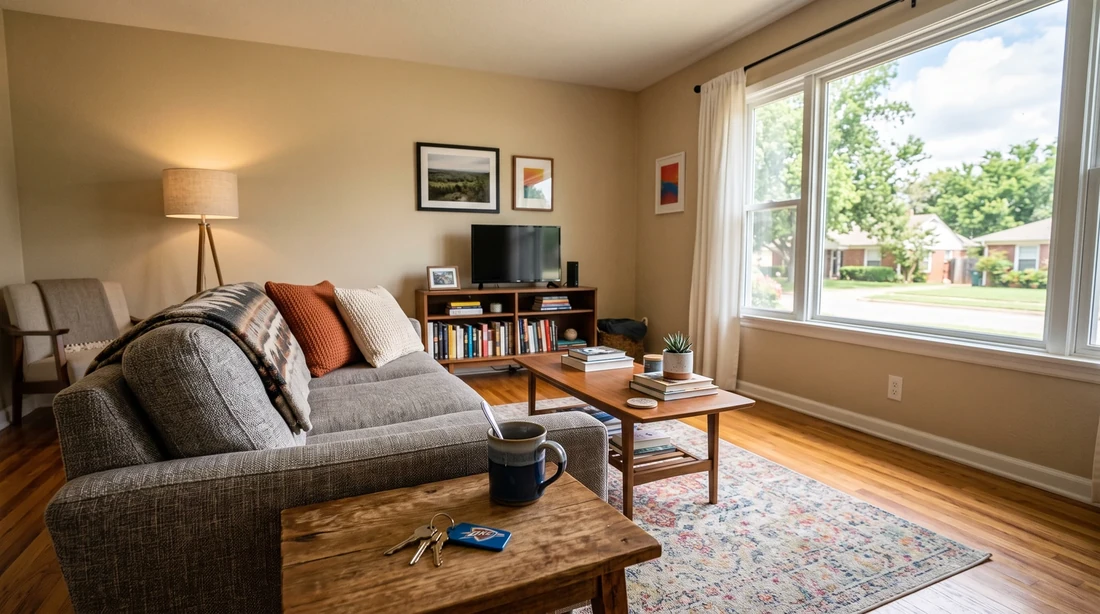
If you only ever rent your home for stays longer than 30 days, you're outside the home-sharing ordinance — no license, no night cap, no special exception. That's the honest carve-out, and it's the entire basis of extended-stay and insurance housing. If you're a guest staying a night or two for a Thunder game at Paycom Center or a weekend on Route 66 for the centennial, none of the host-side paperwork is your problem — you just want a licensed listing that won't vanish.
Where it does matter: hosts renting on nightly terms, families booking a multi-week furnished home, and anyone placing a displaced household. That's where working with a licensed local operator changes the outcome.
This guide is general information, not legal or tax advice; the City of Oklahoma City makes all licensing and code decisions. Confirm current requirements and fees at okc.gov.
Your Next Steps
- Confirm the current license fee and requirements for your address on okc.gov's Home Sharing License page — don't rely on a third-party guide's number.
- Determine which side of the 30-day line you're on: a nightly home share needs a license (and maybe the $300 special exception), while an exclusively 30-plus-day rental needs neither.
- Booking a licensed, code-compliant OKC home? Browse our furnished homes or call/text (405) 295-5052 for your dates.