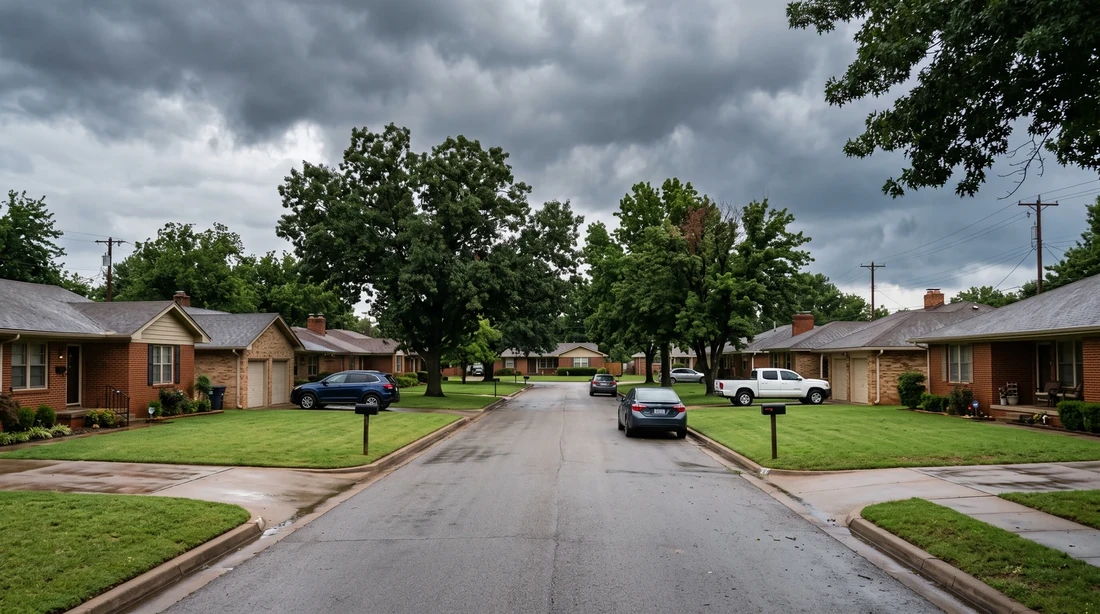
Oklahoma has the highest average home insurance rate in the United States for 2026. LendingTree's State of Home Insurance report, published June 8, 2026, put the state average at $5,298 a year, 121.2% above the national average of $2,395. NerdWallet's 2026 data goes higher still, near $7,255. If a storm displaces you, every one of those dollars matters.
Key Takeaways
- LendingTree's June 8, 2026 report put Oklahoma's average home insurance premium at $5,298 a year, 121.2% above the $2,395 national average.
- NerdWallet's 2026 data, using $400,000 dwelling coverage, reported an Oklahoma average of $7,255, with State Farm at $4,610 and Travelers at $5,715.
- Oklahoma's top 20 homeowners insurers paid $129 in claims per $100 of premium in 2023 and $97 in 2024.
- In a hypothetical four-month displacement, two hotel rooms at about $180 nightly for 122 nights total roughly $21,960, before pet fees or meals.
This guide covers what the June 2026 LendingTree report and NerdWallet's 2026 data say about Oklahoma home insurance rates, why the state pays the most, what the premium buys you when a storm forces you out of the house, a worked displacement example, and when a furnished home is the wrong call.
You already know your premium climbed again. Now the national numbers confirm what OKC homeowners feel every renewal: Oklahoma home insurance rates in 2026 are the most expensive in the country. Different studies use different math, so the headline figure ranges from about $5,300 to $7,255. Every ranking lands Oklahoma at or near the top.
That squeeze matters most at the exact moment a hailstorm or tornado forces you out of your house. When a claim pays for temporary housing, the gap between a smart stay and an expensive one is real money. That is why we've laid this out plainly below.
Oklahoma's peak severe-weather window is April through June. That's when displacement claims spike, and when the difference between a two-room hotel and a furnished home decides how far your loss-of-use dollars stretch.

What Did the June 2026 Report Say?
LendingTree's report, released June 8, 2026, ranked Oklahoma as the single most expensive state for home insurance, using data from Quadrant Information Services collected in February 2026. The benchmark: a home with $350,000 in dwelling coverage and a $1,000 deductible.
The core findings, straight from the report:
- $5,298 per year: Oklahoma's average annual premium.
- 121.2% above the national average of $2,395.
- Rates rose 5.5% in 2025 alone.
- Rates climbed 54.5% cumulatively from 2020 to 2025.
NerdWallet's 2026 data, current as of March 4, 2026, used a larger $400,000 dwelling-coverage benchmark and reported an even steeper Oklahoma average of $7,255 a year against a national average of $2,490 (nearly three times the norm). Among large insurers, NerdWallet found the lowest Oklahoma rates at USAA ($4,365, military families only), State Farm ($4,610), and Travelers ($5,715).
The gap between $5,298 and $7,255 isn't a contradiction. It's methodology: different coverage amounts, different insurer samples, different data months. The takeaway holds across both. Oklahoma homeowners pay more than anyone else in the country.
Industry-wide loss data shows the same strain beyond Oklahoma:
In 2023, insurers disbursed $1.11 in claims for every dollar received in premiums, indicating a financial strain within the home insurance sector.
Wikipedia: Home insurance
Why Does Oklahoma Pay the Most?
The plain answer is weather. Oklahoma sits in the heart of tornado alley, and hail, straight-line wind, and severe convective storms drive claim costs far above the national baseline. Insurers price that risk into every policy statewide.
The Oklahoma Insurance Department (OID) published loss data on May 28, 2025 that shows the pressure directly. In 2023, the state's top 20 homeowners insurers paid $129 in claims for every $100 of premium they collected, losing money on the line. In 2024 that improved to $97 per $100, but the multi-year strain is what pushes rates up.
Here is the part many homeowners don't realize. The OID lacks statutory authority to set or approve homeowners rates except in extraordinary circumstances. Oklahoma uses an open-competition model shared by 38 states and territories, meaning the market sets prices, not the regulator. More than 100 licensed companies write homeowners policies in Oklahoma and over 50 actively write new business, so shopping matters, but no state office is capping the number.
| Period | What happened | Figure |
|---|---|---|
| 2020 to 2025 | Cumulative rate increase (LendingTree) | +54.5% |
| 2023 | Claims paid per $100 premium (top 20 insurers, OID) | $129 |
| 2024 | Claims paid per $100 premium (improved, OID) | $97 |
| 2025 | Single-year rate increase (LendingTree) | +5.5% |
| Feb to Mar 2026 | State average premium reported | $5,298 to $7,255 |
What Does This Mean If You're an OKC Homeowner Facing a Storm Claim?
Paying the nation's highest premium doesn't change how your claim pays out. It does make stretching the loss-of-use portion far more important. When a covered event makes your home unlivable, most policies include Additional Living Expenses (ALE), also called loss of use, to cover temporary housing above your normal costs. That budget is finite, and how you spend it is your decision.
The trap is the extended hotel stay. A hotel is easy on night one. By week three, two adjoining rooms at metro rates quietly drain a budget that a single furnished home would have stretched for months, with a kitchen so you're not buying every meal out, and laundry so you're not adding a service line to the claim.
This is the exact situation our insurance housing homes are built for. BnB OKC operates 11 furnished homes across the metro, holds a 9.5 out of 10 average across 1,580 verified guest reviews on Airbnb and Vrbo, offers monthly rates on stays of 30+ nights, and works with Alacrity Solutions on insurance placements. Homes sleep from 2 to 16+, several are dog-friendly, and check-in is 4:00 PM with checkout at 11:00 AM.
Here is the honest cost picture homeowners face after displacement.
| Factor | Two hotel rooms | Furnished home (30+ nights) |
|---|---|---|
| Nightly feel | Cheap night one, costly by week three | Monthly rate, flat and predictable |
| Kitchen & laundry | Rarely; meals eaten out add up | Full kitchen and laundry included |
| Family & pets | Cramped; pet fees per room | Sleeps 2 to 16+, several dog-friendly homes |
| ALE efficiency | Burns budget fast | Stretches the same dollars further |
| Direct billing | Sometimes | Available with carrier/TPA authorization |
Displaced by an Oklahoma storm and watching your ALE budget shrink? Check furnished-home availability for your claim dates before another hotel week burns the budget.
What Does Stretching the Claim Look Like in Practice?
Say a hailstorm damages your roof and ceiling in May, and your adjuster approves four months of temporary housing for a family of four plus a dog while repairs run. The numbers below are illustrative. Your carrier makes all coverage decisions.
- Two hotel rooms at roughly $180/night combined: $180 for 122 nights comes to about $21,960 before pet fees, and with no kitchen, so most meals get eaten out, adding hundreds more per week.
- A furnished BnB OKC home on a monthly insurance rate, with a full kitchen and laundry, is typically well below that four-month hotel total. The flat monthly figure is what an adjuster can approve cleanly.
Even in the ballpark, the furnished home leaves more of a finite ALE budget for the parts of daily life a hotel can't cover. That's the whole point of stretching the claim: same coverage, more livable months.
For longer displacements, our extended stays pages and pet-friendly rentals in OKC show which homes fit a family and a dog for a multi-month repair.
How to Stretch Your Loss-of-Use Budget, Step by Step
The order matters, because the first hotel week is the one that quietly sets the pace.
- Find your ALE line. Pull your declarations page and read the loss-of-use limit. It's usually a percentage of your dwelling coverage, and that number is your temporary-housing budget.
- Check your deductibles. Oklahoma policies often carry separate, higher wind/hail deductibles, so know what comes out of pocket first.
- Compare the real cost. Put a four-month hotel total next to a monthly furnished-home rate for your family size and pets, meals and laundry included.
- Ask about direct billing. With carrier or TPA authorization, the housing provider can bill the carrier directly instead of you fronting the cost.
- Book a 30+ night stay before the hotel weeks pile up. A flat monthly rate is the figure an adjuster can approve cleanly.
What to Check Before You Commit to a Hotel
These are the places a displacement claim usually goes wrong.
- Treating night one as the price. A hotel is cheap on night one and costly by week three. Price the full repair window.
- Forgetting the meals. No kitchen means most meals get eaten out, which adds hundreds more per week to a finite ALE budget.
- Splitting a family across rooms. Two cramped rooms plus pet fees per room burn the budget faster than one home that sleeps the whole household.
- Comparing premium averages with different coverage behind them. LendingTree used $350,000 in dwelling coverage and NerdWallet used $400,000 in its benchmark. That is why the headline figures differ.
- Expecting the regulator to cap your rate. Oklahoma's open-competition model means the market sets prices, so shopping among the 100-plus licensed companies is the lever you control.
Terms you'll hear, decoded
- Additional Living Expenses (ALE) / loss of use: the part of a homeowners policy that pays your extra costs to live elsewhere while your home is unlivable after a covered loss.
- Dwelling coverage: the dollar amount your policy will pay to rebuild the structure. The benchmark studies use ($350,000 for LendingTree, $400,000 for NerdWallet) changes the quoted average.
- Deductible: what you pay out of pocket before coverage kicks in; Oklahoma policies often carry separate, higher wind/hail deductibles.
- Direct billing: when the housing provider bills your carrier or its third-party administrator directly. Only happens with carrier/TPA authorization.
- Open-competition rating: the model Oklahoma uses, where the market sets rates and the OID does not approve them except in extraordinary cases.
How this fits the bigger OKC picture
Rising costs are hitting Oklahoma housing from several directions at once. If you follow local policy news, our coverage of the Norman hotel tax increase and the OKC short-term rental rules tracks the same affordability pressures from the lodging side. And for a lighter note on what's drawing visitors to the metro this year, see the Route 66 centennial in OKC.
When Do You Not Need a Furnished Home?
If your repair is a one- or two-night fix (a small kitchen job, a quick roof patch), a hotel is the simpler call, especially if you have hotel loyalty points and no pets. Short, single-traveler displacements rarely justify a whole home.
A furnished home changes the outcome when the stay runs 30 nights or longer, when there's a family, when pets are involved, or when you need a kitchen and laundry to keep everyday costs off the claim. That's the line where stretching the nation's-highest-premium dollar pays off.

The Bottom Line
Oklahoma pays the most for home insurance in the country, and the loss-of-use line is where that premium does its real work after a storm. Pull your declarations page, find the ALE limit, and put a four-month hotel total next to a monthly furnished-home rate for your family size and pets, meals and laundry included.
Visit our insurance housing page or call or text (405) 870-2146 for same-day options if you're displaced now.
This guide is general information, not insurance or legal advice; your carrier makes all coverage decisions.