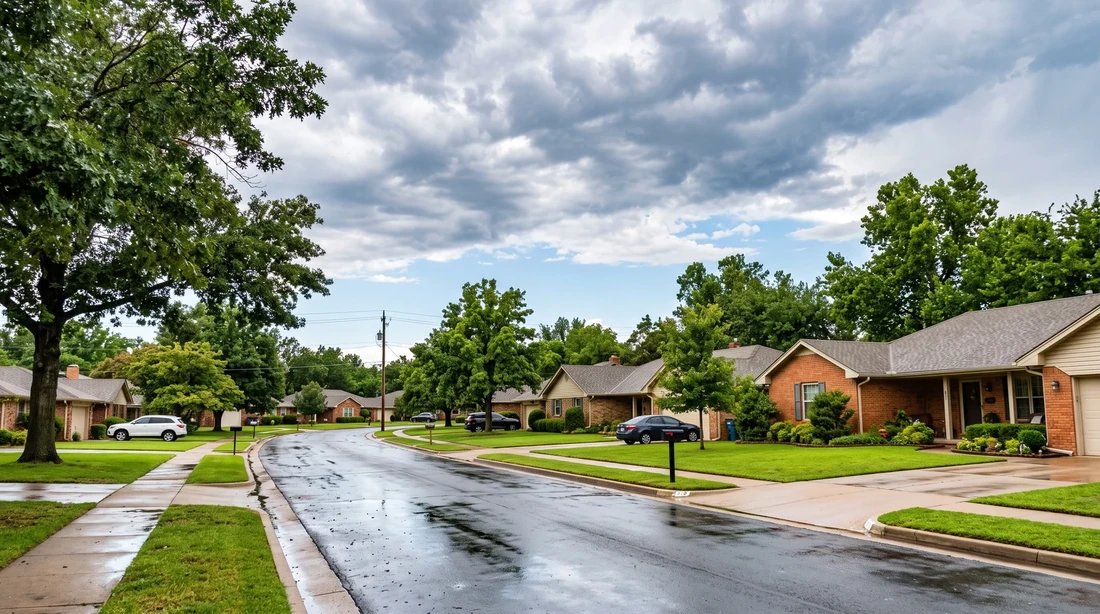
On June 24, 2026, Oklahoma Attorney General Gentner Drummond sued State Farm Fire and Casualty Company in Cleveland County District Court, alleging an internal "Hail Focus Initiative" designed to deny and underpay roof claims statewide. The allegations are unproven. If a covered loss displaces you during a dispute, your policy's loss-of-use coverage may still pay for temporary housing.
Key Takeaways
- Oklahoma AG Gentner Drummond sued State Farm on June 24, 2026, alleging an internal "Hail Focus Initiative"; allegations are unproven.
- The lawsuit does not pause, reopen, pay, or decide any individual claim; policy language and evidence still control.
- Loss-of-use or ALE coverage may pay temporary housing when a covered loss makes a home unlivable.
- Hypothetically, two hotel rooms at $189/night for 120 nights total $45,360; published from-rates run $165 to $425/night.
This guide covers what the State Farm lawsuit over Oklahoma hail claims says, how the case got to this point, what it does and does not change for your own claim, your rights while a dispute drags on, and where temporary housing fits if damage forces you out of your home.
If you are an Oklahoma City homeowner mid-fight over a hail-damaged roof, this news landed at exactly the wrong moment. The short version: the lawsuit does not decide your individual claim and it does not pause it. It does describe, in the state's own words, the pattern many homeowners felt they were up against.
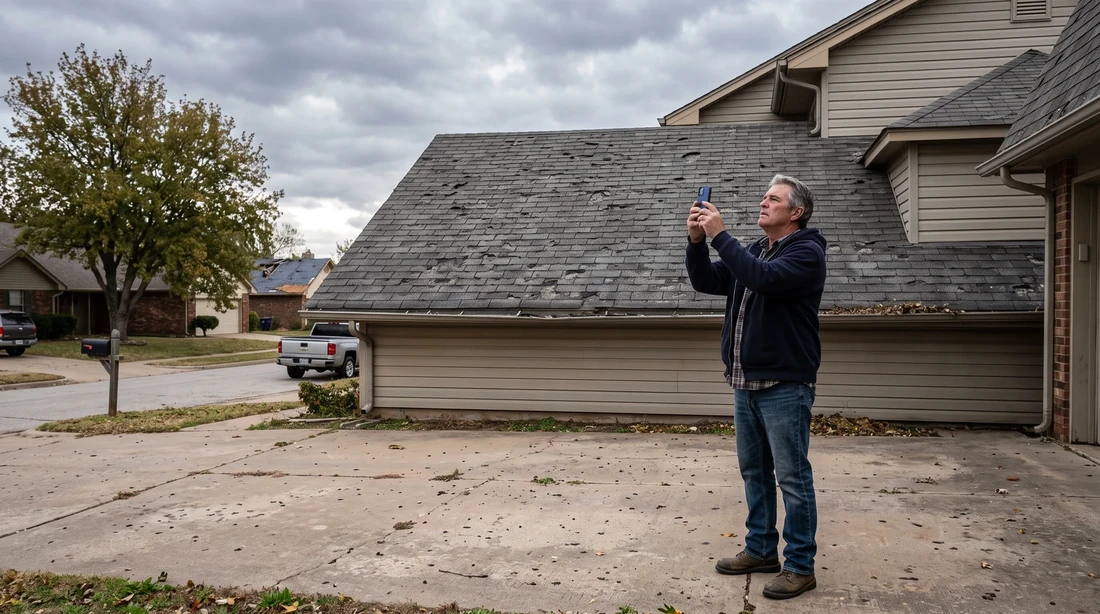
There is no countdown on this lawsuit. There is a real clock on your own claim. Documentation windows, appraisal deadlines, and your policy's proof-of-loss requirements all keep running. Photograph damage, keep every receipt, and do not let a slow dispute erase the record.

What Does the State Farm Oklahoma Hail Claims Lawsuit Allege?
The suit claims State Farm ran an internal program called the "Hail Focus Initiative" built to reduce roof-replacement approvals and minimize payments on hail and wind claims. Those are the state's allegations, and they are unproven in pending litigation.
According to the Attorney General's filing, State Farm marketed replacement-cost coverage to Oklahomans while allegedly applying undisclosed internal standards and "outcome-oriented engineering reviews." The state says those inspections were steered toward denial rather than an objective look at the damage.
The legal claims are broad. Drummond brought counts under the Oklahoma Consumer Protection Act and the Oklahoma Racketeer-Influenced and Corrupt Organizations Act (RICO), plus civil conspiracy and unjust enrichment. The relief sought includes injunctive relief, civil penalties, disgorgement, and restitution.
In the AG's words: "This case is about more than individual claim disputes. The allegations describe a corporate scheme that threatens the integrity of Oklahoma's insurance marketplace."
State Farm, for its part, has publicly stated it paid more than $1 billion to Oklahoma customers for wind and hail damage over the past two years. Both things can be reported at once, the state's allegations and the company's payment figure. A court has decided neither.
On the homeowner's obligations after a loss, one insurance overview notes:
After a loss, the insured is expected to take steps to mitigate the loss.
Wikipedia: Home insurance
How Did the Case Get Here?
This lawsuit did not appear out of nowhere. It grew out of a private homeowner case, an intervention fight, and a state Supreme Court ruling that forced the AG to file on his own.
| Date | What happened |
|---|---|
| April 17, 2025 | Two homeowners sue State Farm, alleging breach of contract, bad faith, constructive fraud, and negligent misrepresentation. |
| December 30, 2025 | A district court permits the Attorney General to intervene in the homeowner case. |
| June 23, 2026 | The Oklahoma Supreme Court issues a writ of prohibition blocking the AG's intervention. |
| June 24, 2026 | AG Drummond files a new, separate lawsuit against State Farm Fire and Casualty in Cleveland County District Court. |
So the new suit is the AG's response to being removed from the earlier action. It is a fresh, standalone case rather than a continuation of the homeowners' file. The underlying private case remains its own matter.
What Changes for Your Claim, and What Stays the Same?
A state lawsuit against an insurer does not automatically reopen, pay, or decide any individual claim. Your claim still lives or dies on your policy language, your evidence, and the adjuster's determination. The carrier makes coverage decisions. A court, and never this article, will rule on the allegations.
Here is the honest before/after picture for a homeowner in an active dispute.
| Before June 24, 2026 | After the AG's filing |
|---|---|
| Roof-claim disputes felt like one homeowner vs. a national carrier. | The state has publicly described an alleged statewide pattern, though the allegations are unproven. |
| Your evidence and policy terms decide your claim. | Still true. The lawsuit doesn't pay or reopen your file. |
| Appraisal, proof-of-loss, and deadline rules apply. | Unchanged. Keep documenting and meet every deadline. |
| Displacement housing runs through your loss-of-use coverage. | Unchanged. If a covered loss makes your home unlivable, ALE rules still govern. |
The practical takeaway: keep treating your claim like your claim. The news may validate what you have felt. It does none of your paperwork for you.
What Are Your Rights While a Roof Claim Drags On?
Oklahoma homeowners have the right to document, dispute, and escalate a claim they believe was underpaid, and to use the coverages they paid for. Roof and hail disputes are usually about the roof itself. Severe storm damage can also make a home unlivable, which is where temporary-housing coverage comes in.
If your home is damaged badly enough that you cannot live in it during repairs, most homeowner policies include loss-of-use coverage, also called Additional Living Expenses (ALE). That is the money that pays for a temporary place to stay above your normal living costs. It applies to the housing side of a covered loss, separate from the roof-repair dispute.
None of what follows promises an outcome. It keeps your record clean and your options open while the bigger legal story plays out around you.
Displaced by covered storm damage while your claim is disputed? If your loss-of-use coverage is approved, we work with adjusters and TPAs on direct-billed furnished housing across the OKC metro, real homes with kitchens and laundry instead of a hotel room for four months.
See insurance & displacement housing Call or text (405) 870-2146
How to Protect Your Claim and Your Housing, Step by Step
- Report the loss and get a claim number. Photograph everything before you touch it.
- Get your own documentation. Independent roofer estimates and dated photos mean you are relying on more than the carrier's inspection.
- Ask about loss of use if you are displaced. Ask specifically whether ALE applies and what it covers.
- Use the dispute process. If you disagree with the payout, ask about the appraisal or dispute process in your policy.
- Escalate if you believe you were treated unfairly. You can file a complaint with the Oklahoma Insurance Department.
- Keep every displacement receipt. Dated photos, independent estimates, your claim number, and every housing receipt belong in one folder.
Where Does Temporary Housing Fit If a Hail Loss Displaces You?
A furnished home in OKC typically stretches a loss-of-use budget further than 30-plus nights in a hotel, because a covered family gets a kitchen, laundry, and separate bedrooms instead of paying restaurant and per-diem premiums nightly. That matters most when a repair timeline stretches into months, which roof and structural work often does.
Here is how the housing options compare while you wait out a repair or a dispute.
| Option | Best for | Watch-outs |
|---|---|---|
| Hotel room(s) | 1-3 nights, single traveler, or the very first night after a loss | Costs stack fast for families; no kitchen burns ALE on takeout |
| Extended-stay hotel | 2-4 weeks, one or two people | Small footprint; limited cooking; tight for families with kids or pets |
| Furnished home (direct-billed) | Families, 30+ nights, pets, groups needing a kitchen and laundry | Requires carrier/TPA authorization to bill directly |
| Staying with family | Short gaps, tight budgets | Hard to sustain for months; may reduce reimbursable ALE |
A hypothetical worked example
Here is a clearly hypothetical example to show the math. It is no promise about any real claim. Say a covered storm damages a family's roof badly enough that repairs and interior drying take four months, and their loss-of-use coverage is approved.
Two hotel rooms at roughly $189/night for a family of five would run about $189 times 2 rooms times 120 nights, or $45,360 before the extra restaurant costs of having no kitchen.
A furnished multi-bedroom home billed monthly for the same four months, with a full kitchen and laundry, commonly lands well below that hotel total while keeping the family together in one place. Our published from-rates run $225-$425/night depending on the home, with monthly rates on 30+ night stays. The exact figures depend on the home, your dates, and what your carrier authorizes. The gap between a kitchenless hotel and a real home over four months is the whole point.
Every hotel night with no kitchen tends to burn ALE budget that a furnished home would stretch. Ask your adjuster what your policy caps or limits look like before you commit.
What to Watch for While the Lawsuit Plays Out
- Assuming the suit reopens your file. It does not. Your evidence and policy terms still decide the claim.
- Letting deadlines slide. Appraisal windows and proof-of-loss requirements keep running during the litigation.
- Relying only on the carrier's inspection. Independent roofer estimates and dated photos give you a record of your own.
- Fronting housing costs without asking about direct billing. Direct billing happens only with carrier or TPA authorization, so ask early.
- Booking hotel nights by the week for a months-long repair. That is how a loss-of-use budget runs out before the roof is done.
Terms You'll Hear, Decoded
- Additional Living Expenses (ALE) / loss of use: the coverage that pays for temporary housing and extra costs when a covered loss makes your home unlivable, above your normal living expenses.
- Replacement-cost coverage: coverage that pays to replace damaged property (like a roof) rather than its depreciated value; a central issue in the lawsuit's allegations.
- Direct billing: when the carrier or third-party administrator pays a housing provider directly instead of reimbursing you; it only happens with carrier/TPA authorization.
- Writ of prohibition: a higher court's order stopping a lower court from a specific action; here, blocking the AG's intervention in the private case.
- Disgorgement: a remedy forcing a defendant to give up money it allegedly gained improperly; one of the reliefs the AG is seeking.
For more on how displacement housing and adjuster billing work, see our insurance housing hub and extended-stay options. If you are following other Oklahoma news, we also track OKC short-term rental rules and the Route 66 Centennial in OKC.
The Bottom Line
The AG's suit describes an alleged pattern. It decides nothing about your roof. Check your policy's loss-of-use line and confirm whether ALE applies to your situation and what it caps at; the carrier decides coverage, so get it in writing. Gather your documentation in one folder. If a covered loss displaced you and ALE is approved, call or text (405) 870-2146 or request options through our insurance-housing page. We coordinate direct billing with authorized adjusters and TPAs.
This guide is general information, not insurance or legal advice; your carrier makes all coverage decisions, and the lawsuit's allegations are unproven in pending litigation.