Key Takeaways
- Three layers can pay: your policy's ALE or loss-of-use coverage, FEMA Individual Assistance after a presidential declaration, and Red Cross shelters.
- Major tornado rebuilds and apartment re-leases in the OKC metro typically run 4 to 12 months, far longer than families plan.
- A furnished home runs $2,500 to $5,500 monthly by size, versus $4,500 to $7,500 for a hotel suite or two rooms with taxes.
- Your carrier, not city inspectors, makes the habitability call for ALE; request that determination in writing and keep every receipt.
Temporary housing after a tornado in Oklahoma typically comes from three sources: your policy's Additional Living Expenses (ALE) coverage, FEMA assistance after a presidentially declared disaster, and Red Cross shelters for the first nights. Most major tornado rebuilds run 4-12 months, so a furnished monthly rental usually stretches your housing budget furthest.
What this guide covers: the three layers that can pay for your housing, every housing option with realistic monthly costs, where intact inventory sits in the metro after a storm, and the same-week placement path local families use when hundreds of households hit the market at once.
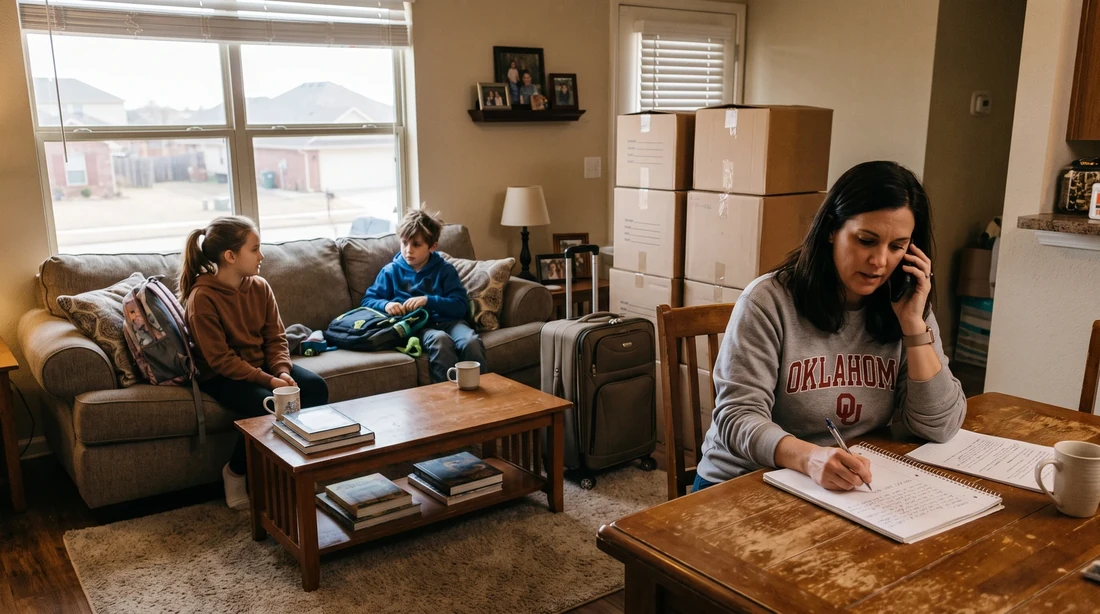
The sirens stopped an hour ago, your apartment has no roof, and your kids are asking where everyone sleeps tomorrow. That question has a real answer with real steps. In the OKC metro, families who act in the first week typically have far better housing options than families who ride out a month of hotel nights before making a plan.
Oklahoma's tornado season peaks April through June, which means hundreds of displaced households often enter the housing market the same week you do. If a federal disaster is declared, FEMA registration windows typically run about 60 days from the declaration date. And every unplanned hotel night burns ALE budget a furnished home would stretch.

Why Does a Tornado Displace You Differently Than Other Claims?
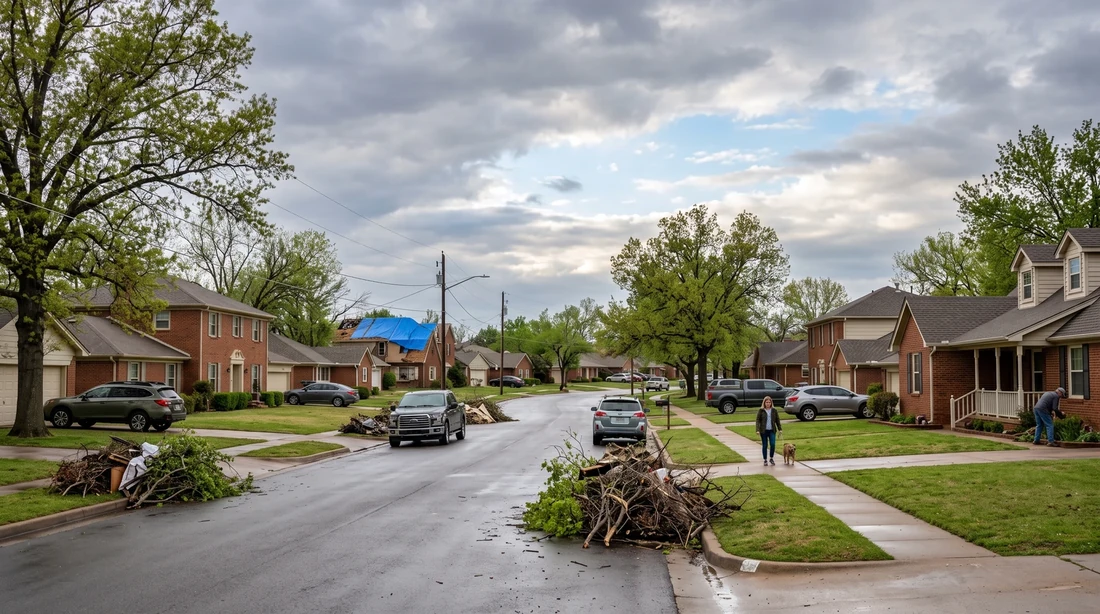
A single EF3 tornado can push hundreds of Oklahoma households into the housing market in one evening, all competing for the same rooms within a 20-minute drive of the damage path.
That is the core difference from a fire. A house fire displaces one family into a normal market with normal vacancy. A tornado displaces block after block at the same moment, and everyone starts dialing the same hotels within hours of the all-clear.
Your neighbors aren't the only competition. After a metro tornado, out-of-town catastrophe adjusters, roofing crews, tree services, and utility mutual-aid teams all book rooms too. The recovery workforce alone can absorb an extended-stay hotel's entire inventory before the weekend.
Spring makes it worse, because tornado season overlaps OKC's biggest hotel weekends. The OKC Memorial Marathon lands in late April, and the Women's College World Series fills Devon Park (and thousands of hotel rooms) in late May and early June. A storm that hits during either one drops displaced families into a hotel market that was already near capacity before the sirens sounded. Fall storms can collide with the State Fair of Oklahoma in September the same way.
Here's a paradox that works in your favor. A tornado's damage path is often less than a mile wide. Two miles off the path, homes are untouched, utilities work, and the metro's furnished housing inventory is fully intact. After an Oklahoma tornado, housing rarely runs out entirely. Speed is the problem. The families who lock intact inventory in the first week get it, and the families who wait choose from what's left.
Claim handling changes too. Carriers deploy catastrophe (CAT) teams after major tornadoes, and your adjuster may be carrying dozens of files at once. Callbacks slow down. That makes your own documentation (photos, receipts, written requests) matter more than it would on an ordinary claim.
Finally, rebuild timelines stretch. When an entire metro needs framers, roofers, and electricians in the same season, repairs that would take three months in a quiet year can take eight. Since the season peaks April through June, displacement often lands right across the end of the school year, which changes where you should stay as well as how long.
On how catastrophes can affect the accuracy of claim estimates:
In some cases, estimates can be too low because of "demand surge" after a catastrophe.
Wikipedia: Home insurance
Where Should You Stay Tonight, and in the First 72 Hours?
Your first-night decision is temporary by design. A shelter, family, or a 2 to 3 night hotel booking all work, and none of them locks you in.
After significant Oklahoma tornadoes, the American Red Cross and local churches and schools typically open shelters within hours. They're free, safe, and a legitimate bridge while you make calls. Staying with family nearby works the same way. It buys you a calm week to plan, and it isn't meant to last six months.
If you book a hotel, book short. Two or three nights is enough to open your claim and see your options. Booking a week at post-storm surge pricing spends ALE budget you'll want later, and ALE reimbursement typically runs on receipts. So start a receipts folder from the first dollar: gas, meals, toiletries, pet boarding, everything.
Know who decides if you're displaced. City inspectors may red-tag or yellow-tag structures after a storm, but your carrier makes the habitability call for ALE purposes, typically based on the adjuster's inspection. A red tag is strong evidence; a power outage alone for a day or two often isn't enough on its own. Ask your adjuster for the habitability determination in writing, since every ALE dollar hangs on it.
Before you leave the property (only if it's safe and you're cleared to enter, and never re-enter a red-tagged structure), try to take:
- IDs, medications, phone chargers, and 3 days of clothes
- Your insurance declarations page, or at least your carrier app login
- Photos and video of every damaged room and belonging, before tarping or debris removal changes the scene
If furniture and belongings survived but the building didn't, ask your adjuster early how storage is handled. Storage-unit costs during displacement are sometimes reimbursable under ALE or handled inside the contents claim. Carriers differ, so get the answer before you sign a storage contract, and keep those receipts with the rest.
Hold onto one phrase from day one: the 'A' in ALE means additional. Policies typically reimburse costs above your normal living expenses, like the hotel you don't usually pay for and the restaurant meals above your normal grocery spend. Your entire cost of living isn't covered. Everything in this guide is built around stretching that specific number.
Who Pays for Tornado Displaced Housing: ALE, FEMA, or Both?
Three sources can pay for tornado displaced housing in Oklahoma: your own policy's loss-of-use coverage, FEMA Individual Assistance after a presidential disaster declaration, and voluntary agencies like the Red Cross.
Layer one: your policy's ALE / loss-of-use coverage
If your home or apartment is uninhabitable from a covered windstorm loss, most homeowners and renters policies include loss-of-use coverage that pays additional living expenses: lodging, extra food costs, laundry, mileage, often pet boarding. Homeowners policies commonly set it as a percentage of dwelling coverage; renters policies commonly set it as a percentage of the personal property limit. The full mechanics live in our guide to loss of use coverage explained.
Renters: your landlord's policy covers the building and leaves your housing to you. Your own renters policy is the mechanism that pays for where you sleep. Here's exactly how renters insurance covers temporary housing. Ask your adjuster for your ALE limit in writing on the first call, and ask if the carrier issues advances. Many do after catastrophes.
Homeowners: the wind/hail deductible wrinkle
Many Oklahoma homeowners policies carry a separate wind/hail deductible, often set as a percentage of the dwelling limit. On a $300,000 dwelling, a 1 to 2% wind deductible is $3,000 to $6,000 before the property claim pays anything. Families often miss what comes next. That deductible typically applies to the dwelling and contents portions, and it usually isn't taken out of each ALE receipt.
Many carriers reimburse loss-of-use expenses without netting the deductible against them, but handling varies. Ask your adjuster how yours applies, in writing, before you assume your first month of housing is coming out of pocket. Homeowners ALE limits, set as a percentage of dwelling coverage, are also usually meaningfully larger in dollars than renters limits, which changes which housing options fit.
Layer two: FEMA Individual Assistance (declared disasters only)
FEMA housing help exists only after the President issues a major disaster declaration for your county with Individual Assistance, and not every Oklahoma tornado gets one. Plenty of damaging storms stay below the declaration threshold, which means your insurance is the whole game.
When a declaration does come, four things matter:
- Register even if you're insured. FEMA cannot duplicate insurance benefits, but it can cover documented gaps after your claim settles, including a denied or exhausted ALE claim. Keep every settlement and denial letter.
- Transitional Sheltering Assistance (TSA) is sometimes activated, letting eligible households stay in participating hotels with FEMA paying the hotel directly. Treat it as a bridge measure. It won't serve as a housing plan.
- FEMA rental assistance typically covers an initial period of rent for a temporary place, with extensions possible if you document continuing need. It pays toward rent. You still have to find the unit, in the same tightened market as everyone else.
- SBA disaster loans often open alongside a declaration. These are low-interest loans from the U.S. Small Business Administration, available to homeowners for rebuilding and to renters for destroyed personal property. You do have to repay it. If FEMA refers you to the SBA, completing that application can matter for eligibility for certain further assistance, so don't toss the referral letter.
Registration happens at DisasterAssistance.gov, and the window typically runs about 60 days from the declaration. Missing it usually closes the door.
Layer three: tornado victims housing when you're uninsured or denied
Without coverage, the sequence is FEMA (if declared), then voluntary agencies: Red Cross financial assistance, local long-term recovery groups that form after major Oklahoma disasters, and 211 for referrals. If you have coverage but the carrier says no, don't stop at the first answer. Our guide on what to do when insurance denies temporary housing walks the escalation path, including the Oklahoma Insurance Department's consumer assistance line.
If you're self-paying while a claim or FEMA application processes, direct booking matters. BnB OKC's direct booking rates save up to 35% on stays of 4+ nights versus platform pricing.
What Does Waiting Cost You?
Major tornado rebuilds and apartment re-leases in the OKC metro typically run 4 to 12 months, several times longer than most families plan for in week one.
Here's the sequence that plays out after a metro tornado, and what waiting does at each stage:
- Night one: hotels within 20 minutes of the damage path fill within hours; what's left prices up.
- Days 2 to 7: extended-stay properties book out as displaced households, CAT adjusters, and contractor crews compete for the same keys.
- Weeks 2 to 4: hotel and restaurant receipts stack toward your ALE ceiling while the repair estimate quietly grows from weeks into months.
- Months 2 to 6: contractor demand peaks metro-wide, rebuild dates slip, and families who never set extension terms face a second move in the middle of the claim.
| Stage | Typical window | What's happening | Your best housing move |
|---|---|---|---|
| Impact night | Hours 0-24 | Shelters open; nearby hotels fill; roads and utilities disrupted | Shelter, family, or a 2-3 night hotel booking; start the receipts folder |
| Stabilize | Days 1-3 | Claim opened; damage assessed; red-tag decisions made | Get your ALE limit in writing; register with FEMA if declared |
| Decide | Days 4-10 | Repair timeline emerges, almost always longer than first guessed | Price furnished monthly options before intact inventory is gone |
| Settle in | Weeks 2-4 | CAT adjusters cycle out; paperwork slows; hotel costs compound | Move into the 30+ night option; switch to monthly-rate math |
| Rebuild | Months 2-6+ | Contractor backlogs push completion dates | Extend month-to-month in writing; submit receipts monthly |
| Return | Final month | Punch lists, re-inspection, move-back logistics | Confirm checkout flexibility so you never move twice in a week |
Displaced by a tornado in the OKC metro, or placing a family who was? BnB OKC keeps 11 furnished homes across the metro and handles insurance placements, often same-week, with direct billing available when your carrier authorizes it.
See insurance housing options or call/text (405) 870-2146.
Where Can You Stay After a Tornado, and What Does Each Option Cost?
A furnished 3-bedroom home in the OKC metro typically costs less per month than 30 nights in a two-room hotel setup. It's also the only option on this list that comes with a full kitchen, laundry, and a yard.
| Option | Ballpark monthly cost | Best fit | What disqualifies it |
|---|---|---|---|
| Standard hotel (suite or 2 rooms) | $4,500-$7,500 with taxes | First 3-7 nights only | No kitchen, so food costs pile onto ALE; sells out fast after a metro tornado |
| Extended-stay hotel | $2,700-$4,200 | Solo or couple, 2-6 weeks | One room and a kitchenette for a whole household; books out fastest during catastrophes |
| Furnished home, monthly rate | $2,500-$5,500 by size | 30+ nights; households with kids or pets | Needs roughly a month's commitment; inventory tightens quickly after a storm |
| Staying with family | $0 to low | The first calm week | ALE typically reimburses only documented extra costs; strain compounds over months |
| New 12-month apartment lease | Market rent + deposits + furnishing everything | Total loss, no plan to return | Term outlasts many claims; you're buying furniture before the contents claim pays |
Hotels are the right first move and the wrong long-term one. Whether your policy pays for them at all, and for how long, is its own question, covered in does renters insurance cover hotel stays. The practical tornado-specific problem is availability. On a bad spring night, rooms near the path run out.
Extended-stay hotels price well for one or two adults. For a household, one room with a kitchenette for four months is where tempers and homework both fall apart. After a metro tornado these properties are the first thing the recovery workforce books solid.
Furnished homes are the monthly-math option. BnB OKC manages 11 furnished homes across the OKC metro, sleeping 2 to 16+, with published from-rates of $225 to $425/night, monthly rates on 30+ night stays, and a 9.5 out of 10 average across 1,580 verified guest reviews on Airbnb and Vrbo. Several homes are dog-friendly.
Because damage paths are narrow, there's usually intact inventory a short drive from your neighborhood, close enough to keep the same school pickup line and the same commute to the rebuild. We work with Alacrity Solutions on insurance placements, and direct billing is possible when your carrier or its TPA authorizes it. How that arrangement works behind the scenes is covered in how ALE housing companies work.
Staying with family makes a good bridge and a bad six-month plan. ALE typically reimburses actual, documented additional costs, so a vague arrangement with your in-laws usually recovers little. If you go this route past a few weeks, talk to your adjuster about what's reimbursable before assuming anything.
A new long-term lease makes sense mainly on total losses where you know you're not returning. Signing one in week two, before the repair timeline is real, is how families end up paying rent on an empty apartment in month five.
Where Is Intact Housing in the OKC Metro After a Storm?
Because damage paths are narrow, intact furnished housing in the OKC metro is almost always within a 20 to 30 minute drive of wherever the tornado hit.
Historically, many of the metro's worst tracks have run the Moore and south-OKC corridor along I-35, while northwest OKC (the Lake Hefner area, The Village, Gaillardia) sits well off those paths and holds furnished inventory. The reverse is also true. A west-metro storm through El Reno, Yukon, or Mustang leaves the central and northern neighborhoods untouched. The practical move is to pick housing just outside the damage zone but inside your daily radius of school, work, and the rebuild site.
| If the damage is in... | Intact housing typically nearby | Rough drive back to your area |
|---|---|---|
| Moore / south OKC (I-35 corridor) | NW OKC near Lake Hefner, The Village | ~20-30 minutes |
| Midwest City / Del City (near Tinker AFB) | North OKC and Edmond-side neighborhoods | ~20-25 minutes |
| El Reno / Yukon / Mustang (west metro) | NW OKC; homes about 6 minutes from Will Rogers Airport | ~20-30 minutes |
| Norman | South-metro intact pockets or NW OKC | ~25-40 minutes |
| Edmond / north metro | Central OKC, Paseo & Plaza districts | ~20-25 minutes |
Drive times are rough weekday estimates and stretch during debris-removal weeks when arterial roads are down to one lane. When you call about placement, lead with the three addresses that anchor your life: the damaged property, the school, the workplace. Let geography pick the house, and don't let vacancy panic do it. Browse the current map on our OKC furnished homes page.
How Far Does a $12,000 ALE Cap Go Over Four Months?
Here's a clearly hypothetical scenario with the math shown. Your numbers and your carrier's decisions will differ.
Say a renter with two kids is displaced when an EF2 hits their Moore apartment complex in May. The complex estimates four months to repair and re-lease the unit. The renters policy carries $40,000 in personal property coverage with loss of use at 30%, which makes a $12,000 ALE ceiling for the whole displacement.
The hotel path: a suite big enough for three runs about $159/night. Over 120 nights that's $159 × 120 = $19,080. Add roughly $50/day in food costs above their normal grocery spend (no kitchen means restaurants): another $6,000. Total submitted expenses come to about $25,080 against a $12,000 cap. At roughly $209/day, the cap is exhausted around day 57, before the halfway point of the displacement. Months three and four come out of pocket, or the family moves again mid-claim.
The furnished-home path: a furnished 3-bedroom at a $2,800 monthly rate runs $2,800 × 4 = $11,200. That's under the cap with about $800 to spare for mileage, laundry, and incidentals. The full kitchen keeps food spending near normal, and since ALE only pays the additional portion anyway, there's little extra food cost to submit at all.
The realistic hybrid: nobody moves into a monthly rental on night one, so run the version most families live. Six bridge nights in the hotel: $159 × 6 = $954, plus about $300 in restaurant overage, for $1,254 in week one. Then the furnished 3-bedroom for the remaining ~3.8 months: $2,800 × 3.8 = $10,640. Total: roughly $11,894, inside the $12,000 cap with only about $100 of margin. The bridge week fits. A bridge month would not. Thirty hotel nights plus food would burn near $6,300 and doom the rest of the claim.
The slipped-timeline version: now say the complex's four months becomes six, which is common when the whole metro is queued for the same contractors. Six months at $2,800 is $16,800, which blows past $12,000 on its face. One detail decides it. If the lease abated and the family stopped paying their normal $1,300 rent, many carriers count only the additional portion ($2,800 − $1,300 = $1,500/month) against the cap.
Six months at $1,500 is $9,000, comfortably inside. Other carriers reimburse the full temporary rent when you're still obligated on the old lease. Which method applies changes your budget by thousands, so ask your adjuster in writing how they calculate 'additional' rent before you pick a price point.
Hotels aren't the villain here. Hotel math is nightly and displacement math is monthly, and the sooner you switch, the further the same coverage stretches. Your carrier makes all coverage decisions, so run your own version of this arithmetic with your actual limit before you commit to anything.
How to Find Temporary Housing After a Tornado, Step by Step
- Secure tonight's stay. Book a shelter bed, family couch, or hotel room for the next 2 to 3 nights only, and save every receipt starting now.
- Open your claim the same day. Call your carrier's claims line, ask for your ALE/loss-of-use limit in writing, and request an advance if offered.
- Register with FEMA if a disaster is declared. Apply at DisasterAssistance.gov even if you're insured; FEMA can cover gaps your policy doesn't.
- Price monthly options before week one ends. Compare a furnished home's monthly rate against 30 nights of hotel receipts for your family size.
- Book the 30+ night option and set the extension terms. Confirm month-to-month extensions in writing so a slipping rebuild date doesn't force a second move.
Who Handles What?
Most tornado housing delays trace to one question nobody assigned early: who was supposed to handle that.
| Task | Who handles it |
|---|---|
| Photograph damage and inventory losses before cleanup | You |
| Open the claim and get the ALE limit in writing | You |
| Approve a housing budget and duration | Adjuster |
| Issue ALE advances and reimbursements | Carrier |
| Register with FEMA if a disaster is declared | You |
| Source the furnished home and stay agreement | Host (BnB OKC) |
| Set up direct billing (only with carrier/TPA authorization) | Carrier/TPA + Host |
| Keep every receipt and submit monthly | You |
| Extend the stay when the rebuild date slips | You + Adjuster + Host |
Two of those rows sink more claims than everything else combined: receipts and extensions. Submit receipts monthly instead of in one shoebox at the end, because monthly submissions surface budget problems while they're still fixable. And raise the extension conversation the moment your contractor's date moves. Waiting until the week your stay ends is too late.
What Should You Check Before You Commit?
- Your ALE limit is in writing.
- Your adjuster has told you, in writing, how the wind/hail deductible applies.
- You know how your carrier calculates 'additional' rent.
- You've registered with FEMA if a disaster was declared, inside the window.
- Month-to-month extension terms (rate, notice, what happens if the home is booked behind you) are in writing.
- Direct billing is authorized by the carrier or TPA before anyone counts on it.
Which Situations Change the Answer?
You have pets
Hotels cap pet counts, charge nightly pet fees, and often exclude larger dogs entirely. That's a real problem when your dog just lived through the same storm you did. Boarding costs are often ALE-eligible with receipts, but months of boarding is hard on everyone. Several BnB OKC homes are dog-friendly with fenced yards; see the current pet-friendly rentals in OKC.
Your kids' school year is on the line
Spring tornadoes land in April, May, and June, the exact end of the school year. Because damage paths are narrow, intact furnished homes usually exist inside or near the same district. A placement chosen by school boundary keeps the same bus stop, teachers, and teammates through a season when everything else changed. Tell whoever is placing you the school name, along with the ZIP code.
The whole extended family got hit
Tornadoes don't respect property lines. Sometimes your house and your parents' house are on the same damaged street. Homes that sleep 12 to 16+ can keep a displaced extended household under one roof on one agreement instead of scattered across three hotels; see large group rentals in OKC.
Someone in the household is hospitalized
Serious tornadoes send injuries to the OU Medical Center complex. If a family member is admitted while everyone else needs housing, proximity becomes the whole decision. BnB OKC's Capitol Manor sits directly across from OU Medical Center and OU Children's Hospital, which turns a daily crosstown drive into a walk. Mention the hospital by name when you call so placement is built around visiting hours as well as square footage.
You commute to Tinker AFB or work from home
Tinker AFB sits southeast of the city, so a storm through Midwest City or Del City often pushes displaced households north. Check the drive back against I-40 and I-240 traffic before you commit. If you work remotely, treat reliable internet and a door that closes as claim-critical requirements. Ask about workspace before booking, because four months of video calls from a hotel bed is its own disaster.
The stay outlives the estimate
Assume it will. Contractor backlogs after metro-wide storms push completion dates as a rule. Before you book anywhere, get the month-to-month extension terms in writing: the rate, the notice required, and what happens if the home is booked behind you. On 30+ night stays, BnB OKC prices monthly and handles extensions as a normal part of insurance placements; longer-stay logistics are covered on our extended stays page.
If your adjuster has already approved housing and you need OKC-metro options this week, start at our insurance housing page or text your dates and headcount to (405) 870-2146.
When Don't You Need a Furnished Home?
Honestly, not every tornado displacement needs us, and pretending otherwise would waste your budget.
Skip the furnished home when the displacement is short or small. If repairs will take under two weeks (a roof section, some windows, water remediation), a hotel is simpler and commitment-free. If you're a single adult, an extended-stay room is often the cheapest workable option, and if you carry hotel loyalty status, points can bridge a gap ALE won't.
If family nearby has real space and everyone's honest about a timeline, a free month is a free month. And if your home is a total loss and you already know you're relocating permanently, signing a normal lease now may beat any temporary option. Otherwise you'd be paying temporary-housing premiums on the way to the same lease.
The math flips when the stay crosses roughly 30 nights, or when the household includes kids doing homework, pets, or more than three people. That's where a kitchen, laundry, separate bedrooms, and a monthly rate stop being comfort upgrades. They become the difference between finishing the claim inside your ALE cap and running out in week nine, which is what the worked example above shows. It also flips when your ALE limit is small. The tighter the cap, the more every nightly-rate dollar matters, and monthly-rate housing is how tight caps survive long rebuilds.
Terms You'll Hear, Decoded
- ALE (Additional Living Expenses): the part of your policy that reimburses costs above your normal living expenses while your home is uninhabitable.
- Loss of use: the coverage section ALE lives under, often set as a percentage of your dwelling or personal property limit.
- Wind/hail deductible: a separate, often percentage-based deductible many Oklahoma policies apply to windstorm property damage. It typically hits the dwelling claim instead of each ALE receipt.
- Habitability determination: the carrier's call, usually from the adjuster's inspection, that your home is unlivable. This finding switches ALE on.
- FEMA Individual Assistance: federal help for households after a presidential major disaster declaration; it cannot duplicate what insurance pays.
- Transitional Sheltering Assistance (TSA): a FEMA program, activated in some declared disasters, that pays participating hotels directly for eligible households.
- SBA disaster loan: a low-interest federal loan available after many declarations, to homeowners for rebuilding and to renters for personal property. It has to be repaid.
- CAT adjuster: a catastrophe adjuster deployed after large-scale disasters, often from out of state and carrying a heavy file load.
- TPA (third-party administrator): a company a carrier hires to manage parts of a claim, such as housing placement, on its behalf.
- Direct billing: the housing provider invoices your carrier or its TPA directly, but only after the carrier authorizes it in writing.
Your Next Steps
- Confirm your ALE limit tonight. Read the loss-of-use line on your declarations page or ask your adjuster for the number in writing. Also ask how they calculate 'additional' rent, because every decision below flows from those two answers.
- Run the monthly math. Total your first week of hotel and food receipts, multiply toward your realistic timeline, and compare it against a furnished monthly rate for your household size.
- Get placed. Start at our insurance housing page or call/text (405) 870-2146 with your dates, headcount, and school or work locations. Same-week placement is often possible after Oklahoma storms.
For official disaster registration, use FEMA's disaster assistance site. For Oklahoma-specific policy questions or complaints, the Oklahoma Insurance Department offers consumer assistance, and the City of Oklahoma City posts local emergency and debris-removal updates.
Bottom Line
After a tornado, your own policy's ALE coverage usually carries the housing bill, with FEMA stepping in only after a declared disaster. Book short at first, get your limit in writing, and move into monthly housing within the first week or two. Intact homes sit a short drive from the damage path, and the families who lock them early get them.
This guide is general information, not insurance or legal advice; your carrier makes all coverage decisions.