
Temporary housing companies come in three lanes: national ALE vendors your insurance carrier assigns (ALE Solutions, CRS Temporary Housing, Temporary Accommodations), self-serve directories like Furnished Finder, and local direct operators like BnB OKC. Carrier-assigned vendors coordinate at no fee to you and can direct-bill; local operators typically confirm a specific furnished home fastest.
Key Takeaways
- Temporary housing splits into three lanes: carrier-assigned national vendors, self-serve platforms like Furnished Finder, and local direct operators owning homes.
- Carrier-assigned vendors coordinate at no direct cost and can direct-bill, but every housing dollar still draws down your loss-of-use limit.
- In the article's hypothetical, 56 nights costs about $10,300 by hotel with meals, versus $6,800 for a furnished home monthly.
- Oklahoma tornado season peaks April through June, when storm surges flood vendor queues and placements taking days can take weeks.
What this guide covers: the kinds of temporary housing companies you'll run into after a loss, who each one works for, what they cost per month in the OKC metro, and the questions to ask before you accept a placement.
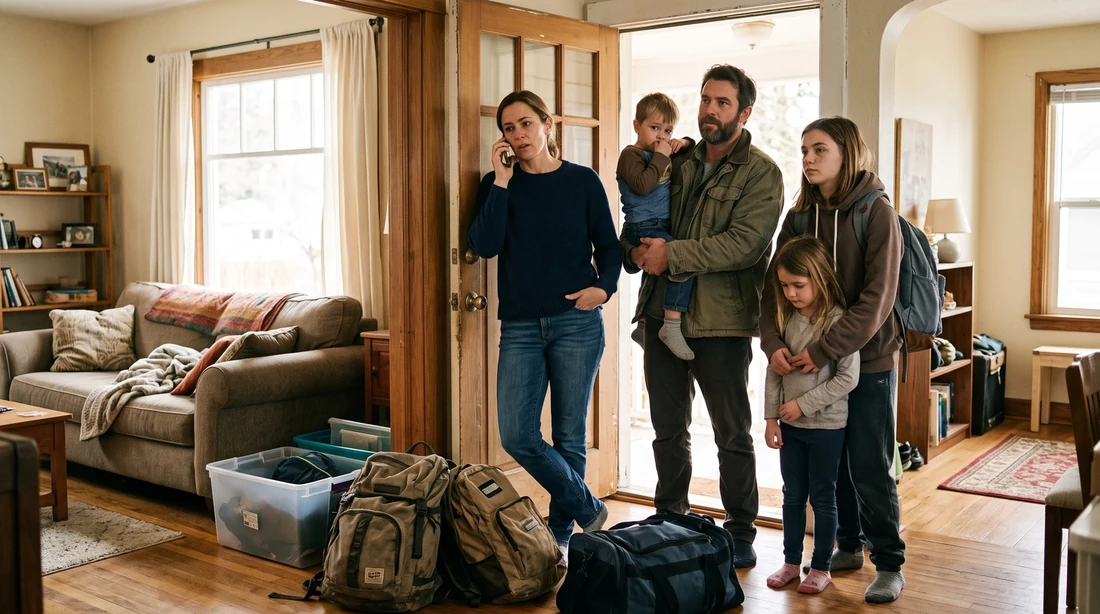
The plumber found the burst pipe, the mitigation crew is pulling up your floors, and the contractor just said six to eight weeks. Now your adjuster is asking which housing company you want on the placement. You'd never heard these names before this morning. This temporary housing directory scores them honestly so you can answer in one read.
There's no official deadline to pick a housing company. Your ALE limit still spends itself one hotel night at a time, though. Every $150 hotel night plus every restaurant meal draws down the same capped pot that a furnished home on a monthly rate would stretch.

What Kinds of Temporary Housing Companies Are There?
Every temporary housing company you'll encounter fits one of three lanes: carrier-assigned national vendors, self-serve platforms, and local direct operators. The practical difference is who each one answers to.
Carrier-assigned vendors are hired by insurance carriers and third-party administrators (TPAs). Your adjuster opens the claim, a vendor gets the file, and a housing coordinator calls you. Their coordination typically costs you nothing directly. Every dollar of housing they source still draws down your loss-of-use limit.
Self-serve platforms (Furnished Finder, Airbnb, Vrbo) answer to no one on your claim. You search, you book, you pay, and you submit receipts to your carrier for reimbursement.
Local direct operators own or manage the actual homes in one metro. They answer to the guest sleeping in the house. Some also sit inside claims networks. BnB OKC, for example, takes insurance placements through Alacrity Solutions and directly from adjusters and displaced families.
How money flows through the assigned-vendor model is its own article; see how ALE housing companies work. The short version: the carrier pays the vendor, the vendor pays local suppliers, and everything spent counts against the loss-of-use limit explained in our guide to loss of use coverage.
On why housing coverage terms differ from policy to policy:
Coverages have been reduced instead and companies have diverged from the former standardized model ISO forms.
Wikipedia: Home insurance
What Does Waiting in a Hotel Cost?
A displaced couple who drifts in a hotel for three extra weeks typically burns $3,000 or more of ALE budget that a furnished home on a monthly rate would have stretched into a full month of housing. Here's the sequence most claims follow, and where it stalls.
- Days 1-3: emergency hotel. The vendor books it, or you do. In the OKC metro that typically runs $130-$180 a night, plus every meal eaten out. Save every folio and receipt from night one. If you rent, check whether renters insurance covers hotel stays before assuming.
- Week 1: coverage confirmed. The adjuster verifies your loss-of-use coverage and either assigns a housing vendor or approves you sourcing your own comparable housing. Ask which one, in writing.
- Weeks 1-3: the long-term placement. This is the fork. National vendors search their supplier network, which typically takes days to a couple of weeks. A local operator with a ready home can confirm the same day you call.
- Every week you drift: hotel nights and restaurant meals keep drawing the same capped pot. If repairs outlast your limit, the remaining nights come out of your pocket. The carrier pays what the policy allows, whatever the repair timeline demands.
Displaced in the OKC metro and want a specific furnished home, not a queue? We answer same-day, work directly with adjusters, and take placements through Alacrity Solutions. See our insurance housing options or call/text (405) 870-2146.
Which Temporary Housing Companies Will You Actually Run Into?
This temporary housing directory covers the eight names displaced Oklahoma families actually encounter, scored on coverage area, booking speed, pet policy, and direct-bill support. If you searched for an ALE housing companies list, the table below is the working version. Profiles and honest tradeoffs follow it.
| Company & type | Coverage & how you reach them | Direct billing | Pets & typical speed |
|---|---|---|---|
| ALE Solutions (national carrier vendor) | Nationwide; assigned by your adjuster | Yes, typically bills the carrier directly | Pets case-by-case; hotel same-day, home in days to weeks |
| CRS Temporary Housing (national carrier vendor) | Nationwide; assigned by the carrier | Yes, typically | Pets case-by-case; similar hotel-first timeline |
| Temporary Accommodations (national carrier vendor) | Nationwide; assigned by the carrier | Yes, typically | Pets case-by-case; supply-dependent speed |
| Sedgwick housing services (TPA) | Nationwide, when your carrier uses Sedgwick | Handled inside the claim file | Depends on the local supplier it sources |
| Alacrity Solutions network (claims network) | Nationwide via vetted local suppliers | Yes, through the network | Supplier-dependent; its OKC supplier includes dog-friendly homes |
| Furnished Finder (listing directory) | Nationwide; you search and contact landlords | No; you pay, then submit receipts | Landlord-by-landlord; replies in hours to days |
| Airbnb / Vrbo (booking platforms) | Nationwide; you book yourself | No; receipts route only | Pet rules vary per listing; instant booking |
| BnB OKC (local direct operator) | OKC metro only; call/text (405) 870-2146 or via Alacrity | Yes, with carrier/TPA authorization | Several dog-friendly homes; same-day answers, homes sleep 2-16+ |
National carrier-assigned vendors: ALE Solutions, CRS, Temporary Accommodations, Sedgwick
These firms belong at the top of any list of insurance housing companies. They cover all 50 states, they can put you in a hotel the day of the loss, and direct billing is native to their model, so the invoice goes to the carrier instead of you.
The tradeoffs come from the structure, and they aren't a knock on any one firm. You're one file among thousands, so response speed depends on your coordinator's load. Long-term homes are sourced from third-party suppliers, which typically means you can't tour the property or read verified guest reviews of the exact house before move-in day. Pet households are placed case-by-case, and pet-friendly inventory commonly takes longer to find.
Extensions run through the same chain. You tell the coordinator, the coordinator asks the adjuster, and the adjuster answers when the file comes up. Build lead time into every request.
Claims networks that source local suppliers: Alacrity Solutions
Alacrity Solutions is a claims-services network rather than a landlord. Housing comes from vetted local suppliers in each market. For you it feels like a vendor placement, but the home is a named local property with a local operator behind it. BnB OKC is one of those suppliers in the Oklahoma City metro, which is how many of our insurance placements arrive.
Self-serve platforms and directories: Furnished Finder, Airbnb, Vrbo
Platforms give you what vendors can't: full choice and visible review histories for the exact property. Furnished Finder is built around monthly stays of 30 days or more; Airbnb and Vrbo add instant booking. The cost is legwork. There's no direct billing, deposits and platform fees are paid upfront, and the reimbursement paperwork is entirely on you.
Platform service fees also compound on long stays. Booking the same home directly with its operator often costs less, and our own direct-booking rates run up to 35% below platform pricing on stays of 4+ nights.
Local direct operators: BnB OKC in the Oklahoma City metro
A local direct operator flips the vendor model. You see the exact home, its photos, and its review history before you commit, and the person who answers the phone controls the calendar. BnB OKC operates 11 furnished homes across the OKC metro, holding a 9.5 out of 10 average across 1,580 verified guest reviews on Airbnb and Vrbo, with two homes carrying Airbnb's Guest Favorite badge.
Homes sleep 2 to 16+, published from-rates run $225-$425 per night with monthly rates on 30+ night stays, and several homes are dog-friendly (see our pet-friendly rentals in OKC). The homes cluster near Lake Hefner, The Village, and the Paseo and Plaza districts, with one 6 minutes from Will Rogers World Airport. That lets a placement match your actual commute or school run instead of whatever address a national supplier had open. Direct billing is available with carrier or TPA authorization, and same-day answers are the norm because there's no queue between you and the calendar.
The honest limitation is that we cover one metro. If you're displaced in Tulsa, Wichita, or Dallas, we're not your answer, and a national vendor or a platform is. Inside the OKC metro, a local operator is typically the fastest route from hotel to home.
What Happens When OKC Demand Spikes?
Oklahoma's tornado season peaks April through June, and a single metro-wide hail or wind event can push hundreds of households into the temporary housing queue on the same afternoon.
That's the difference between a single-home loss and a catastrophe (CAT) event. With a lone burst pipe, your file may be the coordinator's easiest call of the day. During a CAT week, national vendors are triaging hundreds of new files at once, local hotel blocks fill, and furnished inventory tightens. The placement that takes days in March can take weeks in late May. Your move in a CAT week is to price a direct placement in parallel rather than wait passively in the vendor queue.
Winter runs the same play in reverse. Hard-freeze weeks produce a metro-wide surge of burst-pipe claims, the exact loss that displaced you, so the families who call about specific homes the day the plumber confirms the damage get the pick of what's left.
| When | What happens | Your move |
|---|---|---|
| Late April: OKC Memorial Marathon | Downtown and midtown hotel rooms tighten for the weekend | Push for a home placement before race weekend, or expect higher emergency-hotel rates |
| Late May to early June: Women's College World Series at Devon Park | Metro hotel demand spikes for roughly ten days | A furnished home sidesteps the hotel squeeze entirely |
| April-June: tornado season peak | Metro-wide storms can flood vendor queues with new claims at once | Price a direct placement in parallel; don't wait in line passively |
| September: State Fair of Oklahoma | Hotel demand rises across the fairgrounds corridor | Monthly furnished terms beat nightly hotel exposure |
| Hard-freeze weeks in winter | Burst-pipe claims surge metro-wide; furnished inventory tightens fast | Call about specific homes the day the damage is confirmed |
What Do Insurance Housing Companies and Direct Options Cost per Month?
In the OKC metro, a furnished two-to-three-bedroom home on a monthly rate typically costs less per month than 30 nights in one mid-range hotel room, and it comes with the full kitchen and laundry the hotel never had. All figures below are typical ranges, not quotes.
| Option | Typical monthly cost | What you get, and what's missing |
|---|---|---|
| Mid-range hotel room | ~$4,000-$5,300 ($135-$175/night) | No kitchen or laundry; every meal out adds to the ALE draw |
| Extended-stay hotel | ~$2,900-$4,200 ($95-$140/night) | Kitchenette and shared laundry; one room for weeks on end |
| Vendor-sourced furnished apartment | Varies by market and lease length | Furnished 1-2BR; often unseen until move-in day |
| Furnished 2-3BR home, booked direct | Roughly $3,000-$4,500 on monthly rates | Full kitchen, in-unit laundry, yard, separate living space |
Worked example: a couple, a burst pipe, eight weeks
This is a hypothetical to show the arithmetic, not a quote. Say a burst supply line floods your kitchen and the contractor quotes six to eight weeks. Plan for eight, which is 56 nights.
Hotel route: a $149/night room × 56 nights = $8,344. Add roughly $35 a day in restaurant meals above your normal grocery spend = $1,960. Total ALE draw: about $10,300.
Furnished home route: a two-bedroom on a monthly rate at $3,400/month × 2 months = $6,800. A full kitchen keeps food spending near normal, so the "additional" food expense is close to zero.
The difference, in the ballpark of $3,500 of ALE preserved, is your cushion if the repair slips to week ten, which six-to-eight-week estimates commonly do. Remember that ALE reimburses costs above your normal living expenses, and the carrier decides what's reasonable.
Variant: the same couple with a dog
Now give the same hypothetical couple a 60-pound dog. Many OKC-area hotels decline dogs outright or charge nightly pet fees. Call it $25 a night: $25 × 56 = $1,400 on top of the hotel route, pushing the draw near $11,700. Boarding instead typically runs in the ballpark of $30-$40 a day, which is $1,680 to $2,240 for eight weeks, plus eight weeks apart from the dog.
A dog-friendly furnished home typically charges a one-time pet fee of a few hundred dollars, keeping the home route near $7,100. The gap widens to roughly $4,500 of ALE preserved. Pets are where the hotel-vs-home math diverges hardest.
Variant: the repair slips to twelve weeks
Six-to-eight-week estimates slip. A stalled cabinet order or a subfloor surprise turns eight weeks into twelve, which is 84 nights. Hotel route: $149 × 84 = $12,516, plus $35/day in meals = $2,940, about $15,450 total. Home route: $3,400 × 3 months = $10,200.
Now suppose a hypothetical loss-of-use limit of $15,000. The hotel route burns roughly $184 a day and crosses that limit around day 81, so week twelve is entirely out of pocket. The home route finishes with about $4,800 still inside the limit. That's why step 5 below says to book with the repair timeline in mind instead of the estimate.
Which Household Details Change the Right Pick?
Five household details change which lane of this directory you should call first: school schedules, pets, headcount, remote work, and whether insurance is paying at all.
School-age kids: say the school zone in the very first call. Assigned vendors match "like kind and quality," and they won't match attendance boundaries unless you ask. Zone-specific searches narrow inventory and add days. A local operator can tell you the same day which homes sit where relative to the school run.
Dogs: every lane handles pets differently, and pets are the single most common placement delay. Get the pet policy and fee structure in writing before accepting anything. The variant above shows how the fee structure alone can swing the math by thousands.
Large households: hotels break first here. Two or three rooms at $149 each doubles or triples the nightly draw, while a single furnished home sleeps everyone under one roof. Homes in our fleet sleep 2 to 16+, and our large group rentals in OKC page shows the biggest floor plans.
Two adults working from home: eight weeks of overlapping video calls in one hotel room is its own damage. Ask any provider about separate rooms, desks, and confirmed internet speeds. Vendor apartments vary, and "furnished" doesn't always mean "wired."
No claim, or a denied one: carrier-assigned vendors generally only work files routed by an adjuster. If you're self-paying or fighting a denial, platforms and local direct operators will book you on monthly terms while the claim sorts out.
How to Choose a Temporary Housing Company, Step by Step
- Confirm your coverage. Read the loss-of-use (Coverage D) line in your policy declarations so you know the dollar limit before anyone quotes you housing.
- Ask who's assigned. Ask your adjuster whether a housing vendor is already attached to your claim and what they've been told about your household, pets, and repair timeline.
- Compare against direct options. Get the vendor's proposed placement in writing, then price a comparable furnished home from a local direct operator before you accept.
- Verify the paperwork path. Confirm whether the carrier will direct-bill the provider or reimburse your receipts, and get that arrangement in writing.
- Book with the repair timeline in mind. Choose monthly terms with a written extension option, because six-to-eight-week repair estimates commonly slip.
What Should You Check Before You Accept Any Placement?
Each of these seven questions exists because a family somewhere learned the answer at move-in instead of before. Ask all of them, whichever lane you're in.
- Can I see the exact property before committing? Address, current photos, and review history. Vendor placements are commonly unseen until move-in day; a direct operator should show you everything upfront.
- What are the extension terms, and how much notice do you need? Repairs slip. A written extension option beats renegotiating from inside the house at week seven.
- What's actually included? Utilities, internet, linens, kitchenware. "Furnished" varies wildly, and missing internet matters if you work from the placement.
- What's the pet policy and fee, in writing? Nightly pet fees, one-time fees, and deposits produce wildly different totals over two months.
- Will you direct-bill my carrier, and what authorization do you need? Get the direct-bill confirmation in an email before check-in, not after.
- What happens if repairs finish early? Carriers typically won't reimburse nights after your home is habitable again, so ask about early-checkout or prorated terms.
- Is there a deposit or a damage waiver? A refundable deposit and a nonrefundable waiver are different money, and whether either is claimable is your adjuster's call.
Who Handles What During a Placement?
A temporary housing placement has seven moving parts, and knowing who owns each one prevents most of the stalls families hit. Use this as your working checklist.
| Task | Typically handled by | Your move |
|---|---|---|
| Approving loss-of-use coverage | Carrier / adjuster | Ask for your dollar limit in writing |
| Booking emergency hotel nights | Vendor, or you | Keep every folio and receipt |
| Sourcing the long-term home | Assigned vendor or local operator | Compare both before accepting |
| Setting booking/lease terms | Housing company / host | Get the extension option in writing |
| Setting up direct billing | Carrier + housing company | Confirm authorization before check-in |
| Tracking receipts and normal-expense offsets | You | One folder, from day one |
| Requesting extensions when repairs slip | You → adjuster → host | Start two weeks before checkout |
If the adjuster balks at your chosen housing or the claim itself stalls, don't self-fund indefinitely on hope. The escalation path is laid out in what to do when insurance denies temporary housing.
When Don't You Need a Temporary Housing Company at All?
For a one-to-three-night repair, no housing company on this page earns its overhead. Any hotel does the job, especially if you're sitting on points. A single traveler with a short displacement window is usually fine self-booking and submitting receipts. And if you're self-paying with a total housing need under roughly $1,000, a week at an extended-stay hotel beats any monthly commitment.
Staying with family can also be the right call for short stints. Some out-of-pocket costs during that stay may still be claimable under many policies, so ask your adjuster before assuming and keep receipts either way. Renters with low loss-of-use limits should read whether renters insurance covers temporary housing before committing to anything monthly.
A furnished home or a local operator changes the outcome for stays of 30+ nights, households with dogs, and anyone who needs a real kitchen and laundry to keep ALE draw down. The same goes for two people working from home for two months and for fire displacements that stretch four to six months. For those, start with temporary housing after a house fire and our extended-stay homes.
What Do the Terms You'll Hear Mean?
- ALE (Additional Living Expenses): the part of your policy that reimburses costs above your normal living expenses while your home is uninhabitable.
- Loss of use (Coverage D): the policy section ALE lives under, commonly capped as a percentage of your dwelling or personal-property coverage.
- TPA (third-party administrator): a company a carrier hires to manage parts of a claim, including housing. Sedgwick and Alacrity Solutions operate in this space.
- Housing coordinator: the vendor employee assigned to your file. This is your single point of contact inside a national vendor, and the person you ask for every timeline in writing.
- Direct billing: the housing invoice goes straight to the carrier or TPA instead of you, only with their written authorization.
- Like kind and quality: the standard many carriers use for temporary housing, meaning comparable to what you lost and no upgrade.
- CAT (catastrophe) event: a large storm or disaster generating many claims at once. Expect slower vendor response and tighter local inventory during one.
- Normal-expense offset: carriers typically subtract what you'd have spent anyway (your usual groceries, utilities) from what they reimburse.
- Damage waiver: a nonrefundable fee some bookings charge in place of a refundable security deposit; whether it's reimbursable is your carrier's call.
Bottom Line
Find your loss-of-use limit first, because every decision here depends on that figure. Then get the assigned vendor's proposed placement in writing and price one comparable furnished home direct, so the adjuster sees a real alternative.
If you're displaced in the OKC metro, start at our insurance housing page or call/text (405) 870-2146 for same-day answers on availability, monthly rates, and direct billing.
For policy questions or complaints about how a claim is being handled, the Oklahoma Insurance Department is the state's consumer resource.
This guide is general information, not insurance or legal advice; your carrier makes all coverage decisions.