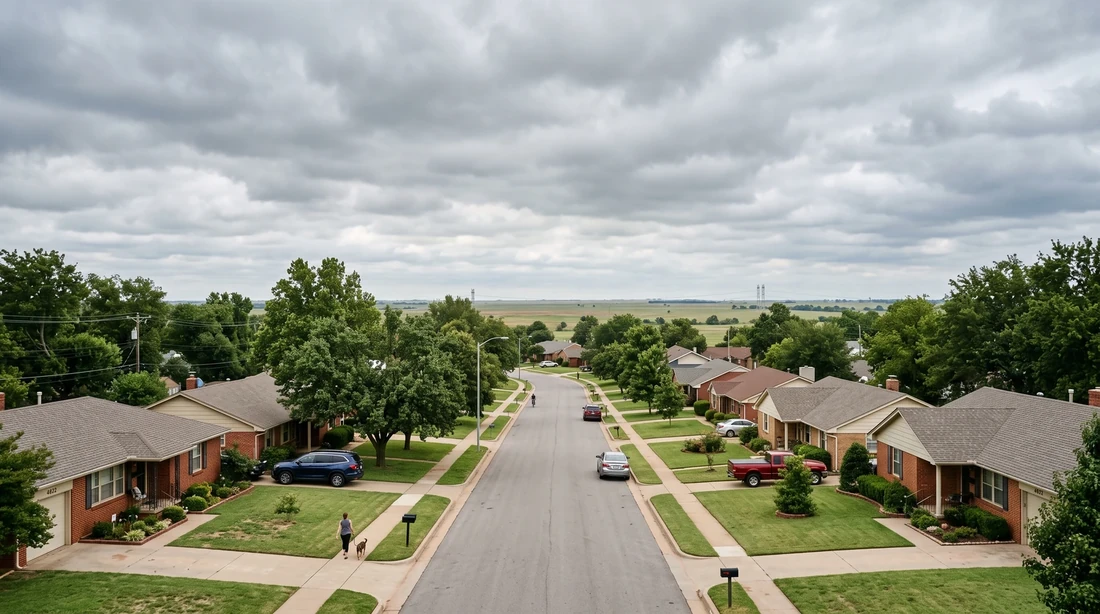
Homeowners insurance is so expensive in Oklahoma because the state is one of the most storm-prone in the country. Oklahoma's average annual premium was $2,268 in 2022 — the 4th highest in the U.S. (NAIC data via the Insurance Information Institute), well above the $1,569 national average — driven by a yearly tornado, wind, and hail risk that carriers price in through steep premiums and separate percentage wind/hail deductibles.
Key Takeaways
- Oklahoma's average annual homeowners premium was $2,268 in 2022, the 4th highest in the U.S., against a $1,569 national average.
- Oklahoma averages 59.4 tornadoes per year, and 2024 set the all-time state record with 152 tornadoes.
- Many policies carry a separate wind/hail deductible written as a percentage of dwelling coverage rather than a flat dollar amount.
- On a $300,000 dwelling, a 5% wind/hail deductible is $15,000 out of pocket before the policy pays for storm damage.
This guide covers why Oklahoma premiums rank 4th in the nation, how a percentage wind/hail deductible turns into a five-figure bill, what that does to your budget if a storm puts your family out of the house, and the one upgrade that lowers the premium.
You opened your renewal and the number jumped again. Double digits, maybe on top of last year's double-digit jump. You are not imagining it, and you are not alone. Reddit's r/oklahoma fills with the same sticker-shock threads every renewal season, and the underlying reasons are specific and verifiable.

Why Is Homeowners Insurance so Expensive in Oklahoma?
The short version: Oklahoma sits in the heart of Tornado Alley, and carriers price that in. Oklahoma averages 59.4 tornadoes per year (1950 to 2025, NWS Norman), and 2024 set the all-time state record with 152 tornadoes. May is the peak month, averaging 24.4.
When a state produces that much severe-weather loss year after year, insurers raise base rates, tighten coverage, and shift more of the storm risk back onto homeowners through deductibles. That combination is exactly what shows up on your declarations page.
| State | Average annual premium | Vs. national average |
|---|---|---|
| Florida | $2,677 | +$1,108 |
| Louisiana | $2,603 | +$1,034 |
| Texas | $2,397 | +$828 |
| Oklahoma | $2,268 | +$699 |
| U.S. national average | $1,569 | — |
Every state ranked above Oklahoma is a coastal hurricane state. Oklahoma reaches 4th place on tornado, wind, and hail exposure alone, which tells you how heavily that risk weighs on rates here.
What Is the Wind/Hail Deductible Trap?
The bigger shock for most Oklahomans is the separate wind/hail deductible. Policies in higher-risk areas may carry a separate deductible specifically for wind and hail, and it is often written as a percentage of your dwelling coverage rather than a flat dollar amount (OID Wind and Hail guidance).
A percentage deductible sounds small until you do the math on a real home. On a $300,000 dwelling, a 5% wind/hail deductible is $15,000 out of pocket before your policy pays a cent on storm damage.
| Deductible | Out of pocket before insurance pays |
|---|---|
| 1% | $3,000 |
| 2% | $6,000 |
| 3% | $9,000 |
| 5% | $15,000 |
That's why the recurring r/Insurance question ("why have homeowners insurance if the wind/hail deductible is bigger than my premium?") is so common in Oklahoma. Many policies also exclude cosmetic hail damage, meaning dents that don't cause leaks, so not every hit is covered even after you clear the deductible. Always read your declarations page for the exact wind/hail line. It may differ from your all-other-perils deductible.
What Does This Mean If a Storm Displaces My Family?
A high wind/hail deductible costs you at repair time, and it also squeezes your entire displacement budget. If you're paying $10,000 to $15,000 out of pocket to get repairs started, every dollar of temporary-housing spending matters.
When a covered loss makes your home unlivable, your policy's Additional Living Expenses (ALE) coverage, also called loss of use, reimburses the extra cost of living somewhere else while repairs happen. But ALE is a finite pool, and hotels burn through it fast. Your carrier makes all coverage decisions. How you spend the housing dollars is often up to you.
Hypothetical: Say a spring hailstorm tears up your roof and a covered loss forces your family of four out for about three months during repairs. Two hotel rooms at roughly $180/night run about $16,200 a month for two rooms, with no kitchen and no laundry, so your food costs climb too.
A furnished home instead: our published from-rates run $225 to $425/night, with monthly rates on 30+ night stays and up to 35% direct-booking savings on 4+ night stays. A single furnished house with a full kitchen and laundry keeps the whole family together and can stretch the same ALE dollars across the full three months instead of running the pool dry in one. Figures are hypothetical; your rate depends on the home and dates.
The Strengthen Oklahoma Homes grant opened statewide January 12, 2026 at oid.ok.gov/okready. Up to $10,000 toward a FORTIFIED roof, first-come, first-served. First-come funds don't wait for your next renewal.
Displaced by an Oklahoma storm and watching a high deductible eat your budget? A weekly- or monthly-rate furnished home stretches ALE further than a hotel — full kitchen, laundry, your family under one roof. We also work with Alacrity Solutions on insurance placements.
See insurance & displacement housing Call or text (405) 295-5052
What Lowers an Oklahoma Homeowners Premium?
The single most effective lever is a FORTIFIED roof. FORTIFIED construction can reduce severe-storm damage by up to 80% and cut premiums 20 to 30%, and participants in the state's pilot program averaged $750/year in premium savings (OID release, January 2026).
FORTIFIED is a nationally recognized building standard designed to keep roofs on during high wind and hail. Because the fixes reduce the losses carriers pay, many insurers pass savings back as a discount. That is the mechanism Oklahoma is trying to scale.
The Strengthen Oklahoma Homes grant puts up to $10,000 toward a qualifying FORTIFIED roof, opened statewide January 12, 2026, first-come, first-served at oid.ok.gov/okready. As Insurance Commissioner Glen Mulready put it: "Oklahoma is one of the most storm-prone states in the country, and strengthening homes is one of the most effective ways to reduce damage."
Beyond the roof, the ordinary levers still help. Raise your all-other-perils deductible, bundle home and auto, and shop quotes across carriers at renewal instead of auto-renewing.
What Happens If I Do Nothing Before Renewal?
- This renewal: the double-digit increase sticks, and your wind/hail deductible may quietly rise with your dwelling coverage as rebuild costs climb.
- Next storm season: if hail hits before you strengthen the roof, you absorb the full percentage deductible, (potentially $10,000 to $15,000) and cosmetic damage may not be covered at all.
- Next renewal after a claim: a storm claim can push your rate higher still, and grant funds you passed on may be gone (first-come, first-served).
How to Lower Your Oklahoma Homeowners Premium, Step by Step
- Check your declarations page for the wind/hail deductible. Confirm whether it's a percentage and what that equals in dollars.
- Apply for the Strengthen Oklahoma Homes grant at oid.ok.gov/okready while first-come funds last.
- Upgrade to a FORTIFIED roof using a qualified contractor and keep the certification documents.
- Ask your carrier for the FORTIFIED discount and submit your certification. Savings are commonly 20 to 30%.
- Compare quotes across carriers at renewal instead of auto-renewing, and re-shop after you strengthen the home.
What to Check on Your Declarations Page
- A wind/hail deductible written as a percentage. Convert it to dollars. On a $300,000 home, 5% is $15,000.
- A wind/hail line that differs from your all-other-perils deductible. They are often two different numbers.
- A cosmetic hail damage exclusion. Dents that don't cause leaks may not be covered at all.
- Dwelling coverage that rose at renewal. A percentage deductible rises with it.
- No FORTIFIED discount applied. If you have the certification, submit it and ask.
- An auto-renewal you never shopped. Compare quotes before the date, and again after you strengthen the roof.
Terms you'll hear, decoded
- Wind/hail deductible: a separate deductible that applies only to wind and hail damage, often a percentage of your dwelling coverage rather than a flat amount.
- Percentage deductible: a deductible calculated as a percent of coverage (2% of $300,000 is $6,000), so it rises as your home's insured value rises.
- Cosmetic hail damage exclusion: a clause letting the carrier decline dents that don't cause leaks or structural harm.
- Additional Living Expenses (ALE): loss-of-use coverage that reimburses the extra cost of living elsewhere while your home is repaired after a covered loss.
- FORTIFIED: a building standard for roofs and homes designed to survive severe wind and hail, tied to grant funds and insurer discounts in Oklahoma.
When Is a Hotel Fine, and When Does a Furnished Home Change the Outcome?
If you're out for a night or two after a minor loss, or you're a single person who values hotel points, a hotel is the simpler call. Short, self-paid stays don't need a furnished house.
A furnished home changes the math when you're displaced 30+ nights, have kids or pets, or a tight deductible has already claimed a chunk of your budget. A full kitchen, laundry, and one address for the whole family keep ALE from draining into restaurant meals and two hotel rooms. Several of our homes are dog-friendly, and we offer monthly rates on 30+ night stays.
If you're weighing where to stay during repairs, our insurance & displacement housing page walks through ALE, direct billing, and how weekly rates work. And if a claim ever pushes you into a rental-income question, our coverage of OKC short-term rental rules and the OKC Airbnb enforcement crackdown explains the local rules.
The Bottom Line
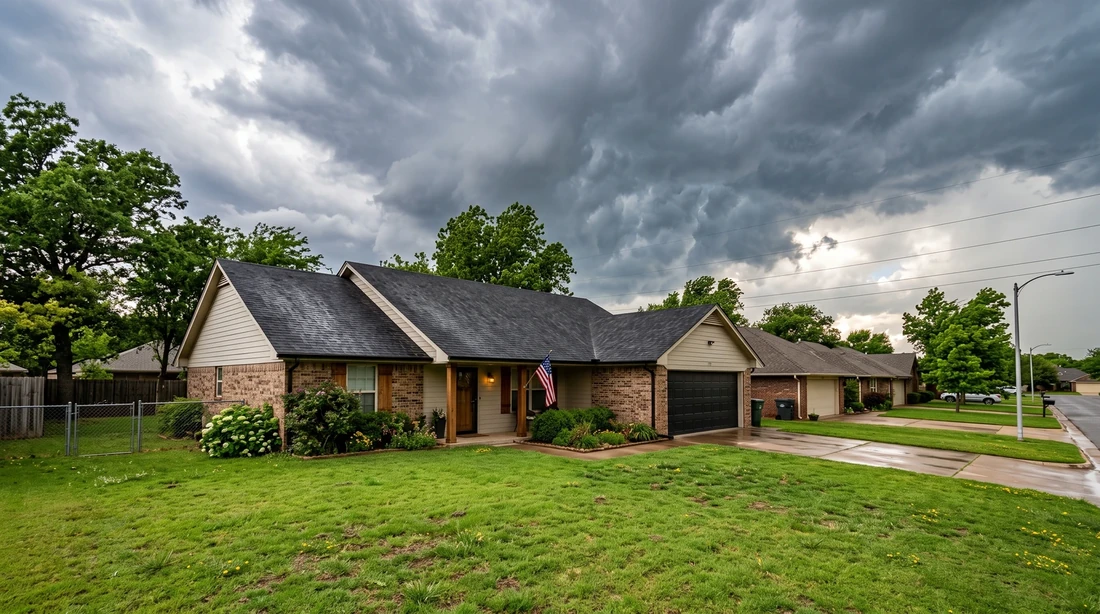
Oklahoma premiums are high because the storms are real, and the deductible on your declarations page is where the risk lands on you. Know the dollar figure behind the percentage. Then weigh a FORTIFIED-roof upgrade (and the up-to-$10,000 grant) against another year of double-digit increases. If you're displaced now, see our insurance-housing options or call/text (405) 295-5052 for weekly- and monthly-rate furnished homes that stretch ALE.
This guide is general information, not insurance or legal advice; your carrier makes all coverage decisions.