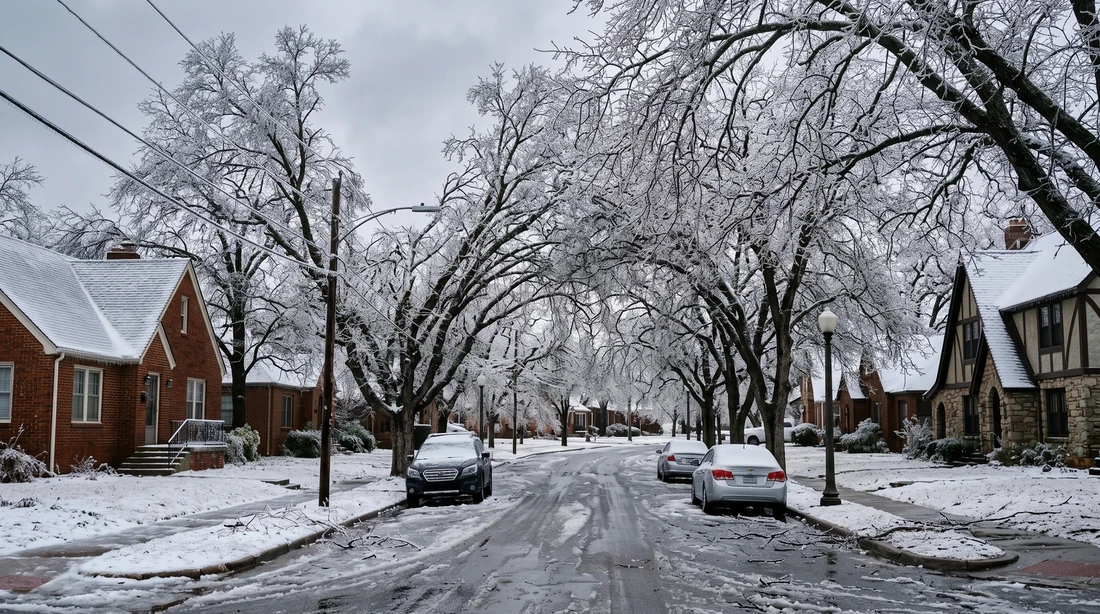
A winter storm damage insurance claim in Oklahoma covers sudden losses like burst pipes, ice-laden roof collapse, and freeze damage under your dwelling coverage. When the home loses heat and becomes uninhabitable, loss-of-use (ALE) typically pays for temporary housing while repairs happen — but your carrier makes the final coverage call.
Key Takeaways
- Standard policies usually cover sudden burst pipes and ice or snow weight, but freezing in an unheated, vacant home is commonly denied.
- Loss-of-use (ALE) pays the additional cost of living elsewhere, but the carrier and adjuster decide whether a home is uninhabitable.
- Two hotel rooms typically run about $8,000 to $10,000 monthly, while a furnished BnB OKC home starts around $4,200 per month.
- First hour: shut off the water main, photograph and video everything before cleanup, then call your carrier and get a claim number.
This guide covers the four losses behind most Oklahoma winter claims, which ones are usually covered and which usually are not, when "no heat" makes a home uninhabitable, what delay costs in a burst-pipe claim, how a hotel compares with a furnished home over a four-month rebuild, and how to file the claim in the right order.
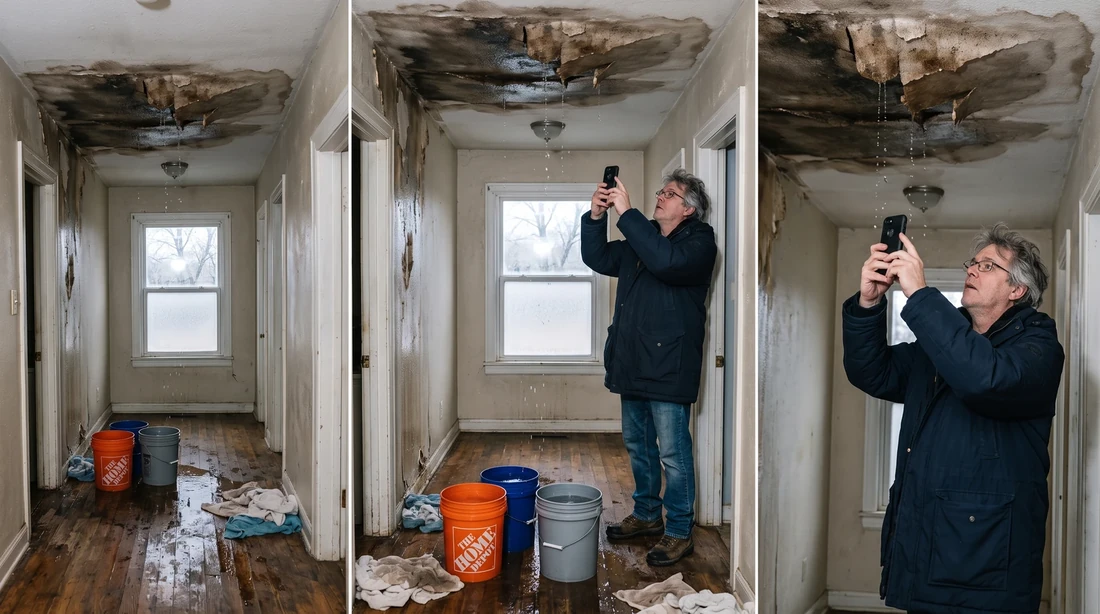
It is 9°F outside, a pipe let go behind the wall overnight, and now water is coming through the hallway ceiling while your kids stand in the cold. In Oklahoma, that scene repeats every hard freeze. The October 2020 ice storm and the February 2021 deep freeze pushed thousands of homeowners into exactly this position. Two things matter in the first hour: stop the damage from spreading, and start documenting for your winter storm damage insurance claim.
Most of these losses, sudden, accidental, and weather-driven, are the kind homeowners policies were written for. And when your house cannot be lived in, the same policy usually pays for somewhere else to stay.
Most policies require you to take reasonable steps to prevent further damage right away: shut off the water, tarp the roof, protect what is salvageable. Photograph and video everything before you clean up or move anything. Waiting to document, or waiting to stop a leak, can shrink what your carrier pays.

Why Do Winter Storms Wreck Oklahoma Homes?
Oklahoma winters do damage in ways that catch homeowners off guard, because the state swings from mild to brutally cold fast. A single Arctic front can drop temperatures 40 degrees in a day, and homes here are not always built for sustained deep freezes.
The four losses that drive most Oklahoma winter claims:
- Burst pipes. Water freezes, expands, and splits the pipe; when it thaws, it floods. A single burst supply line can push hundreds of gallons into a home before anyone notices. Homes with pipes in exterior walls, unheated garages, or crawl spaces fail first.
- Ice-storm roof and tree damage. Accumulated ice adds crushing weight, and falling limbs puncture roofs. The 2020 ice storm brought down power lines and mature trees across the metro. The older, tree-canopied neighborhoods around Paseo, Crown Heights, and Nichols Hills saw some of the heaviest limb damage.
- Roof or ceiling collapse. Heavy ice and snow load, or an ice dam backing water under shingles, can fail a roof section, especially on flatter or older roofs.
- Extended power outages. Days without power means no heat. Pipes freeze faster, and the home itself can become unlivable in a hard freeze. The 2021 event knocked out power for days in parts of central Oklahoma.
Most standard homeowners policies cover sudden, accidental water damage from a burst pipe and the weight of ice or snow. What they typically don't cover is damage from long-term neglect: a slow leak you ignored, or freezing that happened because you left the home unheated and the water on. That last point matters in Oklahoma, where people leave for the holidays during freeze season.
On mold, one widely misunderstood part of water-damage coverage:
The insurance is often misunderstood by its purchasers; for example, many believe that mold is covered when it is not a standard coverage.
Wikipedia: Home insurance
What Is Covered, and What Usually Isn't?
Sudden, accidental winter damage is generally covered; damage a carrier can tie to neglect or lack of maintenance usually isn't. The line between the two decides many Oklahoma freeze claims, so it helps to know which side yours sits on before the adjuster arrives.
| Loss | Typical treatment | What can change it |
|---|---|---|
| Burst pipe from a sudden freeze | Usually covered | Denied if home was left unheated with water on |
| Roof/ceiling collapse from ice or snow weight | Usually covered | Pre-existing roof damage or deferred repairs |
| Falling tree limb puncturing roof | Usually covered | Dead/diseased tree you were told to remove |
| Water backing up under an ice dam | Often covered | Some policies limit or exclude ice-dam water |
| Freeze while home was vacant | Often limited or excluded | Whether you kept heat on and shut off water |
| Slow leak found after a thaw | Often excluded | Whether damage was sudden or gradual |
| Food spoilage from a power outage | Sometimes covered (limited) | Often a small sub-limit; check your policy |
Two Oklahoma-specific traps are worth flagging. First, if you travel for the holidays during freeze season, most policies expect you to keep the heat on and, ideally, shut off the water. A home that froze empty is the classic denied winter claim. Second, rural homes on well water can lose pressure and heat differently than city-served homes; if you are outside the metro, document the well pump and pressure-tank condition too.
When Does "No Heat" Make a Home Uninhabitable?
A home with no working heat during an Oklahoma freeze can qualify as uninhabitable, which is what triggers loss-of-use coverage. Uninhabitable does not mean the house is destroyed. It means you cannot safely or reasonably live there while repairs happen.
Common winter situations that make a home uninhabitable:
- The furnace is destroyed or the gas is shut off and there is no safe heat source in sub-freezing weather.
- A burst pipe flooded floors, walls, and electrical, and crews need to dry, demo, and rebuild.
- Water intrusion created a mold or safety hazard.
- A roof section collapsed or is open to the weather.
The habitability question gets stricter when the household includes someone who cannot tolerate the conditions: an infant, an elderly parent, or anyone with a medical device that needs power. A home that a healthy adult might tough out for a night is more clearly uninhabitable when a newborn is in it during a freeze. Document who lives there and why the conditions are unsafe for them.
When your home reaches that point, your policy's loss-of-use provision, often called Additional Living Expenses, or ALE, typically covers the extra cost of living elsewhere. If you want the full breakdown of how that coverage works, read loss of use coverage explained. The key word is "additional": ALE pays the gap between your normal costs and your displacement costs, not your entire new rent.
The carrier and adjuster decide whether a home is uninhabitable. You do not, and neither do we. You can strengthen the case with documentation: photos of standing water, the failed furnace, the moisture readings from the restoration crew, and any city or utility notice. If a code inspector or the gas utility red-tags the home, that paperwork is powerful evidence.
What Does a Winter Claim Cost You If You Wait?
In a burst-pipe claim, every hour of delay usually multiplies the damage and the cost. Winter losses escalate faster than almost any other peril because water keeps moving and cold keeps working. Here is the typical sequence when you wait or do nothing.
- Hour 0-1: The pipe bursts. If you shut off the main and document immediately, you contain the loss to one area.
- Hour 1-6: Water spreads through subfloor, drywall, and insulation. Restoration cost climbs; mold clock starts.
- Day 1-2: Untreated water begins warping floors and saturating framing. Now you likely need demo, beyond drying.
- Day 2-7: Mold can set in. Carriers scrutinize mold that grew from delayed mitigation, and may limit that portion of the claim.
- Week 1+: If you have not filed and have not secured approved housing, hotel nights are stacking up out of pocket while your ALE clock and rebuild timeline both stretch.
The other quiet cost is housing. A four-month rebuild in a hotel burns cash and patience. Every hotel night without a kitchen, laundry, and space for your family is money a furnished home would stretch further, and it is money you may be fronting before reimbursement lands. It also compounds during Oklahoma's worst weeks. After a regional ice storm, restoration crews, contractors, and hotel rooms all get scarce at once, so the family that lines up housing early tends to fare better than the one that waits for the adjuster to call back.
Displaced by a burst pipe or ice-storm damage this winter? We place families, including with pets, into furnished OKC homes on insurance claims, and we work directly with adjusters and TPAs like Alacrity Solutions on billing.
See insurance housing options or call/text (405) 870-2146.
Where Should Your Family Stay During a Winter Rebuild?
For a displacement longer than a couple of weeks, a furnished home in OKC typically costs less per month than two hotel rooms and gives your family a kitchen and laundry. Here is how the three main options compare for a longer winter rebuild.
| Option | Typical monthly cost | Best for | What it lacks |
|---|---|---|---|
| Two hotel rooms | ~$8,000-$10,000 | 1-2 weeks; single travelers | No kitchen, no laundry, pet fees, split family |
| Extended-stay hotel | ~$4,000-$6,000 | 2-4 weeks; small kitchenette needs | Tight space, limited pet policies, thin walls |
| Furnished home (BnB OKC) | from ~$4,200 (monthly rate) | 30+ nights; families, pets, groups | Books out during peak displacement periods |
Hotel figures above are typical Oklahoma City ranges and vary by season and demand. Our furnished-home monthly rates start in that range with published from-rates of $165-$425/night and up to 35% direct savings on 4+ night stays. Several of our 11 metro homes are dog-friendly, which matters when displacement includes the family dog. See pet-friendly rentals in OKC.
One factor families forget in winter: staying near the kids' school and your job. A furnished home lets you pick a location that keeps the school run and commute intact through a months-long rebuild, instead of taking whatever hotel room is available.
We have homes spread across the metro, near Lake Hefner and The Village on the north side, close to the Capitol Manor area by OU Medical Center, and near the Paseo and Plaza districts, most within a short drive of the interstates and about six minutes from Will Rogers World Airport. Keeping the family in one familiar quadrant of the city is often worth more than a few dollars a night.
A worked example: burst pipe, four-month rebuild
Here is a hypothetical to show the math. Say your family of five plus the dog gets displaced in January when a supply line bursts and floods the lower floor. The restoration crew estimates a four-month dry-out and rebuild.
- Two hotel rooms at roughly $150/night each = $300/night × 30 = about $9,000/month, or ~$36,000 over four months, with pet fees, no kitchen, and everyone split across two rooms.
- A furnished home at about $4,200/month = ~$16,800 over four months. One address, a kitchen, laundry, and the dog with you.
That is roughly $19,000 less over the rebuild in this hypothetical, before you count the money saved by cooking instead of eating every meal out. Because ALE covers the additional cost, stretching your budget with a furnished home can keep you inside your policy limit instead of blowing past it mid-rebuild. This is a hypothetical example; your actual costs and coverage depend on your policy and carrier.
A second example: the ALE-limit squeeze
ALE has limits. Many policies cap loss-of-use at a percentage of your dwelling coverage or a set time period, so the option you pick determines whether the money lasts the whole rebuild. Suppose the same family has a $30,000 ALE limit and the rebuild slips from four months to five because a contractor is backed up after a regional ice storm.
- Two-hotel-room path: at ~$9,000/month, that $30,000 runs out in about 3.3 months, well before move-back, leaving the family paying the last six-plus weeks out of pocket.
- Furnished-home path: at ~$4,200/month, five months costs about $21,000 and sits comfortably inside the same $30,000 limit, with room left for the deposit differences and utilities ALE may or may not cover.
Same family, same limit, very different outcome. When a rebuild is likely to run long, and Oklahoma winter rebuilds often do, the cheaper monthly option is what keeps you from hitting the cap. Again, hypothetical figures; confirm your own ALE limit and terms with your adjuster.
Want more detail on the fire version of this same math? See temporary housing after a house fire. The housing logic is nearly identical for a major winter loss.
How to File a Winter Storm Damage Insurance Claim, Step by Step
Move fast on the first three steps. They protect both your home and your claim.
- Stop the source. Shut off the water main or the affected valve, and cut power to flooded areas if it is safe.
- Document everything. Photograph and video the damage, the burst pipe, standing water, and ruined belongings before cleanup.
- Call your carrier and open the claim. Report the loss, get a claim number, and ask directly whether the home qualifies for loss-of-use housing.
- Mitigate further damage. Hire a restoration crew to dry and secure the home; keep every receipt and invoice.
- Confirm ALE and your housing budget. Ask the adjuster your daily/monthly housing allowance and whether direct billing is possible.
- Secure housing and save receipts. Book somewhere that fits your family and stay length, and keep all lodging and expense receipts for reimbursement.
If your carrier hesitates or denies the housing piece, do not assume it is final. Read what to do when insurance denied temporary housing. For how the placement companies fit in, see how ALE housing companies work.
Who Handles What During the Claim?
Knowing which party owns each task prevents the delays that stack up hotel nights. Displacement involves four players, and confusion between them is where claims stall.
| Task | Who handles it |
|---|---|
| Shut off water, document damage, save receipts | You |
| Inspect the home, decide habitability | Adjuster |
| Set the ALE/loss-of-use budget and limit | Carrier |
| Authorize direct billing to a housing provider | Carrier / TPA |
| Provide the furnished home, invoice correctly | Host / operator |
| Coordinate move-in dates and pet needs | You + host |
The claim and housing timeline, stage by stage
A typical winter displacement runs on two clocks at once, the repair timeline and the ALE timeline, and they rarely match. Here is the sequence most families move through.
| Stage | What happens | Your move |
|---|---|---|
| Day 0 | Pipe bursts / roof fails; home floods or loses heat | Shut off source, document, leave if unsafe |
| Day 0-2 | Open claim; get restoration crew in | Book short-term lodging; save receipts |
| Day 2-7 | Adjuster inspects; habitability decided | Confirm ALE budget and length estimate |
| Week 1-2 | Rebuild scope set; timeline emerges | Move to a monthly furnished home if 30+ days |
| Month 1-4 | Demo, dry-out, rebuild | Keep receipts; request extensions if delayed |
| Move-back | Home passes final inspection | Coordinate checkout and final ALE reconciliation |
One caution specific to winter: the "Day 2-7" inspection can slip when a storm hits the whole region at once and adjusters are triaging thousands of claims. Do not let a delayed inspection freeze you in a hotel. Ask whether you can move into interim housing and be reimbursed once habitability is confirmed, and keep documenting the home's condition in the meantime.
How Does Winter Coverage Differ for Renters and Condo Owners?
If you rent, your landlord's policy repairs the building while your own renters policy covers your belongings and your displacement housing. When a burst pipe makes your rental uninhabitable, it is typically your renters policy's loss-of-use that pays for you to stay elsewhere, and the landlord's policy stays out of it. Many renters do not realize they have this coverage at all. We break it down in does renters insurance cover temporary housing.
If you own a condo or town home, the split gets more complicated. The HOA master policy usually covers the building shell while your unit-owner (HO-6) policy covers interior finishes and your ALE. After a freeze that damages multiple units, find out early which policy is handling your displacement so you are not waiting on the HOA while hotel nights pile up.
When Don't You Need a Furnished Home?
Honesty first: a hotel is the right call for some winter losses. If your home just needs a few days of drying and a plumber, a one- or two-night hotel stay near your neighborhood is simpler and cheaper. If you are a single person or a couple with no pets and loyalty points to burn, a hotel works fine for a short displacement. And if the damage is minor enough that you can stay home (a single frozen faucet, a small ceiling stain), you may not need to leave at all. You file for the repair and that is it.
A furnished home changes the outcome when the situation is bigger: a rebuild of 30 nights or more, a family that needs bedrooms and a kitchen, a pet that hotels charge for or will not take, or a group that would otherwise split across multiple rooms. It also changes things when you need to keep kids in their school and yourself near work for months, or when a household member needs reliable heat, space, and power more than a hotel room provides.
That is when the per-month math and the daily livability tip hard toward a home. If you are weighing the hotel route specifically, we lay it out in does renters insurance cover hotel stays and, for renters, does renters insurance cover temporary housing.
What to Check Before the Adjuster Arrives
These are the points where Oklahoma winter claims most often lose money.
- The water is still on. Shut off the main or the affected valve first. Every hour the pipe runs multiplies the damage and the cost.
- Cleanup before photos. Photograph and video the burst pipe, standing water, and ruined belongings before anything moves.
- A home left unheated with the water on. That is the classic denied winter claim. If you traveled, be ready to show the heat stayed on.
- A slow leak dressed up as a sudden one. Carriers separate sudden damage from gradual damage, and only the first is usually covered.
- Mold from delayed mitigation. Mold that grew because drying started late can be limited on the claim. Get a restoration crew in within days, and keep the invoices.
- No habitability call in writing. Loss-of-use turns on that decision, and the adjuster makes it. A red tag from a code inspector or the gas utility is strong evidence.
- A hotel booking with no end date. Two rooms at roughly $9,000/month exhausts a $30,000 ALE limit in about 3.3 months. Move to a monthly rate once the rebuild scope says 30+ days.
- Waiting on a slipped inspection. After a regional storm, ask whether interim housing can be reimbursed once habitability is confirmed rather than sitting in a hotel until the adjuster calls back.
Terms you'll hear, decoded
- ALE (Additional Living Expenses): The coverage that pays the extra cost of living elsewhere while your home is uninhabitable.
- Loss of use: The broader policy section ALE sits under; it covers displacement costs and, for landlords, lost rent.
- Mitigation: Your duty to stop further damage (shutting off water, tarping a roof) right after a loss.
- Uninhabitable: The condition where you cannot safely or reasonably live in the home, which triggers loss-of-use payment. The adjuster decides.
- Direct billing: When the carrier or TPA pays a housing provider directly instead of reimbursing you, only with their authorization.
- Ice dam: A ridge of ice at a roof edge that backs melted water under shingles and into the home.
- Deductible: The amount you pay before coverage kicks in on the repair side; ALE housing is usually reimbursed separately and is not reduced by your dwelling deductible.
For a deeper walk-through of any of these, our insurance housing hub ties them together.
The Bottom Line
Call your adjuster, get your claim number, and ask directly whether the home qualifies for loss-of-use housing and what the monthly budget and total limit are. Get the restoration crew's timeline in writing so you can match your housing length to the actual rebuild, and remember that Oklahoma winter rebuilds often run long. Then line up housing that fits. Check availability for your dates and family size at our insurance housing page or call/text (405) 870-2146. We place displaced families, including with dogs, and bill carriers directly when authorized.
BnB OKC runs 11 furnished homes across the metro and holds a 9.5 out of 10 average across 1,580 verified guest reviews on Airbnb and Vrbo, with monthly rates on 30+ night stays for exactly this kind of displacement. Learn more at extended stays or book direct.
For official guidance on Oklahoma claims and consumer rights, see the Oklahoma Insurance Department.
This guide is general information, not insurance or legal advice; your carrier makes all coverage decisions.