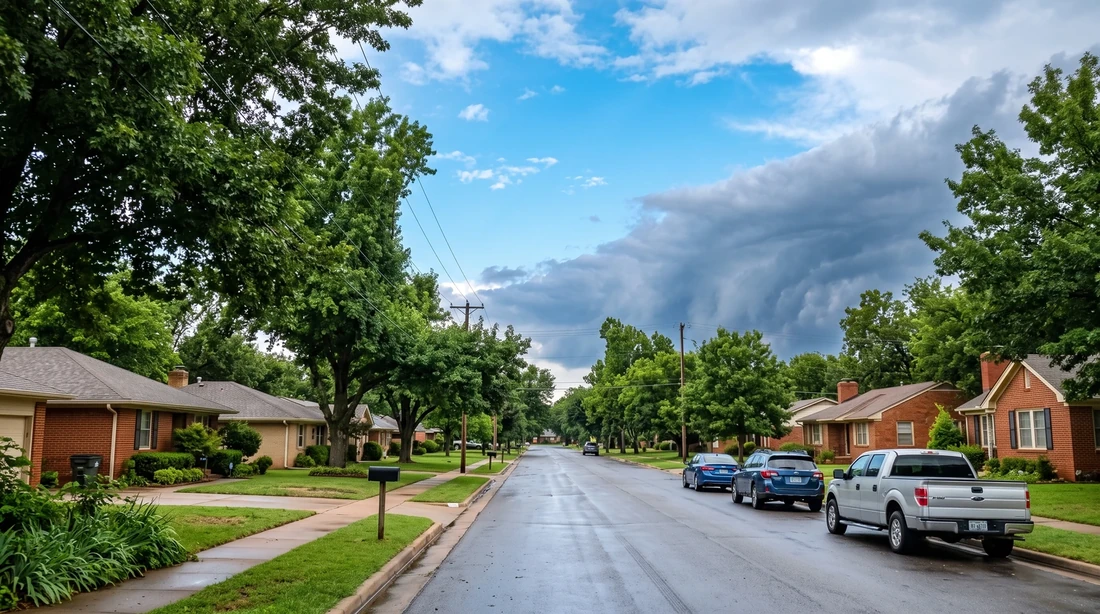
Additional living expenses coverage in Oklahoma (also called loss-of-use) pays the difference between your normal living costs and the higher costs of being displaced — hotels, a furnished rental, extra meals, pet boarding, laundry. It is typically a percentage of your dwelling coverage, and it starts the day your home becomes uninhabitable. On June 24, 2026, the Oklahoma Insurance Department warned that most homeowners never check this benefit until a tornado forces them out.
Your roof is gone, the adjuster says the house is uninhabitable, and now you need somewhere your family can actually live for the next several months. The line on your policy that pays for that is additional living expenses (ALE) — and in Oklahoma, where Oklahoma City home insurance now averages $9,770 a year, most people have never read it. This guide explains exactly what ALE covers, what it does not, and why four months in a hotel room is the most expensive way to spend it.
Here are the three facts that matter first. ALE is usually a set percentage of your dwelling limit, not an unlimited fund. It only pays the extra cost above your normal spending — so receipts matter. And a furnished home billed directly to your carrier almost always stretches the same dollars farther than a hotel.
Every hotel night burns ALE budget a furnished home would stretch. When your loss-of-use limit is a fixed percentage of dwelling coverage, the housing choice you make in the first 48 hours decides whether that budget lasts your full rebuild — or runs out before the drywall is up.
What the Oklahoma Insurance Department Flagged in June 2026
On June 24, 2026, the Oklahoma Insurance Department (OID) published a consumer alert naming the biggest mistakes Oklahoma homeowners make with their policies. Underinsurance topped the list — and ALE is one of the first coverages to fall short when a policy is thin.
The OID's four headline mistakes:
- Not reviewing your coverage every year as rebuild costs rise.
- Being underinsured — carrying limits below what it would actually cost to rebuild and re-house your family.
- Choosing the lowest-cost policy without understanding what it excludes.
- Failing to keep a home inventory, which slows and shrinks every claim.
To back the underinsurance warning, the OID cited a University of Colorado Boulder study of 5,000 Marshall Fire claims: 74% of policyholders were underinsured, with the most severe cases falling below 75% of replacement cost. When the dwelling limit is that far short, the ALE percentage riding on top of it is short too — the fund that is supposed to house you for months can empty in weeks.
The department recommends documenting your belongings with photos, videos, and serial numbers using the NAIC Home Inventory App or the OID's own Home Inventory Form, and points homeowners to its help line at 800-522-0071.

What Additional Living Expenses Coverage Actually Pays For
ALE pays the difference between your normal living costs and the higher costs you face while displaced — the word "additional" is the whole rule. It is not a blank check for a nicer life; it is reimbursement for the gap your loss created.
Typically covered when your home is uninhabitable from a covered loss:
- Temporary housing — a hotel, an extended-stay, or a furnished rental home.
- The extra cost of meals above what you normally spend on groceries.
- Pet boarding or pet-friendly lodging fees.
- Laundry, extra mileage to work or your kids' schools, and storage for salvaged belongings.
What ALE generally does not pay: your existing mortgage (you still owe that — ALE is for the added costs), expenses from losses your policy excludes, or anything you can't document. In Oklahoma, most loss-of-use limits are written as a percentage of the dwelling coverage — commonly a set share, though your policy and carrier decide the exact figure. Read your declarations page for the "Coverage D" or "Loss of Use" line, or call your agent and ask what percentage you carry.
Why the Claim Clock Matters for ALE — And What Oklahoma Is Changing
ALE runs for "a reasonable time to repair or replace" — which means the length of your claim directly controls how long you need housing. On December 10, 2025, the OID announced proposed 2026 reforms that would tighten those timelines.
| Stage | Common situation today | Proposed 2026 rule |
|---|---|---|
| Claim decision | No firm statutory deadline; varies by carrier | Decision required within 30 days |
| Final resolution | Can stretch for months | Final resolution within 90 days |
| Late payment | No standard penalty | 10% interest on late payments |
These are proposals announced by the OID, not yet law. But they matter for ALE planning: the faster your claim resolves, the shorter your displacement, and the less pressure on your loss-of-use limit. Until they pass, assume your rebuild timeline — and your housing need — could run longer than you expect.
Hotel vs. Furnished Home: How the Same ALE Dollars Stretch
A furnished home usually costs less per month than a comparable hotel setup for a family — and it protects the ALE budget you'll need for the whole rebuild. Here's a clearly hypothetical worked example.
Say a family of four in Oklahoma City is displaced by a spring tornado and the rebuild is estimated at four months. Their policy carries a loss-of-use limit of $30,000.
- Two hotel rooms (family won't fit in one) at roughly $170/night combined: 120 nights × $170 = about $20,400 — plus every meal eaten out, because there's no kitchen. Restaurant meals for four can add $60–$100 a day, another $7,000–$12,000. That combination can blow past a $30,000 limit before the rebuild finishes.
- A furnished home with a full kitchen and laundry at a monthly rate: four months at, say, $4,500/month is about $18,000 — and groceries replace restaurant tabs, so the only "additional" food cost is the small gap above their normal grocery bill. The same limit now has real headroom for an extension if the rebuild slips.
Our published from-rates run $165–$425/night, with monthly rates on 30+ night stays and direct-booking savings up to 35% on stays of 4+ nights — and on insurance placements we bill the carrier or TPA directly when they authorize it, so you're not fronting the money.
Displaced by a tornado, fire, or water loss in the OKC metro? We work with adjusters and TPAs on direct-billed placements and have same-day options for families and pets.
Your ALE Options While Displaced
| Option | Who it fits | What can disqualify it |
|---|---|---|
| Hotel | 1–2 nights, solo, waiting on adjuster | No kitchen; two rooms needed for families; meals burn ALE fast |
| Extended-stay hotel | Weeks, small household, kitchenette | Tight for families/pets; still hotel pricing over months |
| Furnished rental home | Families, pets, 30+ nights, whole rebuild | Best when stay is a week or more; overkill for a single night |
| Staying with family | Short gaps, strong support network | Space limits; ALE only reimburses documented added costs |
A furnished home is not always the answer. If your home is habitable in a night or two, a hotel on points may be the cheapest move. Where a furnished home changes the outcome is the situation Oklahoma families hit most after severe weather: a multi-month displacement with kids, pets, and a kitchen that has to feed everyone without draining ALE on restaurants.
How to Use Your ALE Coverage, Step by Step
- Confirm the loss is covered and your home is uninhabitable. ALE only triggers on a covered loss that forces you out — get that in writing from your adjuster.
- Find your loss-of-use limit. Check the "Coverage D" or "Loss of Use" line on your declarations page, or call your agent for the percentage and dollar cap.
- Ask your carrier about direct billing. Many carriers and TPAs will bill temporary housing directly when authorized, so you don't pay out of pocket.
- Keep every receipt. ALE reimburses the difference between normal and displacement costs — hotels, extra meals, pet boarding, mileage, storage. Save it all.
- Choose housing that stretches the limit. Compare a furnished home's monthly rate against months of hotel-plus-restaurant costs against your cap.
- Extend early if the rebuild slips. If repairs run long, tell your adjuster before the ALE window closes — timelines can stretch past the estimate.
When FEMA — Not ALE — Is Your Safety Net
If you're uninsured or underinsured and the event triggers a federal disaster declaration, FEMA rental assistance exists as a separate safety net for displacement. That's the scenario the OID's underinsurance warning is aimed at: the 74% who discovered too late that their limits didn't cover the real cost. FEMA assistance is not a substitute for adequate ALE coverage — it's a backstop, and only under a declaration. The fix that keeps you off it is reviewing your coverage every year, as the OID recommends.
Terms You'll Hear, Decoded
- Additional Living Expenses (ALE): The coverage that pays your extra costs while displaced by a covered loss — housing, added meals, pet boarding, mileage.
- Loss of Use / Coverage D: The name for ALE on most Oklahoma homeowner policies; usually a percentage of your dwelling limit.
- Direct billing: When your carrier or TPA pays the housing provider directly instead of reimbursing you — only happens with their authorization.
- Underinsurance: Carrying limits below actual rebuild and re-housing cost; the OID's top-flagged mistake for 2026.
- Replacement cost: What it costs today to rebuild your home — the number your dwelling and ALE limits should track.
For more on the OKC housing landmarks around these stays, see our guides to OKC short-term rental rules and the OKC Airbnb enforcement crackdown, and our main insurance housing hub.
This guide is general information, not insurance or legal advice; your carrier makes all coverage decisions.
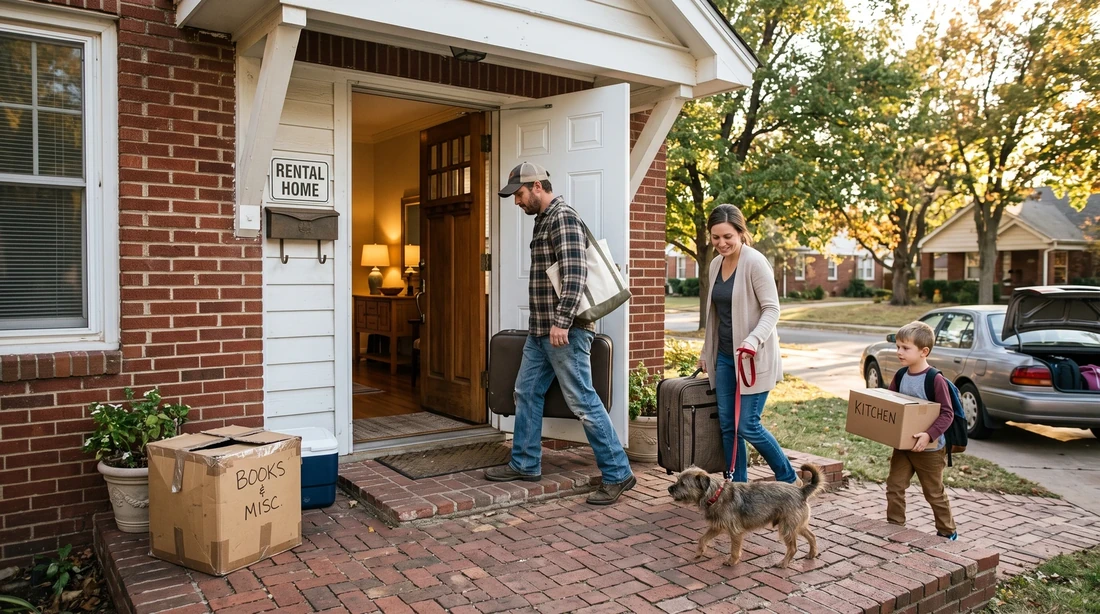
Your Next Steps
- Check your policy's loss-of-use line. Find the Coverage D percentage and dollar cap on your declarations page today — before you ever need it.
- Build your home inventory. Photos, videos, and serial numbers via the NAIC Home Inventory App or OID's Home Inventory Form; the OID help line is 800-522-0071.
- Line up housing that stretches your ALE. If you're displaced now, see insurance housing options or call/text (405) 295-5052 for same-day, direct-billed placements.