If your hail damage roof claim was denied in Oklahoma, ask for the denial in writing citing the exact policy provision, then request a re-inspection with independent roofer photos. Oklahoma insurers must answer a proof of loss within 60 days (36 O.S. § 1250.7). If the valuation still disputes, apply for OID's free EAGLE mediation or call 800-522-0071.
Key Takeaways
- After a denial, ask for it in writing citing the exact policy provision, then request a re-inspection backed by independent roofer photos.
- Oklahoma insurers must respond to a properly executed proof of loss within 60 days under 36 O.S. § 1250.7.
- Effective November 1, 2025, HB 1084 bars assigning post-loss property benefits, so the policyholder stays the named claimant.
- If the valuation is still disputed, apply for OID's free EAGLE mediation or call 800-522-0071, and never pay an adjuster yourself.
This guide covers why Oklahoma hail claims get denied, what to do when the adjuster goes quiet, what the November 1, 2025 assignment-of-benefits ban changed, your options after a written denial, and the five steps that keep you inside the 60-day clock.
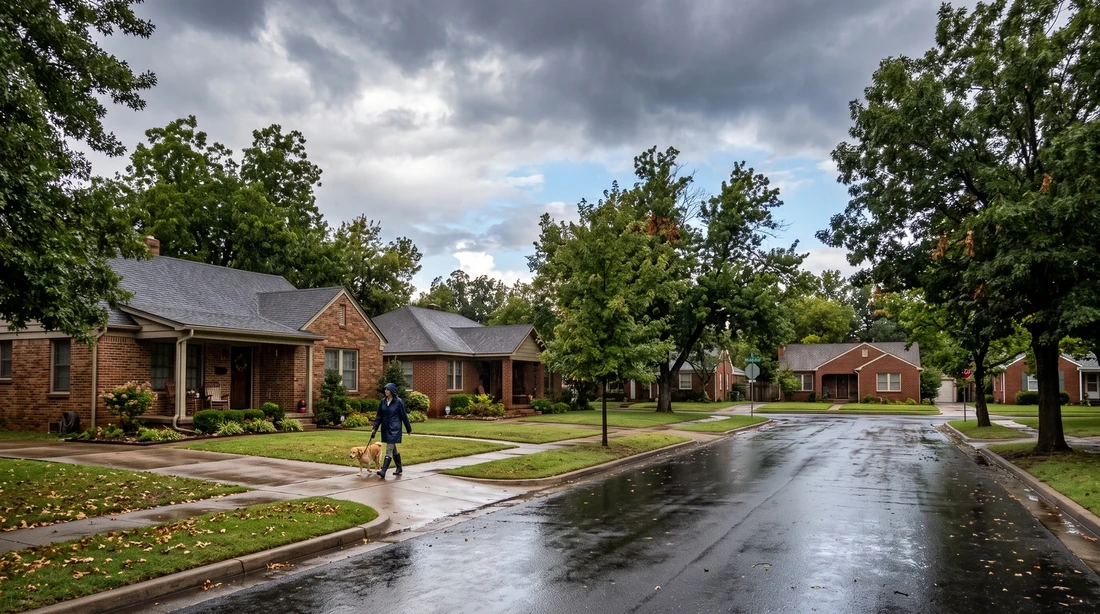
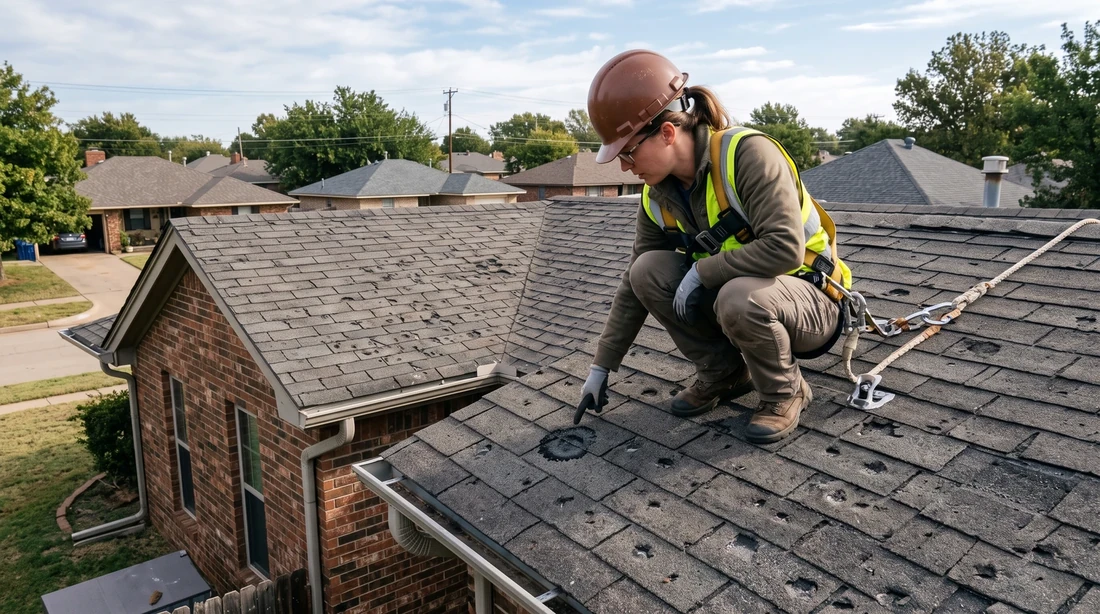
Two roofers walk your roof and mark clear hail bruising. The carrier's adjuster spends fifteen minutes up top and writes zero payable, wear and tear. Meanwhile your neighbor, same insurer, same storm, just got a full roof replacement. That gap is the most common hail-denial story in the OKC metro. After the fall 2024 metro hailstorm that battered thousands of cars and roofs, r/okc filled with it, including adjusters who inspect once and then go silent.
A denial is a starting point, not a verdict. Oklahoma has specific rules that put a clock on the carrier, force the denial into writing, and give you free tools to push back. And a big rule just changed: the November 1, 2025 assignment-of-benefits ban reshaped what a roofer can legally sign you into.
Oklahoma insurers must respond to a properly executed proof of loss within 60 days. They accept it, deny it, or explain in writing why they need more time (36 O.S. § 1250.7). Every day you wait to submit documentation is a day off that clock.

Why Do Oklahoma Hail Claims Get Denied so Often?
Oklahoma had the 4th-highest average homeowners premium in the nation at $2,268 (2022 NAIC data), and hail is a big reason why. Carriers pay out on so many roofs here that they scrutinize each hail claim harder than in low-risk states.
That scrutiny shows up in three recurring ways. First, the cosmetic damage exclusion: many Oklahoma policies won't pay for hail hits that dent or mark a roof's appearance but don't affect how it sheds water. Second, a separate, higher wind and hail deductible, often a percentage of your dwelling coverage rather than a flat dollar amount, which can quietly erase a smaller claim. Third, the date-of-loss dispute, where the carrier argues the damage came from an older storm outside your claim, or from age and wear.
None of those are automatically the last word. But they're the language a denial letter will use, so read your policy's wind/hail deductible and its cosmetic-damage clause before you argue anything.
What If the Adjuster Stops Answering?
A denial you can fight. An adjuster who stops answering is harder, and it's a top complaint in OKC threads. The Oklahoma Insurance Department (OID) is the lever here.
OID also warns about the storm-chasing pressure that follows every big hail event. Verify any adjuster's identification, and remember OID's line plainly: the insurance company pays the adjuster, so an adjuster should never ask you for payment. Be wary of contractors who rush you, show up offering unsolicited repairs, or claim they're backed by a government program. After a metro-wide storm, those knocks come in waves.
What Did the 2025 AOB Ban Change for Roofers?
Effective November 1, 2025, Oklahoma's HB 1084 (36 O.S. § 1230(B)) prohibits assignment of post-loss insurance benefits for property damage under auto, residential, and commercial policies. In plain terms, a roofer can no longer have you sign over your claim (an "AOB") and then chase your insurer directly for payment.
You, the policyholder, remain the named claimant. That's a real shift. Before the ban, roofers routinely took an assignment and ran the claim. Now the paper you sign matters more, and the fight stays in your name. Read anything a contractor puts in front of you.
| Item | Before Nov 1, 2025 | On/after Nov 1, 2025 |
|---|---|---|
| Who can be the claimant | Roofer could take assignment of benefits | Policyholder stays the named claimant |
| Who deals with the carrier | Contractor could pursue insurer directly via AOB | You (or a licensed public adjuster) handle it |
| What a roofer can sign you into | Assignment of post-loss benefits | No assignment of post-loss property benefits |
| Your leverage | Often handed off, out of your control | You keep control of the claim and its record |
What Happens If I Do Nothing After a Denial?
A denied hail claim doesn't reopen itself. Here's the realistic sequence when a homeowner waits.
- Days 1–14: The denial letter sits. Storm debris and any interior water intrusion keep working on the deck and ceilings. Evidence of the original hail event starts aging.
- Days 15–45: Reputable local roofers get booked solid after a metro storm, so the independent inspection you need to rebut the denial is harder to schedule.
- Day 60 and past: The window tied to your proof of loss and re-inspection requests tightens; the longer the gap, the easier the carrier's date-of-loss argument becomes.
- Months later: Untreated roof leaks turn into interior damage (soaked insulation, ceiling stains, mold risk), which is both a bigger repair and a family-displacing one.
That last stage is where a roof claim stops being about shingles. A serious hail rebuild with interior water damage can push a family out of the house for weeks while the deck is torn off and ceilings are opened.
Facing a hail rebuild that puts your family out of the house? BnB OKC places displaced households in fully furnished metro homes near your neighborhood, schools, and work while the roof and interior get redone — with monthly rates on 30+ night stays and insurance placements handled directly.
What Are My Options After a Denied Hail Claim?
A written denial gives you more moves than most homeowners realize. Each has a cost and a fit.
| Option | Cost | Best when |
|---|---|---|
| Request re-inspection with roofer photos | Usually free (roofer inspection often no-charge) | Independent report contradicts the adjuster's findings |
| Hire a licensed public adjuster | Fee-capped percentage of recovery | Large or complex claim you can't argue alone |
| EAGLE mediation (OID) | Free — but both parties must agree | Dispute is about valuation, not total denial of coverage |
| File an OID complaint | Free | Carrier missed the 60-day rule or won't put denial in writing |
| Attorney review | Often contingency on bad-faith cases | Written denial appears to misapply the policy |
EAGLE deserves a note. It's OID's free mediation program for first-party property damage valuation disputes, the two-roofers-say-yes, adjuster-says-no situation. It's not automatic. Both you and the carrier have to agree to mediate. It's often the fastest neutral step short of hiring anyone.
How to Fight a Denied Hail Claim in Oklahoma, Step by Step
Five moves, in order, keep you inside the 60-day clock and build the record you'll need.
- Get the denial in writing citing the exact policy provision the carrier relied on. Oklahoma denials must be written and specific.
- Read your wind/hail deductible and cosmetic-damage exclusion so you know what the policy pays and excludes.
- Gather independent roofer photo reports and document your date of loss with storm dates and dated images.
- Request a re-inspection in writing and submit your proof of loss, keeping copies of everything and the dates you sent them.
- Apply for free EAGLE mediation or call OID consumer assistance at 800-522-0071 if the carrier stalls or the valuation stays disputed.
Red Flags to Check After a Hail Storm
- A denial that arrived by phone. Oklahoma denials must be written and cite the specific provision. Ask for it and note the date you asked.
- An "adjuster" who asks you for money. The insurance company pays the adjuster. Verify identification through OID.
- A contractor who rushes you, offers unsolicited repairs, or claims government backing. OID flags all three after big hail events.
- Paperwork that assigns your claim to a roofer. Post-loss assignment of property benefits is banned as of November 1, 2025. You stay the named claimant.
- A "wear and tear" or date-of-loss finding with no independent report to answer it. Two roofer photo reports and dated storm records are what rebut it.
- A wind/hail deductible you have never read. It is often a percentage of dwelling coverage and can erase a smaller claim on its own.
What If the Rebuild Displaces My Family?
A hypothetical: Say a fall storm bruises the roof of a four-bedroom OKC home, the adjuster denies it as "wear and tear," and two independent roofers document real hail damage. The homeowner requests a re-inspection with photos, the carrier reverses course, and now the roof deck has to come off. By then a leak has soaked ceilings in two bedrooms, so the interior needs repair too.
The rebuild runs about five weeks. A family of four can't live under an open deck with torn-out ceilings. Two hotel rooms at, in the ballpark of, $170/night would run roughly $170 × 2 × 35 nights ≈ $11,900 for the stretch, with no kitchen and no room to spread out. A furnished metro home on a monthly rate keeps everyone together, cooking, and near the same schools, typically for less than two hotel rooms over the same period. This is a hypothetical to show the math, not a quote.
If your reversed claim opens loss-of-use coverage, those living costs may be reimbursable as Additional Living Expenses. Your carrier decides that, and receipts substantiate it. Extended-stay furnished homes and pet-friendly rentals both keep the household intact during a rebuild.
Plenty of hail claims are roof-only. If the crew replaces shingles over two or three days and you can stay in the house, you don't need anywhere to go. The denial fight is your whole task.
Where a furnished home changes the outcome is interior water damage: opened ceilings, torn-out insulation, drywall and flooring work that makes rooms unlivable for weeks. Families, pets, and 30-plus-night rebuilds are exactly the situations hotels handle badly and a furnished home handles well. BnB OKC works with insurance placements and coordinates with adjusters and TPAs like Alacrity Solutions on authorized stays.
For the wider OKC news picture this claim sits inside, the same storm-season metro that keeps OKC short-term rental rules and the Route 66 centennial in OKC in the headlines, the housing math is the same: keep the family near home.
Terms you'll hear, decoded
- Assignment of benefits (AOB): signing your claim over to a contractor, now banned for post-loss property claims in Oklahoma as of Nov 1, 2025.
- Proof of loss: the sworn document itemizing your damage that starts the carrier's 60-day response clock.
- Cosmetic damage exclusion: a policy clause letting the carrier decline hail damage that marks appearance but doesn't affect function.
- Wind/hail deductible: a separate, often percentage-based deductible for wind and hail, higher than your standard one.
- EAGLE mediation: OID's free program to resolve first-party property valuation disputes when both sides agree to mediate.
- Date of loss: the storm date your damage is tied to, and a frequent point of dispute on older or repeated hail events.
- Additional Living Expenses (ALE): loss-of-use coverage for extra costs when covered damage makes your home unlivable; the carrier decides eligibility.
The Bottom Line
A denied hail claim in Oklahoma is the start of a process the law puts a clock on. Get the denial in writing with the provision cited, line up two independent roofer photo reports and your storm dates, request a re-inspection, and use OID's free complaint line and EAGLE mediation if the valuation stays stuck. If the rebuild will put your family out of the house, line up housing early: request insurance housing or call/text (405) 295-5052 for same-week furnished options near your neighborhood.
This guide is general information, not insurance or legal advice; your carrier makes all coverage decisions.