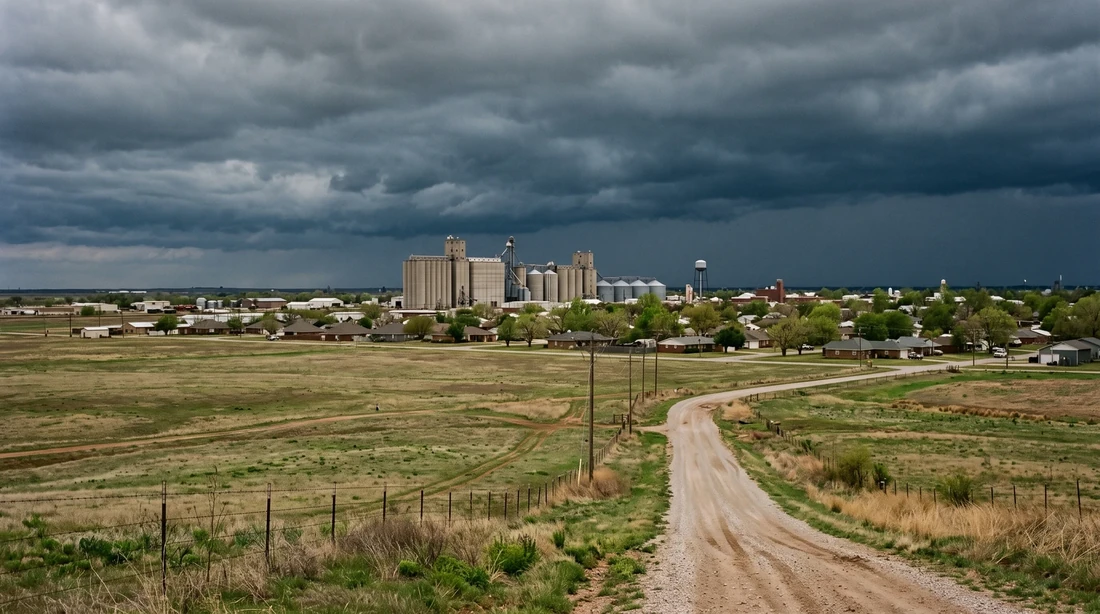
As of April 21, 2026, the National Weather Service confirmed 38 tornadoes in Oklahoma this year, including a record-setting 22 in March, capped by the April 23 Enid EF4, the first EF4 in Garfield County since 1991. It leveled six homes in one neighborhood and damaged roughly 40, with about 10 injuries and no fatalities reported.
Key Takeaways
- The National Weather Service confirmed 38 Oklahoma tornadoes between January 1 and April 21, 2026, including 22 in March.
- The April 23 Enid EF4 tracked 10.38 miles in 37 minutes, leveling six homes and damaging roughly 40.
- Loss-of-use coverage reimburses the extra cost of living elsewhere; receipts substantiate the claim and the carrier decides coverage.
- BnB OKC operates 11 furnished metro homes sleeping 2 to 16-plus, with monthly rates on stays of 30-plus nights.
This guide covers what has happened so far in Oklahoma tornado season 2026, what the Enid EF4 did, how loss-of-use coverage works when a storm makes your home unlivable, which temporary-housing options fit a weeks-to-months rebuild, and the steps that keep a displaced family from burning its housing budget in the first week.
You have watched the radar light up three weekends in a row, and the Enid footage made it real. If a storm takes your roof, or your whole house, the next question is where your family sleeps for the weeks or months a rebuild takes. That is the part news coverage skips.
Peak Oklahoma tornado season runs April through June. If your home is hit, the housing clock starts the same night. Every hotel night you pay before you organize your claim is a night your loss-of-use budget cannot stretch.

What Has Happened in Oklahoma Tornado Season 2026 so Far?
Oklahoma logged 38 confirmed tornadoes between January 1 and April 21, 2026, according to the National Weather Service. It was a fast, front-loaded start driven by an unusually active March.
March 2026 alone produced 22 tornadoes, described as record-setting for the month. April added 11 more through the 21st. The year-to-date count trailed 2024's same-period record of 56, and the intensity climbed as spring went on.
Early April brought the storms into the metro. An EF1 touched down near Will Rogers World Airport, the kind of close-to-home event that turns an abstract forecast into a reason to keep a go-bag by the door.
Of the 38 tornadoes confirmed through April 21, the ratings broke down as follows.
| Rating | Count | What it means |
|---|---|---|
| EF-U (unrated) | 3 | Confirmed but not rated |
| EF0 | 9 | Minor damage |
| EF1 | 20 | Moderate; most common this season |
| EF2 | 5 | Significant structural damage |
| EF3 | 1 | Severe damage |
| EF4 | 1 | Devastating; the April 23 Enid tornado |
For longer-term context on the metro's tornado exposure:
The Oklahoma City metropolitan area is one of the most tornado-prone major cities in the world, with about 150 tornadoes striking within the city limits since 1890.
Wikipedia: Oklahoma City
How Bad Was the Enid EF4?
The April 23 Enid tornado was the first EF4 of 2026 anywhere in the U.S. and the first EF4 in Garfield County since April 26, 1991.
It touched down at 8:11 p.m. CDT and stayed on the ground for 37 minutes until 8:48 p.m., tracking 10.38 miles from northwest of Waukomis and southwest of Vance Air Force Base across the Enid area. Its maximum width reached 600 yards. Peak winds were estimated near 180 mph.
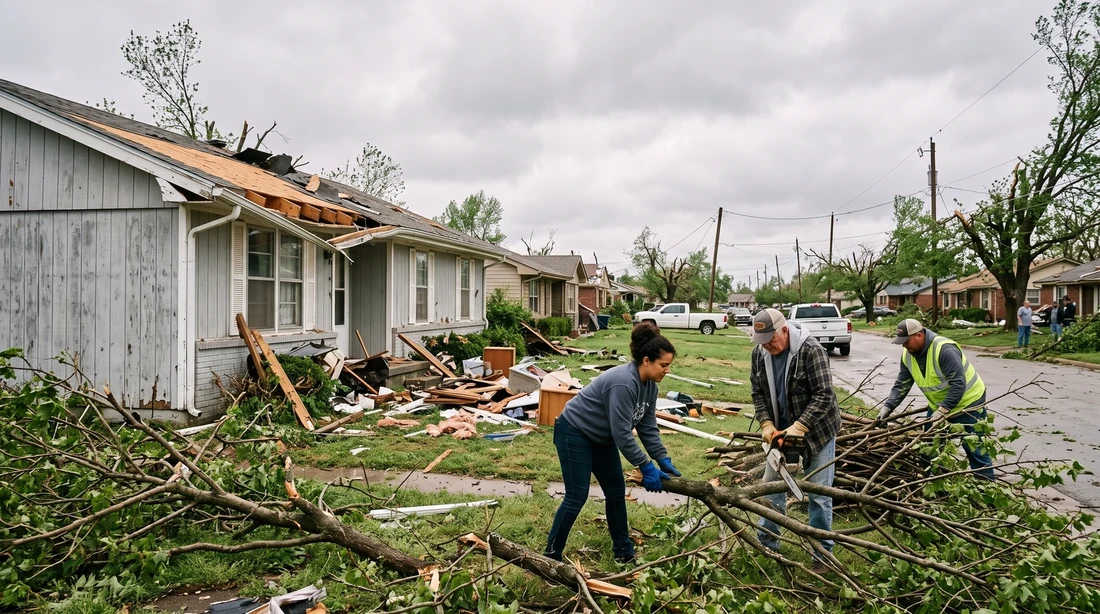
In the Grayridge neighborhood, multiple homes were destroyed and six were leveled to their slabs. Early reports from the Oklahoma Department of Emergency Management, via news coverage, put damage at about 40 homes across Enid and Garfield County, with roughly 10 injuries initially reported and, remarkably given the strength, no fatalities.
An emergency was declared in Garfield and Kay counties. The Enid tornado was one storm in a larger outbreak: the sequence of April 23-28, 2026 produced 108 tornadoes across the central United States.
| Date | Event |
|---|---|
| Jan to Feb 2026 | Quiet start to the year |
| March 2026 | 22 tornadoes; record-setting for March |
| Early April 2026 | EF1 near Will Rogers World Airport in the OKC metro |
| Through April 21 | 38 total confirmed statewide (11 in April) |
| April 23, 8:11 to 8:48 p.m. | Enid EF4; six homes leveled, ~40 damaged, ~10 injuries |
| April 23-28 | Broader outbreak: 108 tornadoes across the central U.S. |
For context, Oklahoma averages 59 tornadoes a year, and 2024 set the all-time record at 152. A 38-count April with an EF4 already on the board is a serious season, and the peak months had not even ended.
What Happens to Your Housing If a Tornado Damages Your Home?
If a tornado makes your home uninhabitable, most homeowners and renters policies include loss-of-use coverage that reimburses the extra cost of living somewhere else while yours is repaired or rebuilt. Your carrier and adjuster make every coverage decision. Knowing how the money works keeps you from burning it in the first week.
Loss of use (often called Additional Living Expenses, or ALE) is commonly set as a percentage of your dwelling coverage. It pays the additional amount above your normal living costs, the gap between what you would have spent at home and what temporary housing actually costs. Receipts substantiate the claim.
Here is the sequence most displaced Oklahoma families move through:
- The storm night. You are safe but out. A hotel is fine for a night or two while the shock clears and you locate your policy.
- Days 1-5. You file the claim, an adjuster is assigned, and you learn your ALE limit. Hotel bills are already stacking up; two rooms for a family runs into real money fast.
- Week 1-2. The rebuild timeline becomes clear: a leveled home is months, not weeks. This is when a furnished home replaces the hotel and stops the bleed.
- Months 1-6+. You settle into a stable home with a kitchen, laundry, bedrooms, and a normal routine for kids and pets while contractors work. Monthly rates and direct billing to your carrier make the math sane.
The trap is treating a months-long rebuild like a weekend hotel stay. Two hotel rooms at a family rate can quietly outrun a furnished house within the first couple of weeks. A hotel has no kitchen, so restaurant meals eat the budget too.
Home damaged this storm season? We house displaced Oklahoma families for the weeks-to-months a rebuild takes, often direct-billed to your carrier.
Which Temporary-Housing Options Fit a Weeks-to-Months Rebuild?
A furnished home usually costs less per month than two hotel rooms and gives a displaced family a kitchen, laundry, and separate bedrooms. Here is how the common options compare for a stay measured in weeks or months.
| Option | Who it fits | What disqualifies it |
|---|---|---|
| Hotel (1-2 rooms) | 1-2 nights right after the storm | No kitchen; two rooms get expensive for a family fast |
| Extended-stay hotel | Single person or couple, shorter repairs | Tight for families and pets; limited living space |
| Furnished home | Families, pets, 30+ nights, full rebuilds | Overkill for a one-night stay |
| Staying with family | Very short displacement, no space needs | Rarely works for months with kids and pets |
BnB OKC operates 11 furnished homes across the metro, rated 9.5 out of 10 across 1,580 verified guest reviews on Airbnb and Vrbo, sleeping 2 to 16-plus. Several homes are dog-friendly, published from-rates run $225-$425/night, and 30+ night stays get monthly rates, with up to 35% direct-booking savings on stays of 4+ nights. We work with Alacrity Solutions on insurance placements, and direct billing is possible once your carrier or their third-party administrator authorizes it.
A hypothetical worked example
Say a family of four in the metro loses their home to an EF2 and the rebuild runs four months. This is illustrative math and never a quote.
Two hotel rooms at, say, $170/night is $340/night, roughly $10,200 a month, before a single restaurant meal. Four months is about $40,800 plus food, because there is no kitchen.
A furnished home at a monthly rate keeps the family under one roof with a kitchen and laundry. Because it is one home instead of two rooms plus dining out, it typically stretches the same loss-of-use budget considerably further over four months. The exact figure depends on the home and your ALE limit; call for dates and a written rate.
Whether your carrier pays, and how much, is always their decision. Keep every receipt.
How to Line up Housing After Tornado Damage, Step by Step
- Get to safety and document. Photograph the damage before you move anything; save it for your claim.
- File your claim. Call your carrier, report the damage, and ask specifically about loss-of-use / ALE limits.
- Confirm your rebuild timeline. Ask the adjuster or contractor whether you are looking at weeks or months. This decides hotel vs. home.
- Line up a furnished home for the real duration. Call (405) 870-2146 with your dates, headcount, and pets so we can match a home.
- Ask about direct billing. Once your carrier or TPA authorizes it, we can often bill them directly instead of you fronting the cost.
- Keep every receipt. ALE is reimbursed against documented additional expenses, so save it all.
What to Check Before You Book Anything
- Booking a furnished home when a hotel will do. If your home is habitable or the repair is a matter of a few nights, a hotel is the right call. A single traveler with hotel points, a minor repair, or a couple who can double up with family for a week do not need a whole house.
- Pricing a months-long rebuild by the night. Two hotel rooms plus restaurant meals can outrun a furnished house within a couple of weeks.
- Skipping the ALE question. Learn your loss-of-use limit on day one, before the hotel bills stack up.
- Fronting costs without asking about direct billing. It only happens after your carrier or TPA authorizes it, so ask early.
- Throwing away receipts. ALE pays against documented additional expenses, and nothing else.
A furnished home changes the outcome when the displacement is real: a family with kids who need a routine, pets that a hotel will not take for months, a stay past 30 nights where monthly rates and a kitchen matter, or a rebuild whose timeline keeps slipping. That is the situation this season is creating across the metro.
Terms You'll Hear, Decoded
- Loss of use / Additional Living Expenses (ALE): the part of a homeowners or renters policy that reimburses the extra cost of living elsewhere while your home is unlivable.
- Direct billing: when the carrier or its administrator is billed for your housing directly, so you don't front the cost; only after they authorize it.
- Adjuster: the person your carrier assigns to inspect the damage and decide what's covered.
- EF scale: the Enhanced Fujita scale rating a tornado's strength from EF0 to EF5 based on damage; the Enid storm was rated EF4.
- Emergency declaration: an official order (declared here in Garfield and Kay counties) that can open up disaster resources.
For more OKC context, see our guides on OKC short-term rental rules and the Route 66 Centennial in OKC, and our insurance housing overview.
The Bottom Line
Thirty-eight tornadoes by April 21 and an EF4 on the board make this a serious season, and the peak months were still ahead. If a storm puts your family out, the first week decides how far your loss-of-use budget goes. Document, file, learn your ALE limit, and price housing by the month once the rebuild timeline is clear. Your carrier makes every coverage decision; keep every receipt.
This guide is general information, not insurance or legal advice; your carrier makes all coverage decisions.