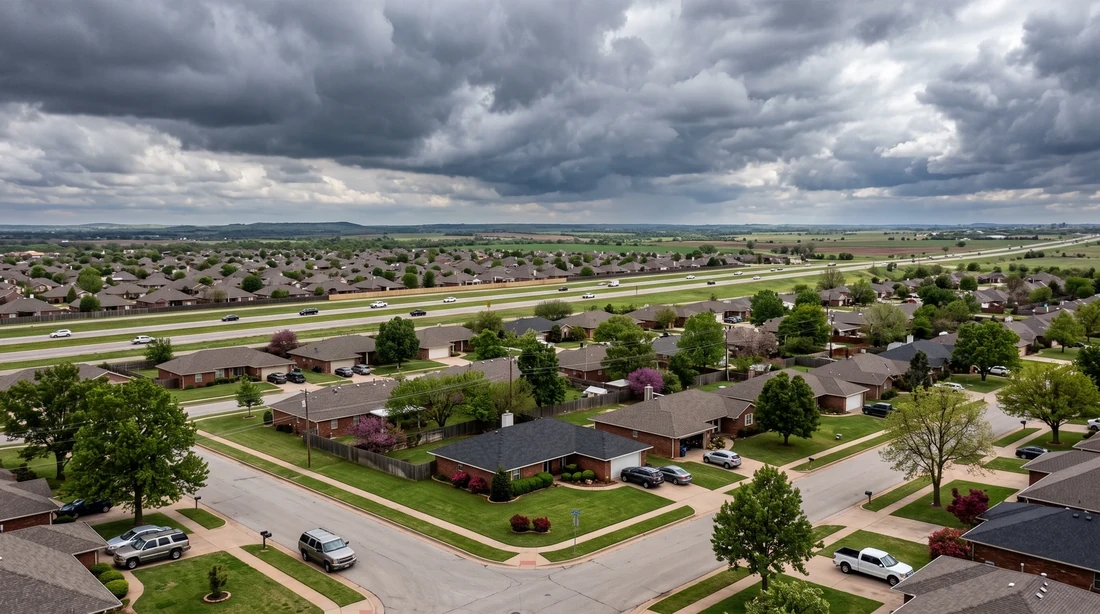
A complete tornado preparedness checklist for families has three parts — and most public lists cover only one: (1) a 72-hour survival kit — water, food, meds, weather radio; (2) a safe-room plan everyone has rehearsed; and (3) an insurance go-bag — your policy declarations page, a phone-video home inventory, and your adjuster's number — so you can file a claim and secure housing within hours, not days.
Key Takeaways
- A complete checklist has three parts: a 72-hour survival kit, a rehearsed safe-room plan, and an insurance go-bag.
- Oklahoma's peak tornado window is April through June, though winter ice storms and autumn hail can also displace families.
- Roof and interior water damage on a typical OKC home often means a 60-to-120-day repair once contractor backlog is counted.
- Two hotel rooms at $95 to $189 a night run roughly $5,600 to $11,000+ monthly; BnB OKC lists monthly rates on 30+ night stays.
This guide covers the three parts of a tornado preparedness checklist for an Oklahoma family: the 72-hour survival kit, the safe-room plan, and the insurance go-bag most lists skip. It also covers who handles what after a covered loss, what the first weeks look like with and without a plan, where your family would live during a months-long repair, and how to build the whole plan in one afternoon.
Most tornado checklists you will find stop at flashlights and bottled water. That keeps your family alive for a night. It does nothing the morning after, when the roof is gone, the adjuster wants a claim number, and you have no idea where four people will sleep for the next three months. In Oklahoma City, where tornado season peaks April through June, the families who recover fastest are the ones who planned for the insurance and housing part before the sirens.
This checklist is built to print. If you are already displaced and need housing today, skip to the housing section or call BnB OKC at (405) 870-2146.
Oklahoma's peak tornado window is April through June, but December to February ice storms and autumn hail can also strand a family. The best time to build your go-bag and pick your backup housing plan is a calm weekend now, before the county is under a warning.

Why Does an Oklahoma Family Need More Than a Survival Kit?
A survival kit gets you through the storm; an insurance go-bag gets you through the three months after it. Those are two different emergencies, and the second one is the expensive one.
After a tornado or a severe hail event, the immediate danger passes in minutes. The recovery takes weeks to months: inspections, claims, contractors, and finding somewhere to live while your home is repaired. A roof and interior water damage on a typical OKC home often means a 60-to-120-day repair timeline once you factor in the contractor backlog that follows any regional storm.
That backlog is real here. When one supercell tracks across the metro, from Yukon and Mustang through Moore and Norman down the I-35 corridor, or out west past El Reno, hundreds of homes need the same roofers and adjusters at once. Materials get scarce, and "three weeks" quietly becomes three months. That is exactly when hotel bills spiral.
Every night in a scrambled hotel booking burns cash your policy's loss-of-use coverage could have stretched into a real home. The prep that saves you goes beyond the water jugs. It is having your policy number, your inventory, and a housing backup ready before you need them.
If you rent rather than own, the same logic applies to your belongings and your displacement. Start with does renters insurance cover temporary housing so you know what you are entitled to before the storm, and does renters insurance cover hotel stays for the short-displacement version.
For scale, Wikipedia records the widest tornado ever measured, near El Reno:
A tornado that affected Hallam, Nebraska on May 22, 2004, was up to 2.5 miles (4.0 km) wide at the ground, and a tornado in El Reno, Oklahoma on May 31, 2013, was approximately 2.6 miles (4.2 km) wide, the widest on record.
Wikipedia: Tornado
What Goes in the Three-Part Tornado Preparedness Checklist?
A family checklist that protects you covers survival, safety, and insurance in one place. Print this and store the go-bag items in a single waterproof folder or a scanned drive you can reach from your phone.
| Category | What to include | Store where |
|---|---|---|
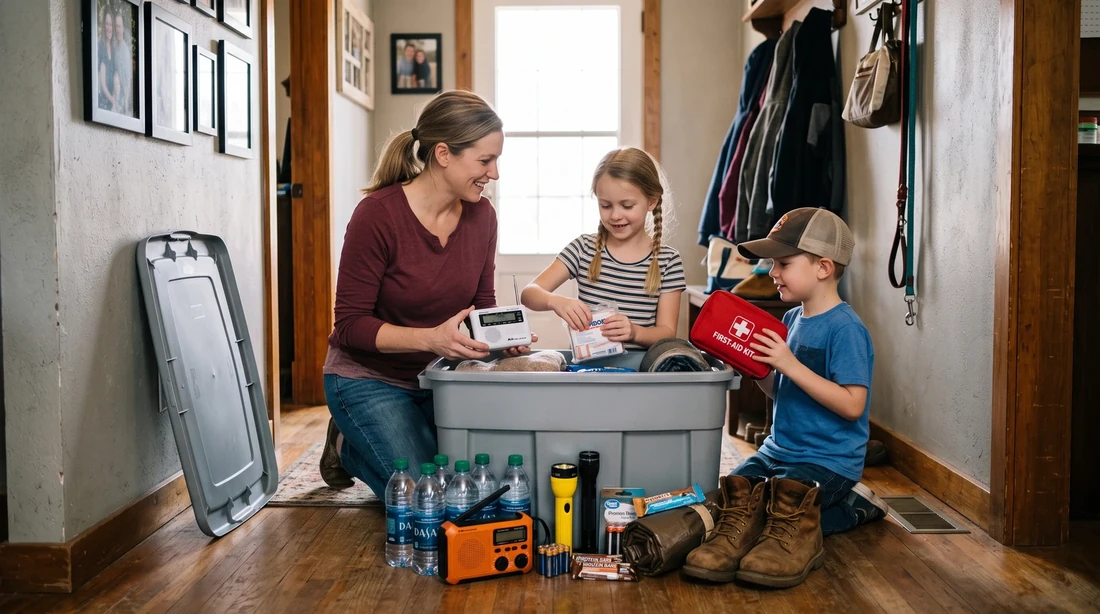
| 72-hour survival kit | 1 gallon water per person per day (3 days), non-perishable food, manual can opener, first-aid kit, 7-day medication supply, flashlights, spare batteries, NOAA weather radio, phone chargers/power bank, cash in small bills, sturdy shoes and gloves | Bin in your safe room |
| Safety plan | Designated safe room (interior room, lowest floor, no windows), meeting point outside, out-of-state contact everyone can call, helmets for each family member, a plan for pets and their carriers | Written and rehearsed twice a year |
| Insurance go-bag | Homeowners or renters policy declarations page, agent and adjuster phone numbers, a room-by-room phone video of your belongings, copies of IDs and birth certificates, mortgage/lease info, recent photos of the home's exterior and roof | Waterproof folder + cloud drive |
The home-inventory video is the single highest-value five minutes of prep on this list. Walk every room with your phone, narrate what you own, open closets and cabinets, and save it to the cloud. When you file a personal-property claim, that video is the difference between remembering half your possessions and documenting all of them.
The tornado emergency kit list, refined for Oklahoma
Two items separate an Oklahoma tornado emergency kit list from a generic one: hard-shell helmets and a battery NOAA radio. Head injury from flying debris is a leading cause of tornado harm, so a bike or batting helmet for each family member belongs in the safe-room bin. A NOAA weather radio matters because cell networks jam or fail when everyone in the metro reaches for a phone at once.
Add prescription medications you cannot skip: a 7-day supply in the bin, rotated so it never expires. If anyone in the house uses an inhaler, insulin, or a CPAP, note the power needs on your plan. A power bank that charges medical devices is mandatory in that case. Keep a whistle in the bin too, so a trapped family member can signal rescuers without shouting.
If your family includes an infant, add formula, diapers, and wipes for three days. If an older parent lives with you, add a spare pair of glasses, a written list of their medications and doses, and any mobility aid they need to move fast to the safe room. These are the items you will never find in the dark mid-warning, so they live in the bin year-round.
Who Handles What After the Storm?
Knowing who owns each task before the storm keeps you from waiting on a call that is not yours to make. After a covered loss, four parties move at once (you, your adjuster, your carrier, and your housing provider), and confusion about roles is where days get lost.
| Task | Who handles it | When |
|---|---|---|
| File the claim with policy number | You | Hours 0-4 |
| Assign a claim number and adjuster | Carrier | Day 1 |
| Document belongings (inventory video) | You | Before storm + day of loss |
| Make emergency repairs to prevent more damage | You (keep receipts) | Days 0-2 |
| Inspect damage, write repair estimate | Adjuster | Days 2-7 |
| Confirm your loss-of-use limit is in play | You + adjuster | Day 1-3 |
| Authorize direct billing (if available) | Carrier / TPA | Day 1-5 |
| Provide furnished home + invoice carrier | Host (e.g., BnB OKC) | Same day once authorized |
| Save receipts for meals, laundry, extra costs | You | Entire displacement |
Notice how many tasks are yours. The carrier and adjuster cannot act until you file with a policy number and start documenting, which is what the go-bag makes instant.
Document the damage before you clean up
Most policies expect you to prevent further damage without throwing away the evidence before the adjuster sees it. That balance trips up a lot of families in the first 24 hours.
Photograph and video everything before you touch it: the roof from the ground, water stains on ceilings, soaked furniture, broken windows, and any debris that hit the home. Then do the reasonable emergency work. Tarp the roof, board a broken window, move dry belongings away from a leak. Keep receipts for tarps, plywood, and any emergency roofer, because those costs are usually reimbursable.
Do not haul damaged belongings to the curb until your adjuster has documented them or told you it is fine. A discarded couch is a discarded line item on your personal-property claim. Bag small ruined items and set them aside instead of tossing them.
What Happens After the Storm If You Haven't Planned?
Without a go-bag, the first 72 hours after a tornado become a paperwork scramble instead of a recovery. Here is the sequence a prepared family moves through, and where the unprepared one stalls.
- Hours 0-4: You are safe. Prepared: you pull the declarations page and call the claim line with your policy number in hand. Unprepared: you are on hold trying to remember which carrier you are with.
- Day 1: You need somewhere to sleep tonight. Prepared: you check your loss-of-use coverage limit and book smart. Unprepared: you take the first hotel with a vacancy at storm-surge pricing.
- Days 2-5: The adjuster inspects. Prepared: your inventory video and roof photos speed the estimate. Unprepared: you are reconstructing a possessions list from memory.
- Weeks 1-2: Repair timeline lands. If it is 3+ months, hotel living stops working. Prepared: you have already priced a furnished home. Unprepared: you are now house-hunting under stress with a hotel bill climbing daily.
- Months 1-3: Repairs run. Prepared: your family lives in one place with a kitchen and beds while the house is fixed. Unprepared: three hotel rooms and takeout have quietly eaten the ALE budget.
Displaced by storm or hail damage and facing a multi-month repair? BnB OKC places families in furnished homes and works with insurance carriers and Alacrity Solutions on ALE stays. Same-day options.
Where Would You Live If the House Is Gone?
A furnished home usually costs a family less per month than two hotel rooms, and it is the one line most tornado checklists never mention. Deciding this before the storm is the whole point of the insurance go-bag.
For a 1-2 night displacement, a hotel is fine. When a roof or interior repair runs weeks to months, a family of four in a hotel loses ground fast: no kitchen, no laundry, kids sharing beds, meals eaten out three times a day. Here is how the options compare for an extended OKC stay.
| Option | Approx. monthly cost | Best for |
|---|---|---|
| Two hotel rooms | ~$5,600-$11,000+ (at $95-$189/night x2) | 1-7 nights; single travelers |
| Extended-stay hotel | ~$3,000-$5,500 (one unit, kitchenette) | 2-6 weeks; couples, small families |
| Furnished home (BnB OKC) | Monthly rates on 30+ night stays | Families, pets, 30+ nights, full kitchen + laundry |
BnB OKC publishes from-rates of $225-$425/night with monthly rates on 30+ night stays and up to 35% direct savings on 4+ night bookings. Homes sleep 2 to 16+, several are dog-friendly, and many sit minutes from OKC hospitals, the Paseo and Plaza districts, and Lake Hefner. See our extended stays and pet-friendly rentals if your family includes a dog.
Location matters more than families expect during a displacement, because the storm does not pause school or work. If your damaged home is in Moore or south OKC and your kids stay in their same school, a furnished home on that side of the metro keeps the morning drive to 10-20 minutes instead of turning it into a 40-minute cross-town commute from a hotel near Will Rogers Airport.
Families in Edmond or The Village to the north, or Yukon and Mustang to the west, should think the same way. Pick a backup that keeps the bus route, the pediatrician, and your contractor's site visits inside a reasonable drive.
One more practical note for the work-from-home reality: confirm the stay has reliable internet before you commit, because a month of dropped video calls costs its own kind of money. A furnished home's dedicated Wi-Fi and a room with a door usually beat a hotel lobby connection.
The key move: decide now which option your family would choose at each timeline. Write it on the checklist. When the tornado hits, you are executing instead of deciding under pressure.
Which Situations Change the Answer?
The right housing choice shifts fast once you add kids' schools, pets, medical needs, or a second displaced household. These are the situations generic checklists never account for.
- Kids in school: A furnished home in your existing school zone means no transfer paperwork and no lost friendships mid-year. Note your school's boundary on your plan so your backup housing keeps the same bus route or drop-off in reach. Late-spring storms are especially disruptive because they hit right as the school year closes and finals loom.
- Pets: Most hotels cap pets by size or charge steep per-night fees, and shelters often cannot take them at all. Several BnB OKC homes are dog-friendly with fenced yards, a real difference when a hotel would separate your family from a pet during an already stressful stretch. Keep a carrier, a leash, and 7 days of pet food and meds in your safe-room bin.
- Medical and mobility needs: If a family member uses a wheelchair, walker, or medical equipment that plugs in, a hotel room with a step-in shower and no counter space works against you. A ground-floor bedroom, a full kitchen for special diets, and room for equipment matter more here than nightly price. Flag those features when you call, so the home fits your family's needs.
- Two households under one roof: Multigenerational homes and blended families sometimes need to house six or eight people. Two hotel rooms will not do it. A home that sleeps 8-16 keeps everyone together and usually costs less per person than the equivalent hotel block. If your household is large, a single furnished home is often the only option that keeps you from splitting up.
- Renters vs. owners: If you rent, your landlord's insurance covers the building, and nothing of yours. Your renters policy is what funds a place to stay and replaces your things, and its loss-of-use limit is usually smaller than a homeowner's. Confirm that limit now so you are not surprised later.
What Does the Math Look Like for a Three-Month Roof Repair?
Here is a hypothetical to show why the housing decision matters more than the flashlights. Numbers are illustrative; your carrier makes all coverage decisions.
Say a spring hailstorm damages your roof and lets water into the second floor. The contractor estimates a 3-month repair. Your family of four needs somewhere to live.
Hotel path: Two rooms at $150/night = $300/night. Over 90 nights that is $27,000 plus roughly $1,500/month eating out because there is no kitchen. Total pushes past $31,000, and much of it may exceed your loss-of-use limit.
Furnished-home path: A furnished home for the same three months at a monthly rate lands in the ballpark of $3,900/month, or about $11,700 total, with a full kitchen and laundry that also cut your food and cleaning costs. Same family, same three months, roughly a third of the spend, leaving far more ALE budget in reserve if repairs run long.
If your carrier authorizes it, direct billing can route that furnished-home cost straight to the insurer. Learn how in how ALE housing companies work.
Variant: a renter with a $20,000 loss-of-use cap
Now say you rent, and your policy caps loss of use at $20,000. On the hotel path, that $31,000-plus total blows through your cap around week nine, and you would pay the rest out of pocket. On the furnished-home path at $3,900/month, three months runs about $11,700, leaving roughly $8,300 of your cap untouched for meals, laundry, and a longer-than-expected repair. Same coverage, wildly different outcome, decided entirely by which housing you choose on day one.
Variant: the repair runs long
Contractor backlogs after a metro-wide storm push "three months" to five more often than you would think. On the furnished path, two extra months at $3,900 is about $7,800 more, manageable inside most ALE limits. On the hotel path, two extra months of two rooms plus dining out is roughly $22,000 more, which almost certainly exceeds your coverage and lands on your card. The longer repairs run, the more the furnished home protects you.
Variant: the ALE budget is only what's "additional"
One number families miss: ALE pays your extra costs, not your total. Say your normal monthly grocery and utility spend at home is about $1,100. If the furnished-home path runs $3,900/month plus $700 in dining and laundry, $4,600 in all, the carrier typically reimburses the amount above your normal $1,100, so roughly $3,500 counts against your ALE limit instead of the full $4,600. Keep both your storm receipts and a sense of your normal spend, because the gap between them is what gets reimbursed.
Displaced right now? Temporary housing after a house fire walks the same steps for a total-loss situation.
How to Build Your Tornado Go-Bag and Housing Plan, Step by Step
You can finish the whole plan in one afternoon. Do these five steps once, review them each spring.
- Pull your policy declarations page and note your loss-of-use limit, deductible, agent, and claim phone number in one spot.
- Record a home-inventory video. Walk every room narrating what you own, open closets and cabinets, and save it to a cloud drive.
- Assemble the survival kit. Three days of water, food, meds, flashlights, a NOAA weather radio, and a power bank in a bin in your safe room.
- Rehearse the safe-room plan with everyone, including pets and their carriers, and name an out-of-state contact.
- Pre-pick your housing backup. Decide which option you would use for a 1-week, 1-month, and 3-month displacement, and save a lodging contact number.
When Don't You Need a Furnished Home?
Not every storm sends you into long-term housing, and honesty here matters. If damage is cosmetic, if you can safely stay in part of the home, or if the repair is only a few nights, a hotel or staying with family is the right, cheaper call. A single traveler or a couple with hotel loyalty points may do fine in an extended-stay unit for a few weeks, and points can knock a chunk off a short stay.
Partial occupancy is its own gray zone. If the roof is being replaced but the home is safe to live in, your carrier may not approve alternative housing at all. If crews shut off power, water, or a bathroom for days, ALE can still apply. Ask your adjuster plainly which it is before you book anything.
A furnished home changes the math when the repair runs 30-plus nights, when you are a family who needs beds and a kitchen, when you have pets a hotel will not take, when your household is too large for two rooms, or when two hotel rooms cost more than one whole house. If your claim gets pushback, read insurance denied temporary housing before you assume you are stuck.
What to Check Before the Sirens
These are the gaps that turn a storm into a months-long scramble.
- No declarations page within reach. Without the policy number you cannot file in the first four hours, and everything downstream waits on that call.
- No inventory video. A personal-property claim reconstructed from memory documents half of what you owned.
- A wind/hail deductible you have not read. In Oklahoma it is sometimes a percentage of your dwelling limit rather than a flat dollar figure. Note it on the same sheet as your loss-of-use limit.
- No helmets and no NOAA radio in the bin. Those are the two items that separate an Oklahoma kit from a generic one.
- Medical power needs left off the plan. An inhaler, insulin, or a CPAP needs a power bank that can charge it.
- Debris hauled to the curb before the adjuster saw it. Photograph first, tarp second, discard only when told it is fine.
- No housing backup chosen. Decide the 1-week, 1-month, and 3-month option now, with a contact number saved, so the first hotel with a vacancy at storm-surge pricing is never your only move.
- A renter's loss-of-use limit nobody has checked. It is usually smaller than a homeowner's, and the landlord's policy covers only the building.
Terms you'll hear, decoded
- Additional Living Expenses (ALE): The part of your policy that pays extra costs (housing, meals, laundry) while your home is unlivable due to a covered loss.
- Loss of use: Another name for the same coverage; typically a percentage of your dwelling or personal-property limit.
- Declarations page: The one-page summary of your policy showing your coverages, limits, and deductible. The first thing to grab in a claim.
- Deductible: The amount you pay out of pocket before coverage kicks in; wind/hail deductibles in Oklahoma are sometimes a percentage of your dwelling limit rather than a flat dollar figure.
- Duty to mitigate: Your responsibility to take reasonable steps, like tarping a roof, to prevent further damage after a loss; the emergency-repair receipts are usually reimbursable.
- Direct billing: When authorized by the carrier or its TPA, the housing provider bills the insurer so you do not front the cost.
- Home inventory: Your documented list or video of belongings that substantiates a personal-property claim.
- Additional (in ALE): "Additional" means costs above your normal living expenses. Your carrier pays the gap, not your entire hotel or grocery bill.
The Bottom Line
Pull your declarations page today and find the ALE / loss-of-use line. That number is your housing budget after a storm. Note your wind/hail deductible on the same sheet. Gather your go-bag items and record the inventory video this weekend, and decide your 1-week, 1-month, and 3-month housing backup that keeps your kids' school and your work in reach. Then save a real housing contact. If a storm displaces your family, see insurance housing options or call/text BnB OKC at (405) 870-2146 for same-day furnished-home availability.
This guide is general information, not insurance or legal advice; your carrier and adjuster make all coverage decisions.